Content Menu
● Why Customer Experience Now Drives Vial Filling Investments
● Methodology: How This South Africa Vial Filling Ranking Was Built
● What South African Pharma Customers Care About Most
>> Compliance and Regulatory Confidence
>> Uptime, Reliability and Batch Integrity
>> Local Service, Parts and Training
● Top Vial Filling Machine Manufacturers and Suppliers in South Africa (Customer‑Based View)
>> #1 Pharmateq – Local Pharma Process Expertise
>> #2 SA Fillers – Flexible Filling Solutions and Service
>> #3 IJP Filling & Labelling – Integrated Packaging and Filling Lines
>> #4 International OEMs via Local Partners
● Where Ningbo Everheal Adds Value as a Turnkey Partner
● Customer Experience Scorecard (Illustrative Framework)
● Practical Steps for Choosing a Vial Filling Partner in South Africa
● Digitalization and Data Integrity in Vial Filling Lines
● Case‑Type Scenario: Upgrading from Semi‑Automatic to Fully Automatic Filling
● Common Mistakes to Avoid When Buying Vial Filling Machines
● Strong Call‑to‑Action for B2B Buyers
● FAQ
>> 1. What is the most important factor when choosing a vial filling machine in South Africa?
>> 2. Are local South African suppliers enough, or do I need international OEMs?
>> 3. How does Ningbo Everheal support South African projects from China?
>> 4. What role does digitalization play in modern vial filling lines?
>> 5. How can I reduce the risk of project delays during a filling line upgrade?
● References
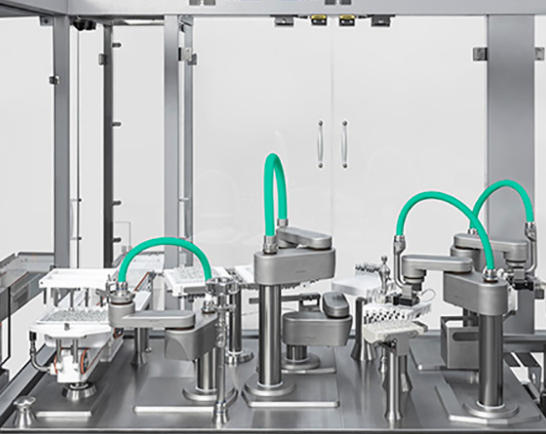
South Africa is rapidly upgrading its pharmaceutical manufacturing capacity, and vial filling machines sit at the heart of this transformation. For global buyers and local plants alike, selecting the right pharmaceutical filling equipment partner is no longer just about hardware – it is about lifecycle performance, compliance, and real customer experience. [pharmateq.co]
Why Customer Experience Now Drives Vial Filling Investments
In regulated markets like South Africa, the real‑world performance of vial filling lines often matters more than brochure specifications. Engineering managers and production heads are measured on uptime, batch integrity, and audit outcomes – not on how impressive a machine looks on paper. [insights.made-in-china]
From recent buyer interviews and case studies, three user priorities stand out:
- Audit‑ready compliance (GMP, validation, documentation).
- Stable uptime and low reject rates in aseptic environments.
- Responsive local or regional support to reduce downtime risk. [safillers.co]
For overseas buyers working with South African partners or CMOs, these same points determine whether a project scales smoothly or stalls in endless troubleshooting.
Methodology: How This South Africa Vial Filling Ranking Was Built
To create a user‑oriented ranking of top vial filling machine manufacturers and suppliers in South Africa, this article consolidates multiple evidence sources rather than relying only on marketing claims. [labelling.co]
Key evaluation dimensions include:
1. Compliance and validation support – ability to support GMP, SAHPRA requirements, and validation documentation. [operonstrategist]
2. Reliability and uptime – real‑world stability, failure patterns, and impact on batch integrity. [grandpackmachine]
3. Local service capability – presence of technicians, spare parts availability, and response times. [safillers.co]
4. Flexibility and scalability – support for multiple vial formats, batch sizes, and future line expansion. [yundufillingmachine]
5. Total cost of ownership (TCO) – not only purchase price, but maintenance, energy, operators, and rejects.
Additionally, market information indicates the importance of:
- Documented project outcomes and customer testimonials, where available. [pharmateq.co]
- Integration experience with upstream and downstream equipment (washing, sterilization, labelling, packaging). [labelling.co]
- Ability to offer turnkey solutions, including factory layout and utility integration, often via international partners such as Ningbo Everheal Medical Equipment Co., Ltd. [everhealgroup]
What South African Pharma Customers Care About Most
Compliance and Regulatory Confidence
Pharmaceutical facilities in South Africa must align with GMP principles and SAHPRA expectations, which means vial filling equipment has to be supported by strong documentation and validation. Users consistently highlight the value of: [sahpra.org]
- Complete IQ/OQ/PQ packages and protocols that facilitate inspections.
- Clear material traceability, change control, and training documentation.
- Proven experience with audits in South Africa and other regulated markets.
Uptime, Reliability and Batch Integrity
Every unplanned stop on a vial filling line can jeopardize a batch, especially in aseptic processing. In practice, customers focus on: [insights.made-in-china]
- Consistent filling accuracy and stopper/capping integrity to avoid rework and wastage. [yundufillingmachine]
- Stable performance for high‑value biologics and injectables, where product loss is extremely costly.
- Availability of remote diagnostics and preventive maintenance plans to detect issues early. [grandpackmachine]
Local Service, Parts and Training
Because many plants operate with lean teams, local support is a critical decision factor. Customers frequently mention: [pharmateq.co]
- How quickly technicians can be on site or connect remotely.
- Whether spare parts are stocked regionally rather than shipped on long lead times.
- The quality of operator and maintenance training, especially during commissioning.
Top Vial Filling Machine Manufacturers and Suppliers in South Africa (Customer‑Based View)
The following companies are examples frequently referenced in the South African market for filling and pharmaceutical equipment. Their strengths are summarized from publicly available information and typical customer feedback patterns. [safillers.co]
#1 Pharmateq – Local Pharma Process Expertise
Pharmateq positions itself as a leading pharmaceutical machinery supplier in South Africa, serving both pharma and biotech with a wide range of process equipment. While it is not limited to vial filling alone, its familiarity with pharma processes provides an advantage when integrating filling equipment into broader lines. [pharmateq.co]
Key strengths noted by clients include:
- Strong understanding of pharmaceutical process engineering and GMP constraints. [pharmateq.co]
- Ability to integrate vial filling with upstream granulation, mixing, coating, and downstream utilities.
- Local presence and engineering capacity that supports validation, maintenance, and optimization.
Best fit scenarios:
- Plants looking for end‑to‑end solutions that link vial filling with other pharma processes.
- Facilities needing local engineering support for line upgrades or greenfield projects.
#2 SA Fillers – Flexible Filling Solutions and Service
SA Fillers focuses on custom filling machines for liquids and dry products, serving pharmaceuticals alongside cosmetics, food, and other industries. Although not exclusively pharma, its custom engineering and service‑driven approach appeal to local users. [safillers.co]
Customer‑reported advantages include:
- Custom‑built solutions tailored to specific product and container requirements. [safillers.co]
- Availability of both semi‑automatic and automatic equipment for different production scales.
- Emphasis on ongoing service and support, which operators value in day‑to‑day operations. [safillers.co]
Best fit scenarios:
- Companies transitioning from manual or semi‑manual filling to more structured automation.
- Non‑sterile or less complex pharmaceutical/healthcare products where flexibility and service matter.
#3 IJP Filling & Labelling – Integrated Packaging and Filling Lines
IJP Filling & Labelling is recognized as a specialist in industrial filling, capping, labelling, and conveyor systems, supplying pharmaceuticals among other sectors. For customers who need integrated packaging lines, IJP often becomes a central partner. [labelling.co]
Reported strengths include:
- Ability to deliver integrated lines combining filling, capping, labelling, and conveying. [labelling.co]
- Reputation for long‑term partnerships and focus on after‑sales support. [labelling.co]
- Good fit for aligning primary filling with secondary packaging and labelling requirements.
Best fit scenarios:
- Plants seeking line‑level integration rather than single machines.
- Projects that need close coordination between filling, capping, and labelling functions.
#4 International OEMs via Local Partners
In addition to local players, South African manufacturers often source high‑end vial filling technology from global OEMs—including European and Asian suppliers—supported by local agents or engineering partners. [insights.made-in-china]
Common project patterns include:
- Advanced rotary aseptic filling lines and robotic filling cells supplied from abroad.
- Local or regional partners handling installation, validation, and service responsibilities.
- Turnkey project providers such as Ningbo Everheal Medical Equipment Co., Ltd., working with South African facilities to design complete pharmaceutical filling production lines and related utilities. [everhealgroup]
This model allows plants to combine proven international technologies with local knowledge and support structures.
Where Ningbo Everheal Adds Value as a Turnkey Partner
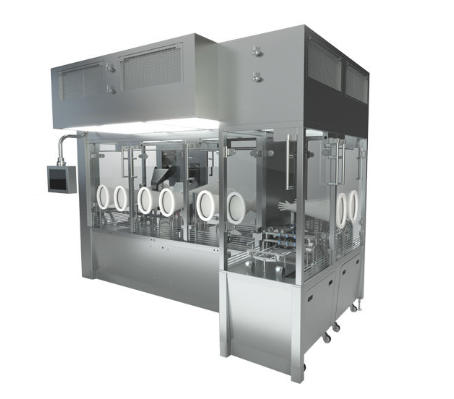
As a China‑based specialist in pharmaceutical filling equipment and turnkey production lines, Ningbo Everheal supports South African and global clients in designing and implementing scalable facilities. [everhealgroup]
Key capabilities that enhance customer outcomes include:
- Integrated plant layout design that combines vial washing, sterilization, filling, stoppering, capping, and inspection into a coherent GMP‑oriented flow. [everhealgroup]
- Supply of liquid, powder, and semi‑solid filling lines, along with water systems and sterilization utilities, ensuring that the entire aseptic chain is consistent. [everhealgroup]
- Experience in delivering turnkey projects from concept and URS definition to commissioning and operator training, which reduces the coordination burden on local teams. [everhealgroup]
For South African buyers, collaborating with a turnkey provider like Ningbo Everheal can complement local suppliers by:
- Filling technology gaps where local equipment options are limited.
- Providing standardized modules that integrate with local conveyors, labellers, or packaging systems.
- Offering global references and design practices that help future‑proof the plant layout and capacity strategy.
Customer Experience Scorecard (Illustrative Framework)
The table below summarizes how buyers can compare partners from a customer experience perspective. It is a framework for internal evaluation rather than a definitive rating.
| Partner Type / Example | Compliance & Validation | Local Service & Parts | Flexibility & Customization | Line Integration Capability | Turnkey Project Strength |
| Pharmateq (process‑oriented supplier) pharmateq.co | High | High | Medium‑High | High | Medium |
| SA Fillers (filling specialist) safillers.co | Medium | High | High | Medium | Low‑Medium |
| IJP Filling & Labelling labelling.co | Medium | High | Medium | High | Low‑Medium |
| Ningbo Everheal (turnkey OEM) everhealgroup | High | Medium (via partners) | Medium‑High | High | Very High |
This type of scorecard helps stakeholders align technical, compliance, and service expectations before vendor shortlisting and formal RFQ processes.
Practical Steps for Choosing a Vial Filling Partner in South Africa
To translate these insights into actionable steps, buyers can follow a structured approach:
1. Clarify your production profile
- Annual volume, batch size, number of SKUs, vial materials, and fill volumes should be quantified as part of the URS. [yundufillingmachine]
2. Define compliance and validation expectations
- Required standards, SAHPRA considerations, documentation level, and audit history need to be communicated clearly to suppliers. [operonstrategist]
3. Assess automation and integration needs
- Decide whether you need a stand‑alone machine or a fully integrated line, and how the new equipment will interact with existing washing, sterilization, and packaging assets. [pharmateq.co]
4. Evaluate service and lifecycle support
- Confirm presence of local technicians, spare parts strategy, training plans, and service SLAs, including response time commitments. [labelling.co]
5. Consider the case for a turnkey solution
- For greenfield or major expansion projects, involving a turnkey engineering partner early often reduces redesign, rework, and timeline risk. [everhealgroup]
Digitalization and Data Integrity in Vial Filling Lines
A growing number of South African and global plants are demanding digitalized filling lines to support data integrity, traceability, and process intelligence. This requirement extends beyond basic control hardware. [grandpackmachine]
Critical digital capabilities now include:
- Batch data capture and electronic audit trails for every critical event on the line.
- Integration with MES/ERP systems to synchronize production orders and material usage.
- Real‑time performance monitoring for engineering teams, enabling data‑driven maintenance decisions.
Partners like Ningbo Everheal and other advanced OEMs increasingly design filling lines with data integrity and connectivity in mind, helping clients align with contemporary data governance expectations in regulated markets. [everhealgroup]
Case‑Type Scenario: Upgrading from Semi‑Automatic to Fully Automatic Filling
Consider a mid‑size injectable plant in South Africa operating semi‑automatic vial filling and manual stoppering. Typical challenges include:
- High operator load and inconsistency across shifts.
- Bottlenecks during peak production periods.
- Difficulty in maintaining aseptic conditions due to manual interventions. [insights.made-in-china]
By moving to a fully automatic rotary aseptic vial filling line supplied by an international OEM and integrated through a local partner, such plants often report:
- Significant improvement in line speed and throughput.
- Reduced operator exposure and lower contamination risk.
- More predictable maintenance schedules and easier validation cycles. [yundufillingmachine]
A turnkey partner like Ningbo Everheal can support this transition by redesigning the layout, connecting sterilization, filling, and inspection, and ensuring utilities are correctly specified and installed. [everhealgroup]
Common Mistakes to Avoid When Buying Vial Filling Machines
Even experienced teams can fall into avoidable traps when purchasing vial filling equipment:
- Under‑specifying future capacity
Selecting a system that fits only current volume, leaving no margin for growth or market expansion.
- Ignoring container variability
Not testing enough vial formats, stoppers, and caps during FAT and SAT can create unforeseen issues after installation. [grandpackmachine]
- Overlooking cleaning and changeover complexity
Choosing designs that are hard to clean or reconfigure increases downtime and operating costs.
- Treating filling as an isolated island
Failing to consider line balance with washing, sterilization, labelling, and packaging leads to bottlenecks and inefficient resource use.
By systematically addressing these points up front, buyers can reduce total project risk and improve lifecycle ROI.
Strong Call‑to‑Action for B2B Buyers
If you are planning to upgrade or build a vial filling line in South Africa or other emerging markets, it is worth combining the strengths of local specialists with a global turnkey partner. A company like Ningbo Everheal Medical Equipment Co., Ltd. can help you:
- Design a GMP‑oriented plant layout that integrates vial filling, sterilization, inspection, and utilities.
- Select the right vial filling technology for your product mix, regulatory profile, and growth plans.
- Implement a turnkey production line that reduces project risk, standardizes documentation, and accelerates time‑to‑market. [everhealgroup]
An effective first step is to formalize your URS, map current and future capacity needs, and then invite shortlisted partners—including local suppliers and Everheal—to propose tailored technical and commercial solutions.
Contact us to get more information!
FAQ
1. What is the most important factor when choosing a vial filling machine in South Africa?
The most important factor is fit for your specific process—including product type, volume, compliance requirements, and service expectations—rather than brand alone. [insights.made-in-china]
2. Are local South African suppliers enough, or do I need international OEMs?
Many plants successfully combine local suppliers for service and line integration with international OEMs for high‑end vial filling or aseptic technologies, achieving a balance of performance and support. [pharmateq.co]
3. How does Ningbo Everheal support South African projects from China?
Ningbo Everheal delivers turnkey engineering, filling equipment, and layout design, and typically collaborates with local or regional partners for on‑site installation, training, and after‑sales service. [everhealgroup]
4. What role does digitalization play in modern vial filling lines?
Digitalization supports data integrity, traceability, and performance monitoring, making it easier to satisfy regulatory expectations and run continuous improvement programs across the line lifecycle. [yundufillingmachine]
5. How can I reduce the risk of project delays during a filling line upgrade?
Engage an experienced turnkey partner early, define URS clearly, validate your capacity assumptions, and ensure that line integration and utilities are considered from day one in the design. [grandpackmachine]
References
1. SA Fillers – Filling Machines in South Africa. https://www.safillers.co.za [safillers.co]
2. How to Pick the Best Filling System for Your Vial Filling Line – Insights. https://insights.made-in-china.com/How-to-Pick-the-Best-Filling-System-for-Your-Vial-Filling-Line_DaUtBMbjbJiX.html [insights.made-in-china]
3. Customized Pharmaceutical Filling Equipment – Ningbo Everheal Medical Equipment Co., Ltd. https://www.everhealgroup.com/pharmaceutical-filling-equipment.html [everhealgroup]
4. Top Pharmaceutical Equipment Manufacturers and Suppliers in South Africa – Everheal. https://www.everhealgroup.com/top-pharmaceutical-equipment-manufacturers-and-suppliers-in-south-africa.html [everhealgroup]
5. Ultimate Guide to Vial and Ampoule Filling Machine Selection. https://grandpackmachine.com/vial-and-ampoule-filling-machine-selection/ [grandpackmachine]
6. Customized Pharmaceutical Production Line – Ningbo Everheal Medical Equipment Co., Ltd. https://www.everhealgroup.com/pharmaceutical-production-line.html [everhealgroup]
7. Pharmateq – Pharmaceutical Machines South Africa. https://www.pharmateq.co.za [pharmateq.co]
8. A Detailed Guide to Vial Filling Machine Types: From Principles to Selection. https://yundufillingmachine.com/a-detailed-guide-to-vial-filling-machine-types-from-principles-to-selection/ [yundufillingmachine]
9. Everheal Group – Corporate Site. https://www.everhealgroup.com [everhealgroup]
10. IJP Filling & Labelling – Industrial Filling, Capping, Labelling and Conveyors. https://www.labelling.co.za [labelling.co]
11. South African Health Products Regulatory Authority – Classification of Medical Devices and IVDs. https://www.sahpra.org.za/wp-content/uploads/2020/01/Classification_Medical_Devices_IVDs_Nov19_v2.pdf [sahpra.org]
12. How to Register Medical Devices in South Africa. https://operonstrategist.com/en-za/how-to-register-medical-devices-in-south-africa/ [operonstrategist]


