Ampoule filling lines play a critical role in sterile pharmaceutical manufacturing, where accuracy, contamination control, and production consistency are non-negotiable. For injectable drugs and other sensitive formulations, understanding the working principle of ampoule filling lines and the key features of modern ampoule filling equipment helps manufacturers make better decisions on plant layout, line selection, and compliance strategy.
Why Ampoule Filling Lines Matter in Pharmaceutical Production
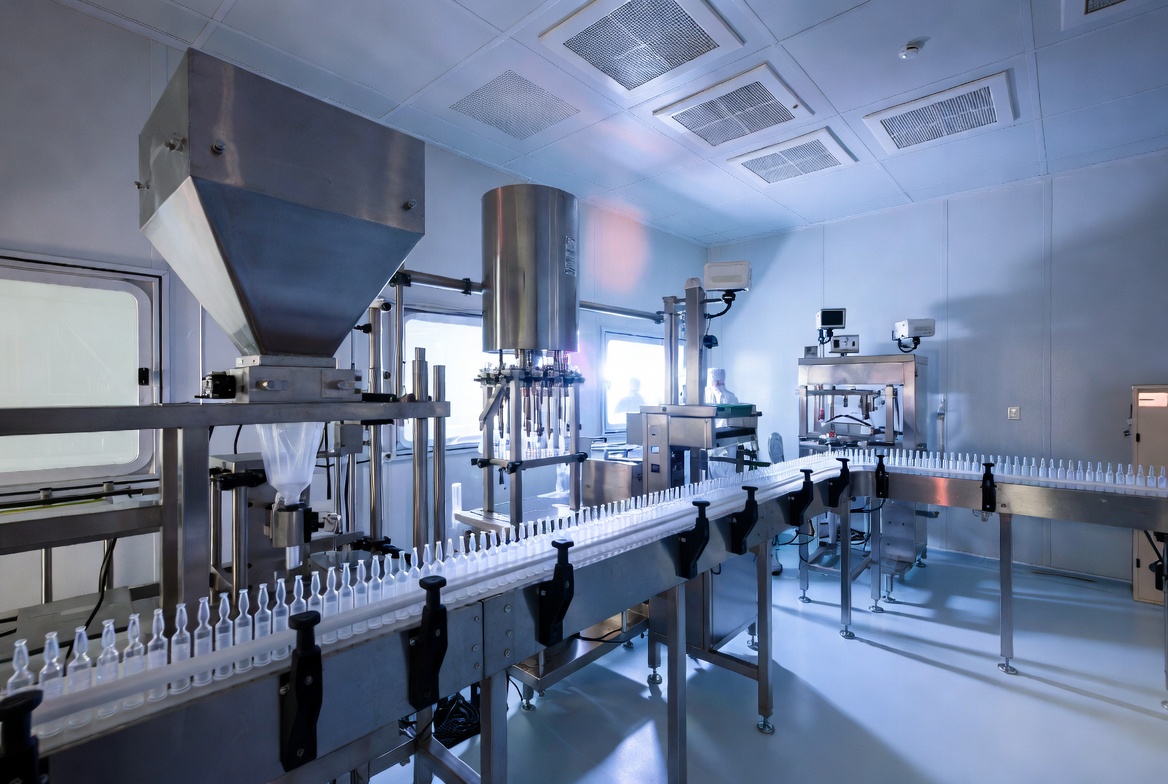
Ampoules remain one of the most trusted packaging formats for sterile, single-dose medicines because they provide strong protection against moisture, oxygen, and contamination. In practice, an ampoule filling line is not just a machine; it is a complete process solution that connects washing, sterilization, filling, sealing, inspection, and downstream handling.
From an engineering perspective, the value of this equipment lies in its ability to deliver repeatable fill volumes, stable sealing quality, and high process integrity. For pharmaceutical plants, especially those producing injectables, the line must also support regulatory expectations, cleanroom discipline, and efficient changeover.
What Is the Working Principle of an Ampoule Filling Line?
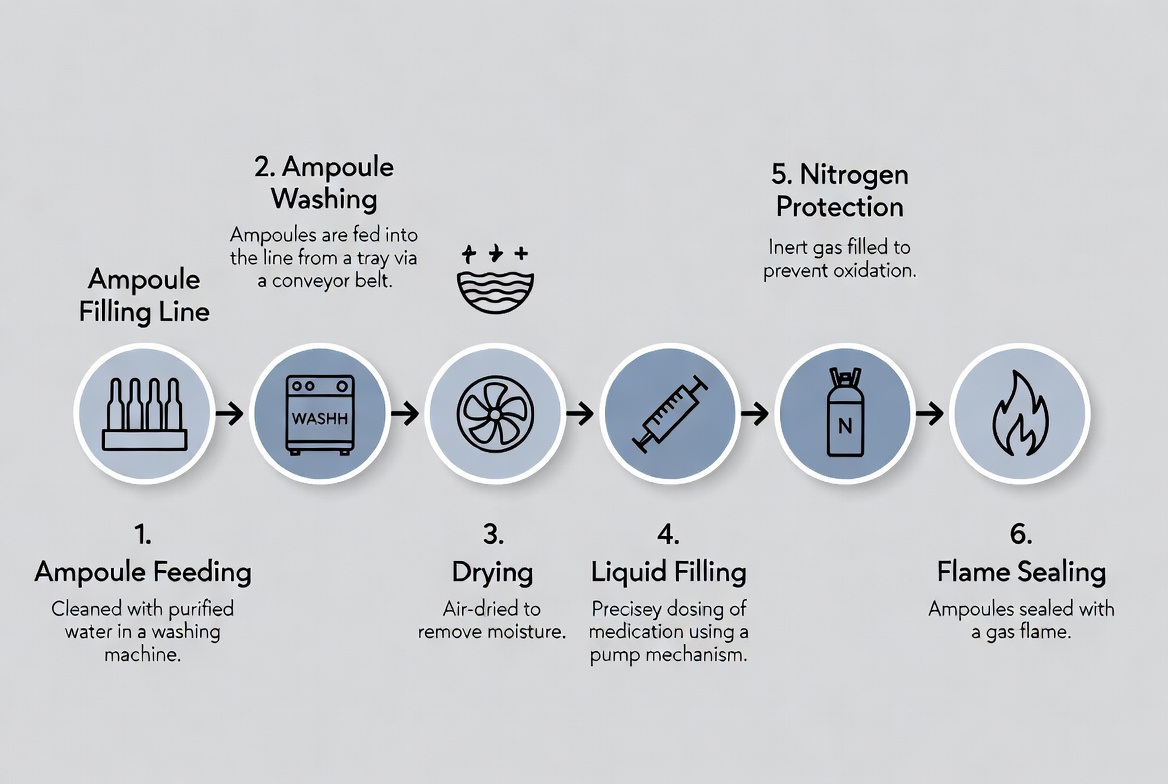
The working principle of an ampoule filling line is based on a controlled sequence of feeding, sterilizing, filling, gas flushing, sealing, and discharge. According to industry descriptions, ampoules are typically transferred along a slant or conveyor-based travel path, which helps stabilize movement and support accurate positioning during filling and sealing. [lodhapharma]
A typical process flow is:
1. Ampoule feeding
Ampoules are loaded into the infeed system or tray loader and delivered to the line in a controlled manner. [intertechglobal]
2. Sterilization and preparation
Depending on the configuration, ampoules may pass through washing, hot air sterilization, or a sterilization tunnel before filling. [parthec]
3. Precise filling
A dosing needle, pump, or volumetric mechanism dispenses the target liquid into each ampoule with high accuracy. [iven-pharma]
4. Pre-gassing and post-gassing
Nitrogen or another inert gas may be used before or after filling to reduce oxidation and protect sensitive products. [adinath.co]
5. Sealing
The neck of the ampoule is sealed immediately after filling, typically by heat or flame-based sealing methods, to preserve sterility and product integrity. [iven-pharma]
6. Collection and inspection
Finished ampoules are discharged to collection trays or downstream inspection systems for further quality checks. [lodhapharma]
Core Features of Modern Ampoule Filling Lines
Today's ampoule filling lines are designed to serve both performance and compliance requirements. In the market, common features include compact machine structure, stainless-steel construction, easy-clean access, and integrated control systems. [parthec]
1. High dosing accuracy
Precision is one of the most important performance indicators. A well-designed ampoule filling line reduces underfill, overfill, and batch variation by using stable dosing mechanisms and synchronized motion control. [iven-pharma]
2. Strong sterility protection
Sterile processing is essential for injectable products. Modern lines are often designed with laminar airflow, sterilization modules, and contamination-reduction features that help maintain product safety throughout the process. [iven-pharma]
3. Compact footprint
Many pharmaceutical factories need to maximize usable cleanroom space. Compact line design helps manufacturers integrate ampoule filling into existing facilities without excessive floor expansion. [lodhapharma]
4. Easy cleaning and maintenance
Maintenance efficiency matters as much as output. Stainless-steel frames, smooth surfaces, and large access openings support cleaning, inspection, and maintenance, which can reduce downtime and help sustain GMP discipline. [lodhapharma]
5. Flexible configuration
Ampoule filling lines can be configured for different output levels, different ampoule sizes, and different production scenarios. This flexibility is especially useful for plants making multiple injectable products or planning future capacity upgrades. [parthec]
Ampoule Filling Line vs. Other Filling Systems
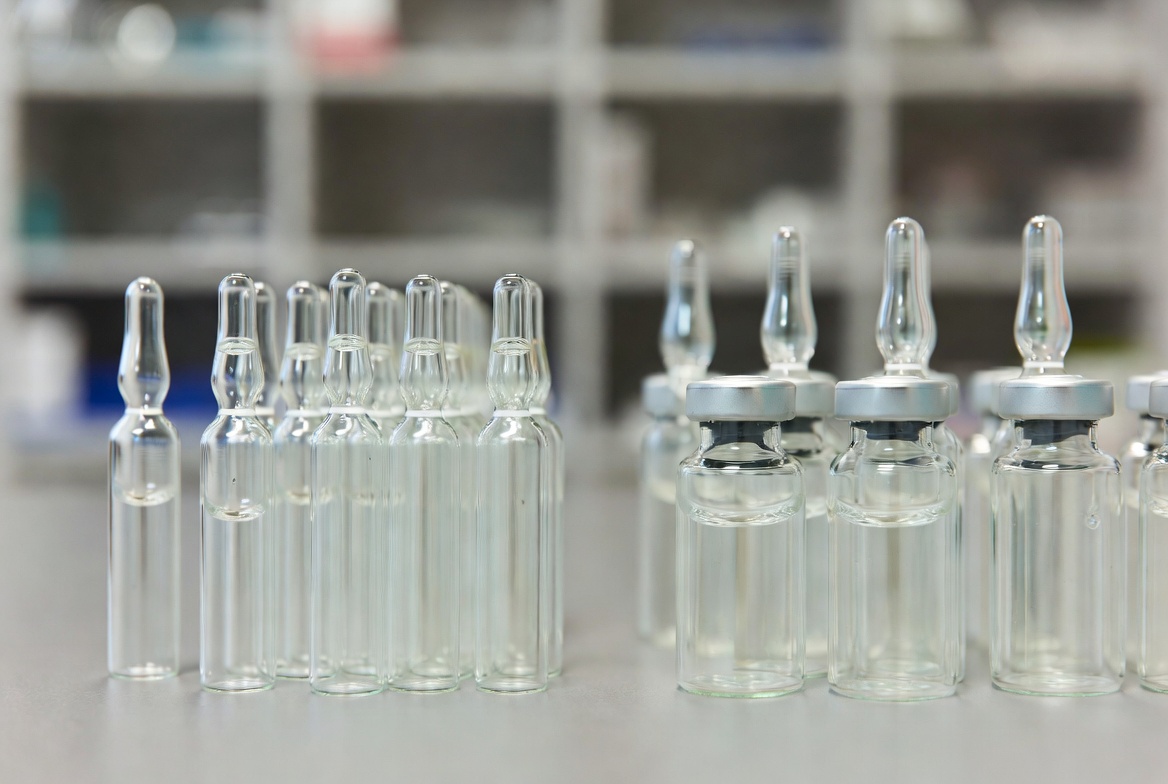
Although ampoule filling lines share some principles with vial and cartridge filling equipment, they serve distinct packaging and sealing requirements. Ampoules require more direct sealing control because the container is typically flame-sealed after filling, while vials often rely on rubber stoppers and crimp caps.
| Factor | Ampoule Filling Line | Vial Filling Line |
| Container type | Sealed glass ampoules | Glass vials with stopper/cap |
| Sealing method | Flame or heat sealing | Stoppering and crimping |
| Product use | Single-dose sterile injectables | Multi-dose or single-dose injectables |
| Sterility focus | Very high | Very high |
| Typical advantage | Excellent protection and shelf stability | Easier reseal or secondary closure |
For manufacturers choosing between these systems, the decision should depend on drug formulation, shelf-life needs, packaging strategy, and regulatory pathway.
Where Ampoule Filling Lines Create the Most Value
Ampoule filling lines are especially valuable in the production of injectables, biologically sensitive liquids, emergency medicines, anesthetics, vaccines, and specialty formulations. They are also suitable for products where oxygen exposure, evaporation, or microbial risk must be minimized.
In our view as a pharmaceutical equipment manufacturer, the strongest business value comes from linking the filling line to the broader plant design. A good ampoule line should not be selected in isolation. It should be matched with upstream water systems, sterilization equipment, cleanroom zoning, and downstream packaging logic.
New Insight: How to Evaluate an Ampoule Filling Line Before Purchase
A common mistake is to compare only speed and price. In reality, the best procurement decision comes from evaluating the line as a process system, not a standalone machine.
Use this checklist:
- Product compatibility: Does the line support your ampoule size, dosage range, and formulation type?
- Dose repeatability: Can the dosing system maintain stable fill accuracy across long runs?
- Sterility design: Does the line support the cleanroom grade and contamination control level you need?
- Changeover efficiency: How quickly can operators switch formats or batch sizes?
- Validation readiness: Is the line designed to support IQ/OQ/PQ and documentation requirements?
- Maintenance access: Can technicians clean, inspect, and service the machine easily?
- Integration potential: Can the line connect with washing, sterilization, inspection, and packing equipment?
This approach helps buyers avoid hidden costs, production interruptions, and validation delays.
Practical Operating Steps for Better Performance
To improve real-world line stability, pharmaceutical manufacturers should follow a disciplined operating model.
1. Verify incoming ampoule quality before loading.
2. Confirm cleaning and sterilization parameters before each batch.
3. Check needle alignment and dosing calibration at startup.
4. Monitor sealing temperature or flame conditions continuously.
5. Inspect the first samples before full-speed production.
6. Track rejection patterns to detect drift, blockage, or seal defects.
7. Document all settings for repeatable batch execution.
These steps may seem basic, but they often determine whether a line performs well in daily production or becomes a constant troubleshooting burden.
Industry Trend: Smarter and More Integrated Filling Lines
The market is moving toward smarter automation, tighter process monitoring, and stronger integration with clean utility systems. Publications on related sterile filling equipment show continued emphasis on automation, precision dosing, and contamination control. Broader fill-finish market growth also signals ongoing demand for production capacity and compliant automation in pharmaceutical manufacturing. [morganreedinsights]
For manufacturers, this means future ampoule filling lines will increasingly be expected to support:
- Digital parameter monitoring.
- Faster batch changeover.
- Better traceability.
- Cleaner machine design.
- Easier integration with plant-wide layout planning.
This is where a manufacturer like Ningbo Everheal Medical Equipment Co., LTD. can add value by providing not only equipment, but also factory layout planning and production line construction solutions.
Conclusion and CTA
For pharmaceutical manufacturers, an ampoule filling line is a strategic investment in product safety, process efficiency, and regulatory reliability. The best results come from selecting equipment that fits the product, the factory layout, and the long-term production roadmap.
If you are planning a new plant or upgrading an existing injectable production facility, the next step is to evaluate the line together with your cleanroom flow, purified water system, sterilization setup, and downstream packaging plan. A properly engineered solution will reduce risk and improve long-term output.
CTA: Contact Ningbo Everheal Medical Equipment Co., LTD. to discuss a customized ampoule filling line and complete pharmaceutical production layout solution.
FAQ
1. What is an ampoule filling line?
An ampoule filling line is a pharmaceutical production system used to wash, sterilize, fill, seal, and collect ampoules for injectable or sensitive medicines. [iven-pharma]
2. Why is sterility so important in ampoule filling?
Ampoules are often used for sterile medicines, so any contamination risk can affect product safety, shelf life, and compliance. [parthec]
3. How does an ampoule filling line ensure accurate dosing?
It uses controlled filling mechanisms, synchronized movement, and calibration systems to dispense a precise volume into each ampoule. [iven-pharma]
4. What is the main difference between ampoule and vial filling lines?
Ampoule lines usually end with flame or heat sealing, while vial lines typically use stoppering and crimping. [intertechglobal]
5. Can ampoule filling lines be integrated into existing production plants?
Yes. Many ampoule filling lines are designed to integrate with existing machinery and can be adapted for line upgrades or factory expansion. [lodhapharma]
References
1. Lodha Pharma. "Filling Principle & Features of Ampoule Filling Lines."
[https://www.lodhapharma.com/filling-principle-and-features-of-ampoule-filling-lines.php] [lodhapharma]
2. Parthec. "Ampoule Filling Line - An Overview."
[https://www.parthec.com/blogs/ampoule-filling-line-an-overview] [parthec]
3. Iven Pharma. "What Is the Working Principle of Ampoule Filling Production Line?"
[https://www.iven-pharma.com/news/what-is-the-working-principle-of-ampoule-filling-production-line/] [iven-pharma]
4. Intertech Global. "Ampoule washing, sterilization, filling & sealing line."
[https://www.intertechglobal.com/Ampoule_washing,sterilization,filling,sealing_line.html] [intertechglobal]
5. Adinath. "Ampoule Filling & Sealing Machine Working Principle."
[https://www.adinath.co.in/ampoule-filling-sealing-machine-working-principle/] [adinath.co]
6. Iven Pharma. "News - What is the principle of ampoule filling machine?"
[https://www.iven-pharma.com/news/what-is-the-principle-of-ampoule-filling-machine/] [iven-pharma]
7. Morgan Reed Insights. "Fill-Finish Pharmaceutical Contract Manufacturing."
[https://www.morganreedinsights.com/fill-finish-pharmaceutical-contract-manufacturing-market/] [morganreedinsights]


