On sterile bottle capping lines, laser coding usually wins on long-term durability, while thermal transfer printing often wins on flexibility and label quality. For pharmaceutical manufacturers, the right choice depends on whether you prioritize permanent traceability, line speed, substrate compatibility, validation effort, and total cost of ownership. The article below is written for sterile bottling, cap-level traceability, and high-compliance pharma operations, including large-scale GMP production environments such as purified water systems, sterile formulation, and aseptic packaging lines. [centec]
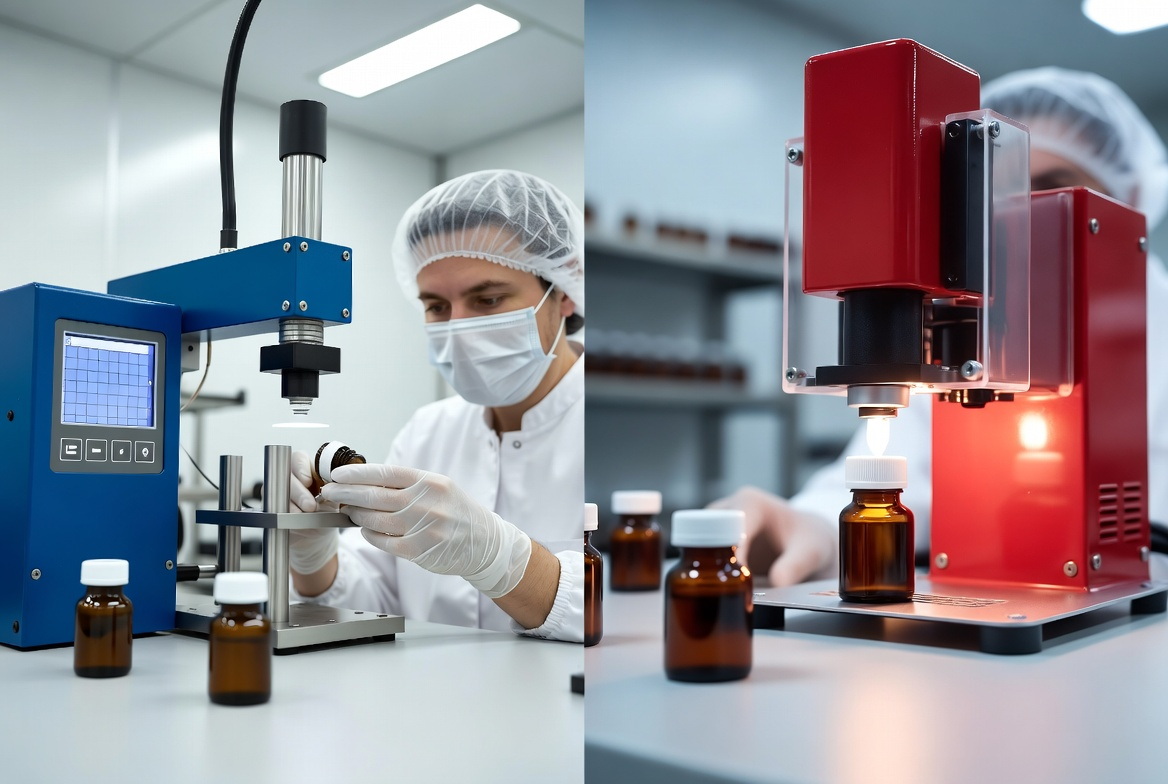
Why coding durability matters
Sterile bottle capping lines are not ordinary packaging lines. The code must survive handling, transport, friction, humidity, alcohol wipe-downs, and sometimes downstream sterilization-related stress without losing readability. In pharmaceutical manufacturing, poor code retention can create inspection failures, rework, batch release delays, and traceability risk, especially when serialization and machine-readable data are involved. [videojet]
In practice, durability is not just "does the mark stay visible." It also includes contrast retention, scanner readability, resistance to abrasion, and performance after exposure to moisture or condensation. On high-speed lines, the code must stay consistent even when production runs continuously and machine vision systems are checking every unit.
Laser coding overview
Laser coding creates the mark directly on the bottle, cap, or a laser-reactive coating by using focused energy rather than consumables. That makes it highly attractive for permanent traceability on pharma lines, because there is no ribbon, ink, or solvent to fade, dry, smudge, or run off. For bottle systems that require a durable mark and low consumable dependency, laser is often the stronger technical choice. [canadianpackaging]
From an engineering perspective, laser coding is especially useful when a manufacturer wants to reduce maintenance touchpoints and eliminate ribbon changeovers. It also supports clean production strategies because there is no wet ink near a sterile or sensitive packaging zone. The tradeoff is that laser success depends heavily on the container material, the cap color, the coating, and the exact mark area.
Thermal transfer printing overview
Thermal transfer printing uses a ribbon to transfer pigment onto a label or packaging film. It is widely used in pharmaceutical packaging because it can produce high-resolution text, barcodes, and 2D codes with strong visual clarity. In bottle capping lines, it is usually applied to labels, sleeves, or pre-printed packaging components rather than directly onto the cap itself. [domino-printing]
Thermal transfer is often chosen when the packaging substrate is label-based, when branding quality matters, or when variable data must be printed with excellent legibility on flexible materials. The downside is that the print's durability depends on ribbon quality, label material, adhesion, and environmental exposure. If the label surface is scratched or the adhesive fails, the code can become unreadable even if the print itself was initially perfect.
Durability comparison
The best way to compare the two technologies is to separate mark permanence from system robustness. Laser usually offers higher permanence because the mark is physically altered into the surface or coating, while thermal transfer printing depends on the integrity of the transferred image and the label structure. [domino-printing]
| Factor | Laser coding | Thermal transfer printing |
| Direct mark permanence | Very high | Medium to high, depending on label durability |
| Resistance to smudging | Excellent | Good, but depends on substrate and handling |
| Resistance to abrasion | Usually stronger | Can degrade if label surface wears |
| Consumables | None for marking | Ribbon required |
| Best use case | Direct marking on bottle/cap or coated surfaces | Labels, sleeves, flexible pack components |
| Visual print quality | Good to excellent, substrate-dependent | Excellent for text and barcodes |
| Maintenance burden | Lower consumable-related maintenance | Higher due to ribbon and wear parts |
For a sterile bottle capping line, the most important durability question is this: Will the code still scan after the bottle has moved through real production and distribution conditions? On that question, laser often has an edge because the mark is integral to the package rather than sitting on top of it.
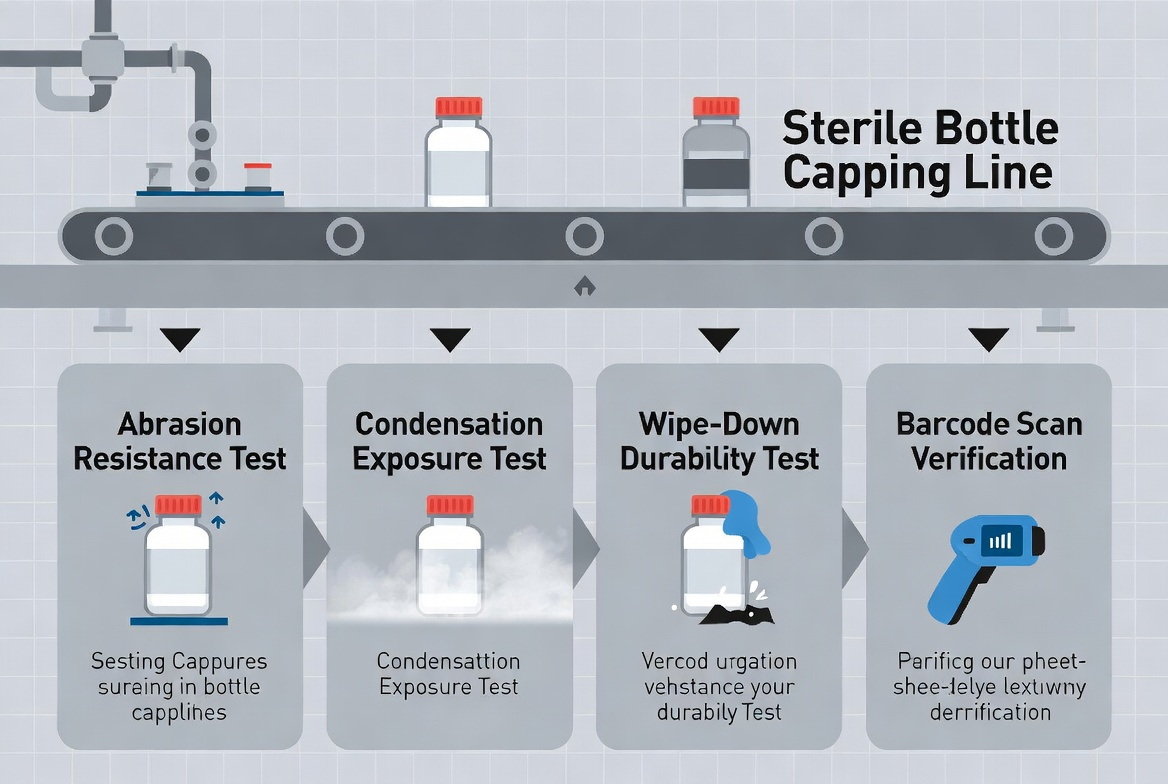
Which survives sterile handling
Sterile handling creates a harsh code environment. Bottles may pass through downstream conveyors, wiping stations, cartoning, storage, and shipping, while being exposed to condensation, light abrasion, and human contact. Laser-coded marks are typically more resistant to those stresses because they are not dependent on an ink film or ribbon transfer layer. [domino-printing]
Thermal transfer can still perform well if the code is printed on a high-quality pharmaceutical label with a matched ribbon and a properly engineered adhesive system. However, if the line includes alcohol wiping, cold-chain condensation, or frequent friction, the label surface becomes the weak point. That is why thermal transfer is often better for controlled label workflows than for direct, permanent bottle/cap marking.
Operational and compliance impact
In regulated pharmaceutical environments, marking technology must support traceability, readability, and validation. Industry solution providers emphasize serialization-ready systems, automated vision inspection, and compliance support packages for pharma packaging lines. That matters because a durable code is only useful if it can be validated and inspected consistently. [videojet]
Laser can reduce consumable-related variance, which can simplify some operational controls. Thermal transfer can be easier to integrate when the package design already uses labels, but it introduces ribbon management and printhead maintenance. In a sterile line, those differences affect uptime, validation effort, and the frequency of operator intervention.
Expert selection framework
A practical way to choose is to start with the packaging architecture, then work backward from durability requirements.
1. Choose laser coding if:
- You need a permanent mark on the bottle or cap.
- You want fewer consumables and less line interruption.
- The surface is laser-compatible or can accept a laser-reactive coating.
- Durability and traceability are more important than decorative print quality.
2. Choose thermal transfer printing if:
- Your code is on a label, shrink sleeve, or flexible substrate.
- You need very sharp human-readable text and barcodes.
- The package design already supports ribbon-based printing.
- You can control label adhesion and surface wear.
In our experience supporting pharmaceutical line design, the best answer is often not "which technology is better," but which one matches the actual risk profile of the line. A line designed for sterile liquids, cap integrity, and high-throughput traceability may favor laser on the final package, while a secondary label or outer pack may still use thermal transfer.
Latest industry practice
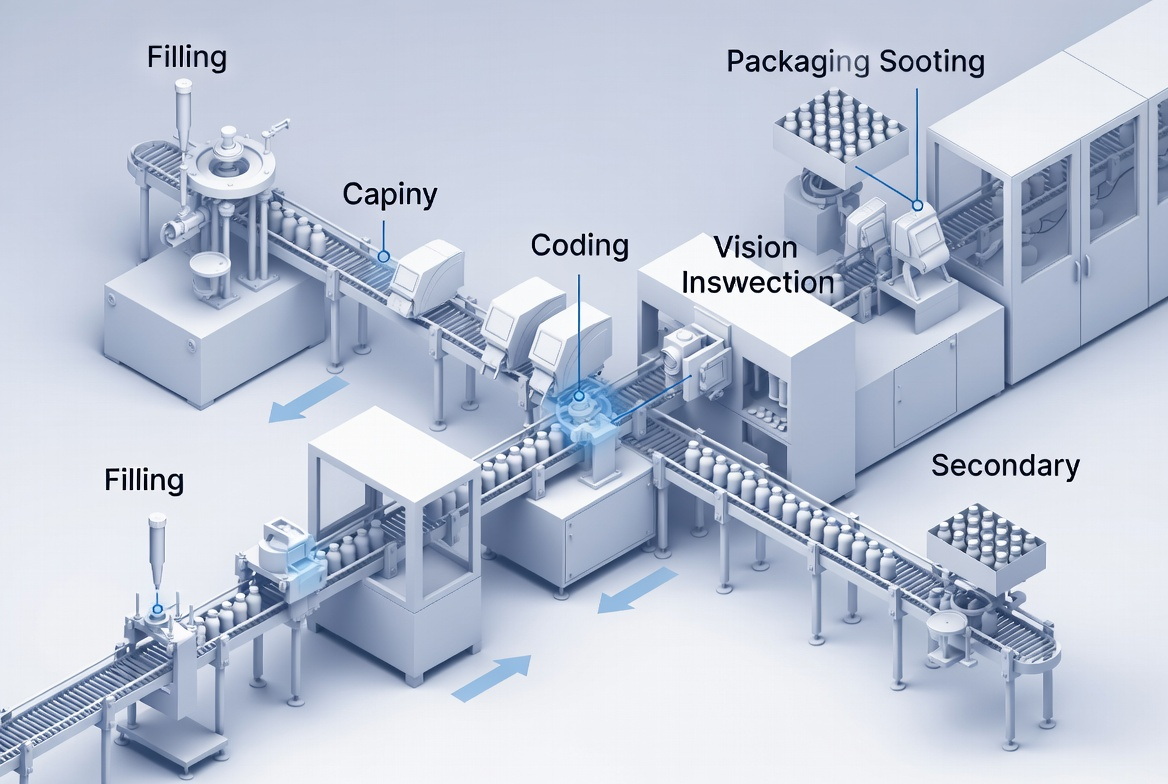
Current pharmaceutical packaging projects increasingly combine laser for permanence with vision inspection for verification and thermal transfer for label-level flexibility. This hybrid strategy reduces operational risk because each technology is used where it performs best. It is also aligned with modern pharma production goals: lower waste, fewer stoppages, and stronger traceability. [canadianpackaging]
For companies designing complete pharmaceutical plants, this coding decision should be considered together with CIP/SIP planning, bottle handling, sterile room layout, and validation routes. As a manufacturer of purified water systems, sterilization cabinets, and pharmaceutical solution preparation systems, Ningbo Everheal can position this as part of a wider sterile manufacturing workflow rather than a standalone coding choice. [centec]
Practical implementation steps
A robust implementation plan should include both technical trials and compliance checks.
1. Define the package surface: bottle body, cap top, cap side, or label.
2. Test code readability after abrasion, wipe-down, and condensation.
3. Verify scanner performance with your actual vision system.
4. Confirm how the code behaves at full line speed.
5. Evaluate maintenance and consumables over a 12-month operating model.
6. Validate the final setup under pharma documentation and quality controls.
This step-by-step approach prevents a common mistake: choosing a printer by brochure specs instead of by actual line stress. For sterile bottling, the real test is not print quality on day one, but code integrity after the product has passed through the complete manufacturing chain.
Closing recommendation
If your priority is durability on sterile bottle capping lines, laser coding is usually the stronger choice because it offers a more permanent and maintenance-light mark. If your priority is label quality, flexible substrate handling, and high-resolution printed data, thermal transfer printing remains a very solid option. The most effective decision comes from matching the technology to the actual bottle surface, sterile environment, and validation target of your line. [domino-printing]
CTA: If you are planning a new sterile bottling project, request a coding feasibility review alongside your line layout and validation plan so the marking system is designed into the process from day one.
FAQ
1. Is laser coding always better than thermal transfer printing?
No. Laser is usually better for permanent durability, but thermal transfer can be better for label-based packaging and high-quality printed graphics. [domino-printing]
2. Can thermal transfer printing work on sterile bottle caps directly?
Usually not as well as on labels or flexible materials. Thermal transfer is mainly a ribbon-based print method, so it performs best on packaging surfaces designed for label printing. [domino-printing]
3. Why is laser coding considered more durable?
Because it creates a direct mark on the surface or coating instead of depositing an ink layer that can wear, smear, or peel. [domino-printing]
4. Which technology is easier to maintain on a busy pharma line?
Laser often has lower consumable-related maintenance, while thermal transfer needs ribbon management and printhead care. [canadianpackaging]
5. What should pharma manufacturers test before choosing a coder?
They should test abrasion resistance, condensation exposure, scanability, line-speed stability, and validation compatibility under real operating conditions.
References
1. Syntegon China, "Pure media and formulation systems." [https://www.syntegon.com.cn/solution-finder/pharma/pure-media-and-formulation-systems/] [syntegon.com]
2. Syntegon China, "Drug product formulation systems." [https://www.syntegon.com.cn/solutions/pharma/drug-product-formulation-systems/] [syntegon.com]
3. Centec GmbH, "PW generator for pharmaceutical purified water." [https://www.centec.de/zh/product-page/pw-erzeuger] [centec]
4. Videojet, "Pharmaceutical serialization - Bottling serialisation." [https://www.videojet.com/us/homepage/industry-solutions/pharmaceutical-and-medical-devices.html] [videojet]
5. Domino Printing Sciences, "Serialization: choosing the correct coding technology." [https://www.domino-printing.com/en-in/blog/2017/pharma-label-serialization] [domino-printing]
6. Canadian Packaging, "Domino Delivers: High-Speed Serialization Solution for Pharma Packaging Line." [https://www.canadianpackaging.com/packpress/domino-delivers-high-speed-serialization-solution-for-pharma-packaging-line/] [canadianpackaging]
7. Domino Printing North America, "Printing on Blister Packs." [https://www.domino-printing.com/en-ca/industries/life-sciences/blister-packs/printing-on-blister-packs] [domino-printing]


