The Stakes of Bio-Containment Adaptability
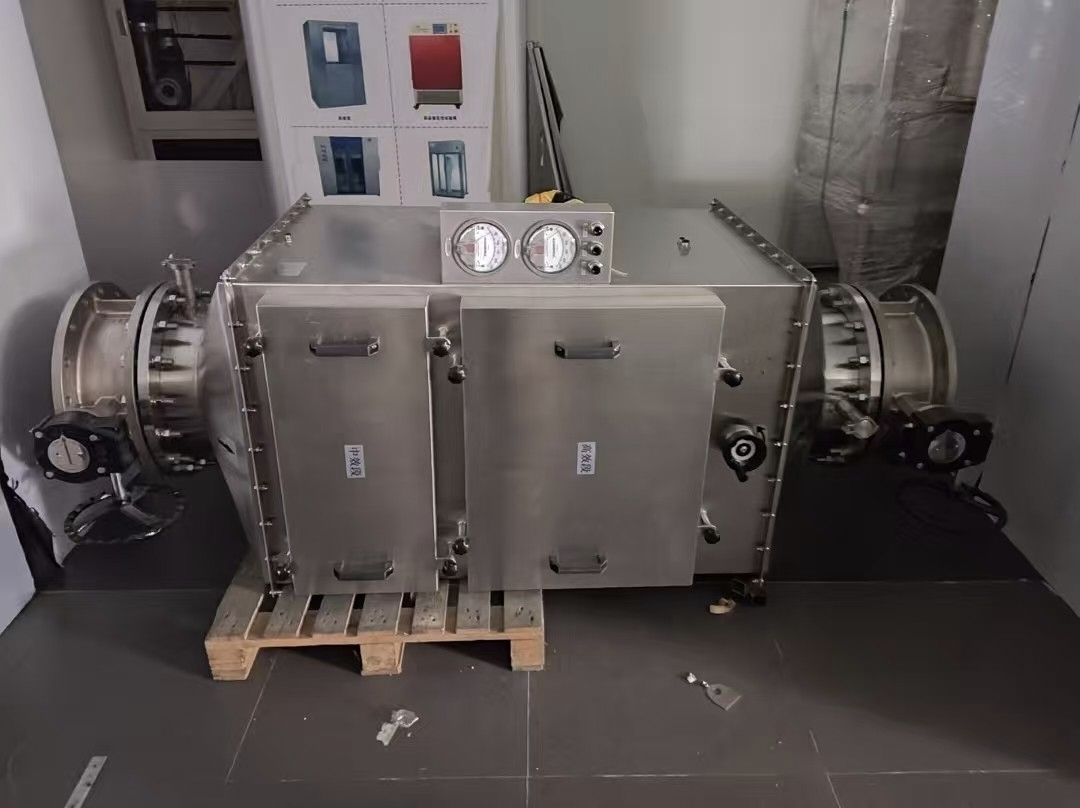
In high-containment pharmaceutical production, environmental health and safety (EHS) parameters are absolutely rigid. When designing a containment system for anticancer drugs preparation or toxic active pharmaceutical ingredient (API) handling, the air filtration network is the final line of defense separating hazardous aerosolized compounds from operators and the external environment. A core technology supporting this containment is the Bag-In-Bag-Out system (BIBO system), which allows service technicians to replace contaminated HEPA filters safely without breaching negative pressure dynamics.
During a large-scale project initialization, an international pharmaceutical manufacturer contracted Ningbo Everheal Pharmaceutical Equipment Co., Ltd. to deploy an advanced hazardous exhaust filtration array. The array was designed to sit directly adjacent to their core pharmaceutical solution preparation system and high-speed Blow-Fill-Seal machine (BFS machine) infrastructure. However, late in the technical implementation phase, sudden utility infrastructure limits at the client's site forced an emergency change request. The power framework allocated to the containment HVAC grid was changed from a standard 3-phase (380V/410V) setup to a highly restrictive single-phase (220V) configuration.
This shift presented a major engineering hurdle: single-phase asynchronous motors are notoriously difficult to control precisely using conventional variable frequency drives (VFD), risking stable negative pressure control. Facing project cancellation and significant regulatory delays, the client required a rapid mechanical pivot.
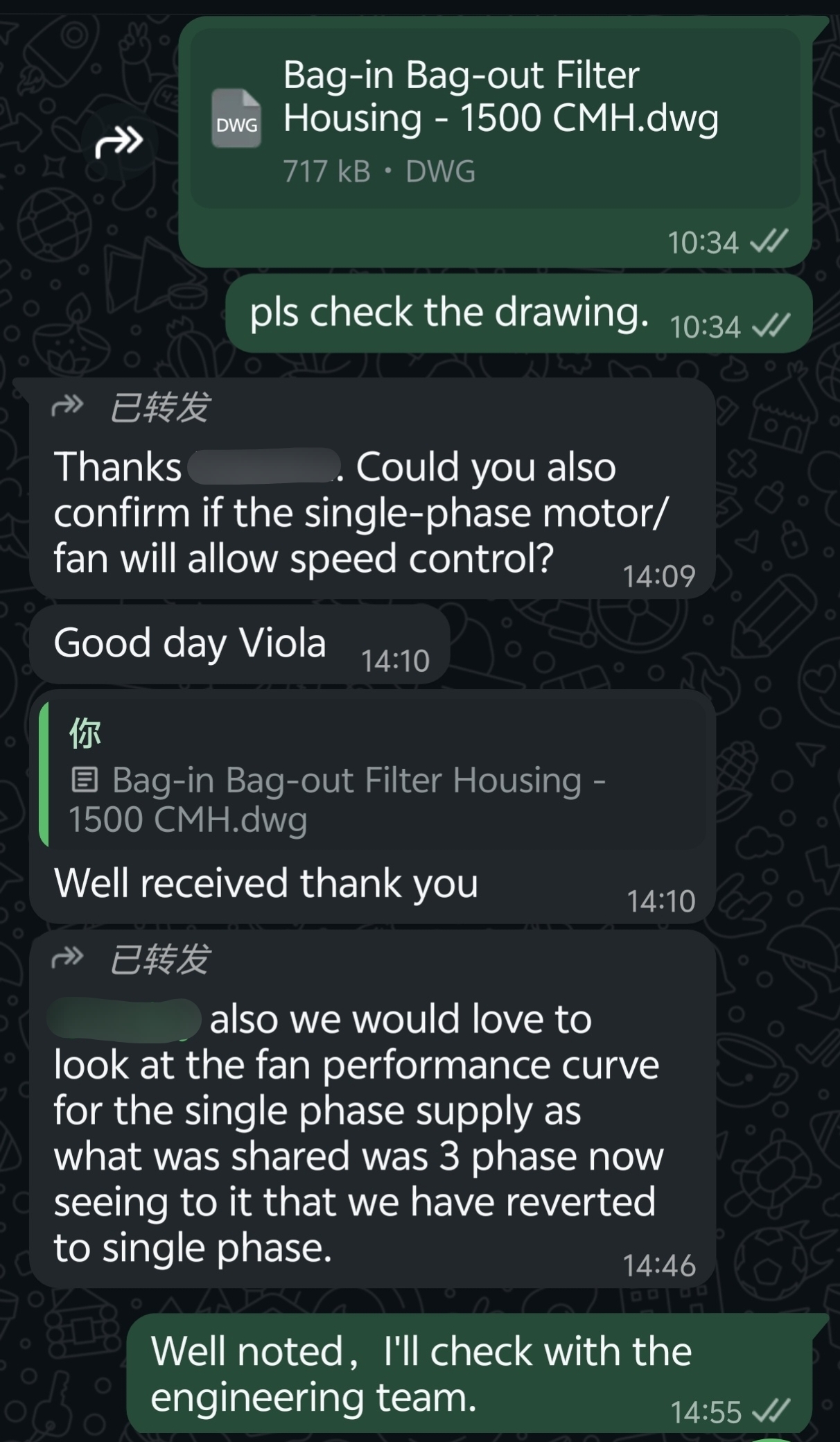
Everheal responded within one hour, mobilizing our HVAC and electrical development specialists. We solved the single phase motor VFD control challenge and performed an immediate fan performance curve recalibration. This fast, data-driven response kept the project completely on track without sacrificing any EHS compliance benchmarks.
1. The Delicate Balance of High-Containment Air Filtration
Modern sterile manufacturing facilities are complex environments governed by strict differential pressure cascades. This complexity is especially pronounced when operating a high-capacity Blow-Fill-Seal machine (BFS machine) alongside a specialized pharmaceutical solution preparation system tailored for toxic compounds. BFS lines continuously extrude thermoplastic granules under high thermal loads, fill containers, and seal them hermetically in a single continuous automated cycle. The high speeds and tight tolerances of these lines require stable cleanroom air management.
When these production suites handle hazardous materials like oncology drugs or cytotoxic substances, standard HVAC recycling is insufficient. The exhaust must pass through a high-containment cleanroom air filtration matrix. The BIBO assembly acts as a key safety asset within this network, isolating contaminated materials within heavy-duty security bags during filter changeouts.
As a highly responsive pharmaceutical equipment manufacturer, Ningbo Everheal focuses on more than static steel fabrication. We design systems that maintain their cGMP validation pathways even when on-site utility conditions shift unexpectedly.
2. The Client’s Critical Pain Points: Single-Phase Limitations and Pressure Flow Deviations
During the transition from facility layout design to mechanical assembly, our client experienced an unexpected power grid failure within their regional sub-station. This issue limited their cleanroom extension block to single-phase power lines instead of the standard industrial 3-phase infrastructure.
The client's engineering team contacted Everheal with significant concerns. In high-containment HVAC design, 3-phase power is standard because it provides uniform rotating magnetic fields. This allows multi-horsepower industrial exhaust fans to maintain constant velocity and torque profiles, which are necessary to preserve strict cleanroom pressure zones (Pcleanroom < Pcorridor).
The Technical Deadlock
The Single-Phase Control Problem: Standard industrial variable frequency drives (VFDs) are built to modulate 3-phase currents. Applying a standard VFD to a traditional single-phase motor often results in motor stalling, severe overheating, and harmonic vibration distortion. This can significantly reduce the service life of high-efficiency backward-curved centrifugal fans.
The Loss of the Fan Performance Curve: Modifying the operational voltage and motor winding configuration alters the baseline fan performance curve. In a BIBO system, the fan must dynamically increase static pressure output as the HEPA filters load over time to maintain a stable volumetric flow rate (Q). Without an updated, verified curve, the client could not validate the system against international cGMP and ISO 14644 cleanroom standards.
The Threat of Project Stagnation: The client faced a costly dilemma: either pause the project to rewire their building's primary substation or find a vendor capable of custom-engineering an advanced single-phase filtration solution.
The client was deeply concerned that this change would force a complete, expensive overhaul of their turnkey pharmaceutical plant layout optimization blueprint.
3. The Everheal One-Hour Turnaround: Rapid Engineering Alignment
When the client sent their emergency notification, our project management team bypassed standard bureaucracy. Within minutes of receiving the email, our senior project lead issued a definitive confirmation to the client, providing reassurance that our engineering team was already addressing the issue.
[On-Site Power Shift: 3-Phase ➔ Single-Phase]
                        ↓ (Minute 0)
[Everheal 1-Hour Rapid Engineering Deployment]
Electrical Engineering ── Aerodynamics Specialists ── Control Systems
                        ↓ (Minute 30)
[Torque Vector Modeling & Curve Recalibration]
                        ↓ (Minute 60)
[Validated Solution: Single-Phase VFD Optimization + New Performance Curve]
To resolve this complex issue without missing critical project milestones, Everheal mobilized an internal rapid response matrix spanning three specialized technical fields:
Power Electronics Engineering: Tasked with evaluating dynamic torque vector modulation strategies for single-phase motor windings.
Aerodynamic Modeling Specialists: Focused on calculating fan wheel behavior under modified torque inputs to update the static pressure profiles.
Automation & PLC Programmers: Dedicated to updating the pressure control loop software to ensure responsive safety tracking.
4. Engineering Solution: Mastering Single-Phase VFD Modulation and Aerodynamic Curves
To safely implement single-phase motor operation within a high-integrity cleanroom HVAC technical modification package, Everheal’s electrical engineers abandoned standard voltage-to-frequency ( V / f ) control methods. Instead, we developed a specialized pulse-width modulation (PWM) torque vectoring profile.
Resolving the Electrical Control Challenge
Traditional single-phase motors rely on auxiliary start capacitors, which cause electrical phase issues when modulated by a standard VFD. Everheal resolved this by using a high-torque, permanent split capacitor (PSC) motor matched with an advanced single-phase input/output vector control inverter.
Our engineers reprogrammed the inverter's internal parameters to supply an adjusted output current shape. This maintained a stable 90° electrical phase separation between the main and auxiliary motor windings across the entire frequency range (20 Hz to 50 Hz). This configuration eliminated harmonic vibration and overheating risks, matching the smooth operation of traditional 3-phase platforms.
Calculating the Recalibrated Fan Performance Curve
Once stable motor operation was achieved, our aerodynamics team recalculated the system's fan performance curves. The physical relationship governing fan behavior across varying velocities ( N ) is guided by standard fluid dynamic affinity laws:
Q 1 / Q 2 = N 1 / N 2 , P 1 / P 2 = ( N 1 / N 2) ⒉, HP 1 / HP 2 = ( N 1 / N 2) ⒊
Because single-phase motor slip characteristics differ from 3-phase profiles under heavy loads, we mapped the precise relationship between Static Pressure ( ΔPs ) and Volumetric Flow Rate ( Q ) to build an accurate operational envelope:
Static Pressure (Pa)
  ▲
  │       / (Dirty Filter Resistance Curve)
  │      /
  │     /    Original 3-Phase Curve
  │____/___________. . . . . . . . .
  │   /  \         :
  │  /    \        :  Recalibrated Single-Phase Curve
  │ /      \───────:───────┐
  │/        \      :       \
  └──────────┴─────:───────┴────────► Volumetric Flow (m³/h)
             Optimal Operating Point
Our engineers ran a simulation tracking fan output from clean filter conditions (150 Pa initial resistance) through fully loaded filter states (450 Pa final replacement threshold). The recalculated curve proved that our optimized single-phase motor delivered the necessary torque to maintain an identical volumetric flow velocity, keeping air change rates stable within the client's oncology processing suite.
5. System Integration: Ensuring Total Isolation on the Production Floor
The updated single-phase Bag-In-Bag-Out system (BIBO system) was designed to integrate directly with the wider facility infrastructure. In modern production environments, containment equipment cannot function as isolated machinery; it must sync continuously with automated packaging systems like the Blow-Fill-Seal machine (BFS machine) line.
Safe Automation Control Loops
Everheal’s automation team updated the system's central control logic to maintain safety metrics:
Continuous Negative Pressure Monitoring: The single-phase VFD was linked to differential pressure transmitters inside the HEPA chamber through a Modbus RTU network. If cleanroom exhaust pressure varies by even ±2 Pa from the setpoint, the VFD automatically adjusts motor speed within milliseconds to restore equilibrium.
Safe Interlocking Logic: The control system was programmed with interlocking safety parameters. If the exhaust system experiences a sudden power loss, an emergency signal is transmitted to the upstream pharmaceutical solution preparation system and BFS filling line, triggering an immediate, safe production pause before containment can be compromised.
Fail-Safe Mechanical Isolation: Fast-acting pneumatic isolation dampers were integrated at both the inlet and outlet ports of the BIBO system. These dampers seal automatically in the event of power loss, isolating hazardous residue safely inside the filtration core.
6. Zero Risk and Proven Project Performance
By leveraging our internal engineering resources, Everheal delivered a completely re-engineered, validated technical solution proposal within one hour of the client's initial alert.
The tangible benefits achieved through this rapid response framework include:
Zero Project Rework: The client avoided costly structural remodeling or power sub-station overhauls, keeping their original building timeline intact.
Validated Regulatory Compliance: The updated fan performance curve provided verifiable documentation that simplified the cleanroom's final EHS and cGMP certification pathways.
Optimized Energy Efficiency: The single-phase vector inverter adjusted power consumption dynamically based on actual filter loading, preventing unnecessary energy draw during early-lifecycle production runs.
Complete Operational Security: The automated control loop maintained continuous negative pressure, ensuring dependable safety during high-potency operations.
Partner Commendation
The Lead EHS Architect for the facility noted our agility during the final compliance review:
"The rapid response from the Everheal team saved this project from significant downtime. Discovering an on-site power mismatch late in a project can easily cause months of delays. Everheal solved the single-phase VFD control challenge and delivered a verified fan performance curve in an hour, providing excellent safety assurance for our production team."
7. Engineering Agility Tailored for High-Stakes Pharmaceutical Manufacturing
In high-purity pharmaceutical infrastructure, project success depends on finding a supplier that can adapt fluidly to unpredictable field conditions.
At Ningbo Everheal Pharmaceutical Equipment Co., Ltd., we combine manufacturing precision with adaptable engineering capabilities. Whether optimizing a complex pharmaceutical solution preparation system, installing high-efficiency BFS equipment, or customizing advanced air containment systems under difficult utility limitations, our team engineers solutions that protect your investments. Contact Everheal today to discover how our responsive engineering can secure your next production asset.
Technical Change Comparison Profile
| Engineering Parameter | Original System Blueprint | Everheal Re-Engineered Asset | Field Operational Advantage |
| Power Infrastructure | 3-Phase Industrial (380V/410V) | Single-Phase Commercial (220V) | Fits on-site electrical limits |
| Motor Drive Control | Standard V/f Modulation Inverter | PSC Motor + PWM Vector Drive | Eliminates motor vibration and heat |
| Airflow Calculation | Default Factory Performance Curve | Dynamic Recalibrated Performance Curve | Assures certified cGMP airflow volume |
| Response Turnaround | Standard 5–7 Day Review Window | 60 Minutes Engineering Delivery | Prevents project halts and delays |
| System Interlocking | Isolated Equipment Tracking | Integrated BFS / Preparation Safe Link | Guarantees complete isolation protection |


