Capsule filling machines are among the most important pieces of equipment in modern pharmaceutical manufacturing. They help producers fill hard gelatin or vegetarian capsules with powders, pellets, granules, or liquids with high accuracy, better hygiene, and stable productivity.
From an equipment manufacturer's perspective, the real value of a capsule filling machine is not only speed. It is the combination of dosage precision, process consistency, compliance, and long-term operational stability. That is why selecting the right machine requires understanding the machine type, the product form, the production scale, and the quality expectations of the target market.
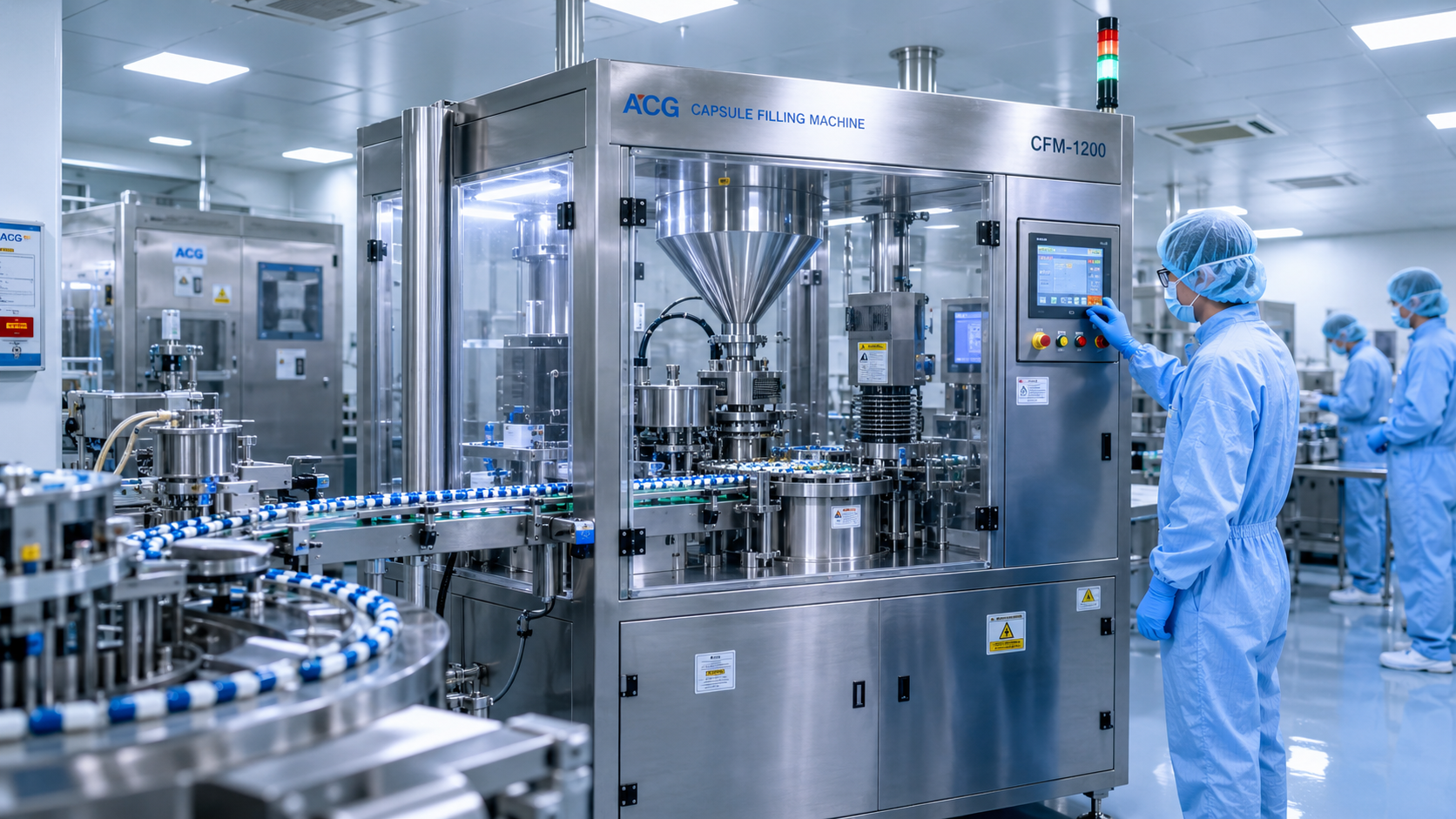
What Is a Capsule Filling Machine?
A capsule filling machine is a pharmaceutical machine used to separate empty capsules, fill them with the required material, close them, and discharge finished capsules for downstream processing. The machine may be designed for manual, semi-automatic, or fully automatic operation.
In practical use, capsule filling machines are widely applied in pharmaceutical factories, nutraceutical plants, contract manufacturing facilities, and research laboratories. They are valued because they improve filling efficiency while reducing human handling and contamination risk.
How Capsule Filling Machines Work
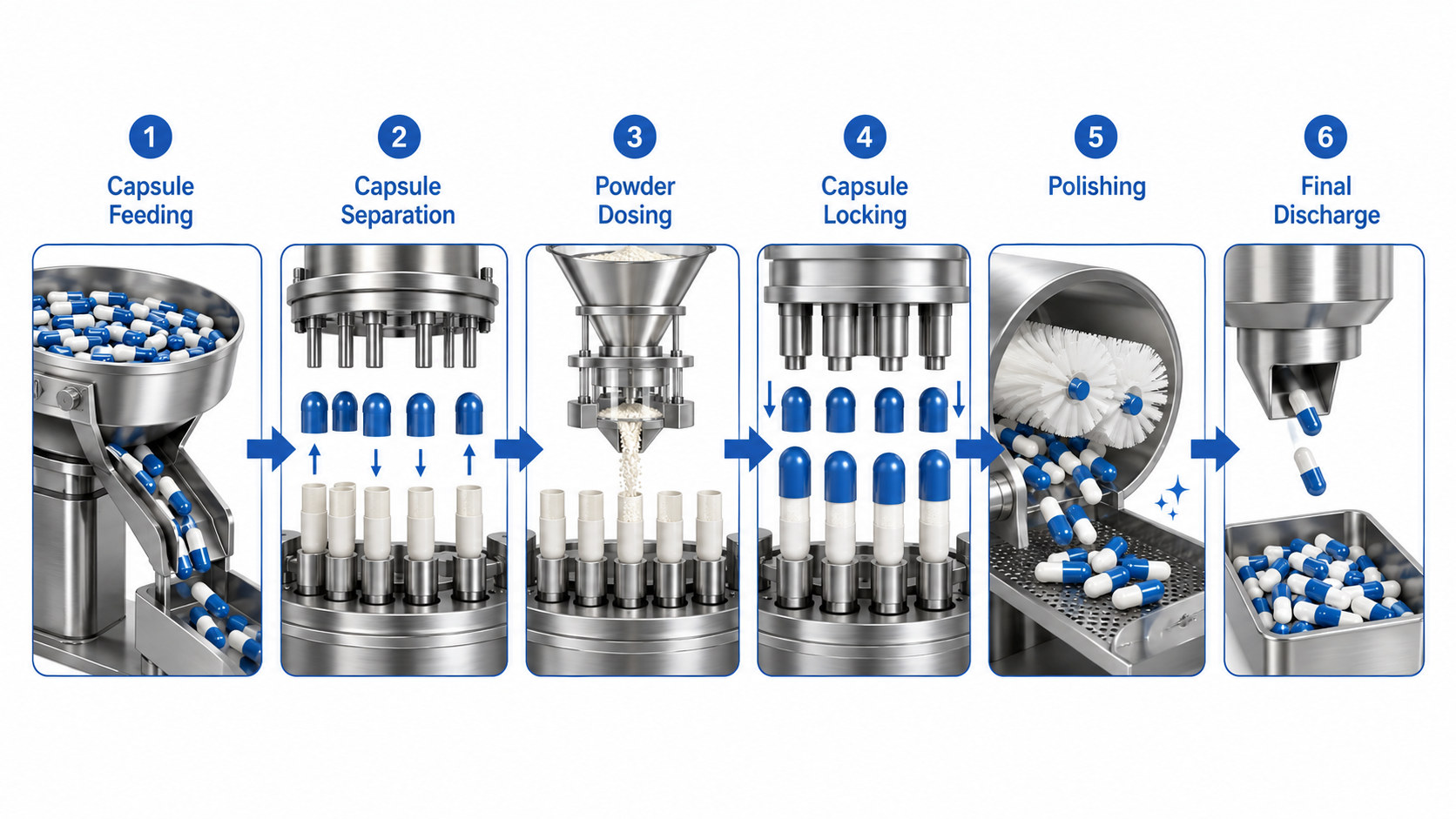
Although designs vary, the working logic is usually similar. The machine first loads empty capsules into a feeding system, then separates the capsule body and cap, doses the fill material, and finally locks the capsule after filling.
A typical process includes:
1. Capsule feeding.
2. Capsule separation.
3. Material dosing.
4. Capsule closing or locking.
5. Finished capsule discharge.
6. Optional weight inspection and rejection.
In high-end systems, the process is supported by vacuum separation, servo control, dust collection, and automatic rejection systems. These functions help improve accuracy and reduce waste.
Main Types of Capsule Filling Machines
1. Manual Capsule Filling Machines
Manual machines are best for small batches, laboratory work, and early-stage product development. They are simple, low-cost, and easy to operate.
They are usually selected by:
- R&D laboratories.
- Small supplement brands.
- Compounding pharmacies.
- Startups with limited output.
Their main advantage is flexibility. Their main limitation is low productivity.
2. Semi-Automatic Capsule Filling Machines
Semi-automatic machines reduce labor intensity and improve batch consistency. Operators still participate in capsule loading or handling, but key filling steps are mechanized.
They are suitable for:
- Medium-scale production.
- Plants running multiple formulations.
- Companies that want a balance between cost and capacity.
This type is often the most practical choice for companies scaling from pilot production to commercial output.
3. Fully Automatic Capsule Filling Machines
Fully automatic machines are used in high-volume pharmaceutical production. They can perform capsule separation, filling, locking, and rejection with minimal manual intervention.
They are preferred when:
- Output requirements are high.
- Product quality must remain highly consistent.
- Compliance requirements are strict.
- Labor cost reduction is a priority.
These systems are often integrated with upstream and downstream equipment, such as powder preparation systems, blending systems, metal detection, and packaging lines.
4. Liquid Capsule Filling Machines
These machines are designed for capsules filled with liquid or semi-liquid formulations. They are technically more demanding because sealing, leakage prevention, and material compatibility are critical.
They are used for:
- Oil-based formulations.
- Softgel-related applications.
- Special drug delivery systems.
5. Powder and Pellet Capsule Filling Machines
This is the most common category in standard pharmaceutical and nutraceutical production. The machine handles powders, granules, pellets, or mixed formulations.
It is widely used because it supports multiple product types and offers strong process versatility.
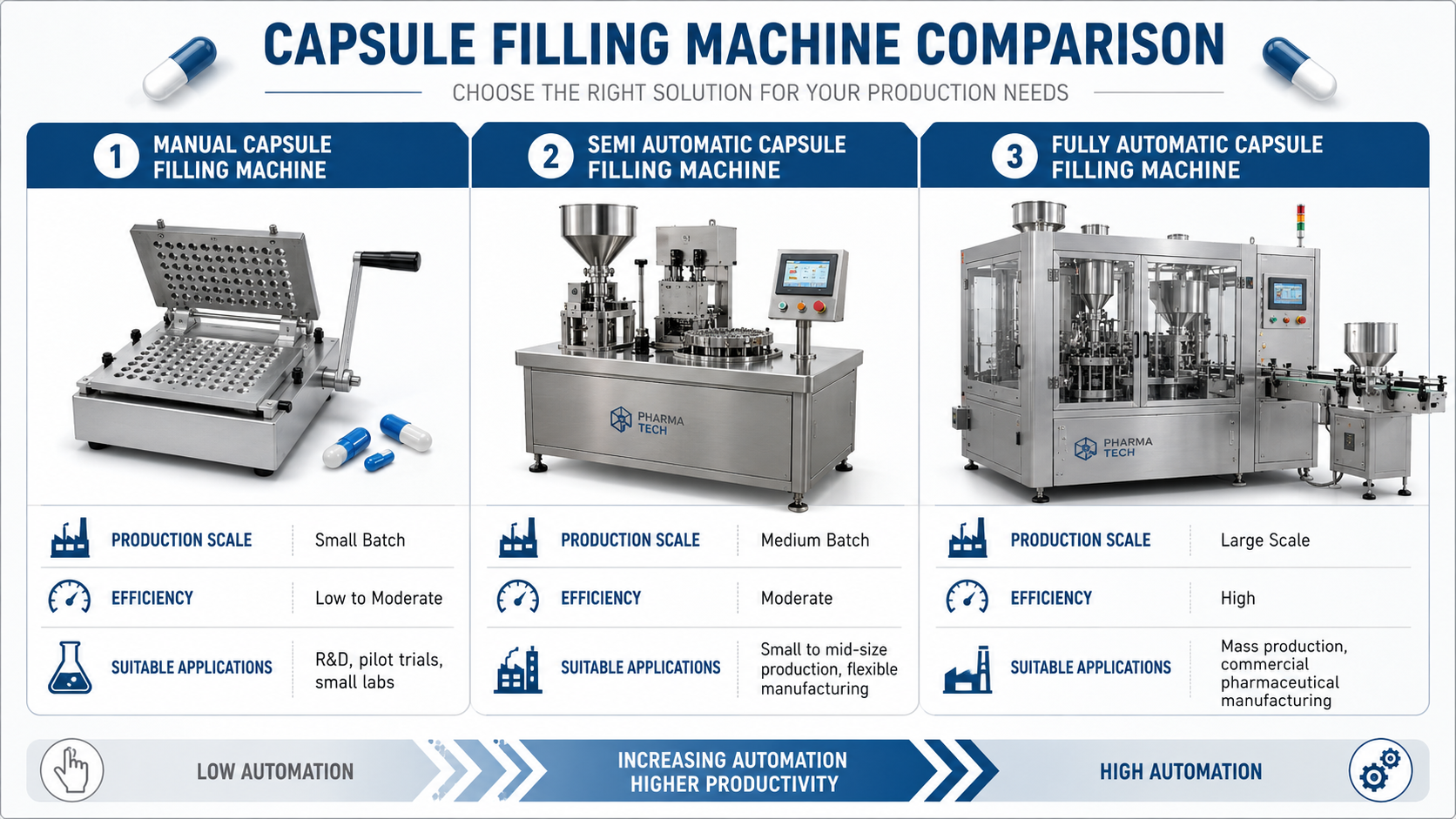
Capsule Filling Machine Comparison
| Machine Type | Best For | Output | Operator Skill | Investment Level | Main Benefit |
| Manual | Labs, pilot batches | Low | Low | Low | Simple and flexible |
| Semi-automatic | Growing factories | Medium | Medium | Medium | Balanced cost and efficiency |
| Fully automatic | Large production lines | High | Medium to high | High | Maximum speed and consistency |
| Liquid capsule | Specialized formulations | Medium to high | High | High | Supports sensitive liquid fills |
| Powder/pellet | General pharmaceutical production | Medium to high | Medium | Medium to high | Broad application range |
Uses Across the Pharmaceutical Industry
Capsule filling machines are used in a wide range of production scenarios. In pharmaceutical factories, they support prescription drugs, modified-release formulations, and niche delivery systems.
Common applications include:
- Antibiotics.
- Vitamins and dietary supplements.
- Herbal and botanical products.
- Anti-inflammatory medicines.
- Specialty formulations for clinical and contract manufacturing.
They are also useful in companies that need frequent product changeovers. In such cases, ease of cleaning and short setup time become especially important.
Key Advantages of Capsule Filling Machines
Higher Accuracy
Modern machines deliver more consistent fill weights than manual filling. That helps reduce dosage variation and improves batch quality.
Better Productivity
Automatic systems can significantly increase throughput, especially in large-scale production environments.
Improved Hygiene
Less direct human contact means lower contamination risk and better GMP alignment.
Lower Labor Dependence
Automation helps factories reduce manual workload and maintain stable output even when labor conditions change.
Flexible Formulation Support
A well-designed machine can handle different capsule sizes and multiple fill materials.
Better Compliance
Consistent process control supports documentation, traceability, and validation requirements.
How to Choose the Right Machine
Choosing the right capsule filling machine starts with the product, not the machine. A smart buyer first defines the capsule size, fill material, target batch size, and required compliance level.
Use this checklist:
1. Define the formulation. Powder, pellet, granule, or liquid.
2. Confirm target output. Lab, pilot, medium, or large-scale production.
3. Check capsule sizes. Make sure the machine supports the capsule formats you need.
4. Review accuracy requirements. Some products require tighter dose control than others.
5. Assess cleaning and changeover. This is critical for multi-product plants.
6. Verify compliance needs. GMP, data recording, and validation support may be required.
7. Plan integration. Consider how the machine fits with upstream preparation and downstream packaging.
From an engineering viewpoint, many production problems come not from the machine itself, but from poor matching between machine design and process reality.
Technical Factors That Matter
When evaluating a capsule filling machine, buyers should pay attention to more than speed alone.
Important technical factors include:
- Filling accuracy.
- Capsule size compatibility.
- Material adaptability.
- Dust control.
- Noise level.
- Cleaning convenience.
- Wear resistance.
- Control system stability.
- Spare parts availability.
For pharmaceutical buyers, the machine should also support traceable operation and stable performance over long production cycles.
Latest Industry Insight: Why Integration Matters
A major trend in pharmaceutical manufacturing is the move from standalone machines to integrated production systems. In real plant planning, capsule filling equipment is no longer selected in isolation. It must work with purified water preparation, powder handling, cleanroom planning, sterilization, and packaging logistics.
This is where many manufacturers gain a competitive advantage. A machine may look strong on paper, but if it does not fit the plant layout, material flow, or validation strategy, the entire line becomes harder to operate. For that reason, equipment suppliers with production line design capability often provide more value than machine-only vendors.
Example of a Practical Setup
For a mid-sized pharmaceutical factory, a typical capsule production line may include:
- Raw material dispensing room.
- Powder blending system.
- Capsule filling machine.
- Dedusting and polishing unit.
- Metal detector.
- Blister packing or bottle filling line.
This kind of flow helps maintain a cleaner process and improves quality control from beginning to end.
Why Everheal Is a Strong Partner
As a pharmaceutical equipment manufacturer, Ningbo Everheal Medical Equipment Co., LTD. is positioned to support not only single machines but also broader pharmaceutical production line planning. That matters because capsule production rarely exists alone; it is usually part of a larger facility strategy involving clean utilities, material flow, and GMP-compliant layout design.
Everheal's background in pharmaceutical equipment and production line solutions makes it a relevant partner for customers who need more than a catalog machine. For buyers planning new plants or upgrading existing lines, engineering support and layout planning can reduce costly mistakes during installation and scale-up.
Practical Buying Advice From an Industry Perspective
If I were advising a pharmaceutical buyer, I would suggest focusing on three questions first:
- What is the product?
- What is the real daily output target?
- How will the machine connect to the rest of the line?
These three questions usually determine the best machine choice more accurately than brand name alone. A well-matched machine will save more money over time than a cheaper machine that constantly creates downtime or quality issues.
Conclusion and CTA
Capsule filling machines are essential to modern drug and supplement manufacturing because they combine speed, accuracy, hygiene, and scalability. The best choice depends on your formulation, capacity target, plant layout, and compliance requirements.
If your project includes not only capsule filling but also purified water systems, sterilization equipment, or pharmaceutical solution preparation systems, a full-line engineering approach will usually deliver better long-term results. Contact Everheal to discuss a customized pharmaceutical production solution, factory layout planning, or integrated equipment configuration for your facility.
FAQ
1. What is the main purpose of a capsule filling machine?
A capsule filling machine fills empty capsules with powders, pellets, granules, or liquids in a controlled and efficient way.
2. Which type of capsule filling machine is best for a small factory?
A semi-automatic machine is often the best balance of cost, capacity, and flexibility for a small or growing factory.
3. Can one machine handle different capsule sizes?
Yes, many machines support multiple capsule sizes, but the exact range depends on the model and tooling configuration.
4. What industries use capsule filling machines?
They are used in pharmaceuticals, nutraceuticals, contract manufacturing, herbal products, and research laboratories.
5. What should I check before buying a capsule filling machine?
Check fill type, output capacity, capsule size range, cleaning convenience, compliance support, and whether it integrates with your production line.
References
1. [U.S. Food and Drug Administration (FDA) – Current Good Manufacturing Practice (CGMP) Regulations]
2. [World Health Organization (WHO) – Good Manufacturing Practices]
3. [European Commission – EudraLex Volume 4, GMP Guidelines]
4. [Ningbo Everheal Medical Equipment Co., LTD. – Official Website]
5. [Everheal LinkedIn Company Profile]
6. [FDA Guidance for Industry: Process Validation]


