In sterile liquid filling, vacuum mixing is usually the stronger choice when your priority is to eliminate air entrainment, reduce foam, and improve batch consistency. Atmospheric mixing can still work in some formulations, but it is inherently more likely to draw air into the product, especially at higher impeller speeds or during powder addition. [mixers]
For a pharmaceutical manufacturer like Ningbo Everheal Medical Equipment Co., LTD., this comparison matters because mixing technology directly affects aseptic processing performance, fill accuracy, and downstream sterilization and cleaning requirements. In practice, the right choice depends on product sensitivity, viscosity, foaming tendency, and the level of sterility assurance your process must achieve. [centec]
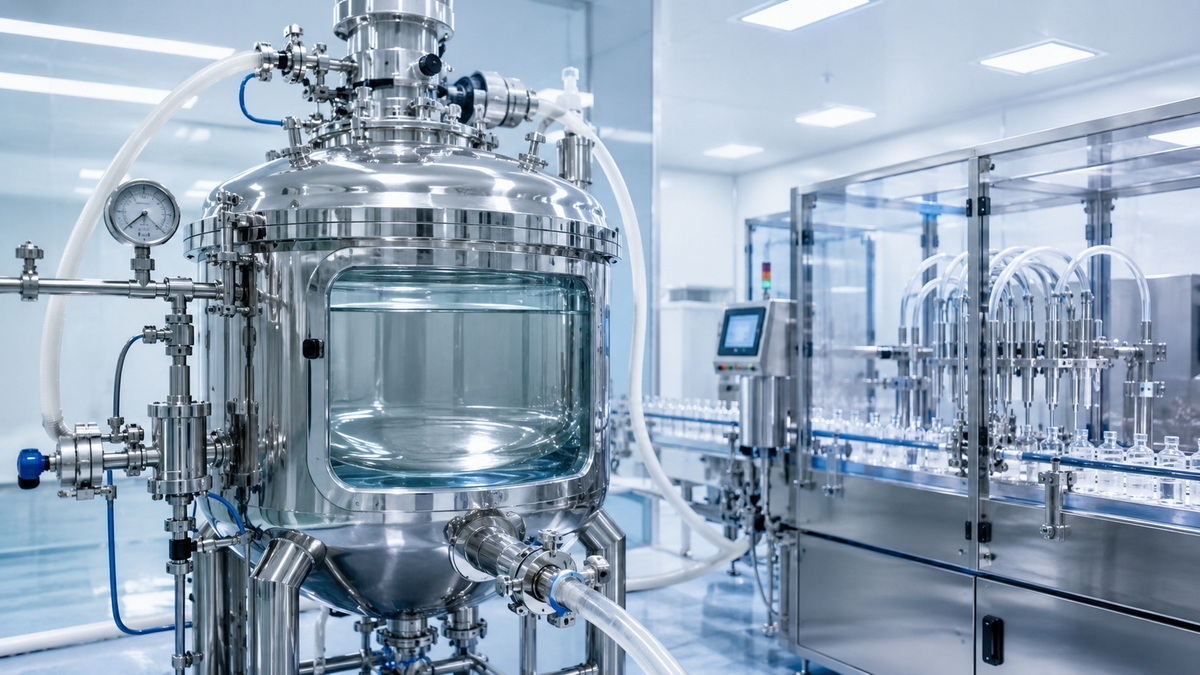
Why Air Entrapment Matters in Sterile Filling
Air entrainment is more than a cosmetic defect. In liquid pharmaceutical batches, trapped air can contribute to foaming, unstable fill volumes, cloudiness, voids, and product loss. It can also make downstream handling harder and increase the risk of process variability during aseptic filling. [mixers]
In sterile operations, even small differences in mixing behavior can affect line performance. That is why formulation vessels, preparation skids, and transfer systems are increasingly designed with hygienic geometry, drainability, and vacuum-capable operation in mind. [centec]
What Each Mixing Method Does
Vacuum Mixing
Vacuum mixing lowers the pressure in the vessel headspace while agitation continues. This helps dissolved and entrained gases escape from the liquid, which reduces foam and improves deaeration. Industry guidance also notes that vacuum mixing allows full-speed agitation without the same level of air incorporation seen in open or atmospheric systems. [permixmixers]
Atmospheric Mixing
Atmospheric mixing occurs at normal ambient pressure. It is simpler, often cheaper, and easier to operate, but it leaves the batch exposed to a greater risk of vortex formation and air incorporation. When speed increases, the liquid surface pulls in more air, and the problem becomes more pronounced in foaming or surfactant-rich products. [mixers]
Side-by-Side Comparison
| Factor | Vacuum Mixing | Atmospheric Mixing |
| Air entrainment control | Excellent for deaeration and foam reduction mixers | Moderate to weak, depending on impeller design and speed mixers |
| Batch clarity | Better for clear, low-defect liquids mixers | More risk of haze and bubbles mixers |
| Fill consistency | Stronger, especially for precision aseptic filling | More variability if foam persists |
| Process speed | Can support high-speed mixing while limiting air mixers | Speed gains may increase air entrainment mixers |
| Equipment complexity | Higher | Lower |
| Validation and control | Easier to justify when deaeration is critical | Simpler, but may require more process workarounds |
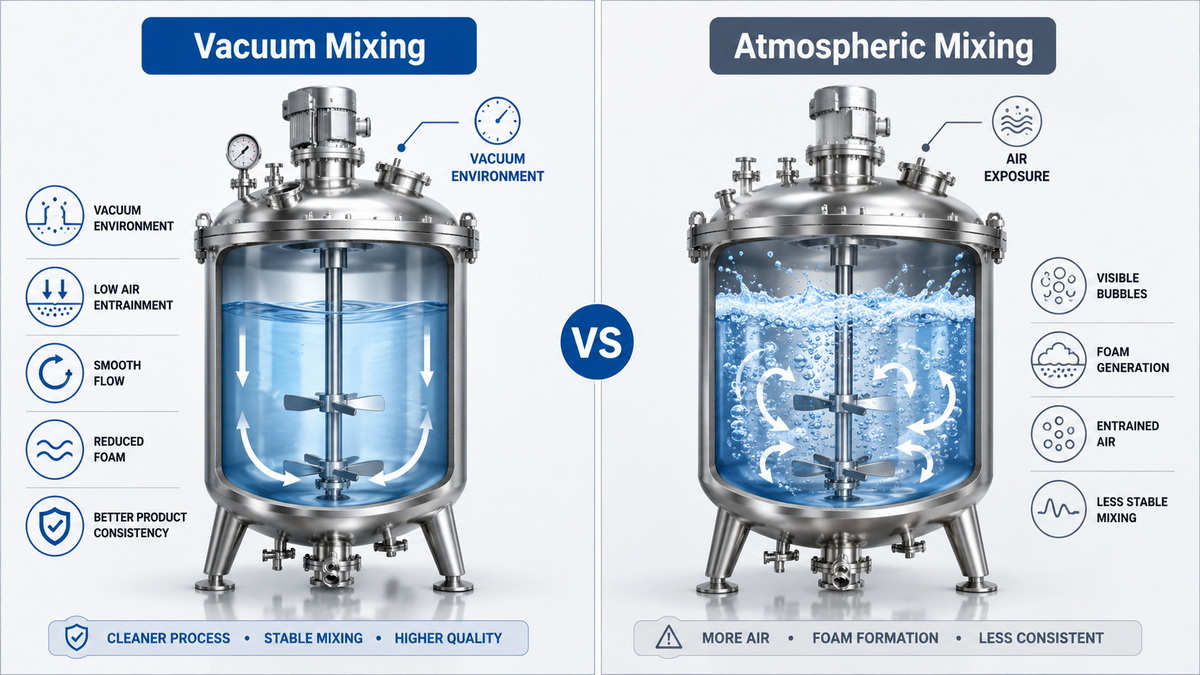
Why Vacuum Mixing Wins in Aseptic Work
In sterile liquid fill-finish, the problem is not just mixing; it is mixing without creating avoidable defects. Vacuum mixing is especially useful for products that are foam-sensitive, oxygen-sensitive, or visually sensitive. It is also well suited to large-volume preparations, lyophilized drug solutions, and anticancer drug solutions where consistency and containment matter. [centec]
From a systems perspective, vacuum mixing aligns well with modern pharmaceutical preparation platforms that emphasize hygienic design, CIP/SIP capability, automation, and GMP compliance. These are exactly the characteristics expected in purified water systems and aseptic liquid preparation systems used in pharmaceutical plants. [centec]
Where Atmospheric Mixing Still Makes Sense
Atmospheric mixing is not obsolete. It can be practical for low-risk formulations, non-foaming liquids, early-stage development, or facilities that need a simpler capital investment. If the product is tolerant of some air and the filling line can handle minor bubble presence, atmospheric mixing may be sufficient. [mixers]
It can also serve as a baseline process when batch size is small, viscosity is low, and the operational burden of vacuum equipment is not justified. In those cases, good impeller selection, off-center blade positioning, and reduced vortex formation can improve performance without a vacuum system. [mixers]
Expert View From Process Design
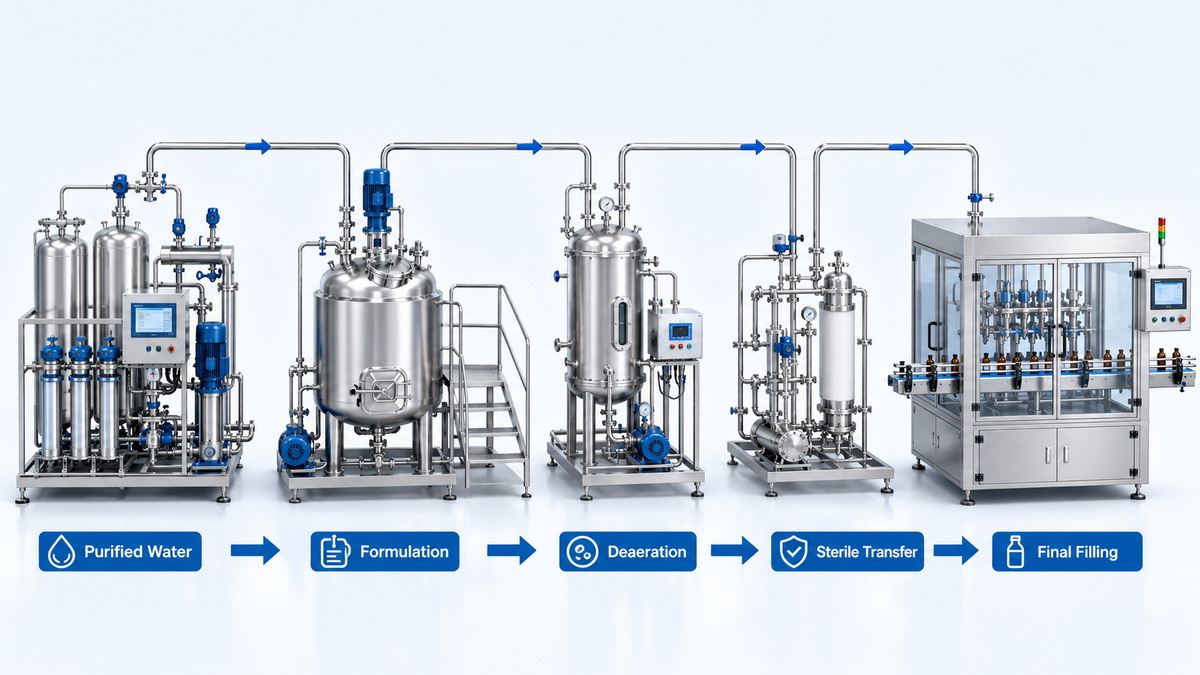
In real plant design, I rarely recommend choosing the mixer first and the process second. The better approach is to design the whole liquid preparation and filling chain together: water quality, vessel geometry, agitation mode, transfer path, filtration, sterilization, and final filling conditions. That is especially important when the same platform must support purified water preparation, sterile solution compounding, and aseptic filling. [centec]
As a practical rule, if the product is valuable, sensitive, or difficult to defoam, vacuum mixing usually pays for itself through fewer rejects, less rework, and more stable filling. If the product is simple and forgiving, atmospheric mixing may be adequate as long as the vessel design and operating parameters are carefully controlled. [mixers]
Practical Selection Guide
Use these criteria to choose the right method:
1. Choose vacuum mixing when:
- The formulation foams easily.
- Oxygen exposure must be minimized.
- Clear appearance and bubble-free filling are critical.
- You are preparing large-volume or high-value sterile liquids. [centec]
2. Choose atmospheric mixing when:
- The formulation is low-foam and low-risk.
- Capital simplicity matters more than maximum deaeration.
- Batch quality remains acceptable with minor air content. [mixers]
3. Add process controls when:
- You need consistent fill weights.
- Your product is sensitive to oxidation.
- You want to reduce cleaning and batch loss caused by foam overflow. [mixers]
System Design That Supports Deaeration
A well-designed sterile liquid preparation system should support the mixer, not fight it. That means sanitary piping, drainable vessel bottoms, controlled recirculation, proper vacuum seals, and automation that monitors key parameters such as conductivity, temperature, pressure, and cleaning cycles. Modern purified water systems and formulation skids are commonly built around these principles to support GMP operations. [centec]
For pharmaceutical projects, this is where integrated engineering matters. Vacuum mixing works best when the vessel, transfer lines, and filling interface are designed as one controlled platform rather than as separate machines stitched together later. [centec]
Implementation Steps
If you are upgrading a sterile filling line, follow this sequence:
1. Map the product risk profile.
- Identify foam tendency, viscosity, oxygen sensitivity, and fill defect tolerance.
2. Review the vessel and mixer geometry.
- Check impeller position, vortex control, headspace volume, and drainability.
3. Define the mixing mode.
- Decide whether vacuum, atmospheric, or a hybrid approach fits the product.
4. Validate performance.
- Test deaeration, batch uniformity, and fill stability under real operating conditions.
5. Align with aseptic strategy.
- Make sure the mixing platform supports cleaning, sterilization, and controlled transfer. [pharmaguideline]
CTA for Manufacturers
If your sterile liquid products suffer from foaming, entrained air, or inconsistent filling, the best next step is to evaluate whether your current compounding and transfer system is truly vacuum-ready. A properly engineered vacuum mixing platform can improve product quality, reduce waste, and strengthen aseptic process reliability. Ningbo Everheal can support this with customized plant layout planning and end-to-end pharmaceutical production line solutions for water preparation, sterilization, and liquid formulation systems. [centec]
FAQ
1. Is vacuum mixing always better than atmospheric mixing?
No. Vacuum mixing is better for deaeration and foam control, but atmospheric mixing may be enough for simple, low-risk liquids. [mixers]
2. Does vacuum mixing help with sterile filling accuracy?
Yes. By reducing bubbles and foam, vacuum mixing can improve batch uniformity and make filling more stable. [mixers]
3. Can atmospheric mixing be improved without adding vacuum equipment?
Yes. Off-center blade placement, lower vortex formation, and better impeller design can reduce air entrainment. [mixers]
4. What types of sterile products benefit most from vacuum mixing?
Foam-sensitive, oxygen-sensitive, clear, or high-value solutions such as large-volume preparations and sensitive drug solutions benefit most. [centec]
5. Why is system design so important in sterile mixing?
Because mixer performance depends on vessel geometry, transfer design, automation, and cleaning/sterilization compatibility. [centec]
References
1- Syntegon China, "High-purity media and formulation systems" — [https://www.syntegon.com.cn/solution-finder/pharma/pure-media-and-formulation-systems/] [syntegon.com]
2- Syntegon China, "Drug product formulation systems" — [https://www.syntegon.com.cn/solutions/pharma/drug-product-formulation-systems/] [syntegon.com]
3- Centec GmbH, "PW generator — purified water system" — [https://www.centec.de/zh/product-page/pw-erzeuger] [centec]
4- Mixers.com, "Reduce foaming and air entrapment during mixing" — [https://www.mixers.com/resources/mixing-technology-reports/reduce-foaming-and-air-entrapment-during-mixing/] [mixers]
5- PerMix, "Vacuum mixer for deaeration: What to know" — [https://www.permixmixers.com/vacuum-mixer-for-deaeration/] [permixmixers]
6- GMP/aseptic processing overview content on isolators and aseptic filling — [https://file.jgvogel.cn/2015/0609/1747276240.pdf] [file.jgvogel]
7- ECV, "Aerosol Distribution in Filling Processes within Pharmaceutical Isolator Systems" — [https://www.ecv.de/beitrag/TechnoPharm/Aerosol_Distribution_in_Filling_Processes_within_Pharmaceutical_Isolator_Systems] [ecv]
8- Pharmaguideline, "Aseptic Filling Process (Media Fill) Validation Protocol" — [https://www.pharmaguideline.com/2011/08/aseptic-filling-process-media-fill.html] [pharmaguideline]


