When handling flammable solvents in pharmaceutical and industrial environments, the choice between pneumatic dispensing systems and electric dispensing systems is not just a technical preference. It is a safety decision that affects ignition risk, process stability, operator protection, compliance, and long-term operating cost.
From a pharma engineering perspective, especially in solvent-intensive production areas such as large-volume preparation, lyophilized drug preparation, and anticancer drug preparation, the right dispensing architecture must balance explosion safety, hygiene, precision, and maintainability. This article compares both technologies in depth so plant designers, validation teams, and production managers can make a defensible choice.
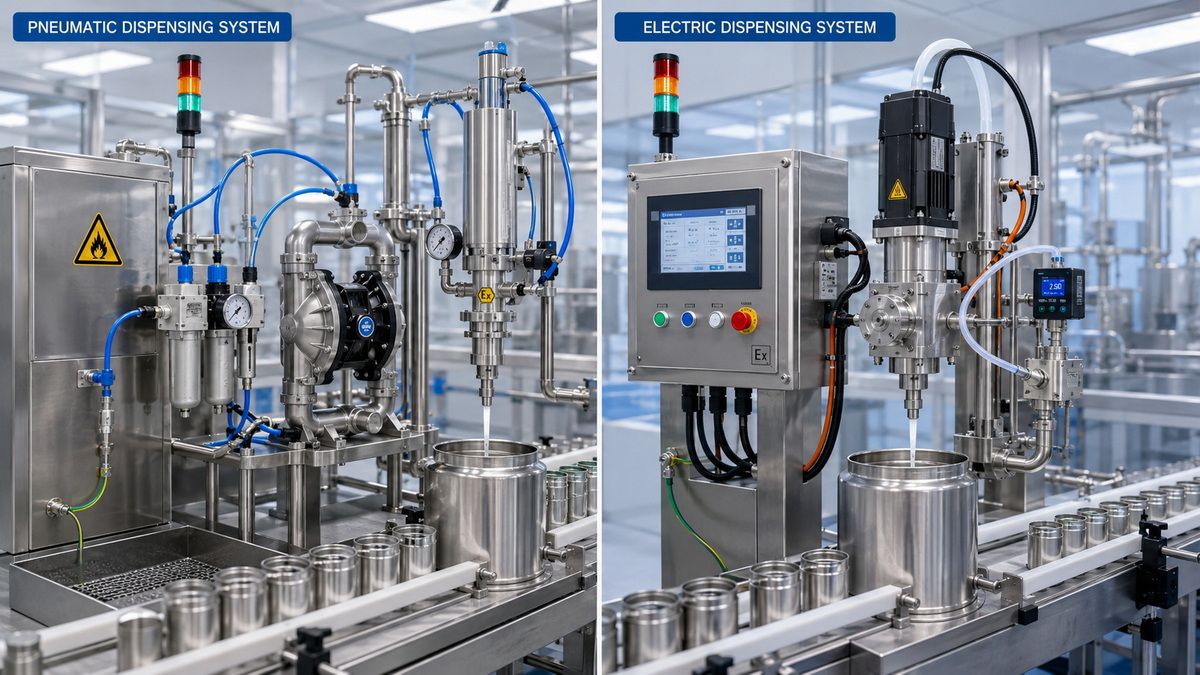
What Is a Dispensing System?
A dispensing system controls the transfer, metering, or delivery of liquids into a process vessel, line, or packaging container. In pharmaceutical production, it may be used for solvents, excipients, active ingredients, cleaning media, or formulation ingredients.
For flammable solvent handling, the dispensing system becomes part of the plant's overall safety chain. That means its drive source, seals, control logic, grounding, ventilation compatibility, and maintenance access all matter. In practice, the question is not only "which system is more accurate," but "which system reduces ignition risk while meeting production needs?"
Why Flammable Solvent Handling Is Different
Flammable solvents create a high-risk environment because vapor, static discharge, heat, or electrical faults can trigger an incident. The risk increases when processes involve frequent opening, pumping, transfer, mixing, or dosing in poorly ventilated areas.
In pharmaceutical facilities, these risks are often amplified by:
- Cleanroom constraints that limit hardware choices.
- Strict validation requirements that slow down corrective actions.
- High-value batches where any contamination or shutdown is costly.
- Operator exposure concerns in manual or semi-automatic operations.
That is why safety engineering must be built into the dispensing system from the start, not added later.
Pneumatic Dispensing Systems Explained
Pneumatic dispensing systems use compressed air as the main power source. In hazardous environments, this is often considered attractive because the actuator itself can be separated from electrical ignition sources.
Typical strengths include:
- Lower direct ignition potential at the point of actuation.
- Simple mechanical architecture in many configurations.
- Good suitability for hazardous zones when designed correctly.
- Fast shutdown behavior in air-controlled emergency systems.
However, pneumatic systems are not automatically "safe." Air supply quality, static generation, hose integrity, and control accessories still need careful engineering. Poorly maintained pneumatic lines can create instability, leaks, and inconsistent dosing performance.
Electric Dispensing Systems Explained
Electric dispensing systems use motors, servo drives, solenoids, or electrically actuated components to control flow and dose volume. They are widely valued for precision, automation integration, and repeatability.
Typical strengths include:
- High dosing accuracy and fine controllability.
- Better data integration with PLC, SCADA, and MES platforms.
- Easier recipe management for multi-product facilities.
- Lower compressed-air dependency in many cases.
Their main challenge in flammable solvent environments is ignition control. Electrical components can generate heat, sparks, or fault conditions unless they are properly rated, enclosed, grounded, and certified for hazardous areas.
Safety Comparison Table
| Safety Factor | Pneumatic Dispensing | Electric Dispensing |
| Ignition source risk | Generally lower at the actuator level | Potentially higher unless intrinsically safe or explosion-proof |
| Heat generation | Usually low | Can be significant in motors, drives, and control electronics |
| Hazardous area suitability | Often strong in Zone-classified applications | Strong only with correct certification and design |
| Dosing precision | Good, but may vary with air quality and pressure stability | Usually superior for repeatable precision |
| Maintenance complexity | Air leaks, FRL units, valves, and pressure issues | Electrical diagnostics, certifications, and component replacement |
| Automation integration | Good, but sometimes less flexible | Excellent for smart manufacturing and digital control |
| Total safety design burden | Requires clean, stable compressed air | Requires robust electrical protection and verification |
Which System Is Safer?
The safest answer is not universal. In many flammable solvent applications, pneumatic dispensing systems are preferred when the primary concern is minimizing ignition risk near the process zone. This is especially true where the operating environment is classified as hazardous and the design philosophy favors non-electrical actuation.
But electric dispensing systems can also be safe when they are engineered for hazardous locations, properly certified, and integrated into a full risk-control strategy. In high-precision pharmaceutical operations, electric systems may outperform pneumatic ones if the plant has strong electrical safety governance and the process demands tight control.
The real decision depends on:
1. Solvent properties such as flash point and vapor behavior.
2. Area classification and hazard zoning.
3. Required dosing accuracy.
4. Process frequency and duty cycle.
5. Validation and maintenance capability.
Hidden Safety Factors Many Buyers Miss
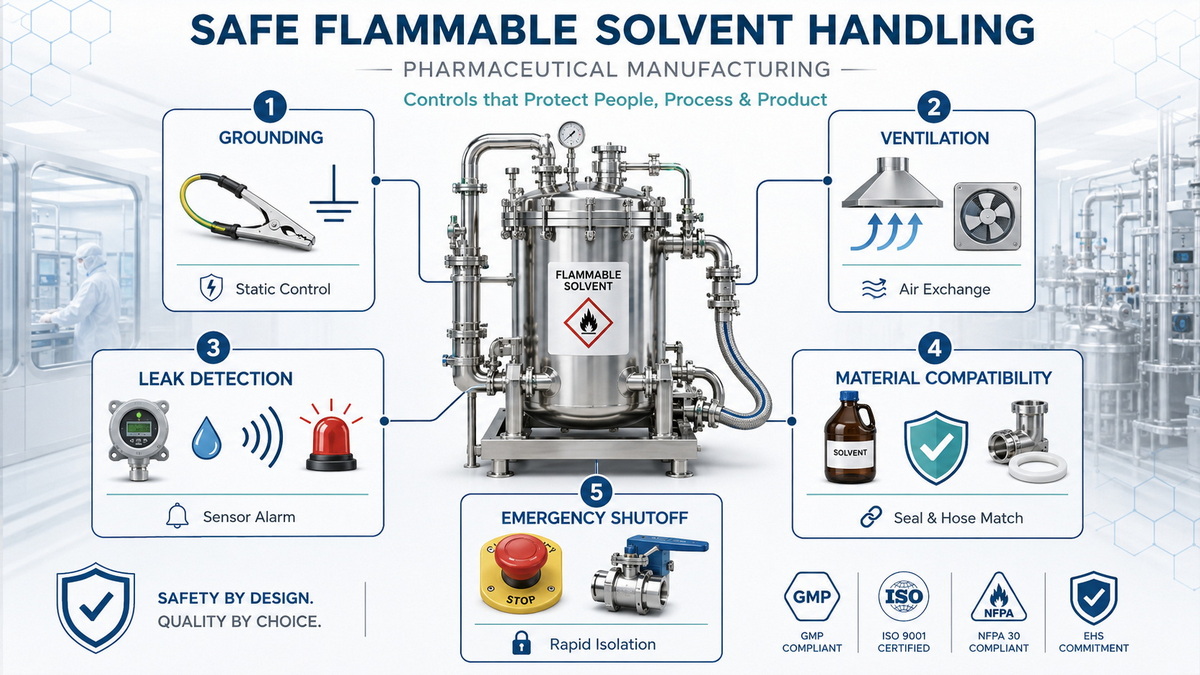
One of the biggest mistakes in equipment selection is focusing only on the drive type. In solvent handling, the following factors often determine actual safety performance:
- Grounding and bonding to prevent static discharge.
- Vapor containment and ventilation around the dispensing point.
- Material compatibility of seals, tubing, and wetted parts.
- Leak detection and alarm logic for early intervention.
- Maintenance access so operators do not bypass safety steps.
In other words, a poorly engineered pneumatic system can be less safe than a well-designed electric system. The drive type matters, but the system design matters more.
Pharmaceutical Use Cases
In pharmaceutical manufacturing, pneumatic dispensing is often favored in:
- Solvent transfer in hazardous rooms.
- Semi-automatic formulation stations.
- Legacy plants with established compressed-air infrastructure.
- Applications where simple fail-safe behavior is preferred.
Electric dispensing is often preferred in:
- High-precision formulation lines.
- Fully automated batch preparation systems.
- Digital production environments that require traceability.
- Facilities optimizing energy use and process repeatability.
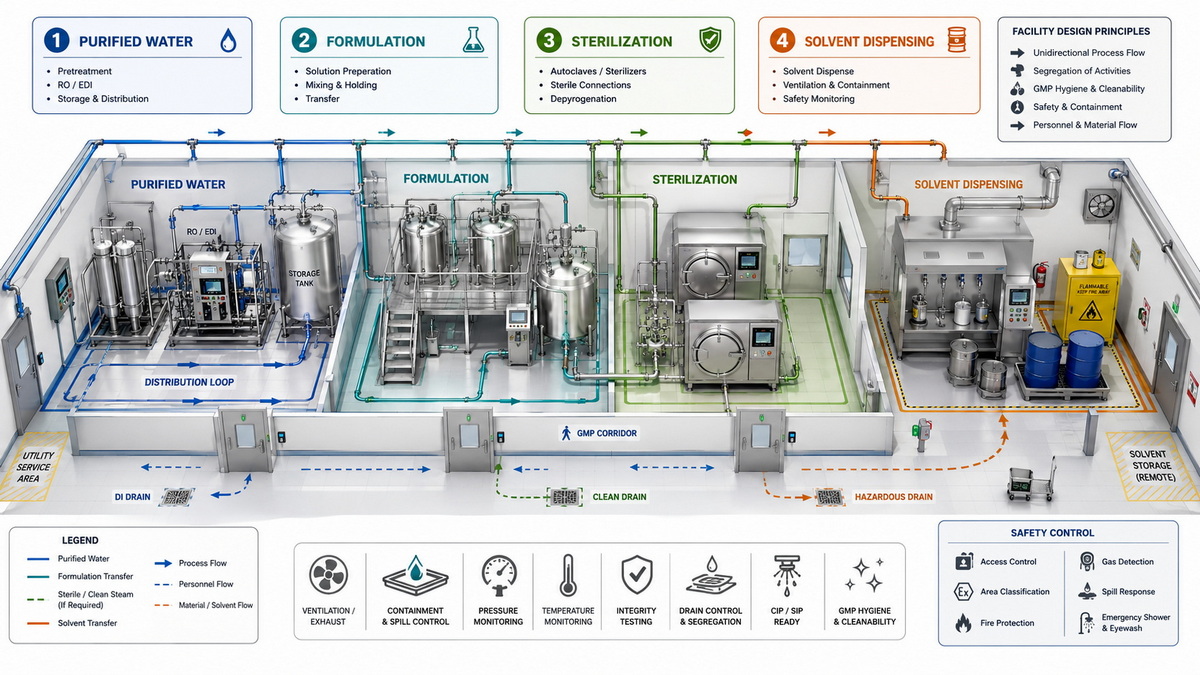
For companies building integrated facilities, such as purified water systems, sterilization equipment, and formulation suites, selecting the right dispensing technology should happen alongside layout planning and utility design.
A Practical Selection Framework
Use the following decision logic when comparing both systems:
Choose Pneumatic When:
- The area is highly flammable and electrical ignition exposure must be minimized.
- The process can tolerate moderate precision.
- Compressed air is already available and well maintained.
- Simplicity and fail-safe behavior are priorities.
Choose Electric When:
- The process requires very tight dosing control.
- The equipment must connect to advanced automation systems.
- The electrical design can meet hazardous-area requirements.
- Traceability and recipe control are central to operations.
Expert Insight for Plant Designers
From a facility-planning perspective, the best results usually come from system-level design, not isolated machine selection. That means the dispensing system, ventilation, fire protection, grounding, process piping, cleanroom layout, and operator workflow should be designed together.
For OEMs and plant builders, this is especially important in projects involving:
- Pharmaceutical solution preparation systems.
- Large-volume preparation rooms.
- Lyophilized drug formulation suites.
- Oncology drug preparation areas.
A well-designed plant will reduce risk before it reaches the operator.
Latest Industry Direction
Across modern pharma manufacturing, three trends are shaping dispensing-system selection:
- More automation, which favors electric control in non-hazardous or well-certified areas.
- Higher safety expectations, which keep pneumatic systems relevant in flammable environments.
- Integrated validation and digital monitoring, which pushes manufacturers to document every safety-related decision.
This means the market is not moving toward one winner. It is moving toward application-specific engineering.
How Everheal-Like Projects Can Add Value
For Chinese manufacturers providing pharmaceutical process equipment and turnkey plant solutions, the competitive advantage lies in helping customers choose the right system early. That includes:
- Process risk assessment.
- Utility and layout planning.
- Hazardous-area design coordination.
- Integration with purified water, sterilization, and preparation systems.
- Documentation support for qualification and validation.
This consultative approach helps clients reduce redesign costs and improve launch speed.
Installation and Operation Checklist
Before finalizing either system, confirm the following:
1. Hazard classification has been reviewed by qualified engineering personnel.
2. All wetted materials are solvent-compatible.
3. Grounding and bonding are verified.
4. Pressure, temperature, and leak alarms are functional.
5. Maintenance procedures are clear and enforceable.
6. Validation documents align with process risk.
7. Operators are trained on emergency shutoff and spill response.
A checklist like this is not optional in solvent handling. It is a core safety control.
CTA
If you are planning a new pharmaceutical facility or upgrading an existing solvent-handling line, start with a system-level safety review before choosing equipment. The right dispensing solution is not just a machine purchase; it is a process-safety decision that affects compliance, output, and long-term reliability.
FAQ
1. Are pneumatic dispensing systems always safer than electric systems?
No. Pneumatic systems often reduce ignition risk, but overall safety depends on the full design, including grounding, ventilation, leak control, and maintenance.
2. Can electric dispensing systems be used with flammable solvents?
Yes, but only when the equipment is correctly certified, enclosed, and designed for hazardous environments.
3. Which system is better for pharmaceutical production?
It depends on the application. Pneumatic systems are often preferred for safety in hazardous zones, while electric systems are often better for precision and automation.
4. What is the biggest hidden risk in solvent dispensing?
Static discharge, leaks, and poor ventilation are among the most overlooked hazards.
5. Should plant layout be considered when choosing a system?
Absolutely. Layout, airflow, utility routing, and emergency access all affect the real-world safety of dispensing equipment.
References
1. [Syntegon – Pharmaceutical formulation systems]
2. [Syntegon – Drug product formulation systems]
3. [CPHI 制药在线 – 药用水处理设备专场]
4. [Ningbo Everheal Medical Equipment Co., LTD. corporate/product page or official site]
5. [Relevant hazardous area / explosion protection standards used by your engineering team]


