In high-mix pharmaceutical plants, filling equipment must balance aseptic integrity, flexibility for frequent changeovers, and lifecycle cost. As a Chinese manufacturer of BFS, FFS, and aseptic filling and sealing lines, Ningbo Everheal Medical Equipment has seen a clear shift: global customers are moving away from purely piston-based systems toward hybrid or peristaltic-centric designs for small-volume and biologics filling. This article compares peristaltic and piston pumps from the perspective of contamination risk, cleaning validation, and multi-product line efficiency, and offers practical selection guidance for pharma engineering and production teams. [everhealgroup]
How Peristaltic and Piston Pumps Work in Pharma Filling Machines
Peristaltic pump principle in filling lines
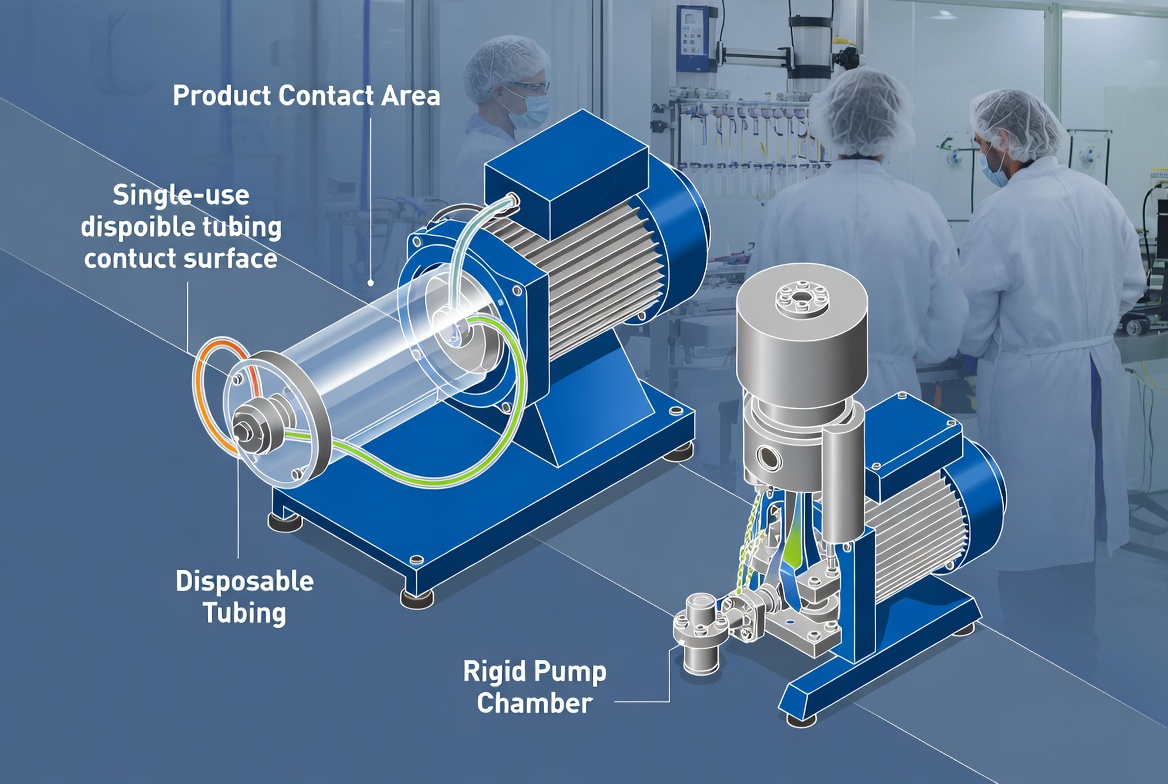
A peristaltic pump is a positive displacement pump where rollers compress flexible tubing to push product forward in a controlled, pulsation-defined manner. The drug product contacts only the inner surface of the disposable tube; the pump head and drive never contact the fluid. This simple flow path is a major reason peristaltic systems dominate aseptic and biologics fill–finish projects. [jihpump]
Where it sits in the line: In filling and sealing machines, the peristaltic head usually sits between the product holding tank (or single-use bag) and the filling needles, often inside a restricted access barrier or isolator. [auroraprosci]
Piston pump principle in filling lines
A piston pump uses a reciprocating piston inside a rigid chamber, with check valves controlling suction and discharge strokes. The product contacts the pump chamber, piston, seals, and associated valves, creating a longer wetted path and more potential retention sites. In return, piston systems offer very high volumetric accuracy and the ability to handle viscous suspensions or semi-solids. [jihpump]
In many traditional vial and bottle filling machines, piston pumps are integrated as multi-head assemblies mounted above or behind the conveyor, with CIP/SIP capability for repeated campaigns on the same line. [machinelab]
Cross-Contamination Risk: Peristaltic Vs Piston Pumps
Product contact surfaces and dead volumes
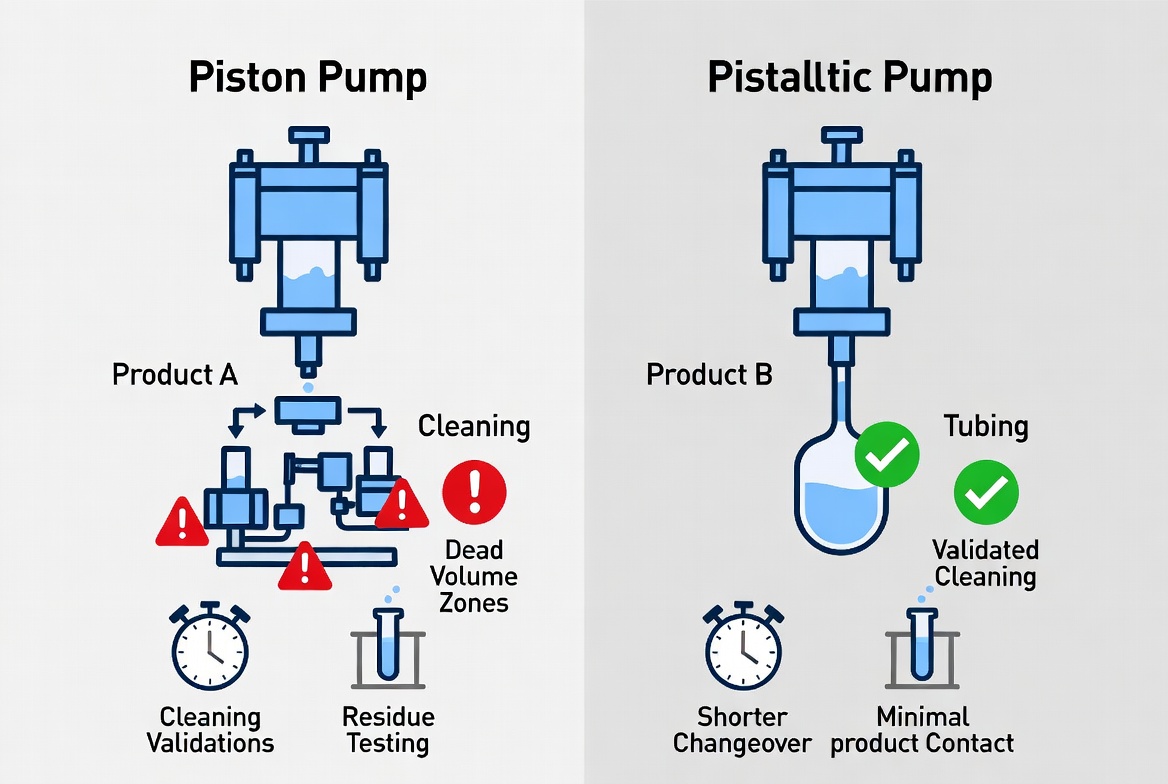
In peristaltic systems, only the tubing is in contact with the product, which eliminates contact between the drug and rotating metal components. There are few dead zones; when you replace the tube set, you effectively remove the entire product path, dramatically reducing carryover risk between batches or SKUs. [cda-usa]
In piston systems, product flows through the pump body, piston, seals, valve seats, and sometimes distribution manifolds, each of which can trap residues and microfilms. Even with well-designed CIP/SIP, it is harder to prove that no residual API or excipient remains in crevices, especially in high-potency or sticky formulations. [linkedin]
Cleaning validation and changeover
Because peristaltic pumps rely on disposable tubing, cleaning validation focuses on the upstream tank (if not single-use), the outlet needles, and the external surfaces; tubing sets are simply replaced. This can eliminate or drastically reduce traditional cleaning validation for the pump itself, a point highlighted in fill–finish best-practice guidance for biologics. [jihpump]
Piston systems require documented, repeatable cleaning protocols: disassembly, flushing, detergent washing, final rinsing, and sometimes steam or chemical sanitization. Each step must be validated with analytical testing to demonstrate residues are below predefined limits, which is time-consuming and costly in multi-product facilities. Industry experts note that this makes piston pumps "much less efficient and more costly in a multi-product facility" compared with peristaltic solutions. [linkedin]
Cross-contamination scenarios in multi-product lines
Typical high-risk scenarios include:
- Switching from a high-potency or cytotoxic product to a low-dose product on the same filling machine. [linkedin]
- Running multiple ophthalmic, nasal, or oral liquid SKUs in short campaigns where cleaning time directly reduces OEE. [jihpump]
- Filling biologics or cell-based products that are sensitive to residual cleaning agents and require extremely low carryover thresholds. [jihpump]
In these scenarios, peristaltic pumps and single-use fluid paths meaningfully reduce cross-contamination risk by design, while piston systems rely on rigorous cleaning and documentation to compensate for higher intrinsic risk. [auroraprosci]
Performance, Accuracy, and Product Compatibility
Dosing accuracy and repeatability
Modern peristaltic filling systems achieve good dosing accuracy by tightly controlling pump speed and rotation counts, and they are widely used for small-volume, low-viscosity fills. However, piston pumps still offer very high volumetric precision, particularly for larger fill volumes or challenging viscosities. For biologics and sensitive injectables, the trade-off often favors peristaltic designs because sterility and low shear override ultra-tight volumetric performance. [cda-usa]
Viscosity range and rheology
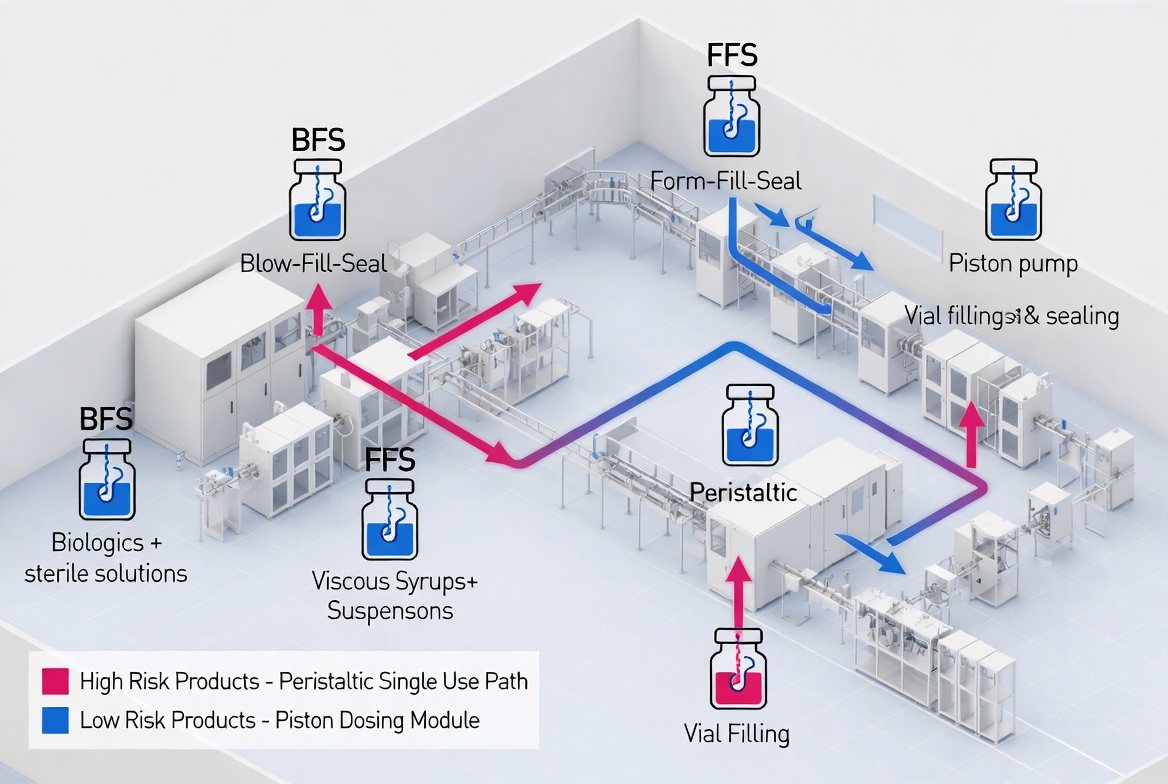
Peristaltic pumps are ideal for low- to medium-viscosity liquids, shear-sensitive formulations, and corrosive solutions, as the gentle, tubing-based transfer reduces mechanical stress on the product. Piston pumps excel with higher-viscosity products, suspensions, or formulations containing particulates, where the robust piston stroke maintains consistent flow. In practice, many facilities run a hybrid strategy: peristaltic heads for sterile solutions and piston modules for syrups, suspensions, and topical products. [jihpump]
Operational Efficiency in Multi-Product Manufacturing
Changeover time and OEE
In multi-SKU lines, changeover time is a hidden driver of total cost. Peristaltic systems allow fast product switches by swapping single-use tubing sets and performing minimal line clearance checks, which supports more, shorter campaigns per shift. Piston systems require longer cleaning, inspection, and QA sign-off; as a result, cleaning validation after each product can become a substantial OEE penalty. [jihpump]
Maintenance and lifecycle cost
Peristaltic systems shift cost from mechanical maintenance to consumables: tubing and, in some designs, single-use manifolds. Routine maintenance is usually limited to replacing worn tubing and inspecting the pump head, which lowers downtime and mechanical complexity. Piston systems require periodic replacement of seals, valves, and sometimes pistons or liners; these interventions are more complex and often require skilled technicians. In high-mix environments, the reduction in cleaning validation and maintenance downtime makes peristaltic solutions attractive despite tubing consumable costs. [cda-usa]
Expert Insight: When Everheal Recommends Peristaltic Vs Piston Pumps
From the perspective of a filling line integrator offering BFS, FFS, and standard filling and sealing machines, the pump decision is rarely one-size-fits-all. Based on current global projects and customer discussions, a practical recommendation matrix looks like this: [everhealgroup]
Decision matrix for pump selection
| Dimension | Peristaltic pump preferred | Piston pump preferred |
| Cross-contamination risk | High concern; multi-product line with frequent changeovers (jihpump) | Low concern; single or few products on the line (generisgp) |
| Product type | Sterile solutions, biologics, ophthalmics, low-viscosity liquids (cda-usa) | Syrups, suspensions, viscous or semi-solid products (jihpump) |
| Campaign length | Short campaigns; many SKUs per week (machinelab) | Long campaigns; same product for extended periods (machinelab) |
| Cleaning validation | Desire to minimize or avoid complex cleaning validation (jihpump) | Established cleaning validation in place; capacity for analytical testing (linkedin) |
| CAPEX vs OPEX | Willing to invest in single-use consumables to cut downtime (auroraprosci) | Focus on minimizing consumables; more manual or CIP cleaning acceptable (linkedin) |
For many customers, Everheal configures hybrid lines that incorporate peristaltic modules for aseptic, high-risk products and piston modules for robust, viscous formulations on the same platform. This approach allows engineering teams to minimize cross-contamination where it matters most, without sacrificing throughput for products that are less sensitive. [everhealgroup]
Practical Steps to Minimize Cross-Contamination in Filling Machines
Step-by-step approach to risk reduction
Engineering and QA teams can use a structured approach to pump selection and line design:
1. Map product portfolio and risk levels
- Classify each product by potency, toxicity, microbial risk, and allowable carryover. [linkedin]
2. Define worst-case scenarios
- Identify "worst-to-follow" product transitions, such as a cytotoxic solution followed by a low-dose pediatric product. [linkedin]
3. Select pump technology by risk tier
- Assign peristaltic, single-use trains to high-risk and biologic products; use piston modules for robust, low-risk formulations. [jihpump]
4. Design cleaning and changeover procedures
- For piston systems, develop detailed cleaning SOPs with validated sampling and acceptance criteria. [linkedin]
- For peristaltic systems, standardize tubing set changes, pre-use integrity checks, and disposal procedures. [auroraprosci]
5. Integrate layout and automation
- Optimize line layout, CIP/SIP routing, and HMI recipes to guide operators through product changeovers with minimal human error. [machinelab]
By integrating pump selection into factory layout planning and automation design, equipment manufacturers can help pharma plants reduce both contamination risk and total cost per batch. [everhealgroup]
Latest Market and Regulatory Trends Supporting Peristaltic Adoption
Market growth for integrated filling and sealing solutions
Global demand for form-fill-seal (FFS) and related filling equipment continues to grow as pharma and healthcare companies seek higher automation and aseptic reliability. One market analysis estimates the global form-fill-seal packaging machine segment at around 9–9.6 billion USD in the mid‑2020s, with a compound annual growth rate above 5%. This growth is driven by demand for flexible, integrated solutions capable of running different product formats with minimal contamination risk. [gminsights]
China-based manufacturers have become important suppliers in BFS and FFS segments, providing cost-effective, high-capacity lines to global customers that are upgrading from manual or semi-automatic filling to fully integrated aseptic solutions. In these projects, peristaltic pump modules and single-use flow paths are frequently specified on user URS documents, especially for export-oriented biologics and sterile generics plants. [truking]
Regulatory expectations around cleaning validation
Regulators expect manufacturers to demonstrate robust cleaning validation to prevent cross-contamination and to document that residues of previous products and cleaning agents remain below acceptable limits. Guidance around multi-product facilities emphasizes risk-based strategies, analytical verification, and clear acceptance criteria for residues and microbiological contamination. Using pump technologies and line designs that inherently reduce contact surfaces—such as peristaltic, single-use paths—makes it easier to meet these expectations and to justify shorter, lower-risk changeovers. [jihpump]
How Everheal Integrates Pump Strategy into BFS, FFS, and Filling Lines
As a manufacturer of BFS machines, FFS systems, and aseptic filling and sealing equipment, Everheal can incorporate both peristaltic and piston pump technologies into turnkey lines based on customer URS and risk assessments. In BFS applications, where containers are blown, filled, and sealed in a single enclosed system, peristaltic dosing combined with integrated sterile pathways helps maintain aseptic integrity across the short, rapid cycle times. [truking]
In more conventional filling and sealing or FFS lines, Everheal can configure dedicated peristaltic modules for biologics and ophthalmics while providing piston-based dosing groups for syrups or suspensions, all within a unified control platform and layout. By addressing pump selection, line layout, and automation together, the company helps clients deliver multi-product flexibility while minimizing cleaning validation burden and cross-contamination risk. [chinese.alibaba]
Call to Action – Design a Low-Risk, Multi-Product Filling Line
If your plant is planning a new multi-product filling line or upgrading legacy equipment, pump selection is one of the most strategic decisions you can make. By combining peristaltic and piston technologies in the right way—and integrating them into your BFS, FFS, or standard filling and sealing machines—you can reduce cross-contamination risk, streamline cleaning validation, and improve throughput across your entire portfolio. [cda-usa]
To discuss a customized filling line layout, risk-based pump selection, and integration into your existing cleanroom or new plant design, contact Everheal's engineering team for a detailed consultation and concept proposal. [everhealgroup]
FAQs About Peristaltic Vs Piston Pumps in Pharma Filling
Q1. Are peristaltic pumps always better than piston pumps for aseptic filling?
A: No. Peristaltic pumps are generally better for sterile, low-viscosity, and biologic products where cross-contamination and gentle handling are critical, but piston pumps still excel for viscous or particulate-rich formulations and very high volumetric precision. [jihpump]
Q2. How do peristaltic pumps help reduce cleaning validation workload?
A: Because the product only contacts disposable tubing, cleaning validation typically excludes the pump body and focuses on upstream and downstream components, reducing the number of surfaces and analytical tests required between products. [jihpump]
Q3. Can I retrofit a legacy piston-based line with peristaltic modules?
A: Many manufacturers can retrofit existing machines with peristaltic heads, especially for small-volume formats, but feasibility depends on line layout, control system architecture, and cleanroom constraints, so a case-by-case engineering review is required. [machinelab]
Q4. Do peristaltic systems increase operating cost due to tubing consumables?
A: Peristaltic systems do add recurring costs for single-use tubing, but these are often offset by reduced downtime, lower cleaning validation effort, and higher flexibility for short campaigns in multi-product environments. [cda-usa]
Q5. How does BFS interact with pump selection?
A: In BFS, container forming, filling, and sealing occur in one enclosed system, and pairing this with peristaltic dosing and single-use product paths further strengthens aseptic control, especially for sterile solutions and small-volume unit doses. [truking]
Reference
1. CDA-USA. "Peristaltic fillers: the best choice for pharma and sensitive liquids." 2025. [Link] [cda-usa]
2. JIHPUMP. "Peristaltic Pump vs. Piston Pump: What's the Difference?" 2025. [Link] [jihpump]
3. JIHPUMP. "Why Choose Peristaltic Pumps for Aseptic Filling?" 2025. [Link] [jihpump]
4. Generis. "Critical Factors of Fill Finish Manufacturing for Biologics." 2017. [PDF] [generisgp]
5. LinkedIn. "Cleaning validation after filling oral liquid suspensions..." 2025. [Link] [linkedin]
6. Mordor Intelligence. "Form-Fill-Seal (FFS) Packaging Machine Market Size." [Link] [mordorintelligence]
7. Global Market Insights. "Form Fill Seal Machines Market Report 2025–2034." 2025. [Link] [gminsights]
8. Truking. "Blow-Fill-Seal Solution (BFS)." Technical brochure. [PDF] [truking]
9. Alibaba. "Liquid Blow-Fill-Seal Auto-form Medical Packaging System." 2025. [Link] [chinese.alibaba]
10. Everheal Group. "China BFS Machine Manufacturer – Everheal." 2025. [Link] [everhealgroup]
11. VKPAK. "How Does a Peristaltic Pump Filler Work?" (image resource). [Link]
12. Sunter. "Peristaltic vs. Ceramic Pumps: Eye Drop Dosing." [Link] [sunterfoodfill]
13. Aurora Pro Scientific. "What's Peristaltic Aseptic Filling." [Link] [auroraprosci]
14. PMEC China. "Intelligent pharma machinery and packaging trends." 2025. [Link] [pmecchina]
15. JIHPUMP. "Peristaltic Pump Applications in Biopharma: From Cell Culture to Final Filling." 2026. [Link] [jihpump]


