


In today's highly regulated pharmaceutical industry, manufacturers are under increasing pressure to build production facilities that are compliant, efficient, scalable, and validation-ready from day one. As a professional Pharmaceutical Production Line Manufacturer, Everheal Group delivers complete, integrated pharmaceutical production line solutions designed to support clients from concept design through commercial production.
Everheal Group positions itself not merely as an equipment supplier, but as a full-scope Pharmaceutical Production Line Manufacturer capable of managing complex system integration, engineering coordination, and regulatory alignment. By combining in-house technical expertise with structured project execution, Everheal enables pharmaceutical companies to reduce project risks, shorten implementation timelines, and accelerate time to market.
As an experienced Pharmaceutical Production Line Manufacturer, Everheal Group focuses on delivering turnkey pharmaceutical production lines that cover the entire project lifecycle. This includes conceptual design, detailed engineering, equipment manufacturing and sourcing, installation, commissioning, and validation support.
Rather than offering isolated machines, Everheal integrates process equipment, utilities, cleanroom systems, automation, and compliance documentation into a unified production line architecture. This holistic delivery model ensures that each pharmaceutical production line operates as a cohesive system, fully aligned with operational, regulatory, and scalability requirements.
By acting as a single responsible Pharmaceutical Production Line Manufacturer, Everheal minimizes coordination complexity for clients while ensuring accountability across all project stages.
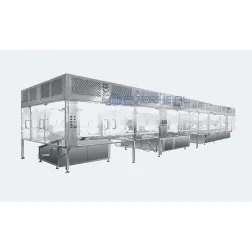
The foundation of a successful pharmaceutical production line lies in intelligent engineering design. Everheal's multidisciplinary engineering team develops production line layouts that prioritize process efficiency, GMP compliance, and future expansion.
Key design considerations include:
* Rational material and personnel flow to reduce cross-contamination risks
* Clean zoning and pressure cascade design
* Utility integration for purified water, clean steam, and process gases
* Equipment placement optimized for maintenance and validation access
As a technically driven Pharmaceutical Production Line Manufacturer, Everheal ensures that every design decision supports both regulatory compliance and long-term operational performance.
Everheal's strength as a Pharmaceutical Production Line Manufacturer lies in its ability to integrate all critical subsystems into a single, coordinated production line.
High-quality utilities are essential to pharmaceutical manufacturing. Everheal integrates purified water systems, clean steam generators, and process utility distribution into the overall production line design, ensuring reliable support for downstream operations.
From solution preparation and mixing to bulk holding and transfer, Everheal designs and supplies formulation systems that integrate seamlessly with filling and packaging operations. Each process stage is engineered to ensure consistency, repeatability, and traceability.
As a professional Pharmaceutical Production Line Manufacturer, Everheal delivers integrated filling and sealing solutions for liquids, powders, and semi-solid products. Production lines can be configured for vials, ampoules, bottles, or customized container formats, supporting both aseptic and non-aseptic processes.
Production lines are often embedded within cleanroom environments. Everheal integrates HVAC systems, cleanroom structures, and environmental monitoring into the overall pharmaceutical production line, ensuring stable operating conditions and compliance with cleanliness classifications.
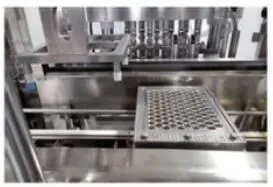
Modern pharmaceutical production lines rely on precise coordination between mechanical equipment, control systems, and data management platforms. Everheal integrates automation and control strategies that enable stable operation, real-time monitoring, and consistent batch execution.
As an experienced Pharmaceutical Production Line Manufacturer, Everheal emphasizes system compatibility and communication across all equipment interfaces. This approach enhances operational reliability, reduces downtime, and simplifies troubleshooting during production.
Validation readiness is a critical success factor for pharmaceutical manufacturing projects. Everheal supports customers throughout the validation process by delivering structured documentation and technical assistance aligned with regulatory expectations.
Validation support includes:
* Installation qualification preparation and execution
* Operational testing coordination
* Performance verification under actual production conditions
* Documentation support for regulatory submission and audits
This validation-focused delivery model reinforces Everheal's role as a trusted Pharmaceutical Production Line Manufacturer for regulated pharmaceutical environments.
Pharmaceutical production line projects involve multiple stakeholders, suppliers, and technical disciplines. Everheal's project management teams coordinate engineering, logistics, installation, and commissioning activities to ensure smooth execution.
On-site services include equipment installation supervision, commissioning assistance, and operator training. By maintaining a structured project management framework, Everheal helps clients bring their production lines into operation efficiently and confidently.
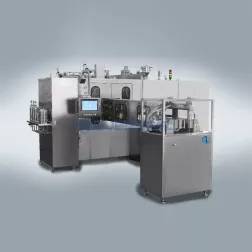
Serving international pharmaceutical clients, Everheal operates as a globally capable Pharmaceutical Production Line Manufacturer. The company supports overseas projects with remote engineering, documentation delivery, and on-site technical services as required.
Everheal's long-term partnership mindset ensures that production lines remain adaptable to evolving regulatory requirements and market demands.
Choosing the right Pharmaceutical Production Line Manufacturer directly impacts project success, regulatory approval, and operational stability. Everheal Group differentiates itself through:
* True turnkey delivery from design to production
* Strong system integration and engineering coordination
* Validation-ready solutions aligned with GMP expectations
* Proven project management and execution capability
By offering a single, accountable partner for complex pharmaceutical production line projects, Everheal helps clients reduce risk and achieve faster, more reliable production startup.
Everheal delivers complete pharmaceutical production line solutions, including engineering design, equipment integration, installation, commissioning, and validation support.
Yes. As a flexible Pharmaceutical Production Line Manufacturer, Everheal customizes production lines based on product type, capacity requirements, and regulatory standards.
Everheal designs production lines with GMP principles and provides validation-oriented documentation and technical support.
Everheal production lines support liquid, powder, and other pharmaceutical dosage forms across various container formats.
Yes. Everheal operates as a global Pharmaceutical Production Line Manufacturer, supporting international delivery and on-site technical services.
Feel free to contact us to learn more and make your purchase!


