Content Menu
● Why Japan Matters For Vial Filling Technology
● Market Overview – Global And Asia‑Pacific Demand
● Top Vial Filling Machine Manufacturers And Suppliers In Japan
>> SHIBUYA CORPORATION – Aseptic Vial Filling Lines
>> YUYAMA – Vial Filling For Pharmacy And Hospital Use
>> WINCKLER & CO. LTD – Engineering And Imported Vial Lines
>> Other Notable Filling Machine Companies In Japan
● Example – Japanese Injectable Manufacturing Lines
● How To Choose Vial Filling Machine Manufacturers And Suppliers In Japan
● Typical Features Of Modern Vial Filling Machines
● Japan Vs. Global Vial Filling Machine Manufacturers And Suppliers
>> Regional Positioning
>> Overview Table – Selecting A Supplier Region
● How Everheal Can Partner With Japanese Suppliers
● Practical Steps For Buyers
● Conclusion
● FAQ – Vial Filling Machine Manufacturers And Suppliers In Japan
>> 1. What types of vial filling machines do Japanese manufacturers typically offer?
>> 2. Are Japanese vial filling machines compatible with international GMP and PIC/S requirements?
>> 3. Can Japanese suppliers integrate vial fillers with utilities and sterilization equipment from other countries?
>> 4. How can buyers evaluate different Japanese Vial Filling Machine Manufacturers And Suppliers remotely?
>> 5. What market trends will impact Japanese vial filling suppliers in the coming years?
● References
Japan is home to several leading vial filling machine manufacturers and suppliers that serve high‑end pharmaceutical, biotech, and hospital pharmacy markets. This guide highlights key players, market trends, and how global buyers can partner with Japanese Vial Filling Machine Manufacturers And Suppliers for reliable aseptic production lines. [shibuya.co]
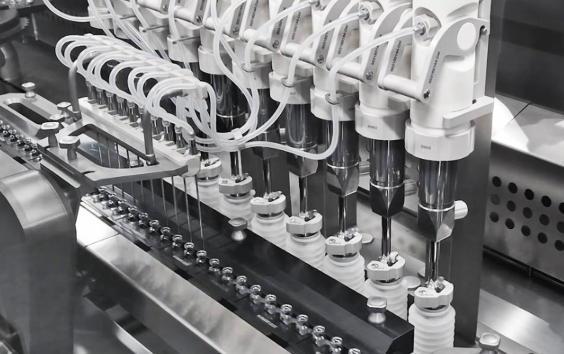
Why Japan Matters For Vial Filling Technology
Japan's reputation for precision engineering, quality control, and automation makes its Vial Filling Machine Manufacturers And Suppliers attractive to global pharma companies. From aseptic vial lines for injectables to compact hospital systems, Japanese suppliers support strict GMP, PIC/S, and FDA‑aligned requirements. [ensun]
Key reasons to source from Japan:
- Strong experience with aseptic processing, isolators, and RABS for injectable drugs. [spera-pharma.co]
- High automation levels that reduce human intervention and contamination risk. [reportsanddata]
- Reliable after‑sales service and lifecycle support via local agents and engineering partners. [winckler.co]
Market Overview – Global And Asia‑Pacific Demand
The global market for vial filling and stoppering machines is growing steadily as injectables, biologics, and vaccines expand worldwide. For global Vial Filling Machine Manufacturers And Suppliers, this growth translates into higher demand for high‑speed, automated filling lines and flexible small‑batch systems. [linkedin]
- One analysis estimates the vial filling and stoppering machines market at around USD 1.35–1.78 billion in 2024, with a CAGR between about 6.4% and 8.9% toward 2029. [linkedin]
- A separate report on liquid vial filling machines values that segment at about USD 1.2 billion in 2024, projecting USD 2.5 billion by 2034 at around 7.5% CAGR. [reportsanddata]
- Asia‑Pacific, including Japan, is expected to post the fastest regional growth, driven by expanding pharma capacity in China, India, and other emerging markets. [linkedin]
For buyers, this means more choice among Vial Filling Machine Manufacturers And Suppliers, but also a need to carefully compare technology, compliance, and total cost of ownership.
Top Vial Filling Machine Manufacturers And Suppliers In Japan
Below are representative Japanese and Japan‑focused suppliers relevant to vial filling solutions. Some are direct machine OEMs, while others act as engineering and distribution partners for global brands. [shibuya.co]
SHIBUYA CORPORATION – Aseptic Vial Filling Lines
SHIBUYA CORPORATION is one of Japan's best‑known suppliers of integrated pharmaceutical vial filling systems. Its aseptic vial filling solutions combine washing, depyrogenation, filling, stoppering, and capping, often under isolators or RABS designed in‑house. [shibuya.co]
Key strengths for buyers seeking Vial Filling Machine Manufacturers And Suppliers:
- Custom aseptic vial filling systems for both liquids and powders, with complete lines from washing to sealing. [shibuya.co]
- Compatibility with in‑house isolators, ensuring a single responsible partner for contamination control. [shibuya.co]
- Support for QbD‑oriented development, including in‑house test facilities for powder filling accuracy. [shibuya.co]
YUYAMA – Vial Filling For Pharmacy And Hospital Use
YUYAMA MANUFACTURING CO., LTD. is widely known for pharmacy automation, including vial filling systems such as the EV‑54 and related solutions. While oriented more toward hospital and community pharmacy dispensing, its machines illustrate how Japanese Vial Filling Machine Manufacturers And Suppliers design compact, user‑friendly vial equipment. [yuyama.com]
Key points:
- Semi‑automatic vial filling systems that handle dozens of calibrated canisters, focusing on ease of use and workflow efficiency. [yuyama.com]
- Experience exporting vial dispensing machines internationally, despite Japan historically using other packaging formats for tablets. [yuyama.co]
- Strong emphasis on intuitive HMIs and ergonomic design to minimize operator error in busy pharmacies. [yuyama.co]
WINCKLER & CO. LTD – Engineering And Imported Vial Lines
WINCKLER & CO. LTD, based in Yokohama, is not a pure OEM manufacturer but a long‑established engineering and trading company specializing in pharmaceutical production and filling machinery. For many buyers, it acts as a key gateway to Vial Filling Machine Manufacturers And Suppliers in Europe and beyond, with full project support in Japan. [ensun]
Buyer benefits:
- Integration of high‑quality European vial filling and packaging machines into Japanese projects, with local engineering and validation. [winckler.co]
- Project management covering design, construction, installation, and GMP‑oriented qualification. [winckler.co]
- Technical services over the entire equipment lifecycle, including upgrades and retrofits. [winckler.co]
Other Notable Filling Machine Companies In Japan
There are many broader filling and packaging machinery companies in Japan that either directly offer vial‑capable systems or provide adjacent technologies. While not always dedicated Vial Filling Machine Manufacturers And Suppliers, they can complement vial lines or be adapted for specific sterile applications. Examples include: [aileauto]
- Newlong Industrial Co., Ltd. (NLI): Specializes in liquid filling equipment such as tube filling machines and high‑speed mini‑bottle filling machines, which can inform engineering decisions for small‑volume formats. [ensun]
- Other packaging machinery players listed in Japanese industry directories, which supply bagging, bottling, and secondary packaging to support overall sterile filling projects. [aileauto]
These firms often appear in online rankings and product lists that help procurement teams benchmark features and price ranges during early research. [mono.ipros]
Example – Japanese Injectable Manufacturing Lines
Japan also hosts high‑end injectable manufacturing sites that use automatic vial filling lines, demonstrating how Vial Filling Machine Manufacturers And Suppliers integrate with real production environments. [spera-pharma.co]
SPERA PHARMA, for example, describes an injectable manufacturing setup capable of producing up to about 40,000 vials per batch, with automatic cleaning, stainless‑steel aseptic filling lines, and sterilization equipment. The line handles solution and frozen injection vials with fill volumes roughly in the 0.5–20 mL range, supported by tanks of 50 L and 200 L. [spera-pharma.co]
Many CDMOs and pharma plants describe processes that include automatic vial loading and washing, depyrogenation tunnels, servo‑driven filling nozzles with in‑line check‑weighing, and integrated stoppering, capping, and visual inspection. These descriptions are valuable to buyers comparing global Vial Filling Machine Manufacturers And Suppliers, because they show realistic capacities, line layouts, and operating concepts. [shibuya.co]
How To Choose Vial Filling Machine Manufacturers And Suppliers In Japan
When evaluating Japanese Vial Filling Machine Manufacturers And Suppliers, international buyers should consider several practical criteria beyond headline specifications. [reportsanddata]
- Regulatory and GMP fit: Confirm experience with EU GMP, US FDA, and PIC/S, as seen in Japanese facilities that already operate under trilateral or PIC/S GMP. [spera-pharma.co]
- Aseptic philosophy: Assess whether an OEM can supply isolators or RABS, or has proven interfaces with third‑party containment solutions. [shibuya.co]
- Batch size and format flexibility: Compare supported vial sizes, filling ranges (e.g., sub‑1 mL to 20 mL), and ability to switch between liquid and lyophilized products. [sinopharmtech]
- Automation level: Review automated sampling, CIP/SIP, in‑line data collection, and electronic batch recording features, which are increasingly standard in top Vial Filling Machine Manufacturers And Suppliers. [reportsanddata]
- After‑sales and local service: For overseas buyers, check whether the Japanese supplier or its partners maintain service centers or agents in your region. [ensun]
Shortlisted vendors frequently provide 3D layout information and detailed operation sequences, which can be used internally for stakeholder buy‑in and URS refinement. [shibuya.co]

Typical Features Of Modern Vial Filling Machines
Modern vial filling machines from leading Vial Filling Machine Manufacturers And Suppliers share several technical characteristics aligned with global best practices. [reportsanddata]
- High accuracy dosing: Use of peristaltic pumps, rotary piston pumps, or time‑pressure systems with closed‑loop control to maintain tight filling tolerances. [shibuya.co]
- Contamination control: Machine designs that minimize dead zones, support full CIP/SIP, and integrate laminar airflow or isolators. [spera-pharma.co]
- Data integrity: Full recording of batch parameters, weight checks, and alarms, supporting compliance with data integrity guidelines. [reportsanddata]
- Modular line design: Ability to link washers, tunnels, fillers, cappers, and lyophilizers into a cohesive line scaled to production needs. [sinopharmtech]
Technical documentation from OEMs and engineering firms often breaks down each step—washing, sterilizing, filling, stoppering—to help end users create SOPs and training material. [sinopharmtech]
Japan Vs. Global Vial Filling Machine Manufacturers And Suppliers
For strategic sourcing managers, comparing Japanese suppliers with global Vial Filling Machine Manufacturers And Suppliers can clarify when Japan is the best fit. Data from global industry overviews show that major players also operate in Europe, North America, and China, each region emphasizing different strengths. [grandpackmachine]
Regional Positioning
- Europe: Strong in large‑scale high‑speed vial filling, especially for vaccines and biologics, supported by established OEM brands. [grandpackmachine]
- North America: Focus on high‑automation systems and integration with advanced MES and data integrity platforms. [linkedin]
- Asia‑Pacific (including Japan): Fast‑growing capacity, with Japan standing out for precision, reliability, and its role as a bridge between Western technologies and broader Asian markets. [linkedin]
Overview Table – Selecting A Supplier Region
How Everheal Can Partner With Japanese Suppliers
As a Chinese pharmaceutical equipment company, Everheal can collaborate with Japanese Vial Filling Machine Manufacturers And Suppliers to deliver integrated solutions for global clients. By combining Japanese vial filling cores with Everheal's pure water systems, pure steam generators, multifunctional distillation units, liquid filling‑sealing machines, and sterilization systems, end users receive complete production lines with harmonized utilities and layouts. [sinopharmtech]
Typical cooperation models include:
- Sourcing core vial fillers and cappers from Japanese OEMs, then engineering the upstream utilities and downstream sterilization and packaging via Everheal.
- Jointly developing plant layouts and process flow concepts—from water preparation to final vial sterilization and packaging—for customer approvals.
- Providing bilingual documentation and on‑site support to ensure smooth commissioning in emerging markets.
This approach allows end users to benefit from the strengths of both Japanese and Chinese Vial Filling Machine Manufacturers And Suppliers, optimizing cost, compliance, and service coverage.
Practical Steps For Buyers
To select the right Japanese vial filling partner, procurement and engineering teams can follow a structured approach based on real‑world practices seen across Vial Filling Machine Manufacturers And Suppliers. [winckler.co]
1. Define URS clearly
- Batch size, vial range, product type (solution, suspension, lyophilized), and required line speed. [sinopharmtech]
2. Shortlist potential suppliers
- Include Japanese OEMs and engineering partners from industry directories and case studies. [ensun]
3. Request layout drawings and process descriptions
- Ask for line layout diagrams and detailed operating sequences to evaluate ergonomics and maintenance access. [shibuya.co]
4. Assess lifecycle support
- Confirm spare parts strategy, remote diagnostics, and local service partners for your region. [ensun]
5. Conduct FAT and SAT with complete documentation
- Record key FAT tests in detailed reports for internal validation and future training; most leading Vial Filling Machine Manufacturers And Suppliers support this practice. [winckler.co]
Conclusion
Japan offers a compact but influential group of Vial Filling Machine Manufacturers And Suppliers capable of delivering high‑quality aseptic vial lines for pharmaceuticals, biologics, and hospital pharmacies. With proven GMP experience, advanced containment technologies, and growing integration into Asia‑Pacific expansion projects, Japanese suppliers deserve serious consideration in any global sourcing strategy. By partnering these manufacturers with complementary solutions from companies like Everheal, buyers can build robust, compliant, and efficient vial filling facilities tailored to their specific market and regulatory needs. [linkedin]
Contact us to get more information!
FAQ – Vial Filling Machine Manufacturers And Suppliers In Japan
1. What types of vial filling machines do Japanese manufacturers typically offer?
Japanese Vial Filling Machine Manufacturers And Suppliers typically offer complete aseptic lines for liquid vials, powder vials, and lyophilized products, including washing, sterilization, filling, stoppering, and capping modules. Some also supply smaller semi‑automatic systems for hospital and pharmacy applications. [yuyama.com]
2. Are Japanese vial filling machines compatible with international GMP and PIC/S requirements?
Yes, many Japanese manufacturing facilities operate under trilateral GMP (Japan, US, EU) and PIC/S, demonstrating compatibility with stringent regulatory expectations for aseptic vial filling. When working with Vial Filling Machine Manufacturers And Suppliers in Japan, buyers can request references and documentation from sites already inspected under these regimes. [spera-pharma.co]
3. Can Japanese suppliers integrate vial fillers with utilities and sterilization equipment from other countries?
Japanese OEMs and engineering firms often collaborate with foreign partners to integrate vial filling equipment with external utilities, sterilization systems, and packaging machines. This makes it feasible for companies like Everheal to combine their own water, steam, distillation, and sterilization solutions with Japanese vial lines in a single project. [shibuya.co]
4. How can buyers evaluate different Japanese Vial Filling Machine Manufacturers And Suppliers remotely?
Buyers can request technical datasheets, 3D layouts, and detailed operating descriptions that cover full cycles of washing, sterilizing, filling, and capping under isolators or RABS. Many suppliers also support remote FAT participation, enabling detailed inspection of critical tests before shipment. [shibuya.co]
5. What market trends will impact Japanese vial filling suppliers in the coming years?
Global demand for injectable drugs, biologics, and vaccines is increasing, which should drive continued growth for Vial Filling Machine Manufacturers And Suppliers in Japan and the wider Asia‑Pacific region. Rising automation, data integrity requirements, and interest in flexible small‑batch production lines will further shape product development and innovation. [linkedin]
References
1. SHIBUYA CORPORATION – Vial Filling System (pharmaceutical manufacturing systems, aseptic vial filling lines, isolator integration). Available at: https://www.shibuya.co.jp/en/pharmaceutical/pms07.html [shibuya.co]
2. YUYAMA – Semi‑Automatic Vial‑Filling Machine EV‑54 (pharmacy vial filling equipment). Available at: https://yuyama.com.hk/en/product.php?id=24 [yuyama.com]
3. IPROS – Vial Filling Machine Product List and Ranking (overview of vial filling machine manufacturers). Available at: https://mono.ipros.com/en/cg2/Vial%20Filling%20Machine/ [mono.ipros]
4. Aile – Top 10 Aerosol Filling Machine Suppliers in Japan (context on Japanese filling machine suppliers). Available at: https://www.aileauto.com/top-10-aerosol-filling-machine-suppliers-in-japan/ [aileauto]
5. Ensun – Top Filling Machine Manufacturers in Japan (company profiles including Newlong Industrial Co., Ltd. and others). Available at: https://ensun.io/search/filling-machine/japan [ensun]
6. SPERA PHARMA – Injection Manufacturing (vial formulation, aseptic filling line capacity and GMP status). Available at: https://www.spera-pharma.co.jp/en/technology/formulation/injection-manufacturing/ [spera-pharma.co]
7. LinkedIn – Vial Filling and Stoppering Machines Market by Application (market size and regional growth data). [linkedin]
8. YUYAMA – User Report: The First Vial Filling Machine in Japan (experience with EV‑54 vial filling in pharmacies). Available at: https://www.yuyama.co.jp/en/user-report/589 [yuyama.co]
9. SHIBUYA CORPORATION – Aseptic Powder Vial Filling System (features of powder vial filling technology). Available at: https://www.shibuya.co.jp/en/pharmaceutical/pms12.html [shibuya.co]
10. Reports and Data – Vial Filling Machines for Liquid Vials Market (global market size, CAGR, segment insights). [reportsanddata]
11. Winckler & Co. – Pharmaceuticals (pharmaceutical production and filling machinery engineering, project management). Available at: https://www.winckler.co.jp/en/machines/pharmaceuticals/ [winckler.co]
12. Laxmi Pharma Equipment – Vial Collection Unit in Japan (example of vial handling solutions in Japan). [laxmipharma]
13. LinkedIn – Global Vial Filling and Stoppering Machines Market: Impact of AI (market size and technology trends). [linkedin]
14. Grand – World Top 10 Vial Filling Machine Manufacturers (global OEM landscape overview). [grandpackmachine]
15. Sinopharmtech – Vial Filling Line (Lyophilisation) (example of vial filling line capacity and configuration). [sinopharmtech]


