In pharmaceutical HVAC systems, humidity resistance is not a minor filter detail — it is a performance, compliance, and reliability issue. When comparing synthetic fiber media and glass fiber media, the right choice depends on how the filter behaves under high moisture, cleaning cycles, airflow demand, and long-term GMP operation.
In this article, we compare both media from an engineering and pharmaceutical production perspective, with practical guidance for cleanrooms, processing suites, and regulated manufacturing environments.
Why Humidity Resistance Matters in Pharmaceutical HVAC
Humidity control affects more than comfort. In pharmaceutical facilities, it directly influences product quality, microbial risk, powder behavior, process stability, and equipment life. A filter that loses strength or efficiency when exposed to moisture can become a hidden weak point in the air system.
High humidity may occur during rainy seasons, washdown areas, sterile production, or in regions with tropical climates such as Hong Kong and southern China. In these environments, filter media must resist swelling, fiber collapse, pressure drop instability, and moisture-driven performance drift. For companies planning a new facility, this becomes part of the broader HVAC and plant layout strategy, especially when the HVAC system must support purified water preparation areas, solution preparation rooms, and sterilization zones.
Key humidity-related risks include:
- Reduced filtration efficiency under damp conditions.
- Increased pressure drop and higher fan energy use.
- Media deformation, sagging, or fiber migration.
- Shorter service life and more frequent changeouts.
- Greater contamination risk in regulated areas.
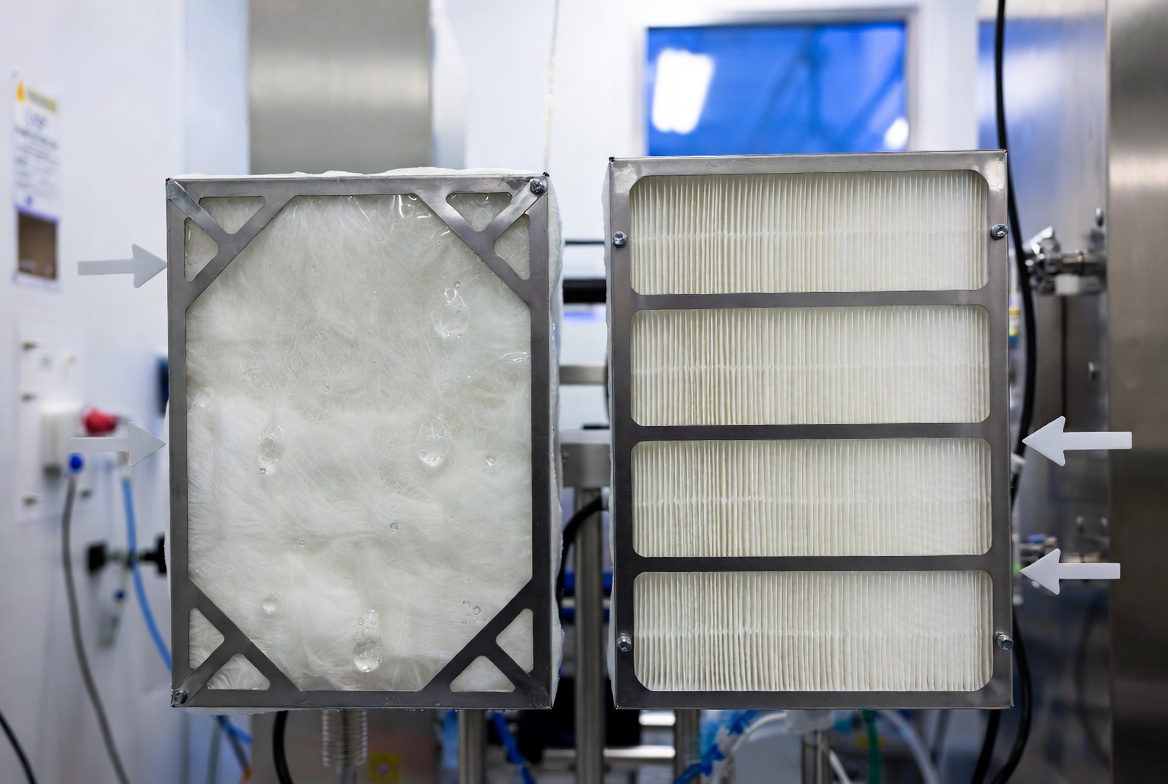
Synthetic Fiber Media Overview
Synthetic fiber media is usually made from polyester or other polymer-based materials. It is widely used in HVAC pre-filtration and medium filtration because it offers a good balance of durability, moisture resistance, and cost efficiency.
From an operational perspective, synthetic fiber media is often favored where humidity fluctuates or where filters may be exposed to wet air, condensation risk, or frequent system start-stop cycles. Its structure can be designed to resist water absorption better than traditional fibrous materials, which helps maintain more stable performance in humid environments.
Typical strengths of synthetic fiber media:
- Better resistance to moisture absorption.
- Lower risk of structural degradation in damp conditions.
- Good mechanical strength and tear resistance.
- Suitable for many pre-filter and fine-filter HVAC applications.
- Often easier to handle during maintenance.
Potential limitations:
- Performance depends heavily on media construction and quality.
- Some products may have lower thermal resistance than glass-based options.
- Not always the best choice for very high-temperature or specialty airflow conditions.
Glass Fiber Media Overview
Glass fiber media is made from fine glass fibers and is often associated with higher-temperature resistance and strong filtration efficiency in certain HVAC configurations. It has long been used in demanding air systems because the media structure can support fine particle capture and stable operation when properly designed.
However, glass fiber media is not automatically superior in humid conditions. Its performance depends on binder quality, media integrity, and the exact operating environment. In high humidity, some glass fiber filters may face concerns related to binder weakening, moisture sensitivity at the media matrix, or increased fragility during handling.
Typical strengths of glass fiber media:
- Strong filtration performance in many HVAC applications.
- Good thermal stability.
- Suitable for systems with strict airflow and efficiency requirements.
- Often used in higher-grade filtration stages.
Potential limitations:
- More fragile than synthetic alternatives in some formats.
- Moisture exposure may affect long-term structural reliability.
- Can be less forgiving during maintenance or installation.
- Quality varies significantly by manufacturer and binder system.
Humidity Resistance Comparison
For pharmaceutical HVAC systems, the most important question is not simply "which media filters better?" but which media stays reliable in real operating conditions. That includes relative humidity spikes, condensation risk, cleaning routines, and local climate.
Performance table
| Factor | Synthetic Fiber Media | Glass Fiber Media |
| Moisture absorption | Generally lower | Can be more sensitive depending on construction |
| Structural stability in humidity | Usually strong | May weaken if binder or media integrity is affected |
| Handling durability | Good | Often more fragile |
| Pressure drop stability | More predictable in damp environments | Can vary more if moisture affects structure |
| Thermal resistance | Moderate to good | Generally stronger |
| Best-fit use | Humid HVAC, pre-filtration, general pharmaceutical environments | Higher-efficiency applications where heat stability matters |
In many pharmaceutical HVAC systems, synthetic fiber media has an advantage in humidity resilience because it tends to remain more mechanically stable under damp conditions. Glass fiber media may still be appropriate in specific high-efficiency stages, but it should be selected carefully when humidity exposure is expected.
Pharmaceutical HVAC Selection Criteria
Choosing between the two media should never be based on material alone. Pharmaceutical plants need filters that match process risk, room classification, maintenance plan, and environmental load.
Use synthetic fiber media when:
- The facility operates in a humid climate.
- Condensation risk is present.
- Maintenance teams need more rugged, easier-to-handle filters.
- The application is pre-filtration or general air treatment.
- The plant prioritizes stable performance and lower lifecycle risk.
Use glass fiber media when:
- The HVAC design requires higher thermal resistance.
- Filtration efficiency requirements justify the material choice.
- The operating environment is dry and well-controlled.
- The system is engineered for precise media performance and strict handling controls.
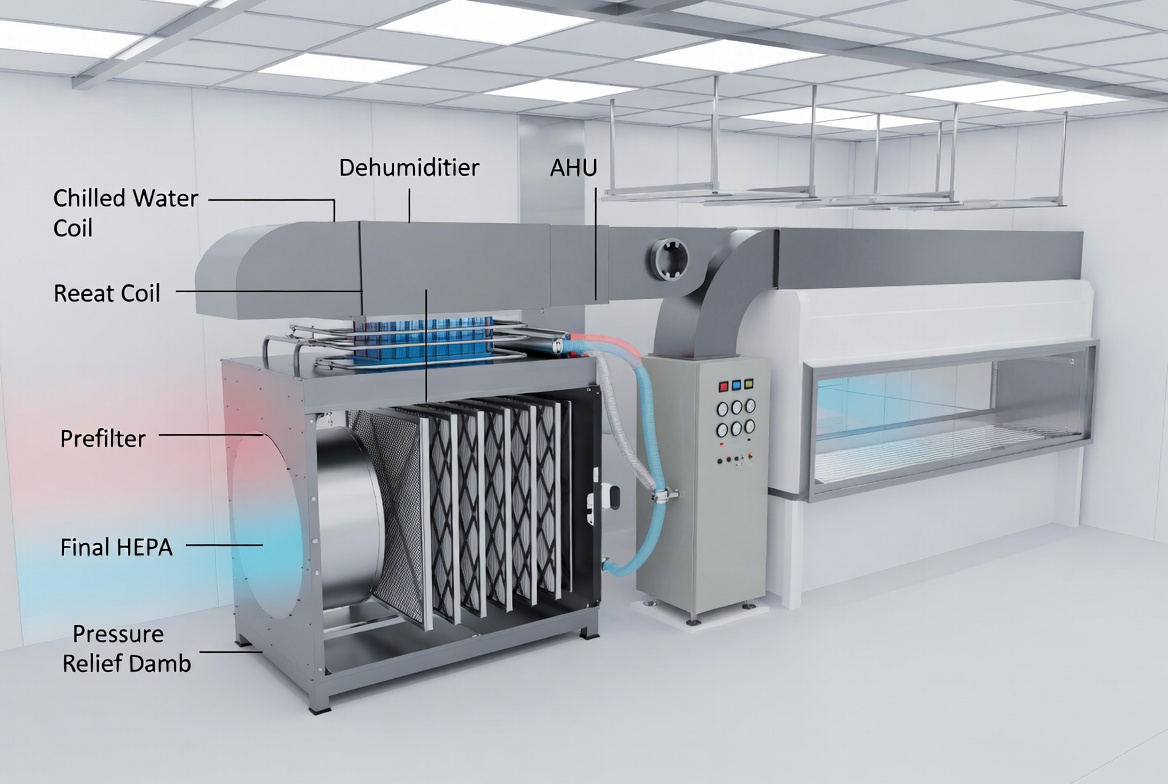
For regulated pharmaceutical facilities, the best practice is to assess the filter as part of the whole system, not as a standalone consumable. That means considering air velocity, filter loading, dew point control, duct insulation, AHU design, and room classification.
Latest Industry Perspective
A practical trend in pharmaceutical HVAC design is the shift toward risk-based material selection. Instead of choosing filters only by initial efficiency rating, engineers now pay closer attention to how the filter behaves under real production conditions such as seasonal humidity, CIP-adjacent support areas, and long maintenance intervals.
This is especially relevant for companies building new plants or expanding existing lines. In facilities that also include purified water preparation systems, sterilization cabinets, and pharmaceutical solution preparation systems, HVAC reliability affects the whole site layout. A weak filter choice can create unexpected downtime, more frequent replacement, and unstable environmental conditions that affect downstream operations.
What industry teams are focusing on now:
- More stable humidity performance across seasons.
- Lower total cost of ownership, not just lower purchase price.
- Easier validation and maintenance documentation.
- Better compatibility with GMP maintenance planning.
- Improved coordination between HVAC, utility rooms, and clean production zones.
Practical Engineering Case
Imagine a pharmaceutical plant in a coastal region with long humid summers. The HVAC system supports a cleanroom suite, weighing and dispensing areas, and adjacent utility rooms. The plant experiences condensation risk during early morning startup and during monsoon season.
In that case, synthetic fiber media may outperform glass fiber media in day-to-day operational reliability because it is less likely to suffer from moisture-related degradation. If the plant instead has a controlled low-humidity environment with a need for higher thermal tolerance, glass fiber media may remain a valid option at specific filtration stages.
The lesson is simple: the best media is the one that stays predictable under your actual operating conditions.
Maintenance and Validation Tips
Even the best filter media will fail early if the system is poorly managed. For pharmaceutical HVAC, filter performance should be maintained through regular inspections, documented replacements, and environmental monitoring.
Recommended steps:
1. Track differential pressure trends.
2. Inspect for condensation, leaks, or insulation failures.
3. Replace filters before structural breakdown occurs.
4. Record humidity excursions and correlate them with filter life.
5. Validate filter performance during seasonal worst-case conditions.
A good maintenance program protects not only the HVAC system, but also the cleanroom environment and the broader manufacturing process.
Expert Recommendation
From a pharmaceutical engineering perspective, synthetic fiber media is often the safer choice for humidity-prone HVAC environments because it tends to offer stronger moisture tolerance and more stable mechanical behavior. Glass fiber media remains valuable in certain higher-efficiency or higher-temperature applications, but it should be specified only after reviewing the plant's humidity profile, handling requirements, and long-term maintenance plan.
For facilities under GMP pressure, the right answer is rarely the cheapest filter. It is the filter that best supports compliance, uptime, and environmental stability.
How We Support Facility Planning
As a Chinese manufacturer focused on pharmaceutical equipment and production line solutions, Ningbo Everheal Medical Equipment Co., LTD. understands that HVAC is part of a larger facility ecosystem. When clients plan purified water preparation systems, sterilization cabinets, and pharmaceutical solution preparation systems, they also need coordinated plant layout and clean utility planning.
That is why HVAC media selection should be considered alongside:
- Room zoning.
- Process flow.
- Clean utility routing.
- Equipment footprint.
- Maintenance access.
- GMP compliance strategy.
This integrated approach helps reduce design conflicts and supports a smoother factory build-out.
FAQ
1. Is synthetic fiber media always better than glass fiber media in humid environments?
No. Synthetic fiber media is often more humidity-resistant, but the final choice depends on filtration stage, temperature, airflow, and GMP requirements.
2. Can glass fiber media be used in pharmaceutical HVAC systems?
Yes. It is commonly used in specific filtration stages, especially where efficiency or thermal stability matters, but it must be selected carefully for moisture exposure.
3. What is the biggest risk of using the wrong filter media?
The biggest risk is unstable performance, which can lead to higher pressure drop, more frequent changeouts, and possible environmental control issues.
4. How do I know if humidity is affecting my filters?
Watch for faster pressure drop increase, visible condensation, uneven loading, reduced airflow, or shortened service life during wet seasons.
5. Should filter media be selected separately from HVAC system design?
No. Media choice should be part of the full HVAC design, including duct insulation, dehumidification strategy, maintenance access, and room classification.
Conclusion and CTA
For pharmaceutical HVAC systems, the real decision is not synthetic fiber versus glass fiber in isolation. It is whether the filter can deliver stable performance, compliance support, and long-term reliability in your actual operating environment.
If your project includes a new factory, cleanroom expansion, or coordinated utility planning, you should evaluate HVAC filtration together with process layout, purified water systems, and production line design. A well-designed system saves cost, reduces risk, and supports GMP success from the start.
CTA: Contact our engineering team to discuss a customized pharmaceutical plant layout, clean utility planning, and HVAC-support strategy tailored to your production environment.
References
1. Centec GmbH. "PW Generator — Purified Water Systems for Pharmaceutical Use."
[https://www.centec.de/zh/product-page/pw-erzeuger]
2. Syntegon. "High-Purity Media Systems."
[https://www.syntegon.com.cn/solution-finder/pharma/pure-media-and-formulation-systems/]
3. Syntegon. "Drug Product Formulation Systems."
[https://www.syntegon.com.cn/solutions/pharma/drug-product-formulation-systems/]
4. Shanghai Jingze Clean Equipment Co., Ltd. "Aseptic Preparation System."
[http://winatechgroup.com/product/showproduct.php?id=13]
5. Sino Pharmatec. "Solution Preparation System."
[https://pharmatec-gmp.com/product/Solution-Preparation-System.html]


