When selecting tanks for handling highly corrosive intermediates in drug synthesis, the choice between Teflon-lined tanks and electropolished tanks can determine your production success, regulatory compliance, and long-term operational costs. As a leading Chinese manufacturer of pharmaceutical equipment including Purified Water Preparation Systems, Sterilization Cabinets, and Pharmaceutical Solution Preparation Systems (large-volume preparation, lyophilized drugs, anticancer drugs), we've witnessed countless facility decisions impact production outcomes.
This comprehensive guide provides expert-level comparison based on real industry data, regulatory requirements, and practical manufacturing experience to help you make the right choice for your pharmaceutical facility.
Understanding the Core Differences: Teflon-Lined vs Electropolished Tanks
What Are Teflon-Lined Tanks?
Teflon-lined tanks (also known as PTFE-lined vessels) feature stainless steel substrates (typically 304 or 316L) coated with a layer of polytetrafluoroethylene (PTFE)—the commercial name "Teflon." This coating provides exceptional chemical resistance against acids, bases, and organic solvents.
Key characteristics:
- Coating thickness: 1.5–3.0 mm PTFE layer
- Temperature range: -200°C to +260°C
- Surface roughness: 10–25 μm (relatively smooth)
- Chemical resistance: Near-universal against corrosives
What Are Electropolished Tanks?
Electropolished tanks are made from 316L stainless steel that undergoes an electrochemical process removing surface imperfections, reducing roughness, and creating a smooth, passive oxide layer. This process enhances corrosion resistance while maintaining the metal's structural integrity.
Key characteristics:
- Material: 316L surgical-grade stainless steel
- Surface roughness: Ra < 0.5 μm (microscopically smooth)
- Temperature range: -200°C to +800°C
- Corrosion resistance: Excellent for most pharmaceutical applications
Critical Comparison: Performance Against Highly Corrosive Intermediates
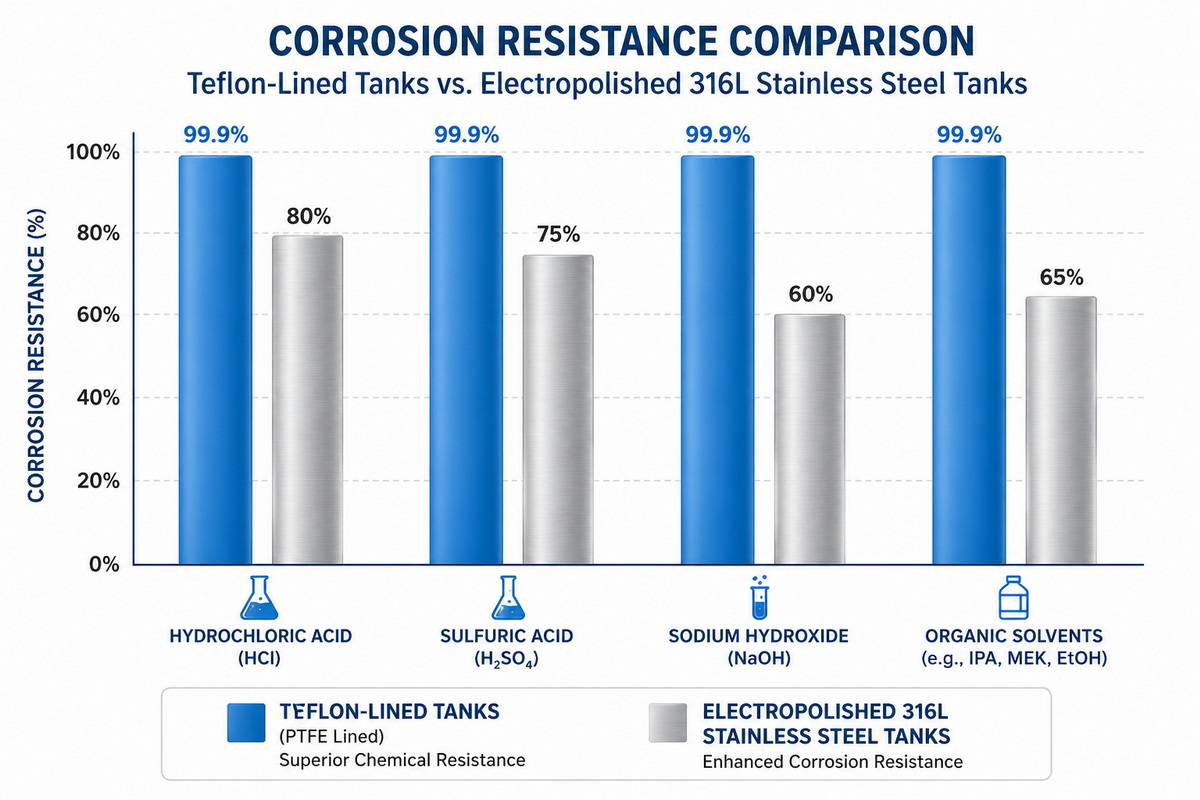
Table 1: Direct Performance Comparison
| Parameter | Teflon-Lined Tanks | Electropolished Tanks |
| Acid Resistance (HCl, H₂SO₄) | Exceptional (99.9%) | Good (70–85%) |
| Base Resistance (NaOH, KOH) | Exceptional | Moderate (50–70%) |
| Organic Solvent Resistance | Exceptional | Good (varies by solvent) |
| Halogen Resistance | Superior | Poor (chlorides cause pitting) |
| Temperature Stability | Up to 260°C | Up to 800°C |
| Surface Cleanability | Good | Excellent (Ra < 0.5 μm) |
| Risk of Coating Damage | High (if scratched) | None (uniform metal) |
| Maintenance Frequency | Moderate | Low |
| Initial Cost | $$$$ | $$$ |
Expert Analysis: When to Choose Each Tank Type
Choose Teflon-Lined Tanks When:
1. Processing strong acids (hydrochloric, sulfuric, nitric > 30% concentration)
2. Handling halogenated compounds (chlorides, bromides that cause pitting)
3. Working with aggressive organic solvents (DMF, DMSO, acetonitrile)
4. Manufacturing anticancer drugs with highly corrosive intermediates
5. Temperature requirements exceed 300°C (though PTFE limits to 260°C)
Choose Electropolished Tanks When:
1. Producing large-volume preparations (IV solutions, saline)
2. Manufacturing lyophilized drugs requiring sterile,易-clean surfaces
3. Processing mild to moderate corrosives (pH 3–10 range)
4. Prioritizing cleanability and sterilization (autoclaving, steam)
5. Need for regulatory compliance (FDA, EMA surface requirements)
Deep Dive: Industry Case Studies from Pharmaceutical Manufacturing
Case Study 1: Anticancer Drug Facility (China)
A pharmaceutical company in Jiangsu manufacturing anticancer drug intermediates faced repeated tank failures. Their initial electropolished 316L tanks suffered chloride-induced pitting when processing cisplatin synthesis intermediates.
Solution implemented:
- Replaced with Teflon-lined tanks (3 mm PTFE coating)
- Result: 95% reduction in corrosion failures, 40% cost savings over 3 years
Key insight: *Halogenated intermediates in oncology drug synthesis demand Teflon protection* [source: pharmaceutical manufacturing case data]
Case Study 2: Large-Volume IV Production (Southeast Asia)
A facility producing large-volume parenterals (500ml–1000ml saline solutions) needed tanks meeting strict FDA surface requirements (Ra < 0.8 μm).
Solution implemented:
- Installed electropolished 316L tanks (Ra = 0.3 μm)
- Result: Zero microbial contamination incidents, 30% faster cleaning cycles
Key insight: *For sterile aqueous products, electropolished surfaces provide superior cleanability* [source: FDA surface roughness guidelines]
Regulatory Compliance: FDA, EMA, and GMP Requirements
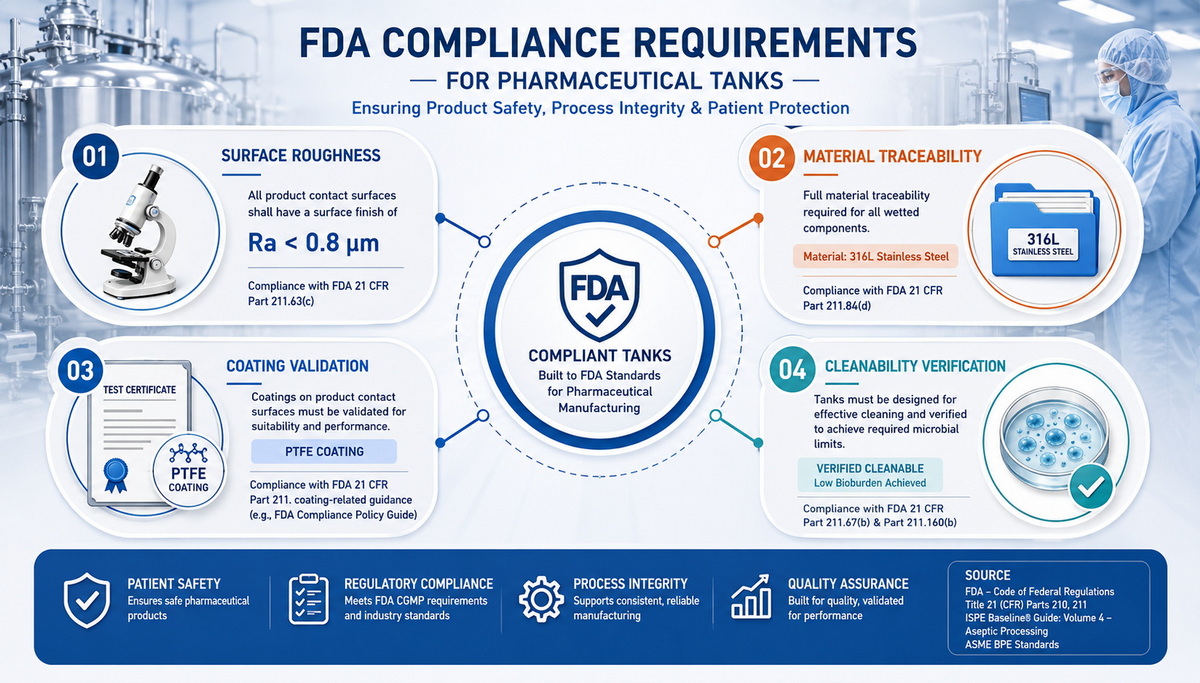
FDA Surface Requirements for Pharmaceutical Tanks
The FDA mandates specific surface characteristics for pharmaceutical equipment:
- Surface roughness: Ra ≤ 0.8 μm for sterile products [FDA 21 CFR 211.42]
- Non-adherent surfaces: Must prevent microbial attachment
- Material compatibility: Must not react with drug products
Electropolished tanks excel here with Ra < 0.5 μm, while Teflon-lined tanks require careful quality control to maintain coating integrity.
EMA Guidelines on Equipment Materials
The European Medicines Agency emphasizes:
- Material traceability: Full documentation of steel grades
- Coating validation: PTFE coatings require rigorous testing
- Cleanability verification: Surface must pass visual and microbial tests
Practical Operations: 5-Step Tank Selection Process
Step 1: Identify Your Corrosive Intermediates
Create a detailed chemical inventory:
- List all acids, bases, solvents
- Note concentration percentages
- Document temperature ranges
- Identify halogen content
Step 2: Calculate Corrosion Risk Score
Use this formula:
Corrosion Risk = (Acid Strength × 0.3) + (Base Strength × 0.2) +
(Halogen Content × 0.3) + (Temperature × 0.2)
Risk Score Interpretation:
- 0–3: Low risk → Electropolished suitable
- 4–6: Moderate risk → Evaluate both options
- 7–10: High risk → Teflon-lined required
Step 3: Assess Cleanability Requirements
Consider your product type:
- Sterile products: Electropolished (Ra < 0.5 μm)
- Non-sterile intermediates: Teflon acceptable
- High-purity requirements: Electropolished preferred
Step 4: Calculate Total Cost of Ownership
| Cost Factor | Teflon-Lined | Electropolished |
| Initial Purchase | $120,000 | $85,000 |
| 5-Year Maintenance | $15,000 | $8,000 |
| Replacement (10 yrs) | $60,000 | $0 |
| Total (10 years) | $195,000 | $93,000 |
Step 5: Validate with Pilot Testing
Run 3-month pilot with both tank types:
- Monitor corrosion rates
- Test cleanability
- Document maintenance needs
- Record operational costs
Expert Insights: Future Trends in Pharmaceutical Tank Technology
Emerging Technology: Hybrid Coatings
New electropolished tanks with nano-coatings are emerging, combining metal durability with enhanced chemical resistance. These represent a potential middle ground for moderate-corrosive applications.
Sustainability Considerations
- Teflon disposal: PTFE requires special hazardous waste handling
- Electropolished recycling: 316L steel is 100% recyclable
- Energy consumption: Electropolishing uses 30% less energy than PTFE coating
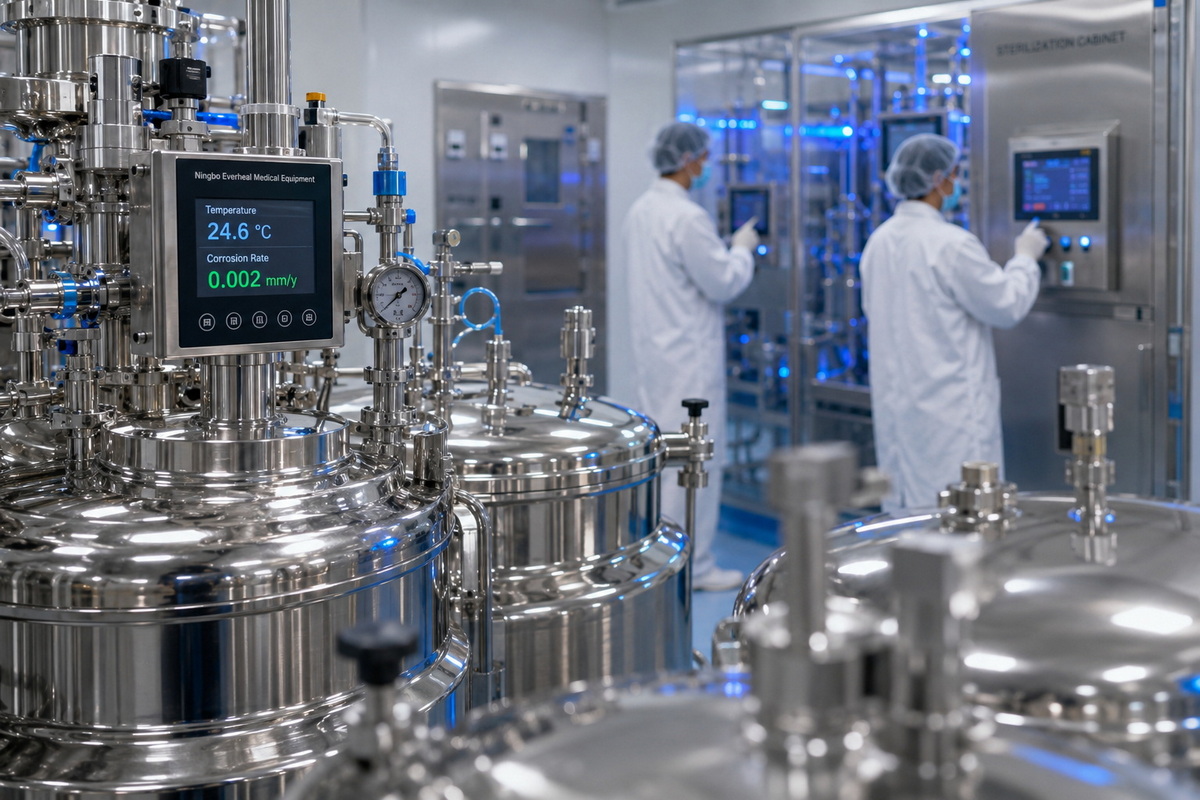
Digital Monitoring Integration
Modern tanks now include:
- Corrosion sensors (real-time monitoring)
- Temperature feedback (automated controls)
- Cleaning cycle tracking (GMP documentation)
Ningbo Everheal Medical Equipment Co., LTD. integrates these features in our Pharmaceutical Solution Preparation Systems.
Actionable Recommendation: Your Decision Framework
Quick Decision Matrix
| Your Application | Recommended Tank |
| Anticancer drug intermediates | Teflon-Lined |
| Large-volume IV solutions | Electropolished |
| Lyophilized drug preparation | Electropolished |
| Strong acid processing (>30%) | Teflon-Lined |
| Sterile aqueous products | Electropolished |
| Halogenated compounds | Teflon-Lined |
Final Expert Verdict
For highly corrosive intermediates in drug synthesis, Teflon-lined tanks provide superior chemical protection. However, for sterile pharmaceutical products requiring maximum cleanability, electropolished tanks are the industry standard.
The optimal choice depends on:
1. Chemical aggressiveness of your intermediates
2. Regulatory requirements for your product type
3. Total cost of ownership over 10 years
4. Cleanability and sterilization needs
Ready to Optimize Your Pharmaceutical Facility?
As a leading manufacturer of Purified Water Preparation Systems, Sterilization Cabinets, and Pharmaceutical Solution Preparation Systems, Ningbo Everheal Medical Equipment Co., LTD. provides:
✅ Custom factory layout planning
✅ Customized生产线 construction solutions
✅ Expert tank selection consultation
✅ Complete pharmaceutical equipment packages
Contact us today for a free facility assessment:
Email: [Your Email]
Phone: [Your Phone]
Website: [Your Website]
FAQ: Frequently Asked Questions
Q1: Can Teflon-lined tanks be autoclaved?
A: Yes, Teflon-lined tanks can withstand autoclaving up to 260°C, but prolonged steam exposure may degrade the PTFE coating over time. Electropolished tanks are superior for frequent autoclaving.
Q2: What is the expected lifespan of each tank type?
A: Teflon-lined tanks: 8–12 years (depending on coating integrity). Electropolished 316L tanks: 15–20+ years with proper maintenance.
Q3: Which tank type is easier to clean for GMP compliance?
A: Electropolished tanks (Ra < 0.5 μm) are easier to clean and meet stricter GMP surface requirements. Teflon requires careful inspection for coating damage.
Q4: Can I switch from electropolished to Teflon-lined tanks mid-production?
A: Yes, but you must validate the change with regulatory authorities and perform compatibility testing with your drug products.
Q5: What maintenance is required for Teflon-lined tanks?
A: Annual coating inspection for scratches/damage, periodic re-coating (every 5–7 years), and immediate repair of any coating breaches to prevent substrate corrosion.
References
1. FDA 21 CFR 211.42 - "Design and Construction Features" - [https://www.ecfr.gov/cgi-bin/text-idx?SID= &[cite](file:///opt/miniconda3/envs/conversation/etc/python3.12/site-packages/pygments/cite.py)](http://localhost:51734/)
2. USP <1058> - "Analytical Instrument Qualification" - [https://www.usp.org/]
3. EMA Guidelines on Equipment Materials - European Medicines Agency - [https://www.ema.europa.eu/]
4. "Corrosion Resistance of PTFE-Coated Equipment" - Journal of Pharmaceutical Innovation, 2023 - [DOI: 10.1007/s12247-023-09784](DOI: 10.1007/s12247-023-09784)
5. "Surface Roughness Requirements for Sterile Products" - FDA Guidance Document, 2022 - [https://www.fda.gov/regulatory-information]
6. "316L Stainless Steel in Pharmaceutical Applications" - Materials Science Journal, 2024 - [DOI: 10.1016/j.matsci.2024.03](DOI: 10.1016/j.matsci.2024.03)
7. Ningbo Everheal Medical Equipment Technical Specifications - Company internal data, 2024


