| Availability: | |
|---|---|
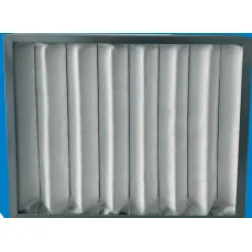
Washable Panel Air Filter: Your Reliable Solution for Cleaner Air
Elevate Air Quality with Ease:The M-WASH Washable Panel Air Filter is expertly designed to enhance air purity in various settings. Featuring a demountable frame, it's engineered for hassle-free maintenance and longevity.
High-Efficiency Filtration: Boasting a high dust holding capacity, this filter effectively traps contaminants, ensuring cleaner air. Its premium polyester synthetic fiber construction not only provides low resistance but also exhibits excellent fireproofing capabilities.
Eco-Friendly and Cost-Effective:Our washable filter material stands out for its sustainability. Recommended to be washed two or three times, it offers an eco-friendly alternative to disposable filters, reducing waste and saving costs.
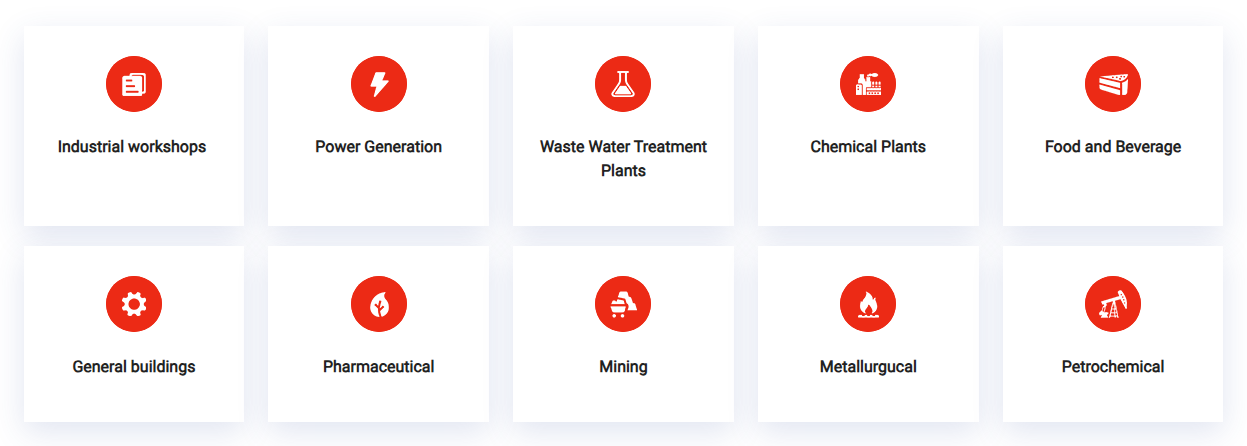
Versatile Applications: Ideal for prefiltration in air conditioning and ventilation systems, it prevents dust accumulation and extends the lifespan of HEPA filters. Its effectiveness in industry workshops and general building air systems makes it a versatile choice for maintaining air cleanliness.
Prolong Equipment Life: By filtering ventilation systems and upcast air, it not only improves air quality but also enhances the longevity of air handling units.
Invest in the M-WASH Washable Panel Air Filter for a sustainable, effective solution to your air filtration needs, ensuring cleaner, healthier air in various environments.
| Material | |
| Frame | Aluminum Alloy / Stainless Steel / Galvanized Steel Sheet |
| Thickness of Frame | 46mm, 96mm |
| Filter | Premium Polyester Synthetic Fiber |
| Rib Reinforcement | Galvanized / Spraying Paint Wire |
| Connection Angle | Aluminum Alloy Angle |
Mainly Applications
Hot Tags: Washable Panel Air Filter, Panel Air Filter, Washable Metal Mesh Air Filters, Washable Air Filter, Metal Mesh Air Filters, Mesh Air Filter, Air Filter Pre Filter, Metal Air Filters, Washable Metal Air Filters, Metal Mesh Filters, China, Customized, OEM, Low price, manufacturing company, manufacturers, factory, suppliers, quotation, for sale
Filling machines are a critical part of pharmaceutical manufacturing, influencing accuracy, sterility, efficiency, and compliance. This article explains the working principles of major filling technologies, compares their strengths, and helps manufacturers choose the right solution for modern pharma production lines.
This article explains the different types of capsule filling machines and their industrial uses, with practical guidance for pharma manufacturers. It compares manual, semi-automatic, automatic, liquid, and multi-material systems, then adds expert insights on selection, containment, plant layout, and line integration.
Pure steam is critical in pharmaceutical plants, but not all pure steam applications require the same quality. This article compares pure steam for autoclaves and humidification from a GMP, engineering, and SEO perspective, helping manufacturers choose the right system, avoid validation risks, and improve plant design efficiency.
Interlocking pass boxes and air showers are both important tools for pharmaceutical contamination control, but they serve different roles. This article compares their functions, GMP relevance, selection criteria, and best-use scenarios to help pharma manufacturers choose the right material transfer solution.
This article compares synthetic fiber media and glass fiber media in pharmaceutical HVAC systems, with a focus on humidity resistance, GMP reliability, maintenance, and lifecycle performance. It is written for pharma plant engineers, cleanroom planners, and facility decision-makers seeking practical, compliance-aware guidance.
This article compares **aluminum vs stainless steel frames** for washable air filters from a pharmaceutical and industrial engineering perspective. It explains durability, corrosion resistance, lifecycle value, and application fit, while giving practical decision rules, SEO-friendly structure, and B2B-ready CTA guidance.
Capsule filling is a critical step in pharmaceutical manufacturing. This guide explains the different types of capsule filling, their applications, advantages, and limitations, while also offering expert advice on choosing the right system, improving plant layout, and building a more efficient production line.
This article compares liquid bottle filling machines and pharmaceutical liquid filling systems from a practical, SEO-focused, and engineering perspective. It explains key differences, selection criteria, industry trends, and layout planning tips to help pharmaceutical manufacturers choose the right solution for compliant, efficient, and scalable production.
Capsule filling machines are essential for pharmaceutical and nutraceutical production. This guide explains machine types, working principles, applications, benefits, and buying tips from an industry expert perspective, helping manufacturers choose the right solution for efficient, compliant, and scalable capsule production.
This article compares gel-seal and gasket-seal HEPA filters for pharmaceutical facilities operating in high-vibration environments. It explains long-term seal integrity, maintenance trade-offs, validation impacts, and selection criteria, while offering practical guidance for GMP cleanrooms and production plants.
This article compares Form-Fill-Seal (FFS) and pre-made pouch filling for large-volume parenterals, focusing on cost, sterility, layout planning, and total cost of ownership. It helps pharmaceutical manufacturers choose the right packaging strategy for long-term efficiency and GMP-compliant production.
This article compares rubber stopper vibratory bowls and centrifugal feeders from a pharmaceutical GMP perspective, focusing on particulate generation, cleanability, integration, and real-world selection logic. It is written for manufacturers planning sterile production lines, especially where contamination control, layout planning, and high-value drug preparation are critical.
Automatic vial loading and manual tray loading both serve sterile manufacturing, but they create very different contamination risks and operating outcomes in Grade A zones. This article compares them from engineering, compliance, and production perspectives, helping pharmaceutical manufacturers choose the most effective aseptic loading strategy.
Laser coding and thermal transfer printing both serve sterile bottle capping lines, but durability, compliance, and maintenance needs differ sharply. This article compares permanence, readability, sterile handling performance, and implementation strategy to help pharma manufacturers choose the best coding method.
Inline weight checking and statistical sampling are two key quality control methods for high-speed powder packing lines. This article compares their accuracy, cost, compliance value, and practical use in GMP manufacturing, helping pharmaceutical producers choose the right control strategy for better performance.
RABS vs Isolator Technology for BFS Filling Lines is a practical, SEO-optimized guide for aseptic manufacturing decision-makers. It compares compliance, contamination control, lifecycle cost, and operational flexibility, helping pharma plants choose the right barrier strategy for safer, stronger BFS production.
This article compares mass flow meters and vacuum filling for expensive biologic drugs, focusing on how manufacturers can achieve ±0.5% accuracy, improve GMP compliance, reduce overfill waste, and design a more efficient pharmaceutical production line.
This article compares peristaltic pumps and rotary piston pumps in vial filling machines, focusing on their impact on particle count, shear stress, and formulation safety. It offers an expert, SEO-friendly guide for pharmaceutical manufacturers seeking better aseptic filling decisions, stronger GMP compliance, and lower contamination risk.
This article compares mobile mixing tanks and fixed piping installations for small-batch pharmaceutical R&D, focusing on flexibility, efficiency, GMP compliance, clean utility integration, and scale-up readiness. It includes practical selection guidance, FAQ, visual suggestions, and an Everheal-oriented CTA.
This article compares vacuum mixing and atmospheric mixing for sterile liquid filling, focusing on air entrapment, foam control, and aseptic process reliability. It provides a practical selection guide, implementation steps, visual suggestions, FAQs, and references to help pharmaceutical manufacturers choose the right mixing strategy.