Content Menu
● What Is a Fully Automatic Linear Tube Filling Machine?
● Why Linear Tube Filling Systems Matter in Pharmaceutical Production
● Main Applications of the Machine
● Key Advantages of the Linear Design
● Important Features to Evaluate
● Technical Considerations Before Selection
● How It Supports a Pharmaceutical Production Line
● Quality and Compliance Considerations
● How to Choose the Right Supplier
● Production Efficiency and Long-Term Value
● Practical Installation and Operation Tips
● Why This Machine Fits Modern Pharmaceutical Manufacturing
● Conclusion
● FAQ
>> 1. What products can a fully automatic linear tube filling machine handle?
>> 2. Why is the linear design useful?
>> 3. Can the machine be used in pharmaceutical production?
>> 4. What should I check before buying one?
>> 5. Can this machine be integrated into a complete line?
● References
What Is a Fully Automatic Linear Tube Filling Machine?
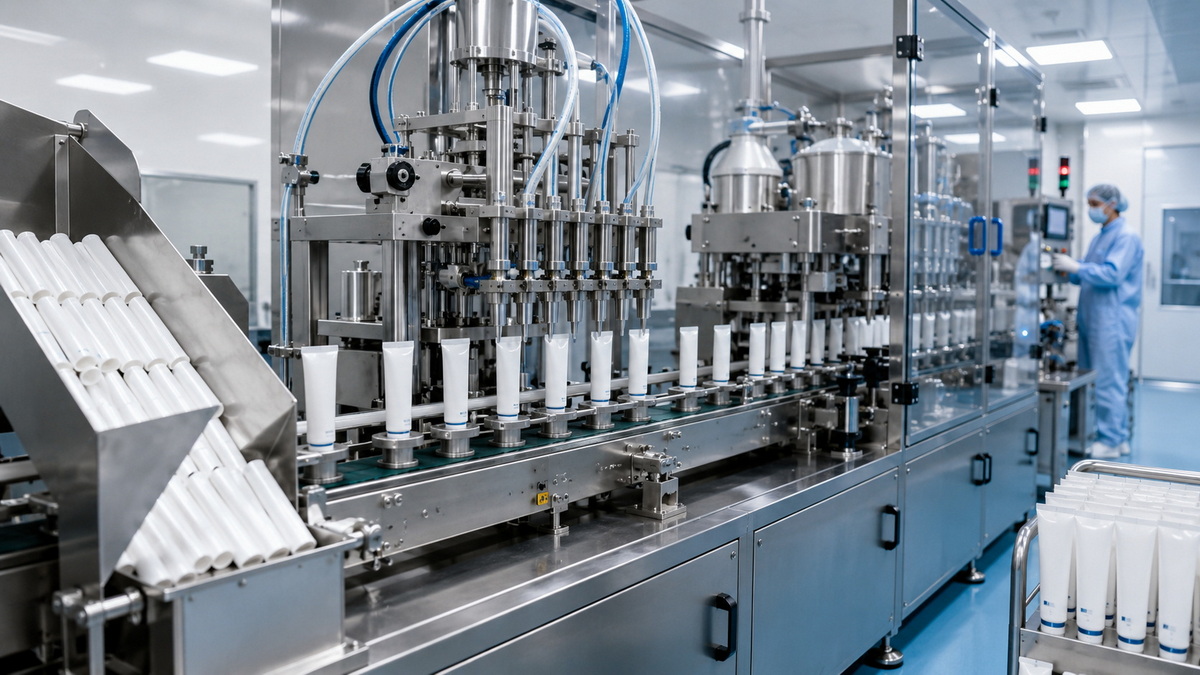
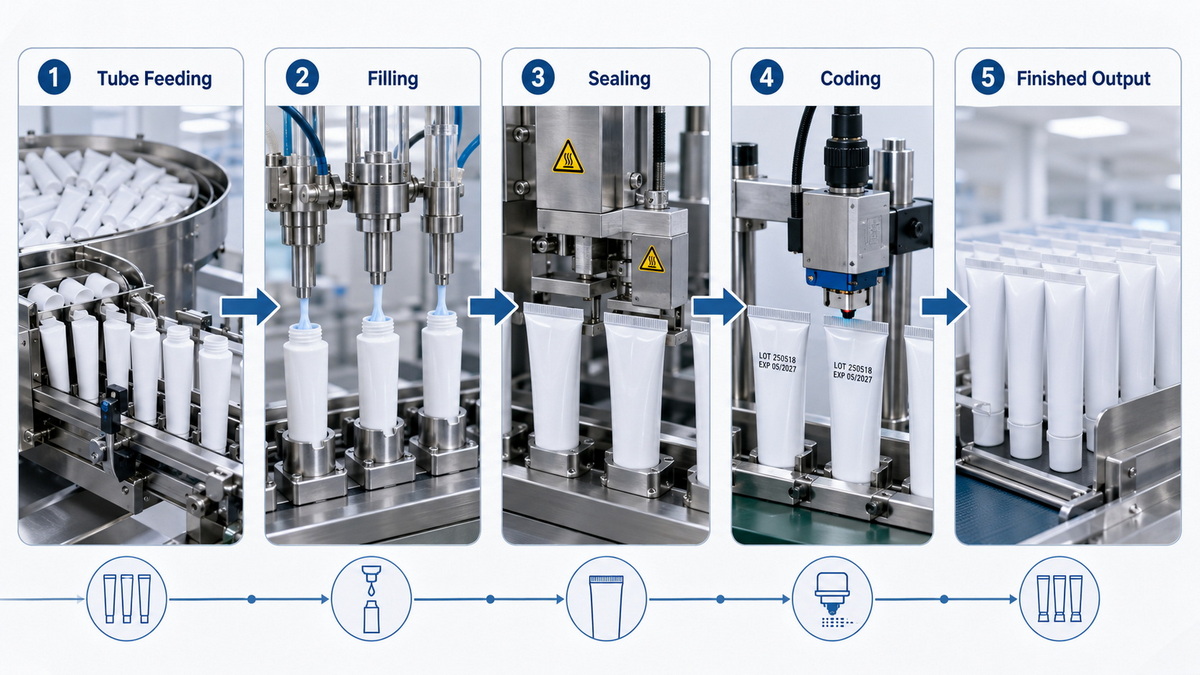
A fully automatic linear tube filling machine is designed to automate the process of feeding, filling, sealing, and discharging tubes in a continuous production flow. It is widely used in pharmaceutical manufacturing because it helps maintain consistent product quality while reducing manual handling.
Unlike semi-automatic systems, a fully automatic machine can complete multiple steps in one coordinated process. This improves efficiency, reduces operator dependency, and supports more stable packaging output. For manufacturers that work with regulated products, this kind of equipment plays an important role in maintaining hygiene, repeatability, and production control.
Why Linear Tube Filling Systems Matter in Pharmaceutical Production
Linear tube filling systems are valued for their practical structure and straightforward operation. The linear layout makes it easier to understand each production stage, which is useful for both operators and maintenance teams. It also allows manufacturers to organize the filling process in a way that supports inspection, cleaning, and machine adjustment.
In pharmaceutical production, packaging quality is closely linked to product safety and brand trust. A reliable tube filling machine helps reduce problems such as inaccurate filling, weak sealing, tube deformation, and product waste. These advantages are especially important for companies producing creams, ointments, gels, and other dosage forms that require careful packaging control.
Main Applications of the Machine
Fully automatic linear tube filling machines are commonly used for a wide range of pharmaceutical and healthcare products. They are suitable for products that require accurate dosing and clean, attractive packaging.
Typical applications include:
- Creams and topical ointments.
- Gels and semisolid formulations.
- Toothpaste and oral care products.
- Skincare and dermatological products.
- Specialty pharmaceutical preparations.
- Industrial pastes and similar viscous materials.
Because these products often differ in viscosity, flow behavior, and packaging requirements, the machine must be configured with suitable filling and sealing settings. This flexibility is one of the main reasons manufacturers choose this type of equipment.
Key Advantages of the Linear Design
The linear design offers several practical advantages for production teams. First, it supports a clear and organized workflow, which helps operators monitor the filling process more easily. Second, it can simplify maintenance because the machine structure is usually more accessible than more complex systems.
Another advantage is adaptability. A linear machine can often be adjusted for different tube sizes, product types, and production needs. For manufacturers that regularly handle multiple formulations, this flexibility can improve line utilization and reduce downtime during changeover.
The system also supports more stable performance in plants that prioritize controlled output and easy supervision. For many pharmaceutical manufacturers, that balance between automation and operational clarity is a major benefit.
Important Features to Evaluate
When selecting a fully automatic linear tube filling machine, manufacturers should look beyond basic speed and focus on the features that affect daily production.
Important features include:
- Precise filling control for consistent dosing.
- Automatic tube feeding and orientation.
- Reliable sealing performance.
- Easy-to-use control interface.
- Stable mechanical movement for long production runs.
- Hygienic contact parts for easier cleaning.
- Alarm and safety functions for operator protection.
- Format change capability for different tube specifications.
These features directly influence efficiency, product consistency, and production stability. A machine that is easy to operate and maintain often delivers better long-term value than one that only offers a high theoretical output rate.
Technical Considerations Before Selection
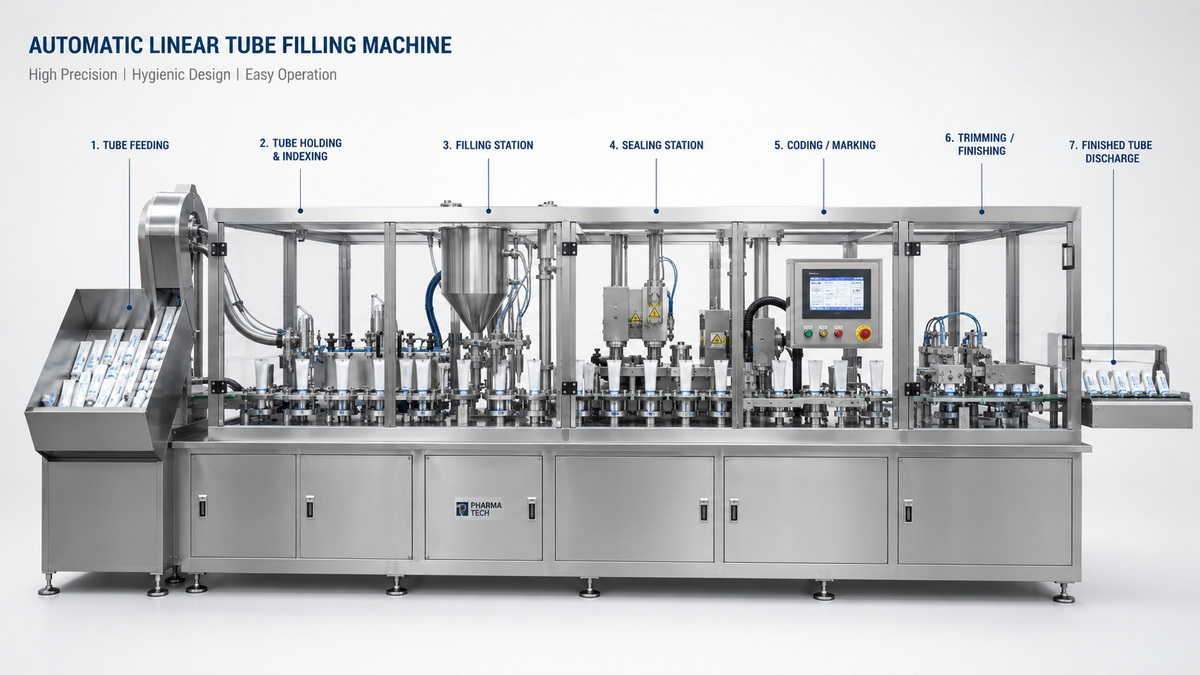
Before purchasing a tube filling machine, it is important to define the product and process requirements clearly. Different products behave differently during filling, and this affects how the equipment should be configured.
Key technical factors include:
- Tube material and tube diameter.
- Tube length and sealing style.
- Product viscosity and flow characteristics.
- Required filling accuracy.
- Target production capacity.
- Plant layout and available installation space.
- Cleanroom and hygiene requirements.
- Control system and data recording needs.
A well-defined equipment specification helps reduce selection errors and makes it easier to compare suppliers. It also supports smoother commissioning later in the project.
How It Supports a Pharmaceutical Production Line
A fully automatic linear tube filling machine is often one part of a larger packaging line. It may work together with tube loading systems, batch coding equipment, inspection units, cartoning machines, and secondary packaging devices.
When properly integrated, the machine helps improve the overall flow of the production line. This reduces bottlenecks, shortens handling time, and supports a more organized factory layout. For manufacturers planning new production facilities, the tube filling machine should be considered not only as a single device but as part of the full manufacturing system.
This broader perspective is especially important for companies that are building or expanding pharmaceutical production lines. Careful coordination between equipment selection, layout planning, and workflow design can have a strong impact on long-term productivity.
Quality and Compliance Considerations
In pharmaceutical manufacturing, packaging equipment must support a clean and controlled environment. That means the machine should be designed with hygienic materials, easy-clean surfaces, and stable operating performance. It should also support traceability and process consistency.
Manufacturers often prefer equipment that can be documented clearly and operated with repeatable settings. This makes it easier to standardize production and maintain quality across batches. Reliable sealing, accurate filling, and consistent machine movement all contribute to stronger production control.
For companies serving regulated markets, the ability to maintain stable and predictable packaging performance is a major requirement. That is why equipment selection should always include both technical performance and practical production suitability.
How to Choose the Right Supplier
Choosing the right supplier is just as important as choosing the right machine. A strong supplier should be able to understand the product, the production environment, and the long-term goals of the buyer.
A reliable supplier should provide:
- Clear technical communication.
- Equipment customization options.
- Support for factory layout and line planning.
- Guidance for installation and commissioning.
- Spare parts and after-sales support.
- Practical experience with pharmaceutical projects.
For buyers, this reduces project risk and helps ensure the machine will fit the actual production environment. It also improves the chances of a smoother setup and more stable performance after delivery.
Production Efficiency and Long-Term Value
A well-designed tube filling machine can improve both short-term and long-term production performance. In the short term, it helps reduce manual work and improve packaging consistency. Over time, it can also support better resource use, lower waste, and more efficient line operation.
Another important benefit is repeatability. Once the machine is properly set up, it can deliver stable output across batches with less variation. This is especially valuable for pharmaceutical manufacturers that need dependable packaging results and predictable process control.
For teams planning future capacity growth, equipment that can support multiple products and formats may also offer stronger long-term value. This reduces the need for frequent replacement and helps the production line remain flexible as business needs change.
Practical Installation and Operation Tips
To get the best performance from a fully automatic linear tube filling machine, manufacturers should pay attention to installation and daily operation.
Useful practices include:
1. Confirm the installation space before delivery.
2. Make sure the machine layout matches the factory workflow.
3. Train operators on product changeover and routine maintenance.
4. Check tube compatibility before production starts.
5. Monitor filling accuracy and sealing quality during startup.
6. Keep cleaning and inspection procedures consistent.
These steps help reduce setup problems and support smooth operation from the beginning. They also improve the stability of the production process during routine use.
Why This Machine Fits Modern Pharmaceutical Manufacturing
Modern pharmaceutical manufacturing depends on efficiency, reliability, and control. A fully automatic linear tube filling machine fits these needs by combining automation with practical design. It helps manufacturers package products accurately while keeping the process organized and easier to manage.
The machine is especially useful for companies that need a balance between production speed and operational flexibility. It supports the changing requirements of pharmaceutical packaging while maintaining the quality standards expected in professional production environments.
Conclusion
A fully automatic linear tube filling machine is a practical and efficient solution for pharmaceutical companies that need accurate tube packaging and stable production performance. It supports a wide range of formulations, works well in organized production lines, and offers the flexibility needed for different manufacturing requirements.
For companies planning new projects or upgrading existing lines, this type of machine can be an important part of building a more efficient and dependable packaging system.
FAQ
1. What products can a fully automatic linear tube filling machine handle?
It can handle creams, ointments, gels, pastes, toothpaste, and other viscous products packaged in tubes.
2. Why is the linear design useful?
The linear design makes the production flow easier to manage, maintain, and monitor during operation.
3. Can the machine be used in pharmaceutical production?
Yes, it is commonly used in pharmaceutical manufacturing for products that require accurate filling and clean packaging.
4. What should I check before buying one?
You should check tube size, product viscosity, filling accuracy, production capacity, sealing method, and factory layout requirements.
5. Can this machine be integrated into a complete line?
Yes, it can be connected with coding, inspection, cartoning, and secondary packaging equipment.
References
1. Research and Markets. Tube Filling and Sealing Equipment Market Report 2026. [https://www.researchandmarkets.com/reports/6215478/tube-filling-sealing-equipment-market-report]
2. Mordor Intelligence. Filling Machines Market Size, Growth Drivers, Forecast. [https://www.mordorintelligence.com/industry-reports/global-filling-machines-market]
3. OSTI. User Requirements Specification: Vaccine Filling Equipment. [https://www.osti.gov/servlets/purl/1690345]
4. GII Research. Tube Filling Machine Global Market Report 2026. [https://www.giiresearch.com/report/tbrc1933669-tube-filling-machine-global-market-report.html]
5. JMP. Appendix B: URS for Sachet Filling Machine. [https://jmp.com.hk/wp-content/uploads/2025/08/Appendix-B-URS-JMP-Sachet-Machine.pdf]
6. Archive Market Research. Fully Automatic Tube Filling Equipment Analysis 2026 and ... [https://www.archivemarketresearch.com/reports/fully-automatic-tube-filling-equipment-790366]


