In pharmaceutical manufacturing, filling machines are not just production tools; they are critical control points that affect dosage accuracy, sterility, line efficiency, and regulatory compliance. Understanding their working principle helps manufacturers choose the right equipment, reduce contamination risk, and improve the stability of the entire filling process. [biotechpharmamarketing]
For companies planning a new facility or upgrading an existing line, the real question is not only "How does a filling machine work?" but also "Which filling principle best fits my product, container, and production environment?" That is where the comparison becomes most valuable. [webfx]
Why Filling Machines Matter in Pharma
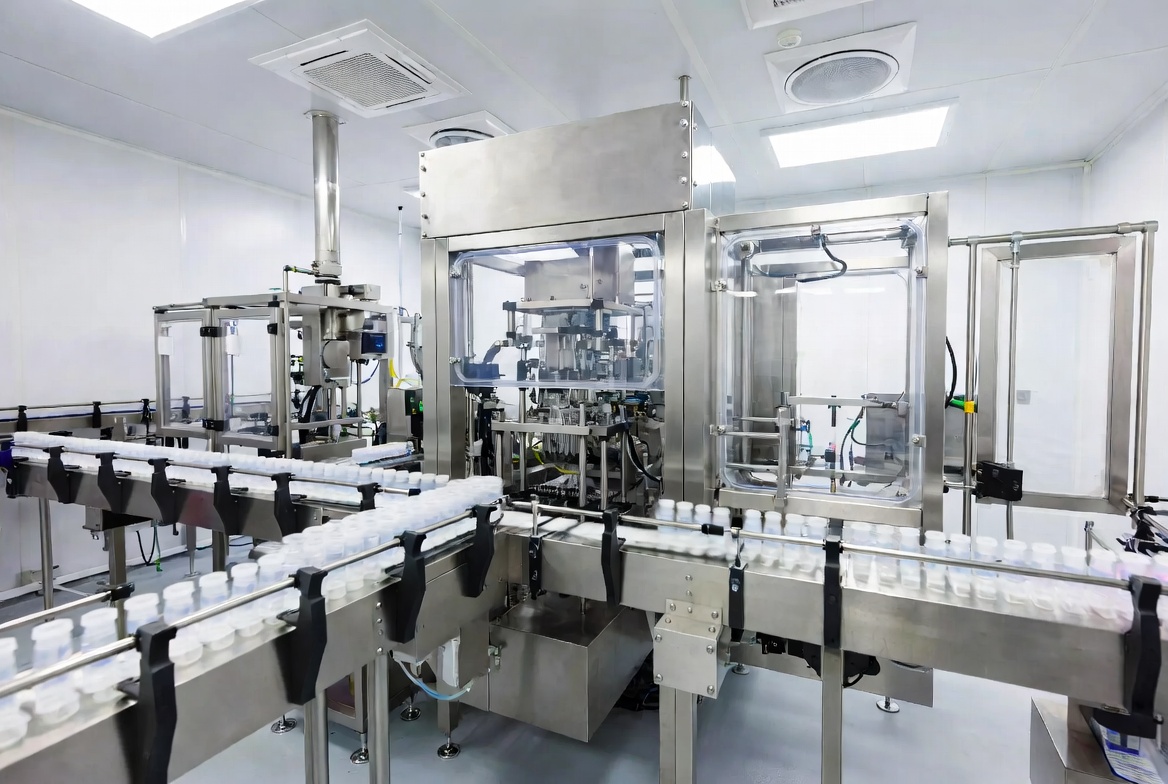
Filling is one of the most sensitive stages in pharmaceutical production. A small deviation in fill volume, particle handling, or sealing environment can lead to product waste, batch failure, or compliance issues. This is especially important in large-volume parenterals, lyophilized products, and oncology formulations, where process integrity directly affects patient safety.
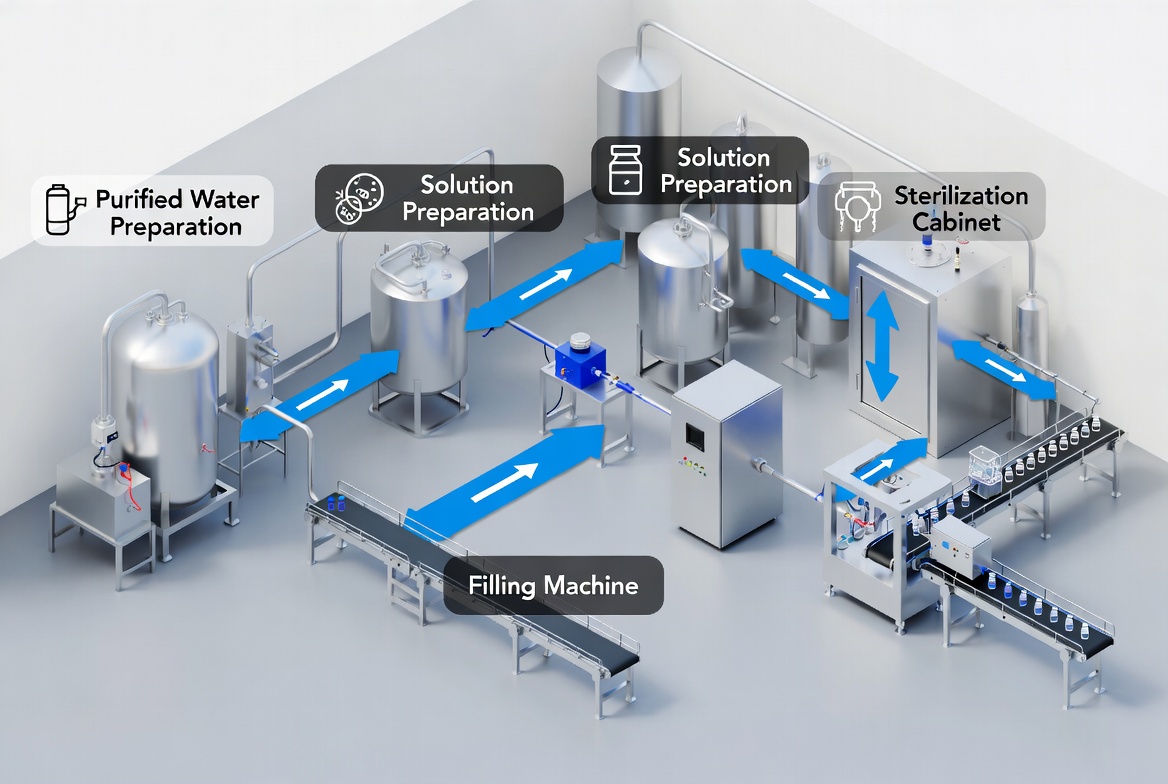
In a modern production line, the filling machine must work together with upstream water preparation, solution preparation, sterilization, and downstream packaging systems. For this reason, manufacturers like Ningbo Everheal Medical Equipment Co., LTD. often design filling-related solutions as part of a complete pharmaceutical plant layout rather than as isolated equipment.
In practice, a good filling system should deliver:
- Accurate dose control.
- Stable production speed.
- Minimal product loss.
- Reduced human intervention.
- Cleanability and validation readiness.
- Compatibility with different container types.
What a Filling Machine Does
A filling machine transfers a product from a supply tank, hopper, or preparation vessel into a final container such as a bottle, vial, ampoule, syringe, or bag. The machine must control the amount of product delivered into each unit while keeping the process stable and repeatable.
In pharmaceutical settings, the filling step may handle:
- Liquids.
- Suspensions.
- Powders.
- Semi-solids.
- Sterile solutions.
The right filling technology depends on viscosity, foaming tendency, sterilization requirement, dosage range, and container geometry.
Filling Machine Working Principle
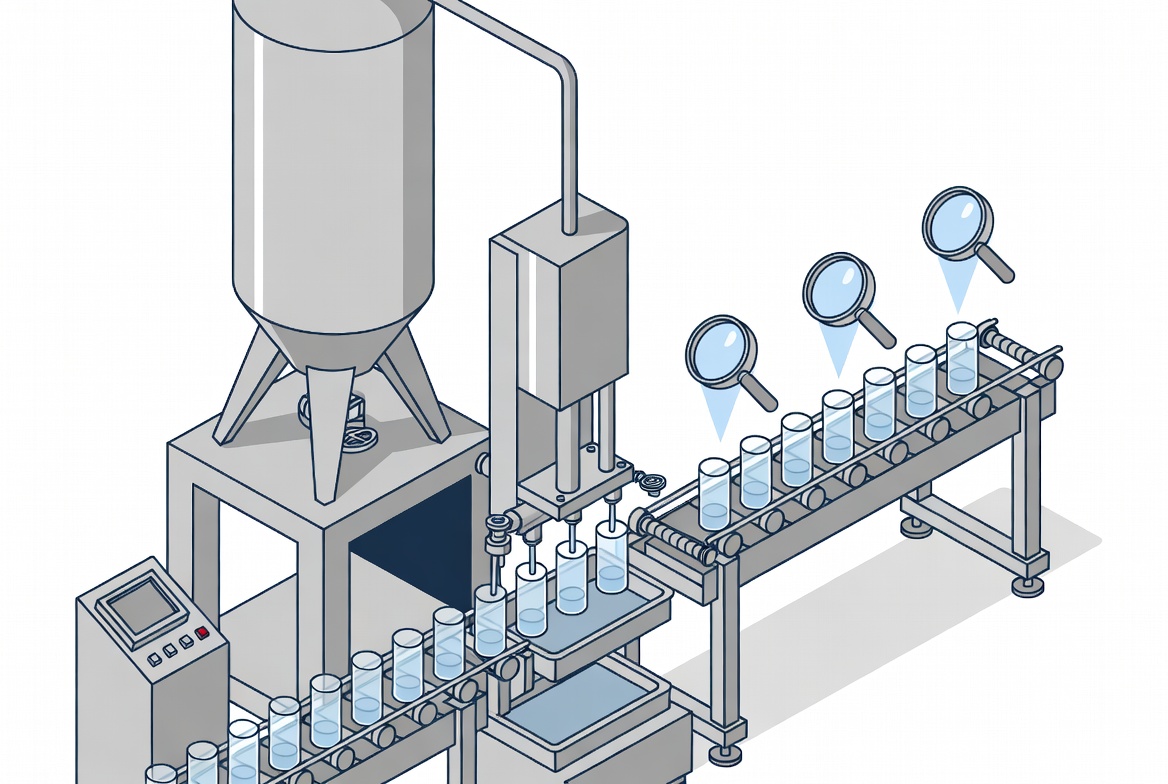
At the core, most filling machines follow the same logic: measure, dispense, verify, and move forward. The product is first supplied from a holding tank or preparation system. Then the machine uses a filling mechanism to deliver a defined amount into each container. After dispensing, the container either proceeds to the next station or is rejected if an error is detected.
A typical cycle includes:
1. Product feed
The product is transferred into the machine from a buffer tank or process vessel.
2. Container positioning
Bottles, vials, or other containers are aligned precisely under the filling nozzles.
3. Dose measurement
The machine determines the fill amount using a specific principle, such as volumetric, peristaltic, piston, gravity, or net-weight control.
4. Filling action
The machine dispenses the product into the container.
5. Level or weight check
Sensors or inspection systems confirm whether the dose is within specification.
6. Transfer to the next process
Filled containers move to capping, sealing, lyophilization, or packaging.
This principle sounds simple, but the engineering behind it is highly specialized. The filling method must match the physical behavior of the product.
Main Filling Principles Compared
Different machines use different filling principles. Choosing the wrong one can create foaming, overflow, inaccurate dosing, or sterility concerns. The table below helps compare the most common principles used in pharma and related industries.
| Filling principle | How it works | Best for | Advantages | Limitations |
| Gravity filling | Uses product weight and flow to fill containers | Low-viscosity liquids | Simple, cost-effective, stable for free-flowing products | Less accurate for viscous or foaming products |
| Volumetric filling | Measures a fixed volume each cycle | Liquids and some semi-liquids | Good repeatability, flexible | May require recalibration for product changes |
| Piston filling | A piston draws and dispenses a set amount | Viscous products, suspensions | High accuracy, handles thick products well | More mechanical parts, higher maintenance |
| Peristaltic filling | Tubing is compressed to move liquid through a sterile path | Small-volume sterile applications | Excellent for sterility, easy cleaning, low cross-contamination risk | Tubing wear and limited throughput |
| Net-weight filling | Fills until target weight is reached | High-value or highly regulated products | Very accurate, good for compliance | More complex and usually higher cost |
For many pharmaceutical manufacturers, the most important decision is not speed alone. It is the balance between accuracy, cleanliness, validation, and product compatibility.
Why the Working Principle Must Match the Product
A filling machine that performs well on one product may fail on another. For example, a free-flowing oral solution behaves very differently from an oncology drug or a lyophilized preparation. Product viscosity, foaming, sensitivity to shear, and sterility requirements all affect performance.
Here is a practical way to think about selection:
- Low-viscosity liquids often suit gravity or volumetric systems.
- Thick or sticky products usually need piston-based filling.
- Sterile or small-batch applications often benefit from peristaltic systems.
- High-accuracy regulated products may justify net-weight filling.
For pharmaceutical producers, this is where process engineering becomes important. The machine is not chosen in isolation; it should fit the full process flow from solution preparation to final packaging.
Typical Applications in Pharma Production
Filling machines are used across a wide range of pharmaceutical production lines. Their working principle changes slightly depending on the dosage form and container type.
Common applications include:
- Large-volume parenterals.
- Lyophilized drug preparation lines.
- Anticancer drug preparation lines.
- Oral liquid filling.
- Sterile water or solution filling.
- Ampoule and vial production.
- Bag or bottle-based filling systems.
In these applications, the machine often works together with sterilization equipment, cleanroom systems, and automated inspection units. That integration is especially important when the product must remain sterile throughout the process.
A Manufacturer's Selection Framework
When advising pharmaceutical plants, I usually recommend evaluating filling machines through six questions before purchase or layout planning.
1. What product will be filled?
Viscosity, sensitivity, and sterility requirements matter.
2. What is the target container?
Bottles, vials, ampoules, or bags each require different handling.
3. What is the required accuracy?
The tighter the tolerance, the more advanced the filling principle should be.
4. What production speed is needed?
High throughput may require a different configuration from small-batch production.
5. How will the machine be cleaned and validated?
Cleanability is essential for compliant pharma operations.
6. How will it connect to upstream and downstream systems?
This includes purified water preparation, solution tanks, sterilization, labeling, and packaging.
This framework reduces the risk of buying equipment that looks efficient on paper but fails in real production.
Industry Insight: What Has Changed
The market trend is moving toward greater automation, tighter process control, and more flexible line design. Pharmaceutical manufacturers want systems that can support multiple products, reduce operator dependency, and simplify cleaning validation.
Another important shift is the increasing demand for integrated production planning. Instead of buying a filling machine alone, many factories now seek a complete solution that includes:
- Facility layout planning.
- Utility system design.
- Sterile process integration.
- Customized production line configuration.
That is especially relevant for companies building new plants or expanding capacity in regulated markets. In those cases, the filling machine is only one part of a larger manufacturing strategy.
Practical Operating Steps
To improve daily operation, the filling machine should be managed as a controlled process, not a standalone device.
A simple operating workflow is:
1. Verify product readiness and batch documentation.
2. Confirm equipment cleaning and sterilization status.
3. Check container supply and alignment.
4. Run a short test cycle.
5. Confirm fill volume or weight.
6. Start full production only after first-pass approval.
7. Monitor rejection rate and fill consistency during the run.
8. Record final batch data for traceability.
This kind of routine supports quality assurance and reduces avoidable downtime.
Why This Matters for Plant Design
For a manufacturer such as Ningbo Everheal Medical Equipment Co., LTD., the value is not only in supplying equipment. It is in helping clients design a complete production ecosystem where purified water preparation, solution compounding, sterilization, and filling operate as one coordinated system.
That broader approach is more useful for pharmaceutical clients because it reduces interface problems between equipment, improves installation planning, and supports long-term scalability. In other words, the best filling machine is the one that fits the whole plant.
Choosing the Right Partner
A reliable equipment partner should be able to explain:
- The working principle of each filling technology.
- The limitations of each option.
- The required utility and cleanroom conditions.
- Layout planning for the entire line.
- Customization based on product type and capacity.
This is where technical consulting becomes as important as equipment supply. Pharmaceutical buyers do not just need a machine; they need a production solution.
Final CTA
If you are planning a new pharmaceutical plant or upgrading an existing filling line, start with process design, not equipment price alone. A well-matched filling system can improve accuracy, reduce contamination risk, and simplify validation across the entire production line.
Contact Ningbo Everheal Medical Equipment Co., LTD. to discuss customized pharmaceutical filling solutions, factory layout planning, and complete production line integration for your specific product requirements.
FAQ
1. What is the basic working principle of a filling machine?
A filling machine measures a defined quantity of product and dispenses it into a container with repeatable accuracy.
2. Which filling principle is best for sterile pharmaceutical products?
Peristaltic and other closed-path systems are often preferred because they help reduce contamination risk and simplify cleaning.
3. What is the difference between volumetric and net-weight filling?
Volumetric filling uses a fixed volume, while net-weight filling stops at a target weight for higher dosing precision.
4. Can one filling machine handle different products?
Yes, but only if the machine is designed for flexibility and the products have compatible flow and sterility characteristics.
5. Why is filling machine selection important in plant layout planning?
Because the filling unit must match upstream preparation, cleanroom conditions, and downstream packaging to ensure efficient operation.
References
1. [Step-by-step SEO Guide for Pharmaceutical Machine Manufacturing Companies]
2. [SEO for Pharma: A Complete Guide]
3. [Ultimate SEO Checklist for Healthcare, Pharma, Life Sciences]
4. [SEO for Pharmaceutical Companies]
5. [SEO for Pharmaceutical Companies: Best Practices + Costs]


