As an experienced Cleanroom Engineering And Products Manufacturer, Everheal Group delivers more than cleanroom construction. We provide fully engineered, GMP-compliant controlled environment systems designed to pass regulatory audits and support long-term pharmaceutical and life-science production.
In regulated industries, a cleanroom is not an interior project. It is a validated environmental control system where air cleanliness, pressure hierarchy, temperature, humidity, and operational workflows must work together as one certifiable unit. As a professional Cleanroom Engineering And Products Manufacturer, Everheal focuses on engineering reliability, compliance readiness, and lifecycle performance rather than surface-level installation.
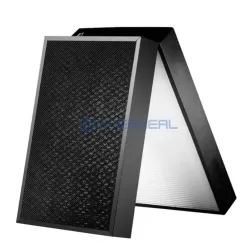
Every cleanroom solution begins with GMP classification planning. As a Cleanroom Engineering And Products Manufacturer, Everheal designs systems aligned with GMP Grade A, B, C, and D requirements, ensuring that cleanliness levels are achieved through airflow design, pressure differentials, and filtration efficiency rather than after-the-fact adjustments.
Our engineering philosophy ensures that compliance is embedded in the system architecture, enabling stable performance during routine operation and regulatory inspection.
True cleanroom performance depends on coordination. Everheal integrates HVAC systems, airflow patterns, temperature and humidity control, and pressure zoning into a unified platform. This system-level approach is what distinguishes a reliable Cleanroom Engineering And Products Manufacturer from conventional contractors.
Environmental stability supports product quality, operator safety, and regulatory consistency across the full production cycle.
As a full-scope Cleanroom Engineering And Products Manufacturer, Everheal supplies and integrates all essential components required for certified cleanroom environments.
Our cleanroom panels, ceilings, doors, and observation windows are engineered for low particle emission, chemical resistance, and cleanability. These architectural products form the physical containment system required to maintain GMP cleanliness over time.
All materials are selected to support long-term compliance, not just initial certification.
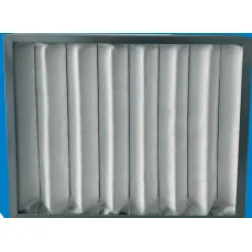
Air cleanliness is achieved through carefully engineered air handling units combined with HEPA or ULPA filtration. As a Cleanroom Engineering And Products Manufacturer, Everheal designs airflow systems that maintain unidirectional flow, stable air changes per hour, and reliable pressure cascades between cleanroom zones.
These systems minimize contamination risks while supporting operational efficiency.
Everheal provides a complete range of cleanroom auxiliary systems, including air showers, pass boxes, transfer hatches, and environmental monitoring interfaces. These Cleanroom Engineering And Products ensure controlled personnel and material flow while supporting GMP documentation requirements.
Utilities are integrated to function seamlessly within the cleanroom environment.
As a Cleanroom Engineering And Products Manufacturer, Everheal designs cleanrooms around process flow, not floor plans alone. Personnel movement, material entry, waste removal, and equipment placement are all engineered to support contamination control and audit transparency.
This process-driven design reduces operational risks and improves long-term compliance.
Different industries demand different environmental tolerances. Everheal customizes Cleanroom Engineering And Products for pharmaceutical manufacturing, biotechnology, medical devices, and laboratory applications, aligning cleanroom systems with specific regulatory and operational needs.
Customization ensures that each system remains both compliant and practical.
Validation is not an afterthought. Everheal delivers Cleanroom Engineering And Products that are designed from the beginning to support IQ, OQ, and PQ requirements. System parameters are measurable, controllable, and documentable.
As a Cleanroom Engineering And Products Manufacturer, we focus on delivering environments that are inspection-ready at handover.
Engineering drawings, equipment specifications, testing protocols, and commissioning records are provided to support regulatory review. This documentation framework reduces approval timelines and simplifies future audits.
Clients receive not just a cleanroom, but a validated system with traceable engineering logic.
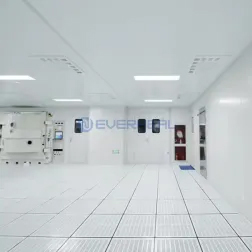
Everheal approaches cleanroom projects as engineering systems, not construction projects. This mindset ensures performance stability, regulatory consistency, and predictable outcomes.
By combining design, product supply, system integration, and validation support, Everheal reduces coordination risks and accelerates project timelines.
As a Cleanroom Engineering And Products Manufacturer, Everheal designs for years of compliant operation, not short-term acceptance. Systems are scalable, maintainable, and adaptable to evolving regulatory requirements.
For pharmaceutical manufacturers, investors, and engineering teams, selecting the right Cleanroom Engineering And Products Manufacturer directly impacts approval success, production efficiency, and operational risk.
Everheal delivers certifiable cleanroom environment systems that align engineering precision with regulatory expectations — supporting confident investment and sustainable production.
A manufacturer delivers integrated cleanroom systems that control air quality, pressure, temperature, and contamination to meet GMP and regulatory standards.
Because compliance depends on environmental performance and validation, not visual appearance.
Yes. Everheal provides engineering designs, testing support, and documentation aligned with GMP inspection requirements.
Absolutely. Cleanroom Engineering And Products are customized based on process flow, risk level, and regulatory classification.
Yes. Everheal's systems are designed to align with global GMP standards and international regulatory expectations.
Feel free to contact us to learn more and make your purchase!
This expert comparison analyzes bottom-entry vs top-entry agitators for high-viscosity pharmaceutical gels (10,000–50,000 cP). Bottom-entry eliminates headspace contamination, achieves ≥99.5% homogeneity in 15 minutes, and enables zero dead-leg drainage—critical for aseptic anticancer drug production. Top-entry suits low-viscosity (<1,000 cP) applications. Includes industry case study, 7-step selection checklist, and 2025 market data. Everheal offers GMP-compliant custom agitators (50L–10,000L).
This expert comparison analyzes on-line real-time TOC sensors vs off-line lab analysis for WFI validation. Covering USP <643> compliance (500 ppb limit), regulatory requirements (ICH Q2), cost-benefit analysis, and a $2M case study, we recommend a hybrid strategy: on-line for TOC PC/QC, off-line for microbial QC. Includes 5-step implementation guide, optimal sensor placement, and SST protocols for pharmaceutical water systems.
Comprehensive comparison of UV C-Band sterilization vs chemical dosing for bio-burden control in pharmaceutical RO systems. Covers pros/cons, FDA/WHO regulations, real case study with 50% cost savings, 7-step implementation framework, and hybrid best practices. Includes expert insights from 15+ years pharmaceutical water systems experience.
Sub-Micron Filtration vs Ultrafiltration (UF) for Endotoxin Removal in Purified Water Systems is a practical, SEO-focused guide for pharma buyers and engineers. It compares performance, compliance, costs, and design choices while helping plants select the right membrane strategy for reliable endotoxin control.
This article compares the pharmaceutical piping **3D rule** and **zero-static valves** from a GMP, hygiene, and plant-layout perspective. It explains dead-leg risk, design tradeoffs, validation impact, and practical selection criteria for purified water and sanitary process systems.
This article deeply compares chemical descaling and thermal shock—two maintenance strategies for clean steam generator heat exchangers. As a pharmaceutical equipment expert from Ningbo Everheal, I combine 15 years of engineering experience to detail the 15-step CIP process for chemical descaling, the damage mechanism of thermal shock, and golden prevention rules. An integrated maintenance strategy is provided to help pharmaceutical plants optimize energy efficiency, extend equipment life, and comply with FDA/cGMP requirements.
This comprehensive guide compares continuous vs batch distillation for optimizing WFI output in 24/7 IV fluid production. We analyze energy efficiency (40% savings with MED), uptime (99% vs 75%), cost structure, WFI purity standards, and provide expert decision framework. Continuous distillation recommended for large-scale pharmaceutical operations requiring steady output. Includes industry case study, validation requirements, and Ningbo Everheal custom solution recommendations for Purified Water Preparation Systems.
In tropical climates, feedwater quality can shift quickly, raising scaling, corrosion, and microbial risk in pharmaceutical water systems. This article compares Multi-Effect Distiller and Vapor Compression technologies for WFI production, with expert guidance, practical selection criteria, and SEO-ready structure.
“Compare double pass RO and single pass RO + EDI for low-conductivity pharma water. Learn how each design impacts compliance, cost, microbial risk, and lifecycle performance, and see how Everheal engineers turnkey purified water systems for modern GMP facilities.”
Discover how ozone sanitization compares with hot water sanitization for pharmaceutical WFI distribution loops. Learn about effectiveness, energy use, biofilm control, hybrid concepts, and how to choose the right strategy for your next aseptic filling line project.
Electropolished 316L vs standard stainless steel in pharmaceutical purified water storage tanks: learn how surface finish, Ra values, and hygienic design influence biofilm formation, cleaning, and GMP compliance in PW systems serving BFS, FFS, and aseptic filling lines.
Learn when to choose peristaltic vs piston pumps in pharmaceutical filling machines. Compare contamination risk, cleaning validation, and multi-product efficiency, with expert insights from an integrated BFS, FFS, and aseptic line manufacturer.
In large‑scale pharma liquid packing, batch mixing is giving way to continuous in-line blending. Learn how each approach impacts homogeneity, quality risk, and OEE on filling, FFS, and BFS lines, with practical guidance from an equipment and process perspective.
“Compare closed-loop chemical dispensing vs open-tank mixing in pharmaceutical cleanrooms. Learn how to cut VOC emissions, protect operators and integrate zero‑VOC strategies into BFS, FFS and sterile filling lines with expert guidance from Ningbo Everheal Medical Equipment.”
Discover how jacketed mixing tanks compare with external heat exchangers for precision temperature control in exothermic chemical reactions. Learn selection criteria, safety implications, and integration tips for pharmaceutical and specialty chemical plants, including BFS and FFS lines.
Comprehensive comparison of 316L stainless steel vs Hastelloy mixing tanks for pharmaceutical intermediate production. Expert analysis of corrosion resistance in acidic environments, cost-benefit evaluation, material selection criteria, and lifecycle performance. Industry insights from pharmaceutical equipment manufacturers specializing in production line design.
Discover how automated liquid dispensing outperforms manual weight‑batching in potent API handling. Learn how closed BFS and FFS systems cut human error, protect operators, and strengthen regulatory compliance for modern HPAPI manufacturing lines.
Discover how magnetic agitators and mechanical shaft mixers impact shear stress, protein stability, and aseptic integrity in pharmaceutical manufacturing. Learn when each technology is best suited and how integrated FFS/BFS lines protect delicate biologic formulations.
Learn how dry heat sterilization cabinets compare with moist heat autoclaves for depyrogenation of pharmaceutical glassware. Understand mechanisms, validation, layouts, and when to choose each method to design safer, more efficient injectable production lines.
Sustainable air filtration for high‑dust pharma labs: compare washable pre‑filters and disposable synthetic media, see how hybrid strategies cut waste and energy use, and learn practical GMP‑aligned steps for cleaner, greener sterile manufacturing.