Content Menu
● Overview of the Vial Filling Landscape in Africa
● Everheal – A Global Partner For Vial Filling Projects in Africa
>> Typical Everheal Vial Filling Line Configuration
● Major Vial Filling Machine Manufacturers And Suppliers Serving Africa
>> Snapshot of Key Companies
● How To Evaluate Vial Filling Machine Manufacturers And Suppliers For African Projects
>> Key Evaluation Criteria
● Recommended Line Concepts For African Sterile Facilities
>> Entry‑Level Clinical / Small‑Scale Line
>> Mid‑Scale Commercial Line
>> High‑Throughput / Export‑Focused Line
● How Everheal Supports African Customers Beyond Equipment Supply
● Conclusion
● FAQ – Vial Filling Machine Manufacturers And Suppliers in Africa
>> 1. What makes Vial Filling Machine Manufacturers And Suppliers suitable for African conditions?
>> 2. How can African buyers reduce project risk when sourcing vial filling lines?
>> 3. Are turnkey solutions better than buying separate machines from different suppliers?
>> 4. What role does purified water and pure steam play in vial filling projects?
>> 5. How can African manufacturers future‑proof their investment in Vial Filling Machine Manufacturers And Suppliers?
● References
Africa's rapidly growing pharmaceutical market is driving strong demand for reliable Vial Filling Machine Manufacturers And Suppliers that can support sterile injectable production, vaccine fill–finish, and contract manufacturing lines across the continent. In this article, we highlight key players active in Africa, explain how to evaluate partners, and show how Everheal can support end‑to‑end vial filling projects for global customers. [linkedin]
The Middle East & Africa sterile injectables CDMO market is projected to reach about USD 236.7 million by 2030, growing at an estimated CAGR above 6% from 2025 to 2030. At the same time, African governments and international institutions are pushing to localize vaccine, therapeutic, and essential medicine production to improve health security by 2040. [grandviewresearch]
This context makes the choice of Vial Filling Machine Manufacturers And Suppliers critical for:
- Ensuring sterile, regulatory‑compliant injectable products
- Scaling capacity for vaccines, insulin, oncology, and biologics
- Attracting international partnerships and technology transfer
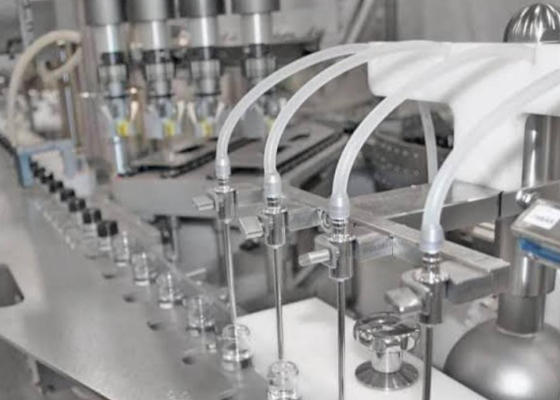
Overview of the Vial Filling Landscape in Africa
Many African pharma plants still rely on imported filling lines from Europe, India, China, and the Middle East, often purchased through regional agents and engineering companies. However, local and regional integrators are increasingly able to offer turnkey filling and packaging solutions tailored to African infrastructure and regulatory realities. [fillingandpackagingmachines.co]
Key trends shaping demand for Vial Filling Machine Manufacturers And Suppliers include:
- Expansion of local manufacturing hubs in South Africa, North Africa, and selected West/East African countries [ifc]
- Growing focus on sterile injectables, biologics, and contract manufacturing for regional markets [linkedin]
- Need for flexible lines that can handle small clinical batches and commercial‑scale volumes
To support buyers, many Vial Filling Machine Manufacturers And Suppliers now combine equipment with validation, training, and lifecycle maintenance services to reduce operational risk. [africa.nichrome]
Everheal – A Global Partner For Vial Filling Projects in Africa
Everheal is a China‑based pharmaceutical equipment specialist focusing on R&D, design, and manufacture of production equipment for the pharmaceutical and food industries. The company provides complete production line design solutions and full sets of equipment—ranging from purified water systems to liquid filling and sterilization—for leading enterprises and research institutions. [linkedin]
Everheal's core capabilities relevant to African Vial Filling Machine Manufacturers And Suppliers projects include:
- Purified water preparation systems and water for injection generation for sterile environments [linkedin]
- Pure steam generators and multi‑effect distillation units to support aseptic processing [linkedin]
- Liquid filling and sealing machines suitable for injectable products and small‑volume parenterals [linkedin]
- Custom factory layout planning and turnkey production line construction services for global customers [linkedin]
By combining these utilities with vial filling and sealing equipment, Everheal can deliver integrated solutions for new greenfield plants or brownfield upgrades across Africa. [everheal]
Typical Everheal Vial Filling Line Configuration
A typical Everheal solution for customers seeking Vial Filling Machine Manufacturers And Suppliers support in Africa might include:
1. Purified water and WFI generation skid with pretreatment, RO, and EDI modules [linkedin]
2. Pure steam generator and distribution loop to feed sterilizers and SIP systems [linkedin]
3. Vial washing, depyrogenation tunnel, aseptic filling and stoppering machine, and capping system (in collaboration with specialist filling OEMs)
4. Terminal sterilization (steam autoclave) or aseptic lyophilization, depending on product needs
5. Cleanroom HVAC, utilities integration, and SCADA for data integrity and monitoring
Everheal's role is to act as a system integrator and technical partner, ensuring that all components—from vial filling to water systems—work as a compliant whole for African clients. [everheal]
Major Vial Filling Machine Manufacturers And Suppliers Serving Africa
Below is a non‑exhaustive list of key international and regional companies that provide vial filling, liquid filling, or pharma packaging technology to African markets. Many operate through agents, distributors, or engineering partners. [pharmafillermachines]
Snapshot of Key Companies
| Company / Brand | Headquarters | Relevance to Africa | Role in Vial Filling Machine Manufacturers And Suppliers Ecosystem |
| Everheal | Ningbo, China (linkedin) | Supplies integrated pharma equipment and production line design to global clients, including emerging markets. (linkedin) | Provides liquid filling and sealing machines, water and steam systems, and turnkey layout planning for vial filling projects. |
| Nichrome Africa | India/Africa operations (africa.nichrome) | Offers pharma packaging machines for capsules, tablets, and oral and liquid products in Africa. (africa.nichrome) | Supplies liquid filling and packaging machines that can support injectable‑adjacent operations and secondary packaging. |
| South African packaging integrators | South Africa (fillingandpackagingmachines.co) | Provide filling and packaging machines, line integration, and local service in Southern Africa. (fillingandpackagingmachines.co) | Act as local Vial Filling Machine Manufacturers And Suppliers partners, sourcing filler technology and integrating lines. |
| Global liquid filling OEMs (e.g., Indian and European firms) | India/EU (pharmafillermachines) | Export vial and liquid filling lines into Africa via agents and project EPC firms. (pharmafillermachines) | Supply core aseptic vial filling machines, capping systems, and isolators that are integrated into African plants. |
These players, together with system integrators like Everheal, form the backbone of Vial Filling Machine Manufacturers And Suppliers networks that support Africa's sterile manufacturing ambitions. [fillingandpackagingmachines.co]
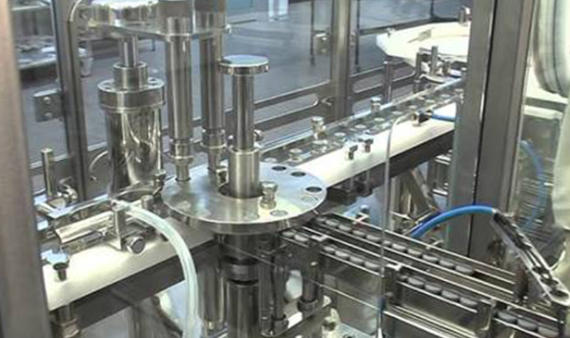
How To Evaluate Vial Filling Machine Manufacturers And Suppliers For African Projects
When selecting Vial Filling Machine Manufacturers And Suppliers for a project in Africa, decision‑makers should balance technical, regulatory, and commercial considerations. The goal is to secure reliable performance under local conditions, while meeting global quality expectations. [grandviewresearch]
Key Evaluation Criteria
- Regulatory and validation support
- Experience with EU‑GMP, WHO PQ, US FDA, or equivalent standards for injectable products [linkedin]
- Ability to provide documentation (DQ, IQ, OQ, PQ) and support for process validation and media fills
- Technical compatibility and flexibility
- Ability to handle different vial sizes, fill volumes, and product viscosities
- Options for RABS or isolator‑based containment to minimize contamination risk [linkedin]
- Integration with upstream (bulk solution prep) and downstream (lyophilization, packaging) equipment
- Service and lifecycle support in Africa
- Availability of regional service partners or remote support options [africa.nichrome]
- Access to spare parts and operator/maintenance training programs
- Total cost of ownership
- Balance between initial capital cost and long‑term reliability, energy efficiency, and maintenance needs [grandviewresearch]
- Potential to phase expansions as capacity grows
Vial Filling Machine Manufacturers And Suppliers able to deliver integrated utilities (water and steam), automation, and training can reduce project risk and accelerate time‑to‑market for African plants. [grandviewresearch]
Recommended Line Concepts For African Sterile Facilities
Because African markets range from early‑stage local producers to advanced export‑oriented CDMOs, the optimal configuration of Vial Filling Machine Manufacturers And Suppliers solutions varies. Below are example line concepts. [ifc]
Entry‑Level Clinical / Small‑Scale Line
For hospitals, smaller state manufacturers, or pilot plants, Vial Filling Machine Manufacturers And Suppliers can propose:
- Semi‑automatic vial washing and manual depyrogenation (oven)
- Compact laminar flow workbench or small RABS unit for aseptic filling
- Low‑to‑medium speed vial filling and stoppering machine (e.g., up to 3,000 vials/hour)
- Benchtop capper and simple labeling/inspection
Here, the emphasis is on flexibility and basic compliance, with modest investment, making it suitable for technology transfer and clinical trial supply.
Mid‑Scale Commercial Line
For regional manufacturers supplying essential medicines, a typical line sourced from Vial Filling Machine Manufacturers And Suppliers might include:
- Automatic vial washer and depyrogenation tunnel
- Medium‑speed aseptic vial filling, stoppering, and capping line (e.g., 6,000–12,000 vials/hour)
- Integration with WFI, pure steam, and cleanroom monitoring systems provided by partners like Everheal [linkedin]
- Automated in‑line inspection and rejection for fill volume and container closure integrity
This design balances throughput with cost and is well‑suited to vaccines, anesthetics, and emergency injectables.
High‑Throughput / Export‑Focused Line
At the top end of Vial Filling Machine Manufacturers And Suppliers solutions in Africa are high‑speed lines designed for export and CDMO work:
- High‑capacity vial washers and continuous depyrogenation tunnels
- Isolator‑enclosed high‑speed vial filling and stoppering systems
- Integration with large‑scale lyophilizers, automated loading/unloading, and advanced in‑line inspection
- Digital batch records, serialization, and data integrity features for regulated markets [linkedin]
Such lines require significant capital, but when combined with Africa's long‑term demand growth and export ambitions, they can be strategically attractive. [ifc]
How Everheal Supports African Customers Beyond Equipment Supply
Unlike purely transactional Vial Filling Machine Manufacturers And Suppliers, Everheal positions itself as a long‑term technical partner for African customers. The company combines its core technologies with engineering, training, and digital tools to support sustainable sterile manufacturing. [everheal]
Key value‑added services include:
- Upfront consultation and URS development for vial filling and aseptic utilities [linkedin]
- 2D/3D layout design that optimizes flows of materials, personnel, and waste while complying with GMP zoning requirements
- Installation, commissioning, and assistance with qualification activities, in collaboration with local contractors
- After‑sales support, remote troubleshooting, and recommendations for periodic preventive maintenance
By aligning equipment, utilities, and plant design from the start, Everheal helps African manufacturers shorten project timelines and avoid costly redesigns. [everheal]
To further support clients who rely on global Vial Filling Machine Manufacturers And Suppliers, Everheal can act as a bridge between overseas OEMs and local project teams, reducing communication gaps and ensuring technical alignment. [linkedin]
Conclusion
Africa's healthcare and pharmaceutical strategies are creating strong long‑term demand for robust, compliant vial filling capacity, from basic essential injectables to high‑value biologics. In this context, choosing the right Vial Filling Machine Manufacturers And Suppliers—and partners that can integrate utilities, layout, and automation—is a strategic decision that affects cost, quality, and regulatory competitiveness. [ifc]
International OEMs, regional packaging integrators, and engineering firms already serve African markets, but there remains a gap for turnkey providers that understand both sterile technology and local project realities. With its expertise in purified water, pure steam, liquid filling, and factory layout design, Everheal is well‑positioned to support African manufacturers and investors as they build next‑generation vial filling facilities for regional and global supply. [fillingandpackagingmachines.co]
Contact us to get more information!
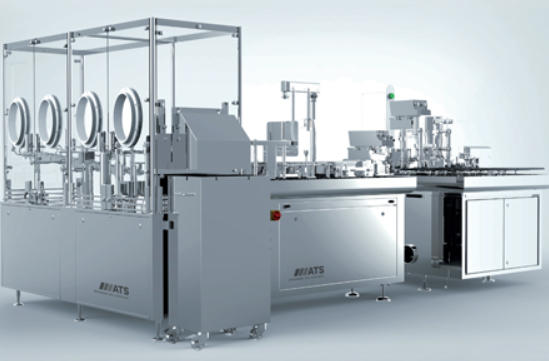
FAQ – Vial Filling Machine Manufacturers And Suppliers in Africa
1. What makes Vial Filling Machine Manufacturers And Suppliers suitable for African conditions?
Vial Filling Machine Manufacturers And Suppliers serving Africa must design equipment that tolerates power fluctuations, variable water quality, and hot climates while still meeting international aseptic standards. They also need strong remote support capabilities and training materials to compensate for distance from their central service hubs. [africa.nichrome]
2. How can African buyers reduce project risk when sourcing vial filling lines?
Risk can be reduced by choosing Vial Filling Machine Manufacturers And Suppliers that offer end‑to‑end services, from URS development and layout design to qualification and lifecycle support. Buyers should request detailed technical documentation and references from similar installations, and consider phased capacity expansion to avoid over‑investment. [fillingandpackagingmachines.co]
3. Are turnkey solutions better than buying separate machines from different suppliers?
Turnkey solutions from experienced integrators can simplify coordination, reduce interface risks, and ensure that vial filling, utilities, and cleanroom systems are designed as a unified whole. However, some advanced customers may still prefer to select best‑of‑breed machines from multiple Vial Filling Machine Manufacturers And Suppliers, provided they have strong in‑house engineering. [grandviewresearch]
4. What role does purified water and pure steam play in vial filling projects?
Purified water and water for injection are essential for cleaning, solution preparation, and as a critical raw material in injectable production, while pure steam is used for sterilization of equipment and distribution systems. Suppliers like Everheal that provide these systems alongside vial filling equipment help ensure consistent quality and easier compliance. [everheal]
5. How can African manufacturers future‑proof their investment in Vial Filling Machine Manufacturers And Suppliers?
To future‑proof investments, African manufacturers should select scalable vial filling platforms that can upgrade speed, containment, and digital features as demand grows. They should also work with Vial Filling Machine Manufacturers And Suppliers that actively follow evolving GMP and data integrity guidelines, ensuring long‑term regulatory alignment. [ifc]
References
1. Middle East & Africa sterile injectables CDMO market outlook – Grand View Research, “Middle East & Africa Sterile Injectables CDMO Market Size” [ddpharmatech.co]
2. IFC – “Answering Africa's Call for Private Investment in Pharma Manufacturing” (health security and local production goals). [ifc]
3. Market commentary on sterile injection development – “Middle East and Africa Sterile Injection Development Market Major …” (drivers, technologies, and challenges). [linkedin]
4. Everheal company profile – LinkedIn, “Eververheal | About us.” [linkedin]
5. Everheal Pharmaceuticals Globals – company description and activity in pharmaceutical machineries and equipment. [everheal]
6. Nichrome Africa – pharma packaging machines for capsules, tablets, liquids in Africa. [africa.nichrome]
7. South African filling and packaging machine providers – “Packaging Machines for Southern Africa.” [fillingandpackagingmachines.co]
8. Example of Indian liquid filling and packaging OEM supplying emerging markets – Lodha International LLP. [everheal]


