Content Menu
● Understanding Gravity-Fed Dispensing
● Understanding Pressure-Fed Dispensing
● Gravity-Fed vs Pressure-Fed Dispensing
● Why Shear Sensitivity Matters
● Product Behavior and Process Impact
● Layout and Plant Design
● Sanitary Design and Cleanability
● Operational Control
● Choosing the Right Method
● Integration With Pharmaceutical Water Systems
● Practical Engineering Considerations
● Industry Perspective
● Conclusion
● FAQ
>> 1. What is the main difference between gravity-fed and pressure-fed dispensing?
>> 2. Which method is gentler for shear-sensitive liquid medications?
>> 3. When is pressure-fed dispensing the better option?
>> 4. Can pressure-fed systems be used for sensitive formulations?
>> 5. Why is plant layout important when choosing a dispensing method?
● References
In pharmaceutical manufacturing, the way a liquid is dispensed can influence product integrity, batch consistency, and long-term production stability. For shear-sensitive liquid medications, the wrong transfer approach may cause foaming, instability, particle damage, or uneven flow behavior.
Gravity-fed and pressure-fed dispensing represent two different engineering philosophies. One relies on height and natural flow. The other relies on controlled force and system pressure. Both can work well, but each suits different products, layouts, and production goals.
Understanding Gravity-Fed Dispensing
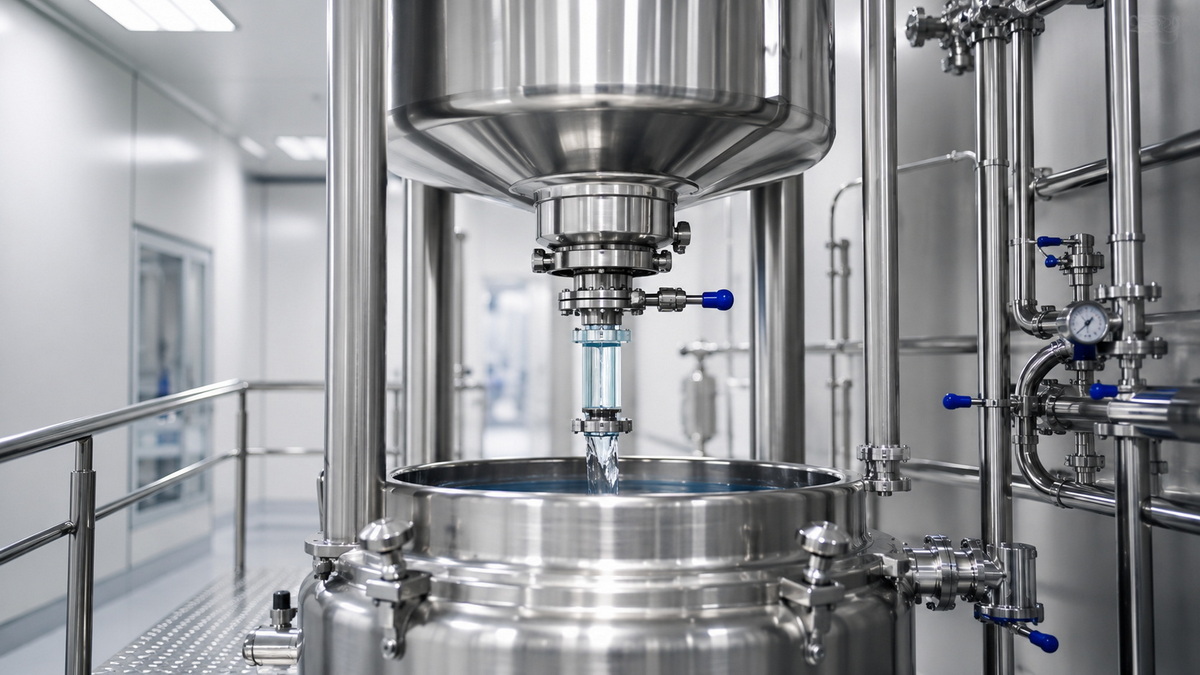
Gravity-fed dispensing uses elevation difference to move liquid from one point to another. A vessel placed at a higher level allows liquid to flow downward without the need for active pumping in the transfer stage.
This method is often preferred for delicate liquids because it can reduce mechanical stress. With fewer moving parts in the transfer path, it may also simplify operation and maintenance.
However, gravity-fed systems depend heavily on plant layout. If the required height difference is limited, flow may become inconsistent or too slow for production needs. In such cases, the process may need support from other system elements to maintain stable delivery.
Understanding Pressure-Fed Dispensing
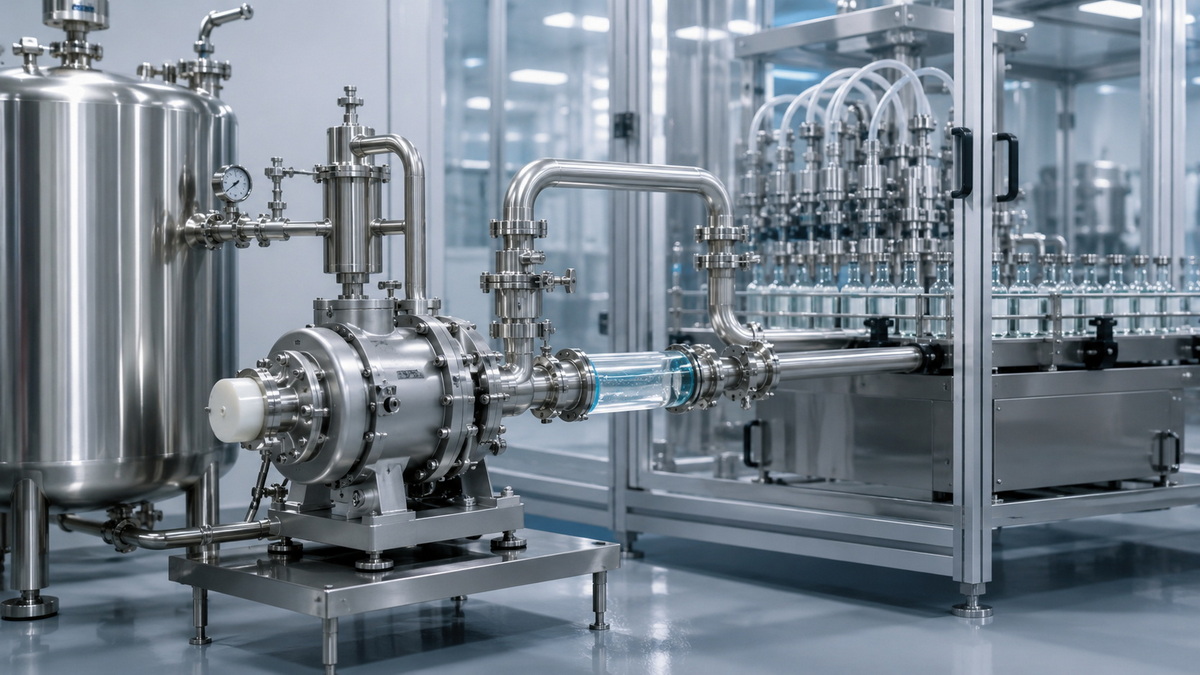
Pressure-fed dispensing uses pumps or pressurized systems to push liquid through the line. This approach gives manufacturers stronger control over flow rate, transfer distance, and delivery timing.
It is especially useful in facilities that require compact layouts, multiple use points, or higher throughput. Pressure-fed systems are also easier to integrate with automated controls and closed-loop production lines.
The main concern is shear. If pressure is too high or the pump design is not suitable, the liquid may be exposed to turbulence, heat, or mechanical stress. For sensitive formulations, that risk must be carefully managed during system design.
Gravity-Fed vs Pressure-Fed Dispensing
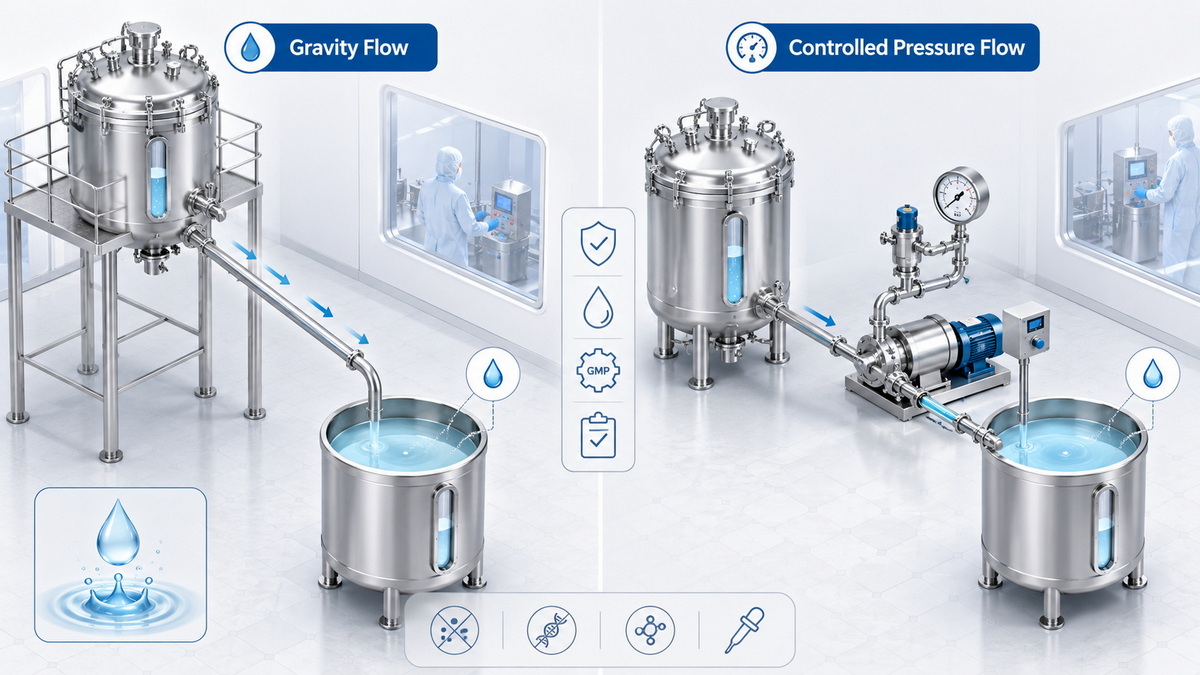
| Factor | Gravity-Fed Dispensing | Pressure-Fed Dispensing |
| Flow mechanism | Uses natural downward flow | Uses pump or system pressure |
| Product stress | Usually gentler | Can create more stress if not controlled |
| Layout requirement | Needs vertical space | Works in flexible layouts |
| Flow control | More limited | More precise |
| Maintenance | Often simpler | Usually more components |
| Best for | Short, gentle transfer paths | Longer, automated, or high-volume lines |
In general, gravity-fed dispensing is better when product sensitivity is the top concern and the plant layout allows elevation-based flow. Pressure-fed dispensing is better when process control, distance, and throughput are more important.
Why Shear Sensitivity Matters
Shear-sensitive liquid medications can change when exposed to excessive force. Some products lose stability, while others may foam, separate, or become harder to fill accurately.
This is especially important in pharmaceutical solution preparation, where products such as large-volume preparations, lyophilized-drug formulations, or anticancer liquid preparations may require careful handling throughout the process. Even small differences in flow behavior can affect consistency from batch to batch.
Because of this, the dispensing system should be selected based on the product's physical behavior, not only on production speed. A strong process is one that protects the formulation from the first transfer step to the final filling stage.
Product Behavior and Process Impact
Not every liquid behaves the same way. A low-viscosity solution may travel easily through either system, while a more delicate or complex formulation may respond poorly to turbulence or pressure changes.
For example, emulsions and suspensions may be more vulnerable to separation if flow is too aggressive. Some biologically active liquids may also require a very gentle handling path to preserve quality.
The final choice should therefore consider viscosity, sensitivity to foaming, desired transfer distance, and the number of times the product needs to move during production. These factors often determine whether gravity-fed or pressure-fed dispensing is the better fit.
Layout and Plant Design
Plant layout is one of the biggest decision factors. A gravity-fed system works best when the production area has enough vertical space to support natural downward flow. That may be practical in some batch rooms, but less suitable in compact facilities.
Pressure-fed systems offer more freedom in layout. They can move liquid across longer distances and through more complex routing without depending on vessel height. This makes them attractive for larger factories or multi-zone production lines.
For manufacturers planning a new pharmaceutical plant, dispensing method should be considered together with the overall factory layout, piping route, sanitation plan, and utility infrastructure. A strong layout can reduce dead legs, improve cleanability, and support more stable production.
Sanitary Design and Cleanability
In pharmaceutical production, cleanability is as important as transfer performance. A dispensing system must support cleaning, drainage, and predictable flow paths.
Gravity-fed systems often have simpler structures, which may help reduce cleaning complexity. At the same time, they still need proper slopes, drainability, and hygienic connections to avoid residue buildup.
Pressure-fed systems usually have more active components, but they can be designed as closed systems with strong sanitary control. When properly engineered, they may provide excellent containment and cleaning performance, especially in automated production environments.
Operational Control
Gravity-fed dispensing is straightforward to operate, but it offers less flexibility in flow adjustment. Once the system height and vessel position are fixed, the operator has fewer ways to fine-tune delivery speed.
Pressure-fed dispensing offers stronger operational control. Flow rate, line pressure, and transfer timing can be adjusted more precisely, which is useful for repeatable batch production and synchronized filling operations.
For many manufacturers, this control is valuable. It supports consistency, especially when different product types are produced on the same line or when the process must maintain strict batch-to-batch reproducibility.
Choosing the Right Method
The best dispensing method depends on the product and the production environment.
Choose gravity-fed dispensing when:
- The formulation is highly sensitive to mechanical stress.
- The transfer path is short and simple.
- The plant layout allows vertical flow.
- Maintenance simplicity is a priority.
Choose pressure-fed dispensing when:
- The line must serve longer distances.
- More precise flow control is needed.
- The facility uses a compact or complex layout.
- Automation and throughput are important.
In some plants, a hybrid design is the most practical solution. Gravity may be used in the gentlest transfer stage, while pressure is used where control or routing flexibility becomes necessary.
Integration With Pharmaceutical Water Systems
Dispensing does not work in isolation. It is part of a larger pharmaceutical production environment that often begins with purified water preparation and continues through formulation, transfer, sterilization, and filling.
Water quality is especially important in liquid medication preparation because it affects both the product and the cleaning process. A well-designed purified water system supports stable formulation conditions, cleaner piping, and more consistent sanitary performance across the line.
When water preparation, dispensing, and plant utilities are designed as one coordinated system, the result is usually better process stability and easier long-term operation.
Practical Engineering Considerations
Before selecting a dispensing method, manufacturers should review several practical points:
1. Product sensitivity to pressure and turbulence.
2. Required transfer distance and elevation.
3. Line size and expected throughput.
4. Cleaning method and validation requirements.
5. Automation needs and operator workflow.
6. Compatibility with upstream and downstream equipment.
These considerations help prevent choosing a system that looks efficient on paper but creates problems during production. In pharmaceutical manufacturing, a technically sound system is one that remains stable under real operating conditions.
Industry Perspective
From a production point of view, dispensing design should always support product quality first. A system that transfers liquid quickly but introduces unnecessary stress may create more risk than value.
The most effective pharmaceutical lines usually balance product protection, sanitary design, and operational efficiency. That balance becomes especially important in large-volume drug preparation, sterile liquid processing, and other high-value pharmaceutical applications.
For manufacturers in this segment, system design should be viewed as part of the product's quality strategy, not just as a transport function. When the dispensing method matches the formulation, the entire line becomes more reliable.
Conclusion
Gravity-fed and pressure-fed dispensing each have clear strengths. Gravity-fed systems are often gentler and simpler, while pressure-fed systems offer more control and flexibility.
For shear-sensitive liquid medications, the right choice depends on the formulation, the facility layout, and the production target. In many cases, the best answer is not one method alone, but a carefully engineered approach that protects the product while supporting efficient manufacturing.
FAQ
1. What is the main difference between gravity-fed and pressure-fed dispensing?
Gravity-fed dispensing uses natural downward flow, while pressure-fed dispensing uses pumps or pressurized force to move the liquid.
2. Which method is gentler for shear-sensitive liquid medications?
Gravity-fed dispensing is usually gentler because it avoids active pumping during the transfer stage.
3. When is pressure-fed dispensing the better option?
Pressure-fed dispensing is better when the line is long, the layout is compact, or precise flow control is needed.
4. Can pressure-fed systems be used for sensitive formulations?
Yes. With careful engineering, low-stress components, and controlled flow conditions, pressure-fed systems can handle sensitive products effectively.
5. Why is plant layout important when choosing a dispensing method?
Plant layout determines whether gravity flow is possible and how easily the system can maintain stable, sanitary, and efficient transfer.
References
1. Veolia Water Technologies, *Pharmaceutical Pure Water Guide*
https://www.veoliawatertech.com/sites/g/files/dvc3601/files/document/2021/03/Pure_Water_Guide_LR_2021_v08-US.pdf
2. USP, *FAQs: Water for Pharmaceutical and Analytical Purposes*
https://www.usp.org/frequently-asked-questions/water-pharmaceutical-and-analytical-purposes
3. Centec GmbH, *PW Generator / Pharmaceutical Purified Water System*
https://www.centec.de/zh/product-page/pw-erzeuger
4. Syntegon, *Drug Product Formulation Systems*
https://www.syntegon.com.cn/solutions/pharma/drug-product-formulation-systems/
5. ViscoTec, *Pharma dispenser press release on high-pressure dosing and shear-sensitive media*
https://www.pharmaceutical-technology.com/contractors/process_automation/viscotec/pressreleases/pressviscotecs-pharma-dispenser-...


