Washable air filters are not just about capture efficiency; they are also about frame durability, corrosion resistance, hygiene, and total lifecycle cost. When comparing aluminum frames vs stainless steel frames, the real question is which material delivers longer service life under repeated cleaning, moisture exposure, and demanding environments such as pharmaceutical facilities, cleanrooms, food plants, and industrial ventilation systems. [centec]
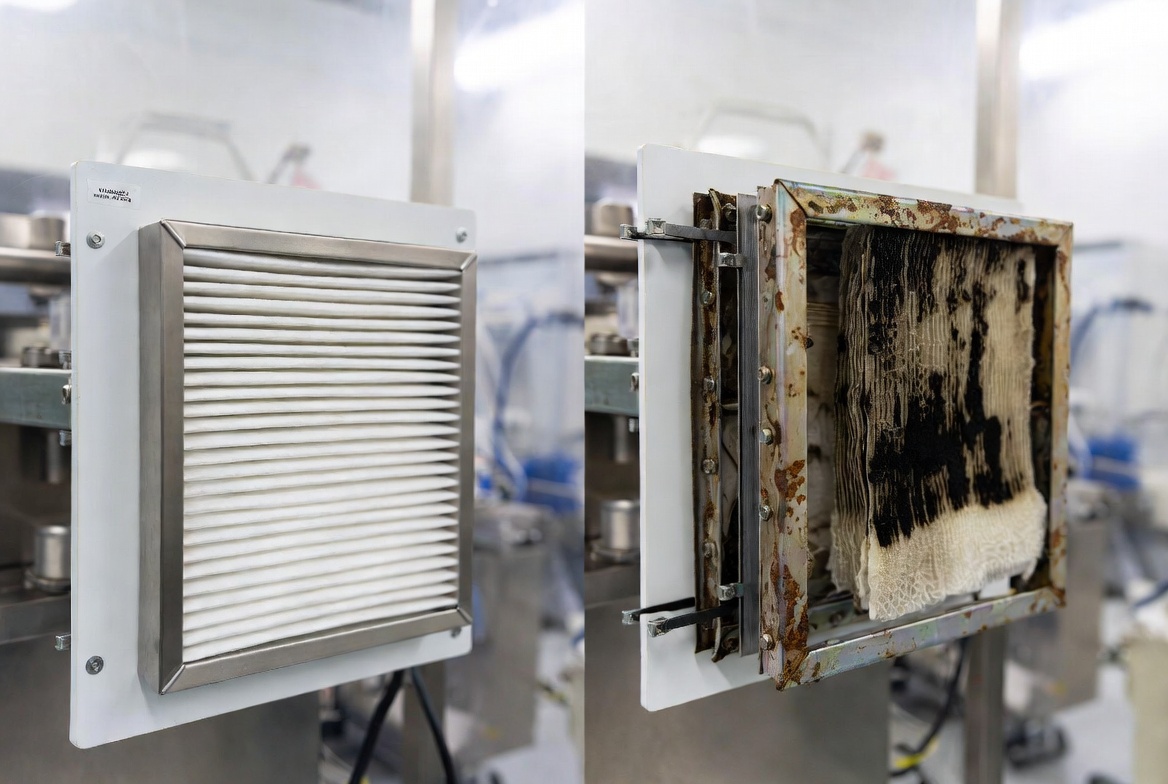
Introduction: Why Frame Material Matters in Washable Air Filters
In washable air filters, the frame is more than a structural shell. It determines whether the filter keeps its shape after repeated washing, resists corrosion in humid or chemically exposed environments, and remains stable enough to maintain sealing performance. [costones]
For industries that rely on strict environmental control, such as pharmaceutical manufacturing, the choice of frame material can directly affect maintenance frequency, contamination risk, and operating cost. A durable frame supports longer service intervals and more predictable performance, which is especially important in regulated production environments. [centec]
Aluminum Frames in Washable Air Filters
Aluminum is widely used because it is lightweight, easy to fabricate, and generally resistant to rust. For washable air filters, this often means simpler handling during installation, lower shipping weight, and good overall practicality in standard HVAC applications. [winatechgroup]
However, aluminum is not equally strong in every environment. Repeated exposure to harsh detergents, alkaline cleaning agents, saline moisture, or high humidity can gradually reduce its surface integrity, especially if the coating or finish is damaged. In long service cycles, this can become a concern for facilities that prioritize hygiene and long-term structural stability. [costones]
Best Use Cases for Aluminum
- General HVAC systems.
- Light- to medium-duty washable air filters.
- Projects where weight reduction and lower upfront cost are important.
- Environments with limited chemical exposure and moderate humidity.
Limits of Aluminum
- More vulnerable to surface damage than stainless steel.
- May require more careful cleaning chemical selection.
- Can be less suitable for aggressive wash-down routines.
- Long-term appearance and rigidity may degrade faster in harsher conditions.
Stainless Steel Frames in Washable Air Filters
Stainless steel is the stronger choice when longevity, hygiene, and corrosion resistance are the main priorities. In washable air filters used in pharmaceutical and cleanroom-related environments, stainless steel supports a more robust lifecycle because it tolerates repeated cleaning and harsh operating conditions better than many alternative materials. [centec]
This matters in settings where moisture, frequent sanitation, and contamination control are part of daily operations. Stainless steel also aligns well with hygienic design principles used in pharmaceutical utilities and process systems, where cleanability and resistance to corrosion are essential. [centec]
Best Use Cases for Stainless Steel
- Pharmaceutical cleanrooms and support spaces.
- High-humidity or wash-down environments.
- Facilities with strict sanitation requirements.
- Long-life installations where replacement disruption must be minimized.
Limits of Stainless Steel
- Higher initial material cost.
- Heavier than aluminum.
- Fabrication may be more expensive.
- Over-specification is possible for low-risk environments.
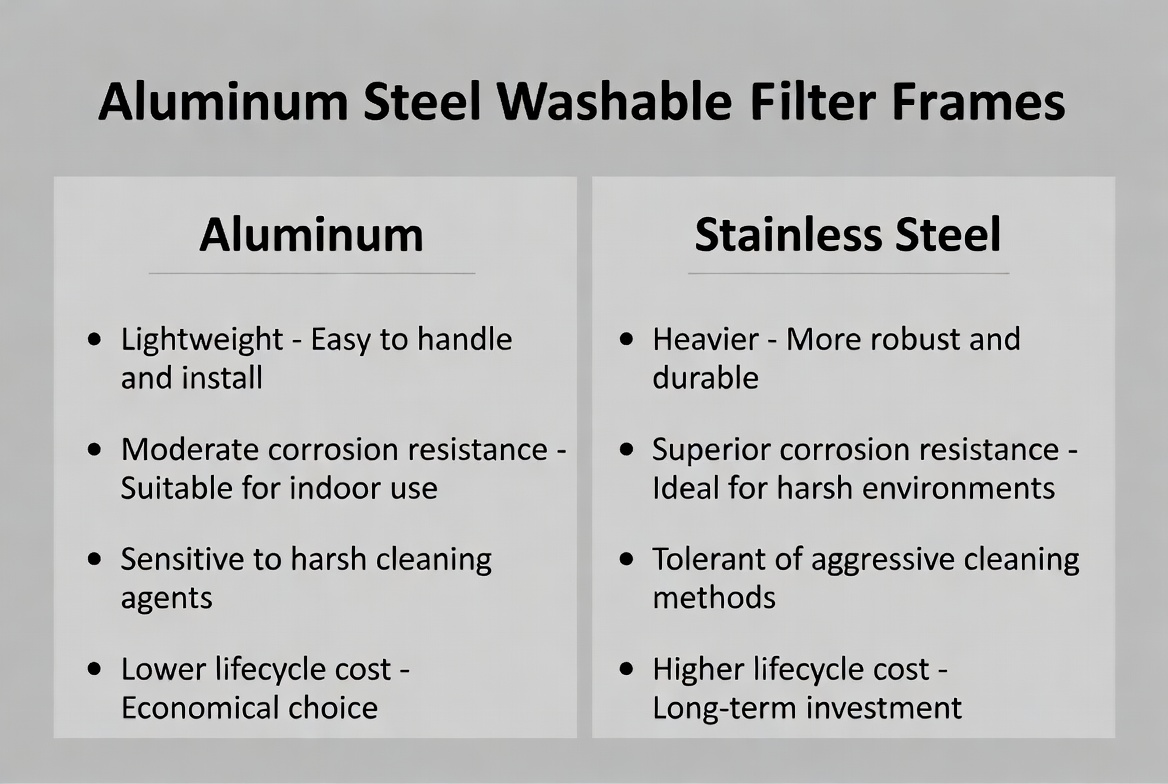
Side-by-Side Material Comparison
| Weight | Very light | Heavier |
| Corrosion resistance | Good in mild conditions | Excellent in demanding conditions |
| Washability | Good with proper care | Excellent for repeated washing |
| Chemical tolerance | Moderate | Strong |
| Structural longevity | Good | Very strong |
| Upfront cost | Lower | Higher |
| Long-term value | Good for standard use | Better for harsh or regulated use |
| Best fit | General HVAC and cost-sensitive projects | Pharmaceutical, cleanroom, and high-hygiene applications |
Longevity: What Really Decides Service Life
The longest-lasting frame is not always the most expensive one. Longevity depends on the whole operating environment, including humidity, cleaning chemistry, filter reuse frequency, mechanical vibration, and the quality of the frame finish. [costones]
A stainless steel frame may last significantly longer in a pharmaceutical environment because it better resists repeated sanitation and moisture exposure. But in a mild commercial HVAC system, aluminum may perform well enough for years while saving upfront cost and simplifying installation. [costones]
Pharmaceutical Industry Perspective
From a pharmaceutical engineering point of view, equipment selection should always support hygiene, maintainability, and process consistency. In facilities that already depend on purified water systems, sterilization cabinets, and formulation equipment, washable air filters are part of the broader contamination-control strategy. [winatechgroup]
That is why many engineers prefer stainless steel in areas where cleaning is frequent or where filter failure could affect environmental control. Aluminum can still be suitable in non-critical zones, but stainless steel offers more confidence where audits, sanitation, and lifecycle reliability matter most. [centec]
Practical Decision Framework
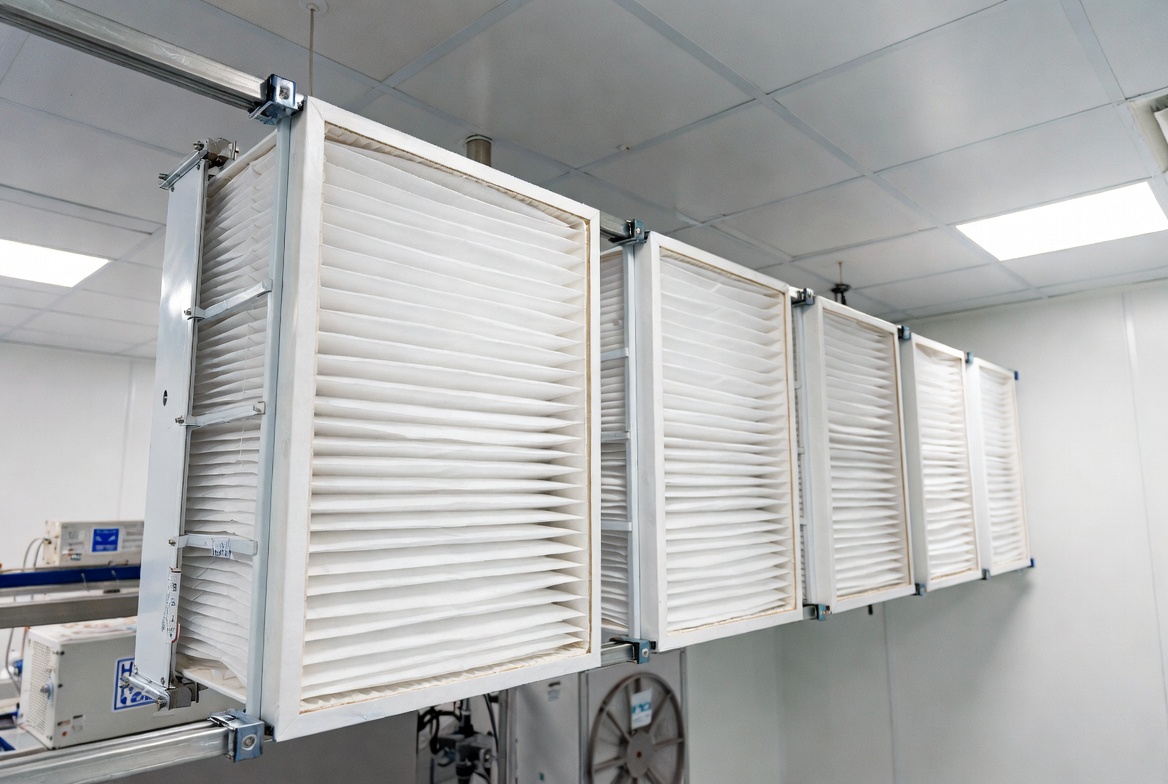
Use this simple decision logic to choose the right frame material:
1. Choose aluminum if the application is standard, budget-sensitive, and only lightly exposed to moisture or chemicals.
2. Choose stainless steel if the filter will be washed often, exposed to harsh cleaning agents, or used in a high-hygiene environment.
3. Choose stainless steel again if downtime costs are high and the goal is maximum service life.
4. Choose aluminum if lightweight handling and lower initial cost are more important than maximum durability.
This framework is especially useful for plant engineers, procurement teams, and facility managers who need a fast but technically defensible decision. [costones]
Expert Insight: Where Buyers Often Make Mistakes
A common mistake is comparing only the purchase price and ignoring cleaning frequency, corrosion risk, and replacement labor. Another mistake is assuming all washable filters are "low maintenance," when in reality the frame material can determine whether the filter remains stable after dozens of cleaning cycles. [costones]
In practice, the best material is the one that matches the facility's sanitation intensity. For a pharmaceutical plant, that often means designing for the full lifecycle, not just the first installation. [centec]
CTA: How to Position It
Place a CTA after the decision framework or at the end of the article. A strong B2B CTA would be:
Need a filtration solution matched to your plant layout and hygiene requirements? Contact our engineering team for customized pharmaceutical facility planning, cleanroom support, and production-line integration.
This works well because it connects the article topic to your company's larger capability in factory planning and pharmaceutical equipment solutions. [winatechgroup]
Conclusion
For washable air filters, aluminum is the practical choice when cost, weight, and ease of use matter most. Stainless steel is the stronger choice when the priority is long-term durability, repeated washing, corrosion resistance, and hygienic performance. [centec]
In pharmaceutical and other high-control environments, stainless steel usually delivers better lifecycle value because it better supports sanitation and operational reliability. For general HVAC applications, aluminum remains a smart and economical option. [costones]
FAQ
1. Which frame lasts longer in washable air filters?
Stainless steel usually lasts longer because it resists corrosion and repeated washing better than aluminum. [centec]
2. Is aluminum good enough for washable air filters?
Yes, aluminum works well in standard HVAC applications with moderate cleaning and limited chemical exposure. [costones]
3. Why is stainless steel preferred in pharmaceutical facilities?
Because pharmaceutical environments need strong hygiene, corrosion resistance, and stable performance under frequent cleaning. [centec]
4. Are stainless steel frames worth the higher cost?
Often yes, if replacement downtime, cleaning intensity, or contamination risk is high. [costones]
5. What is the biggest factor in frame longevity?
The biggest factor is the operating environment, especially moisture, cleaning chemicals, and cleaning frequency. [costones]
References
1. Syntegon China. Pure Media and Formulation Systems. [https://www.syntegon.com.cn/solution-finder/pharma/pure-media-and-formulation-systems/] [syntegon.com]
2. Winatech Group. Sterile Preparation / Pharmaceutical Liquid Preparation Systems. [http://winatechgroup.com/product/showproduct.php?id=13] [winatechgroup]
3. Syntegon China. Drug Product Formulation Systems. [https://www.syntegon.com.cn/solutions/pharma/drug-product-formulation-systems/] [syntegon.com]
4. Centec GmbH. PW Generator for Pharmaceutical Water. [https://www.centec.de/zh/product-page/pw-erzeuger] [centec]
5. COSTONES. Automatic Liquid Preparation System. [http://www.costones.com/lps/163.html] [costones]


