Content Menu
● Why Choosing the Right Liquid Filling Machine Matters for Pharma Manufacturers
● Core Types of Liquid Filling Machines for Pharmaceutical Applications
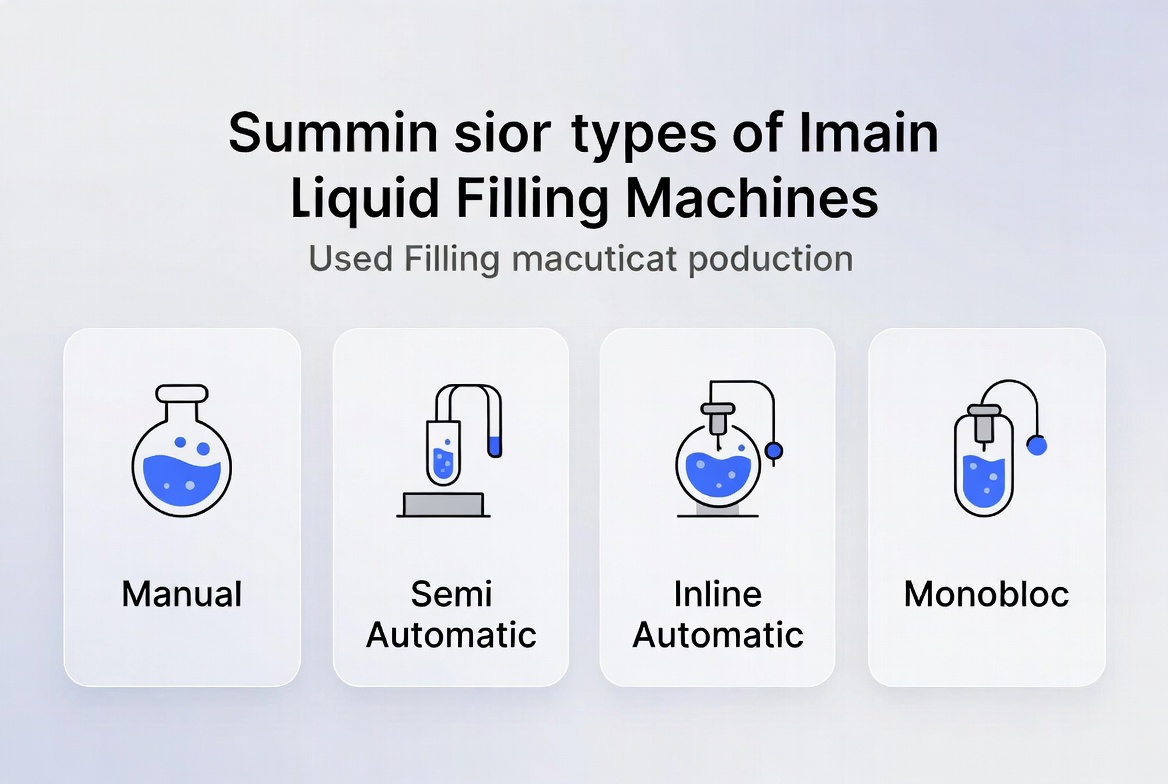
>> Manual Liquid Filling Machines
>> Semi-Automatic Benchtop Filling Machines
>> Inline Automatic Filling Machines
>> Monobloc Filling and Capping Systems
● Advanced Filling Technologies for Specialized Pharma Products
>> Piston Filling Machines for Viscous and Foamy Liquids
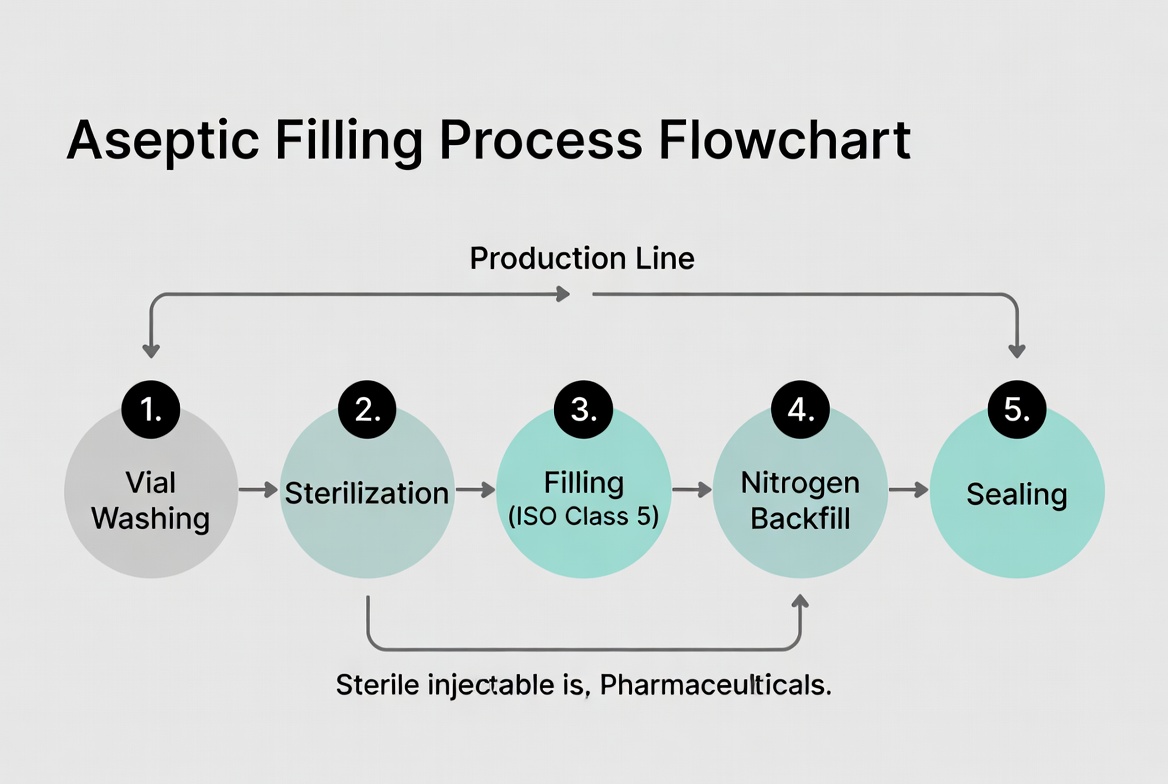
>> Aseptic Filling Systems for Sterile Injectables
>> Servo-Based Linear Piston Fillers for Precision Dosing
● Industry Gaps and How to Avoid Common Selection Mistakes
>> Lack of Viscosity Matching
>> Ignoring CIP and SIP Requirements
>> Overlooking Factory Layout Integration
● Step-by-Step How to Select the Right Filling Machine for Your Pharma Line
● Turnkey LVP Line with Integrated Filling and Sterilization
● Smart Filling and Industry 4.0 Integration
● Actionable Takeaways for Pharma Decision-Makers
● Get a Custom Filling Line Quote from Ningbo Everheal
● FAQ (Frequently Asked Questions)
>> Q1: What is the best filling machine for high-viscosity pharmaceutical liquids?
>> Q2: How do I ensure GMP compliance when selecting a filler?
>> Q3: Can monobloc fillers handle lyophilized drug vials?
>> Q4: What is the typical ROI timeline for upgrading to an automatic filler?
>> Q5: Does Ningbo Everheal provide custom factory layout services?
● References
Liquid filling machines are the backbone of modern pharmaceutical manufacturing, enabling precise, sterile, and efficient packaging of injectables, oral liquids, and biologics. For pharmaceutical producers planning custom factory layouts or upgrading production lines, selecting the right filling technology directly impacts GMP compliance, output quality, and long-term operational efficiency.
This expert guide, informed by over a decade of turnkey pharmaceutical equipment deployment and real-world case studies from Ningbo Everheal Medical Equipment Co., Ltd., provides a comprehensive breakdown of liquid filling machine types, pharma-specific applications, and strategic selection criteria for 2026 and beyond.
Why Choosing the Right Liquid Filling Machine Matters for Pharma Manufacturers
In pharmaceutical manufacturing, accuracy, sterility, and regulatory compliance are non-negotiable. The choice of filling technology affects product safety and shelf-life, batch consistency and yield, audit readiness, and overall equipment effectiveness.
According to industry benchmarks, incorrect filler selection can lead to 15–30% production losses due to downtime, rework, or failed quality checks.
For large-volume parenterals, lyophilized drugs, and anticancer preparations, aseptic filling under ISO Class 5 conditions is mandatory. This requires monobloc or servo-driven linear piston fillers integrated with CIP/SIP and nitrogen pre-cleaning.
Core Types of Liquid Filling Machines for Pharmaceutical Applications
Manual Liquid Filling Machines
Best for small-batch R&D, pilot plants, or low-volume production under 500 bottles per day.
- Operation: Fully manual, no electricity required.
- Accuracy: Plus or minus 1–2% depending on operator skill.
- Limitations: Not suitable for viscous or sterile products; labor-intensive.
Common use case includes compounding pharmacies or university labs preparing small batches of anticancer drugs for clinical trials.
Semi-Automatic Benchtop Filling Machines
Best for medium-scale production between 500 and 5,000 bottles per day, contract manufacturers, and startups.
- Operation: Operator loads and unloads; machine controls fill volume.
- Pump types: Piston, peristaltic, or gear pumps.
- Accuracy: Plus or minus 0.5–1%.
Pharmaceutical advantage: Compatible with GMP-grade stainless steel and CIP-compatible designs. Ideal for ophthalmic solutions, topical liquids, and oral suspensions.
Inline Automatic Filling Machines
Best for high-speed production lines processing 5,000 to 30,000 bottles per hour.
- Operation: Conveyor-based; integrates with cappers, labelers, and vision systems.
- Accuracy: Plus or minus 0.2–0.5%.
- Integration: Can include nitrogen flushing, weight checks, and barcode tracking.
Common use case includes large-volume infusion lines requiring dual-stage sterile filtration and black-white zone segregation for GMP compliance.
Monobloc Filling and Capping Systems
Best for high-volume, fully automated pharma lines processing 30,000 or more bottles per hour.
- Operation: Fully integrated filling, capping, sealing, and labeling in one unit.
- Accuracy: Plus or minus 0.1–0.3%.
- Features: No-fill sensors, speed-control conveyors, removable parts for cleaning.
For lyophilized drug vials, monobloc systems with pre-evacuation and nitrogen backfill ensure oxygen-free sealing and extended shelf-life.
Advanced Filling Technologies for Specialized Pharma Products
Piston Filling Machines for Viscous and Foamy Liquids
- Mechanism: Piston draws liquid from tank, pushes through nozzle.
- Best for: Liquid handwash, gels, syrups, fat emulsion injections.
- Accuracy: Plus or minus 0.3%.
A Chinese OEM reduced fill variation by 40% when switching from gravity to servo-driven piston fillers for fat emulsion IV bags.
Aseptic Filling Systems for Sterile Injectables
- Environment: ISO Class 5 laminar flow hoods.
- Sterilization: Steam-in-Place and Clean-in-Place.
- Applications: Large-volume parenterals, lyophilized reconstitution, anticancer infusions.
Regulatory note: FDA and EU GMP require media fill validation and environmental monitoring for aseptic lines.
Servo-Based Linear Piston Fillers for Precision Dosing
- Control: Digital servo motors for variable force and speed.
- Accuracy: Plus or minus 0.1%.
- Flexibility: Quick changeover for different vial sizes and viscosities.
Common use case includes oncology drug filling where dose accuracy is critical for patient safety.
Industry Gaps and How to Avoid Common Selection Mistakes
Lack of Viscosity Matching
Many manufacturers choose gravity fillers for high-viscosity products, leading to inconsistent fills and product waste.
Solution: Use piston or peristaltic pumps for viscosities above 1,000 centipoise.
Ignoring CIP and SIP Requirements
Non-CIP and non-SIP designs increase downtime and contamination risk.
Best practice: Specify 316L stainless steel, electropolished surfaces, and automated cleaning cycles for GMP-grade lines.
Overlooking Factory Layout Integration
Standalone fillers often create bottlenecks in material flow and personnel movement.
Expert recommendation: Engage turnkey providers like Ningbo Everheal for custom factory layout planning, ensuring seamless integration of water systems, sterilization cabinets, and filling lines.
Step-by-Step How to Select the Right Filling Machine for Your Pharma Line
1. Define product viscosity: water-like, semi-viscous, or viscous.
2. Determine required output speed in bottles per hour.
3. Specify sterility level: non-sterile, aseptic, or ISO Class 5.
4. Check regulatory requirements: FDA, EU GMP, China NMPA.
5. Plan for CIP and SIP and cleaning validation.
6. Evaluate integration with upstream and downstream equipment including washing, sterilizing, and labeling.
7. Request ROI analysis including downtime, yield, and maintenance costs.
For lyophilized drug vials, prioritize monobloc systems with nitrogen backfill and pre-evacuation to prevent oxidation.
Turnkey LVP Line with Integrated Filling and Sterilization
Client: Southeast Asian injectable manufacturer
Challenge: Needed GMP-compliant large-volume parenteral line for 500mL saline bags at 10,000 bags per hour.
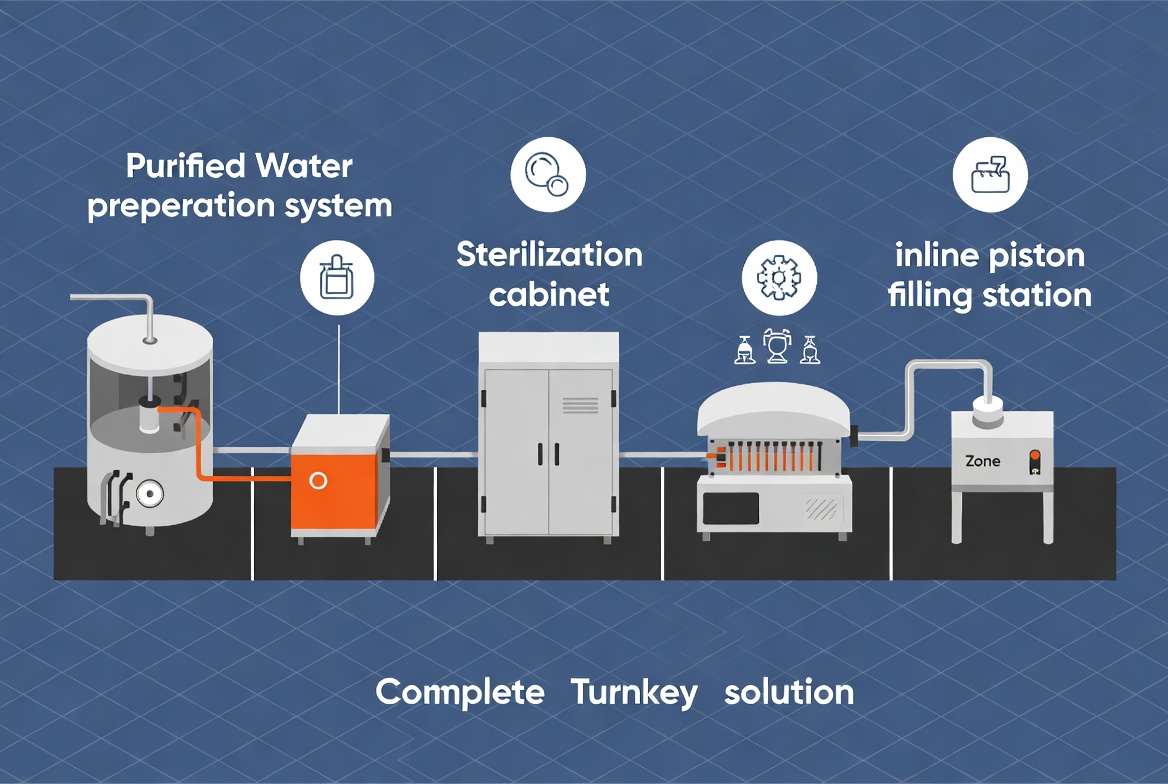
Solution by Ningbo Everheal:
- Purified Water Preparation System rated at 5,000 liters per hour
- Sterilization Cabinet with steam-in-place capability
- Inline piston filler with dual-stage sterile filtration
- Custom factory layout with black-white zone segregation
Result: 25% increase in overall equipment effectiveness, zero contamination incidents in 18 months, FDA audit passed with no observations.
Smart Filling and Industry 4.0 Integration
- IoT-enabled sensors for real-time fill monitoring and predictive maintenance.
- AI-driven viscosity detection to auto-adjust pump speed.
- Blockchain traceability for batch tracking and regulatory reporting.
By 2026, smart fillers are expected to reduce downtime by 30% and improve yield by 10 to 15% through data-driven optimization.
Actionable Takeaways for Pharma Decision-Makers
- Match filler type to product viscosity and sterility requirements.
- Prioritize CIP and SIP capabilities and GMP-grade materials for regulatory compliance.
- Engage turnkey providers for custom factory layout and line integration.
- Plan for Industry 4.0 with IoT-enabled fillers and data analytics.
Get a Custom Filling Line Quote from Ningbo Everheal
Ningbo Everheal Medical Equipment Co., Ltd. specializes in turnkey pharmaceutical production lines, including purified water preparation systems, sterilization cabinets, pharmaceutical solution preparation systems for large-volume infusions, lyophilized drugs, and anticancer preparations, as well as custom factory layout planning and GMP-compliant line integration.
FAQ (Frequently Asked Questions)
Q1: What is the best filling machine for high-viscosity pharmaceutical liquids?
A: Piston filling machines or servo-driven linear piston fillers are ideal for viscosities above 1,000 centipoise, offering plus or minus 0.3% accuracy and consistent dosing.
Q2: How do I ensure GMP compliance when selecting a filler?
A: Choose 316L stainless steel, CIP and SIP-capable designs, and aseptic filling environments rated ISO Class 5. Validate with media fills and environmental monitoring.
Q3: Can monobloc fillers handle lyophilized drug vials?
A: Yes. Monobloc systems with nitrogen backfill and pre-evacuation are standard for lyophilized vials, ensuring oxygen-free sealing and extended shelf-life.
Q4: What is the typical ROI timeline for upgrading to an automatic filler?
A: Most pharma manufacturers see ROI within 12 to 18 months due to reduced labor, higher yield, and lower downtime.
Q5: Does Ningbo Everheal provide custom factory layout services?
A: Yes. Everheal offers turnkey solutions including purified water systems, sterilization cabinets, and custom factory layout planning for GMP-compliant lines.
References
1. Filamatic. "The 4 Main Types of Liquid Filling Machines." 2022. https://www.filamatic.com/blog/4-main-types-liquid-filling-machines/
2. Makwell. "Different Liquid Filling Machine Types and Applications." 2024. https://makwell.com/different-liquid-filling-machine-types-and-applications/
3. Machinery Industry. "The Ultimate Guide to Liquid Filling Machines (2026)." 2026. https://machineryindustrys.com/wiki/the-ultimate-guide-to-liquid-filling-machines/
4. LOM Tech. "Exploring The Types of Liquid Filling Machine & Their Uses." 2024. https://lomfiller.com/the-types-of-liquid-filling-machine/
5. Highfine Pharmatech. "Pharmaceutical Production Line." 2025. https://www.highfine-en.com/pharmaceutical-production-line
6. Ningbo Everheal Medical Equipment. "Products & Turnkey Solutions." 2026. https://www.everhealgroup.com/products.html


