In modern pharmaceutical manufacturing, cleanroom engineering is no longer just about air changes and HEPA filters; it is about controlling every potential emission source at the equipment and process level. As a process engineer who has worked on multiple sterile filling projects in Asia and Europe, I have seen how the choice between closed-loop chemical dispensing and open-tank mixing can make or break a cleanroom VOC strategy. [everhealgroup]
For equipment builders like Ningbo Everheal Medical Equipment Co., LTD, which integrates BFS, FFS and conventional filling and sealing machines into turnkey production lines, this choice is tightly linked to equipment design, piping layouts and factory‑wide automation. In this article, we will explore how closed-loop systems help you achieve near zero‑VOC emissions, and where open-tank mixing still appears in legacy facilities—and how to phase it out. [everhealgroup]
What Are VOCs and Why Do They Matter in Cleanrooms?
Volatile organic compounds (VOCs) are organic chemicals that easily become vapors or gases and are present in many solvents, cleaning agents, and process chemicals used in pharmaceutical production. Typical examples include alcohols, ketones and other organic solvents used for equipment cleaning, surface disinfection, and occasionally in formulation steps. [learn.kaiterra]
Regulators and standards bodies now view VOCs as key indoor air pollutants because they are linked to eye, nose and throat irritation, headache, and long-term health risks at higher concentrations. Many guidelines recommend that total VOC (TVOC) levels in indoor environments remain below approximately 500 µg/m³, with individual compounds like benzene and formaldehyde held at very low thresholds. In a Grade A/B cleanroom, maintaining these levels while running solvent-intensive operations requires tight control of every emission pathway, from chemical storage to dispensing to waste handling. [epa]
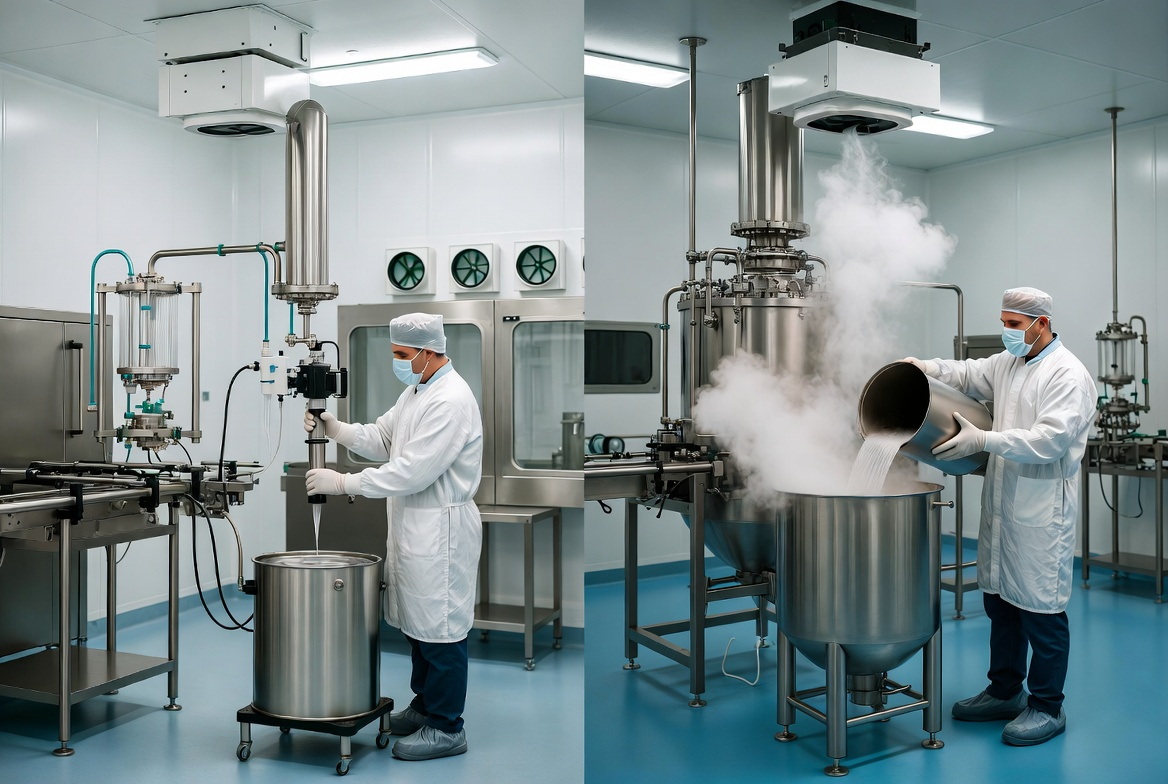
Defining Closed-Loop Chemical Dispensing vs Open-Tank Mixing
What Is Closed-Loop Chemical Dispensing?
Closed-loop chemical dispensing is a system in which concentrated chemicals are transferred from sealed containers to point-of-use equipment through a fully enclosed, often metered, circuit. Connections are typically made via keyed couplers and non‑spill interfaces, and the system meters the exact volume or dilution without exposing operators or the room to open liquid surfaces. [interconchemical]
Modern closed-loop platforms used in cleaning and disinfection applications are designed specifically to prevent spills, minimize operator contact and ensure consistent dosing, which directly supports VOC reduction strategies in controlled environments. When integrated with automated filling and sealing machines, these systems can feed CIP/SIP skids, surface disinfection loops, or formulation vessels without ever opening a drum or reservoir to the room. [everhealgroup]
What Is Open-Tank Mixing?
Open-tank mixing refers to the traditional practice of preparing chemical solutions in partially or fully open vessels, where operators manually pour concentrates and solvents into tanks and mix them using mechanical agitators or recirculation loops. Each step—including opening drums, pouring, and sampling—creates opportunities for VOCs to volatilize directly into the cleanroom or an adjacent grey area. [codes.ohio]
In older facilities, these open tanks are often located inside classified spaces or directly connected to them, meaning that VOCs can enter the cleanroom despite ventilation and filtration. Even when tanks are provided with simple lids, repeated opening for drum changes, manual level checks, or cleaning undermines VOC control and increases operator exposure. [epa]
Process Comparison – How Each Approach Handles VOCs
VOC Emission Pathways
From a process perspective, the key emission points in chemical handling are:
- Container opening and decanting
- Mixing and agitation
- Sampling and testing
- Cleaning and waste management
In open-tank mixing, VOCs escape whenever a drum is opened, a tank is filled or an operator samples the solution. Even with local exhaust, capture efficiencies can be highly variable and depend heavily on operator behavior and maintenance. [codes.ohio]
In closed-loop dispensing, drums remain sealed, and transfers occur through dedicated couplings that prevent splash and vent vapors back into the container or a controlled exhaust pathway. The system can be designed to meet or exceed regulatory expectations for VOC capture efficiencies approaching 90% or higher when combined with engineered controls, making it far easier to comply with tight indoor air targets. [interconchemical]
Impact on Cleanroom Classification and Air Handling
Because VOCs contribute to overall air quality, high emissions from open mixing can compromise environmental monitoring results and increase the burden on HVAC systems. Operators may need higher air change rates or dedicated VOC scrubbing, which increases energy consumption and operating cost. [learn.kaiterra]
Closed-loop dispensing reduces VOC load at the source, allowing cleanroom designers to optimize airflow and filtration without compensating for large solvent releases. For production lines built around BFS, FFS and other integrated filling equipment, this makes it easier to maintain Grade A/B conditions at the point of fill while keeping support areas in lower but still controlled classifications. [everhealgroup]
Safety, Compliance and Life-Cycle Cost
Operator Safety and Ergonomics
From a user experience perspective, manual drum handling and open pouring are among the highest‑risk tasks in a solvent‑using facility. They combine repetitive lifting, splash risk and direct inhalation exposure. Even where PPE is mandatory, human factors—fatigue, rushed work, small mistakes—can quickly erode protection. [epa]
Closed-loop systems are explicitly designed to eliminate manual pouring and to reduce chemical contact to an absolute minimum. Self‑venting, keyed connectors and non‑spill valves help ensure that even less experienced staff can achieve consistent safety performance, which is particularly important in multi‑shift operations and emerging markets. [alco-chem]
Regulatory and ESG Alignment
Air quality regulations increasingly call for storing VOC‑containing materials in closed containers and venting cleaning operations to control systems that achieve high capture and destruction efficiencies. At the same time, ESG reporting frameworks push pharmaceutical companies to demonstrate quantifiable reductions in emissions and workplace exposure. [codes.ohio]
By design, closed-loop dispensing aligns with these expectations and makes it easier to document control measures and performance. In contrast, open-tank mixing forces facilities to rely on administrative controls and high ventilation rates, which are harder to document and defend in audits or ESG disclosures. [interconchemical]
Total Cost of Ownership
While closed-loop systems require higher initial investment in specialized connectors, pumps and control hardware, they often reduce life‑cycle cost by:
- Lowering chemical consumption through precise metering
- Reducing waste from spills and over‑dosing
- Cutting HVAC energy usage by reducing VOC load
- Minimizing lost time incidents and associated downtime
These factors are particularly relevant for large, multi‑line installations that use high volumes of alcohol-based disinfectants and detergents to support aseptic filling lines. When planners evaluate total cost across a 10‑15 year life, closed loop typically delivers a strong return on investment, especially in high‑labor‑cost regions or highly regulated markets. [interconchemical]
How Closed-Loop Dispensing Supports Zero-VOC Cleanroom Strategies
Source Control as the Primary Strategy
Industry guidance on VOCs consistently emphasizes source removal or substitution as the most effective mitigation strategy, ahead of relying solely on ventilation. Closed-loop dispensing is essentially a source‑control technology: it reduces the amount of VOC that ever reaches the room air in the first place. [learn.kaiterra]
When combined with low‑VOC or zero‑VOC chemical formulations and strict storage practices, facilities can drive TVOC levels close to the lower thresholds recommended for high‑quality indoor environments. This is particularly important where cleanrooms are attached to laboratories, packaging areas and warehouses that may introduce additional VOC sources. [greenseal]
Integrating with BFS and FFS Production Lines
For manufacturers like Everheal that deliver complete pharmaceutical production lines, closed-loop VOC management is most powerful when it is designed into the line architecture from day one. Typical integration points include: [everhealgroup]
- Feeding CIP/SIP skids for BFS machines with sealed chemical circuits
- Supplying disinfectants to filling, stoppering and capping zones through closed manifolds
- Connecting bulk solvent storage in technical areas to cleanroom points of use via double‑contained piping
By aligning chemical flows with equipment layout, integrators can keep the highest VOC concentrations outside the cleanroom shell while maintaining reliable supply to critical operations. This approach supports efficient cleanroom zoning and simplifies environmental qualification. [everhealgroup]
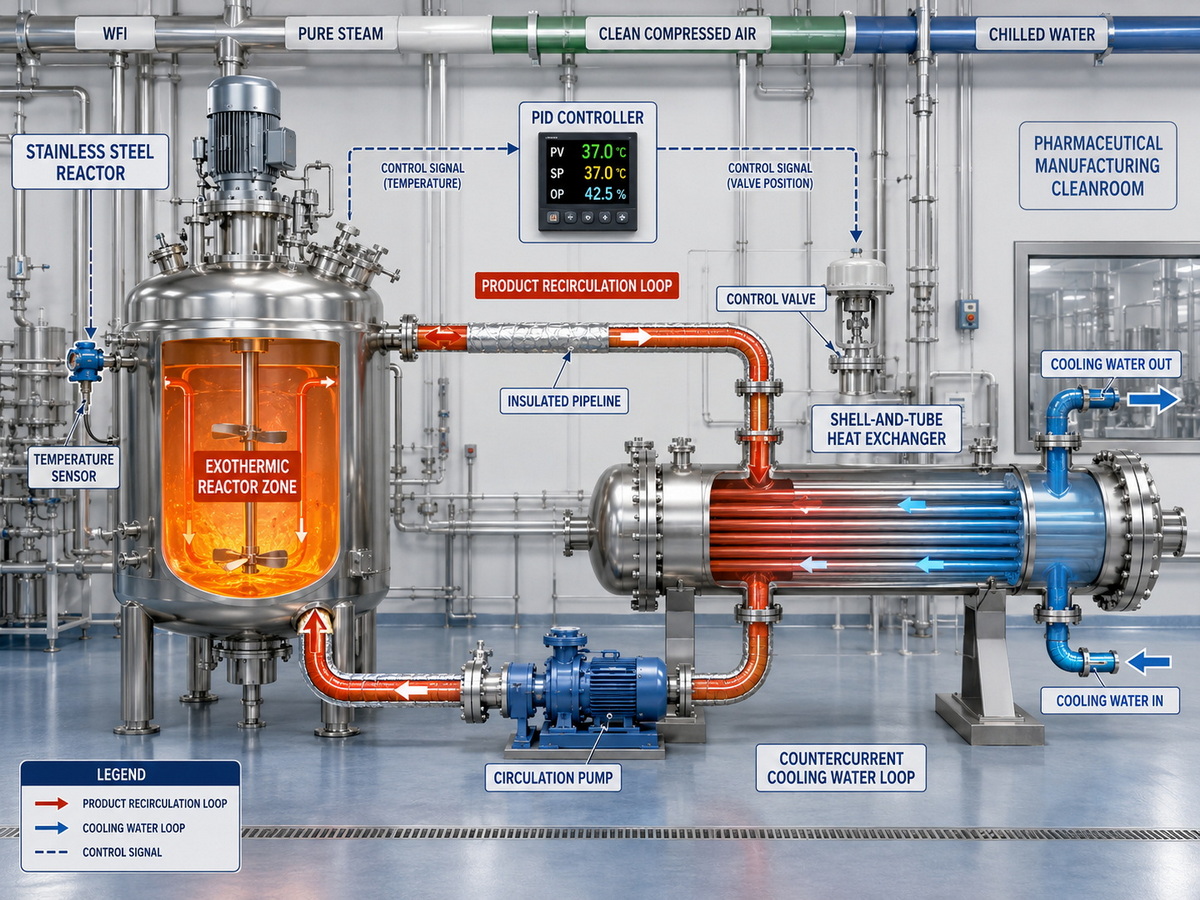
Step-by-Step: Transitioning from Open-Tank Mixing to Closed-Loop Systems
From an engineering consultant's perspective, successful transitions follow a repeatable roadmap:
1. Map all chemical touchpoints
Identify where chemicals are stored, diluted, used and disposed of across the facility, including utility rooms and technical spaces. [epa]
2. Quantify VOC loads
Use safety data sheets and typical usage patterns to estimate VOC emissions from each step, focusing on alcohols and other volatile solvents. [learn.kaiterra]
3. Prioritize high‑impact conversions
Target operations with the highest emissions and most frequent manual handling—often disinfectant preparation tanks and cleaning solution mixing points. [epa]
4. Select closed-loop technology
Choose metered, non‑spill dispensing platforms that are compatible with your containers and relevant regulations, ensuring they can interface with existing skids and filling lines. [interconchemical]
5. Redesign piping and layouts
Route chemical piping through technical corridors and integrate with new or existing filling and sealing machines, minimizing penetrations into classified areas. [everhealgroup]
6. Validate, monitor and train
Verify VOC reductions through monitoring, update SOPs, and train operators on new couplings, safety checks and response procedures. [epa]
Approaching the transition as a structured project rather than a one‑off equipment swap makes it easier to secure management buy‑in and to document improvements for regulators and clients.
Expert Perspective – Where Open-Tank Mixing Still Appears (and How to Manage It)
In real projects, I still see open-tank mixing in three scenarios:
- Legacy facilities where tanks are embedded in existing utilities and cannot be easily replaced
- Small‑batch R&D or clinical operations where flexibility is prioritized over automation
- Low‑risk, non‑VOC chemicals where emission concerns are minimal
In these cases, the goal is to contain and ventilate as much as reasonably practical—using tight‑fitting covers, dedicated local exhaust and careful drum handling. However, any operation that routinely handles flammable or high‑VOC solvents inside the cleanroom should be considered a candidate for closed-loop conversion in the medium term, particularly for companies that export to markets with strict environmental and worker‑safety expectations. [codes.ohio]
Comparative Summary – Closed-Loop vs Open-Tank
VOC and Cleanroom Performance Comparison
| Aspect | Closed-loop chemical dispensing | Open-tank mixing |
| VOC emission potential | Very low; emissions largely contained at source when combined with appropriate controls interconchemical | High; emissions occur at every drum opening, pouring, mixing and sampling step codes.ohio |
| Operator exposure | Minimal; no manual pouring and limited direct contact with chemicals alco-chem | Significant; frequent handling and inhalation risk despite PPE epa |
| Regulatory alignment | Strong; supports closed-container and emission-control requirements codes.ohio | Weaker; relies on administrative controls and high ventilation rates codes.ohio |
| Cleanroom impact | Easier to maintain TVOC below recommended thresholds learn.kaiterra | Higher HVAC load and risk of exceeding internal air‑quality targets epa |
| Integration with BFS/FFS lines | Readily integrated via sealed piping and skids at design stage everhealgroup | Often limited to legacy or ad‑hoc setups; harder to centralize control everhealgroup |
| Life‑cycle cost | Higher capex, lower opex; strong ROI in high‑volume operations interconchemical | Lower capex, higher opex; more waste, energy and safety‑related costs epa |
Where Ningbo Everheal Fits Into the Picture
Ningbo Everheal Medical Equipment Co., LTD focuses on integrated pharmaceutical filling equipment and production lines, including BFS machines, FFS systems and conventional filling and sealing equipment. By combining equipment design with cleanroom engineering, Everheal can help pharmaceutical manufacturers design layouts where chemical preparation, CIP/SIP and disinfection operations are aligned with closed-loop VOC management principles from the start. [everhealgroup]
For global buyers, this means you can work with a single partner to plan cleanroom zoning, chemical piping and equipment placement so that VOC control, aseptic processing and operator safety are addressed in a unified project scope. When paired with localized support, this approach reduces integration risk and accelerates qualification timelines for new production lines. [everhealgroup]
Call to Action – Designing Your Next Zero-VOC Cleanroom Line
If you are planning a new BFS, FFS or conventional filling line—or upgrading an existing facility—now is the time to rethink how chemicals are stored, dispensed and mixed. By shifting from open-tank mixing to closed-loop chemical dispensing, you protect operators, stabilize cleanroom VOC levels and stay ahead of tightening regulatory and ESG requirements. [codes.ohio]
Ningbo Everheal Medical Equipment Co., LTD can support you with integrated factory layout planning, cleanroom engineering and pharmaceutical production line design, ensuring that VOC control is built into your filling, sealing and CIP/SIP systems from day one. Contact the Everheal engineering team to discuss your current mixing practices, VOC challenges and long‑term cleanroom strategy so we can help you architect a safer, cleaner and more efficient production environment. [everhealgroup]
FAQ: Closed-Loop Chemical Dispensing and VOCs in Cleanrooms
Q1: Can closed-loop dispensing alone guarantee zero‑VOC emissions in a cleanroom?
A1: No system can guarantee absolute zero, but closed-loop dispensing drastically reduces emissions at the source and, when combined with low‑VOC chemicals, proper storage and well‑designed ventilation, can bring TVOC levels close to recommended thresholds. [learn.kaiterra]
Q2: Do closed-loop systems require major modifications to existing filling lines?
A2: In many cases, closed-loop platforms can be integrated by adding sealed transfer lines and compatible couplings to existing skids and utilities, though older facilities may require more extensive piping and layout changes. [interconchemical]
Q3: Are closed-loop systems compatible with common disinfectants used in aseptic areas?
A3: Most commercial closed-loop dispensing platforms are designed to handle alcohol‑based and other standard disinfectants, but material compatibility checks with the vendor are still essential. [rdindustries]
Q4: How does VOC reduction influence cleanroom classification?
A4: VOCs are not part of particle counts, but reducing them improves overall indoor air quality and can make it easier to maintain environmental conditions, odor control and operator comfort in high‑grade areas. [epa]
Q5: Why involve an equipment manufacturer like Everheal in VOC planning?
A5: Because chemical distribution, CIP/SIP and disinfection loops are physically integrated with filling and sealing equipment, involving the line manufacturer enables a coordinated design where mechanical, process and VOC controls all work together from the start. [everhealgroup]
Reference
1. U.S. EPA – Volatile Organic Compounds' Impact on Indoor Air Quality. [epa]
<https://www.epa.gov/indoor-air-quality-iaq/volatile-organic-compounds-impact-indoor-air-quality>
2. Kaiterra – Understanding TVOC: What You Need to Know About Volatile Organic Compounds. [learn.kaiterra]
<https://learn.kaiterra.com/en/resources/understanding-tvoc-volatile-organic-compounds>
3. Green Seal – Your Guide to VOCs in Paint and Cleaning Products. [greenseal]
<https://greenseal.org/guide-to-vocs-in-paint-and-cleaning-products/>
4. Ohio Administrative Code – Rule 3745‑21‑23 (VOC emission control requirements). [codes.ohio]
<https://codes.ohio.gov/ohio-administrative-code/rule-3745-21-23>
5. RD Industries – Products for Absolute Chemical Closed‑Loop Technology. [rdindustries]
<https://www.rdindustries.com/closed-loop-technology/>
6. Intercon Chemical – Closed Loop Systems. [interconchemical]
<https://interconchemical.com/solutions/closed-loop-systems/>
7. Ningbo Everheal Medical Equipment Co., LTD – BFS Machine Manufacturer. [everhealgroup]
<https://www.everhealgroup.com/bfs-machine-manufacturer.html>
8. Ningbo Everheal – Pharmaceutical Production Line. [everhealgroup]
<https://www.everhealgroup.com/pharmaceutical-production-line.html>
9. Ningbo Everheal – Pharmaceutical Filling Equipment. [everhealgroup]
<https://www.everhealgroup.com/pharmaceutical-filling-equipment.html>
10. Ningbo Everheal – Cleanroom Engineering and Products. [everhealgroup]
<https://www.everhealgroup.com/cleanroom-engineering-and-products.html>


