Commercial Integrity Meets Complex Logistics
In transnational engineering, delivering a state-of-the-art turnkey pharmaceutical plant construction project requires more than manufacturing compliance. While meeting European Medicines Agency (EMA) and WHO current Good Manufacturing Practices (cGMP) is a baseline requirement, international buyers face significant challenges beyond the cleanroom itself. Specifically, these include managing unpredictable electrical upgrade fees and handling the logistical risks of transporting heavy machinery across borders to landlocked processing facilities.
When an African healthcare enterprise selected Ningbo Everheal Pharmaceutical Equipment Co., Ltd. to build an advanced parenteral processing suite, the project included our flagship pharmaceutical solution preparation system and a high-speed Form-Fill-Seal machine (FFS machine) line. To support this line, the facility required a high-containment hazardous exhaust filtration network. However, during the final contract alignment, the client faced an emergency change in their on-site power infrastructure, causing significant concern regarding hidden commercial fees and technical upgrade costs.
Furthermore, the facility's location presented a major logistical challenge: Lusaka, Zambia—a landlocked city deep within the southern-central African plateau, completely dependent on multi-jurisdictional transit corridors.
By prioritizing commercial transparency and engineering integrated systems that prevent cost inflation, Everheal eliminated hidden modification fees. Moving beyond traditional standard shipping boundaries (such as "FOB Ningbo"), our project logistics team mapped out a complete sea freight and overland transport integration blueprint. This strategy successfully moved the critical cleanroom assets from China through the Port of Dar es Salaam, followed by an intensive cross-border overland journey directly to the client's production floor in Lusaka.
1. The Challenges of Remote Facility Commissioning
Developing high-integrity fluid preparation spaces in emerging markets requires a comprehensive project strategy. A facility operating modern fluid processing arrays alongside automated Form-Fill-Seal machine (FFS machine) lines must balance precise fluid dynamics with reliable biological containment. This is particularly critical when the line handles cytotoxic compounds, anticancer formulations, or large-volume parenterals that require strict cleanroom hazardous exhaust filtration.
Historically, procurement directors in these regions have faced two persistent issues when working with distant machinery suppliers:
The Component Cost Trap: Initial equipment quotes often omit necessary accessories, leading to unexpected additional invoices for control enclosures, software licenses, or cooling fans.
The Port of Entry Boundary: Traditional equipment fabricators typically fulfill their obligations at the domestic shipping port, leaving the buyer to manage complex customs handling, transshipment planning, and long-distance trucking through remote corridors.
Ningbo Everheal addresses these vulnerabilities directly. By operating as a transparent pricing pharmaceutical equipment manufacturer, we ensure that our equipment modules arrive fully integrated, while our logistics specialists manage the international supply chain from our factory floor to final arrival.
2. The Client’s Pain Points: The Fear of Hidden Fees and African Inland Transit Blind Spots
Our client’s core project expansion required an advanced safety exhaust system to isolate active ingredients. Following a late-stage power infrastructure adjustment from 3-phase to single-phase currents, the client was highly concerned that their existing system order would require an expensive engineering overhaul. They worried that modifying the system to incorporate custom control cabinets and specialized variable-speed fan components would lead to substantial hidden upgrade costs.
Simultaneously, the client's logistics team faced a major supply chain challenge. Because Zambia is landlocked, importing high-value, mirror-polished cGMP machinery requires crossing multiple international borders.
The Logistical Bottlenecks
The Transshipment Risk: Precision equipment, such as heavy-duty isolation systems, FFS lines, and sterilization cabinets, cannot tolerate excessive handling. Every transfer between cargo vessels, dockside storage, and overland flatbed trucks increases the risk of structural warping, seal breakdown, or internal alignment issues.
The Infrastructure Corridor Challenge: The overland route from coastal entry points to Lusaka covers over a thousand kilometers of varied road infrastructure. This path introduces prolonged vibration profiles, border clearance delays, and fluctuating environmental conditions that can compromise delicate control sensors if packaging insulation fails.
The Lack of Logistics Guidance: The client lacked the logistics network required to coordinate maritime freight with regional African trucking networks. This gap threatened to leave their high-value equipment stranded at a coastal port, facing expensive storage fines.
The client was hesitant to finalize the project, concerned that hidden engineering fees or transit damage through remote corridors would compromise their investment.
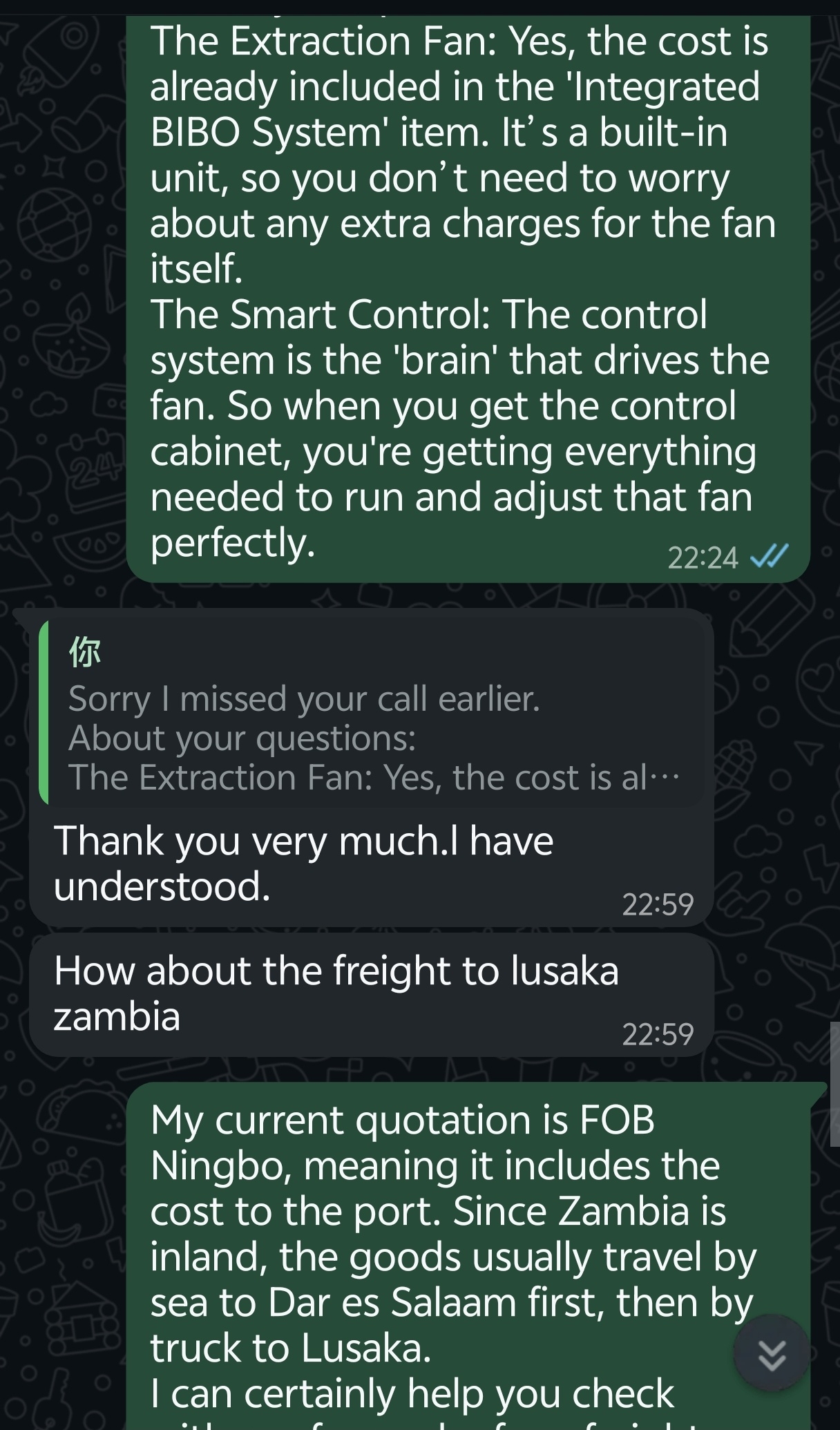
3. The Everheal Solution: All-Inclusive Product Engineering and Collaborative Logistics Mapping
During a late-night project alignment meeting, Everheal’s lead project manager addressed the client's financial and logistical concerns directly.
First, we provided formal assurance regarding the equipment's architecture: our high-containment air filtration asset was engineered as an integrated BIBO system with fan and control. Because our design includes built-in single-phase vector regulation and automated control systems within the base specification, the on-site utility modification would incur zero additional costs. The initial quote remained unchanged.
[Everheal Integrated System Strategy]
Base Equipment Cost (Includes Single-Phase VFD & Smart Control Cabinet) = No Hidden Fees
                                       ↓
[Multimodal Logistics Blueprint for Zambia]
Ningbo Port (Maritime Transit) ➔ Port of Dar es Salaam (Tanzania) ➔ Cross-Border Trucking ➔ Lusaka Cleanroom
Next, our supply chain team took over project logistics. Rather than ending our responsibility at the domestic shipping port, Everheal developed a comprehensive multimodal logistics for pharmaceutical equipment strategy. We mapped out an optimized transportation path, verified regional carrier credentials, and calculated all cross-border transit expenses to give the client clear visibility over their total landed cost.
4. Technical Integration: The Advantages of All-Inclusive System Engineering
The reason Everheal could adapt to the client's single-phase power adjustment without changing our pricing lies in our integrated design philosophy. Traditional air filtration systems often split the filtration housing, fan assembly, and automation components among different suppliers, which drives up integration costs.
Integrated Control and Performance Validation
The integrated BIBO system with fan and control combines these elements onto a unified structural platform. The system features a built-in, pre-wired control cabinet running a dedicated PLC platform. This setup utilizes advanced power vector algorithms capable of running on single-phase inputs while maintaining stable motor performance.
This integrated design allows our factory to perform complete, automated validation testing prior to shipping, including:
This factory-level integration ensures that when the equipment arrives on-site, the installation team only needs to connect primary utilities and ducting interfaces to begin commissioning. By eliminating on-site wiring changes and additional control engineering, we reduce the risk of hidden technical fees.
5. Logistics Optimization: Managing the Journey to a Landlocked Destination
To move heavy equipment like our pharmaceutical solution preparation system and high-capacity FFS units across continents to Lusaka, Everheal’s logistics division developed a comprehensive sea freight and overland transport integration framework.
[Phase 1: Maritime Freight]
Ningbo Port, China ──► (Indian Ocean Transit) ──► Port of Dar es Salaam, Tanzania
                                             │
                                   [Phase 2: Port Transfer]
                                             │
[Phase 3: Overland Corridor]                             ▼
Lusaka, Zambia ◄── (Border Clearance) ◄── [Cross-Border Trucking] (Tazam Highway)
Phase 1: Maritime Transit to East Africa
The equipment modules were secured inside heavy-gauge, desiccated sea containers at our Ningbo manufacturing facility. The containers were loaded onto a container ship routed directly to the Port of Dar es Salaam in Tanzania, the optimal maritime entry point for the central-east African industrial corridors.
Phase 2: Port Transshipment and Custom Crating
To protect the equipment during the overland journey, Everheal designed specialized wooden transport enclosures that exceed standard ISPM-15 export guidelines.
To absorb continuous road vibrations over long distances, the internal components of the FFS machines and filtration housings were secured using high-density polyurethane dampening mounts. The containers were transferred directly from the ocean vessel to specialized long-haul flatbed trailers, minimizing handling inside the port terminal.
Phase 3: Cross-Border Trucking and Inland Delivery
The overland route followed the established Tan-Zam transport corridor, moving southwest from Dar es Salaam across Tanzania to the Tunduma-Nakonde border crossing into Zambia.
Everheal’s logistics coordinators worked closely with regional customs specialists to prepare all transit documentation, including international customs bonds and pre-clearance manifests, reducing border processing times. The convoy traveled down the Great North Road directly to the client's facility in Lusaka, ensuring a secure and predictable delivery.
6. Successful Delivery and Total Cost Control
The arrival of the integrated processing equipment in Lusaka demonstrated the value of combining proactive system engineering with detailed logistics management.
The measurable results of this project include:
Zero Cost Inflation: The client faced no unexpected technical upgrade fees; the integrated system architecture fully supported the single-phase utility adjustment within the original budget.
Uninterrupted Supply Chain Continuity: The multimodal logistics plan eliminated transport blind spots, delivering the equipment safely across a 1,200-kilometer inland corridor.
Compliant On-Site Delivery: The custom transit packaging successfully protected the internal surfaces and electronics of the machinery, passing all arrival quality inspections without damage.
Accelerated Facility Verification: The pre-wired, integrated design allowed the installation team to rapidly connect the system, keeping the facility expansion on schedule.
Project Director Review
The Lead Logistics and Infrastructure Director for the Zambian facility stated during commissioning:
"Everheal provided exceptional commercial integrity and logistical support throughout this project. They kept their technical pricing completely stable despite our on-site power changes, and their team mapped out the entire landlocked trucking route to Lusaka. This complete support gave our team peace of mind and delivered a successful project outcome."
7. Dependable Turnkey Engineering for International Markets
Developing modern pharmaceutical facilities in challenging locations requires an equipment partner that provides complete transparency, engineering expertise, and reliable supply chain support.
At Ningbo Everheal Pharmaceutical Equipment Co., Ltd., we design and build high-performance systems that simplify international delivery. Whether engineering advanced Form-Fill-Seal machine (FFS machine) lines, installing integrated sterile preparation systems, or coordinating complex cross-border trucking to landlocked countries, we ensure your equipment arrives safely and performs to specification. Contact Everheal today to discuss your next facility infrastructure project.
End-to-End Project Execution Framework
| Project Phase | Primary Technical/Logistical Focus | Everheal Strategic Action | Client Benefit |
| Engineering | System Integration & Power Matching | Built-in single-phase VFD & automated control architecture | Eliminates hidden technical fees |
| Manufacturing | Quality Assurance & Compliance | Factory-validated performance mapping under cGMP standards | Simplifies on-site validation |
| Ocean Transit | Secure Maritime Transport | Desiccated container shipping from Ningbo to Dar es Salaam | Protects equipment over long sea routes |
| Inland Overland | Cross-Border Highway Logistics | Specialized vibration-dampening crating and corridor tracking | Ensures safe transit through remote regions |
| Commissioning | Site Installation & Final Sign-Off | Pre-wired connections for fast on-site utility hookup | Speeds up final facility launch |


