Content Menu
● Why Pure Steam Matters For African Pharma
● Market Overview: Pure Steam in Africa
● Key Technical Features Offered by Leading Suppliers
● Representative Pure Steam Generator Manufacturers And Suppliers Serving Africa
>> Representative categories of African-serving suppliers
● How Everheal Supports African Pure Steam Projects
● Typical Applications in African Facilities
● Key Selection Criteria for African Buyers
● How Everheal Integrates Pure Steam With Water Systems
● Engineering and Project Support for Africa
● Future Trends for Pure Steam in Africa
● Conclusion
● FAQs About Pure Steam Generator Manufacturers And Suppliers in Africa
>> 1. What is a pure steam generator and why is it important?
>> 2. How do Pure Steam Generator Manufacturers And Suppliers ensure compliance with pharmacopoeia standards?
>> 3. What should African buyers consider when choosing Pure Steam Generator Manufacturers And Suppliers?
>> 4. Can Everheal support turnkey pure steam and water projects for Africa?
>> 5. How is the pure steam generator market expected to grow in Africa?
● Citations:
Africa's fast-growing pharmaceutical and biotech markets are driving strong demand for reliable Pure Steam Generator Manufacturers And Suppliers that can support GMP-compliant sterile production lines. For investors and engineering teams, understanding which Pure Steam Generator Manufacturers And Suppliers can serve African projects—and how partners like Everheal in China can integrate these units into turnkey facilities—is crucial for long-term success.[1][2][3]

Why Pure Steam Matters For African Pharma
Pure steam generators produce sterile, pyrogen-free steam used for sterilizing equipment, piping, tanks, and sometimes for contact with product-contact surfaces in pharmaceutical plants. Unlike ordinary plant steam, pure steam has very low levels of contaminants, endotoxins, and non-condensable gases, making it suitable for critical sterilization in GMP environments.[4][5]
- Pure steam generator systems typically use purified water or Water for Injection (WFI) as feed water and industrial steam as the heating medium.[5][6]
- Many leading Pure Steam Generator Manufacturers And Suppliers design their systems so that the condensate meets major pharmacopoeia standards such as USP, EP, and CP requirements for WFI quality.[6][5]
For African manufacturers, selecting capable Pure Steam Generator Manufacturers And Suppliers is central to meeting WHO-prequalification, local regulatory expectations, and international client audits.[2][1]
Market Overview: Pure Steam in Africa
Although Africa still represents a relatively small portion of the global pure steam generator market, demand is rising as more countries invest in local vaccine, injectable, and IV solution production. Market research indicates that the Middle East and Africa region accounts for only a few percent of global pure steam generator revenues but is forecast to grow steadily as new facilities are built.[7][1]
- Drivers include expansion of pharmaceutical manufacturing, stricter quality regulations, and the need for improved sterilization and clean utility systems.[1][2]
- Pure Steam Generator Manufacturers And Suppliers that can offer cGMP-compliant design, documentation, and after-sales service increasingly win projects in North Africa, Southern Africa, and selected sub-Saharan markets.[7][1]
Many African projects combine regional steam and utilities integration specialists with international Pure Steam Generator Manufacturers And Suppliers from Europe, Asia, or India, supported by turnkey engineering partners such as Everheal in China.[8][3]
Key Technical Features Offered by Leading Suppliers
Pure Steam Generator Manufacturers And Suppliers serving Africa must meet both technical and regulatory expectations. Typical design features include:[5][6]
- Use of purified water as feed water and industrial steam as heating source, ensuring clean vapor generation.[6][5]
- Construction in high-grade stainless steel such as SS316L in all product-contact areas, with smooth surfaces to minimize contamination risk.[5][6]
- Dual-tube-sheet designs in evaporators and condensers to prevent cross-contamination between utilities and pure steam condensate.[6][5]
- Automated PLC/HMI control for precise control of pressure, temperature, flow, and automatic start/stop sequences.[9][5]
- Multi-stage separation and demisting to remove droplets and ensure low endotoxin and non-condensable gas content in the pure steam.[5][6]
Energy efficiency is increasingly important for African buyers, and Pure Steam Generator Manufacturers And Suppliers are optimizing water, steam, and cooling media consumption through improved heat-exchanger designs and smart control strategies.[9][2]
Representative Pure Steam Generator Manufacturers And Suppliers Serving Africa
Many Pure Steam Generator Manufacturers And Suppliers supporting African projects are headquartered outside the continent but deliver equipment, documentation, and sometimes local service in African markets. The following table highlights typical categories of Pure Steam Generator Manufacturers And Suppliers relevant to Africa, with example companies mentioned in public information.[1][7]
Representative categories of African-serving suppliers
| Supplier Category | Example Companies | Relevance for African Projects |
| Global pharma pure steam specialists | BWT Pharma, Syntegon/Pharmatec, Paul Mueller Company | Provide high-end pure steam generators with strong GMP documentation, often used in large vaccine or biotech projects. |
| Asian pharma equipment manufacturers | AIPAK Engineering, E CHUNG, other Asian Pure Steam Generator Manufacturers And Suppliers | Offer cost-effective pure steam generators designed to meet USP/EP/CP WFI standards, suitable for sterile manufacturing lines. |
| Turnkey pharmaceutical utility providers | Everheal (China) and similar integrated utility partners | Combine pure steam generators, purified water, WFI, and sterilizers with plant layout and line design for African investors. |
| Regional steam and boiler engineering firms | Steam/boiler specialists in Southern Africa offering steam plant design and services | Provide integration, installation, and maintenance of steam systems and may cooperate with Pure Steam Generator Manufacturers And Suppliers for pharma utilities. |
These Pure Steam Generator Manufacturers And Suppliers support African plants by shipping skids, supervising installation, and providing FAT/SAT, validation documents, and operator training.[1][6]

How Everheal Supports African Pure Steam Projects
Everheal is positioned as one of the specialized Pure Steam Generator Manufacturers And Suppliers from China serving global clients, including pharmaceutical and healthcare investors in Africa. Everheal's pure steam generator portfolio focuses on high-purity steam production for sterilization and SIP applications, integrated with purified water and WFI systems.[12][3]
- Everheal pure steam generators are designed to provide higher purity than conventional plant steam, avoiding chemical additives and minimizing corrosion risks.[12][5]
- As a broader pharmaceutical water treatment and utilities provider, Everheal offers purified water systems, multi-effect distillation units, and sterilization systems alongside pure steam generators for African factories.[3][5]
For African investors, working with an integrated supplier like Everheal allows both equipment supply and factory layout planning to be coordinated from early conceptual design through commissioning and validation.[3][12]
Typical Applications in African Facilities
Pure Steam Generator Manufacturers And Suppliers primarily serve sterilization and clean utility needs in sterile production facilities. In Africa, these utilities are deployed in:[4][5]
- Injectables and IV solution plants, where pure steam is used for sterilizing tanks, piping, and filling equipment.[2][1]
- Vaccine and biotech facilities requiring SIP of fermenters, downstream processing equipment, and cleanroom humidification with high-purity steam.[7][1]
- Medical device and infusion bag production lines that depend on reliable sterilization of components, packaging, and production tools.[3][6]
By sourcing from proven Pure Steam Generator Manufacturers And Suppliers, African manufacturers improve uptime, reduce contamination risk, and simplify regulatory inspections.[2][1]
Key Selection Criteria for African Buyers
When comparing Pure Steam Generator Manufacturers And Suppliers for a new African project, engineering teams typically focus on several criteria.[2][1]
- Regulatory compliance: Ability of the pure steam generator to support USP, EP, or other pharmacopoeial requirements for condensate quality, backed by test reports and validation protocols.[6][5]
- Materials and construction standards: Use of suitable stainless steels, orbital welding, and hygienic design to support sterile operations and long service life.[5][6]
- Energy and water efficiency: Designs that reduce steam, cooling water, and feed water consumption, lowering operating costs in regions with high utilities prices.[9][2]
- Service and spare parts support: Availability of remote support, training, and regional partners to ensure continuous operation of pure steam systems in African locations.[13][8]
- Integration with other utilities: Capability of Pure Steam Generator Manufacturers And Suppliers or their partners to integrate pure steam with WFI, purified water, and clean steam distribution.[3][5]
Turnkey partners like Everheal add value by coordinating pure steam generator specification, piping layout, and control system integration within a complete utilities package.[12][3]
How Everheal Integrates Pure Steam With Water Systems
Everheal is not only among the Pure Steam Generator Manufacturers And Suppliers but also a full-scope pharmaceutical water treatment equipment provider. Its solutions for African projects typically combine:[3][5]
- Purified water systems and WFI generators that produce feed water for pure steam generators.[5][3]
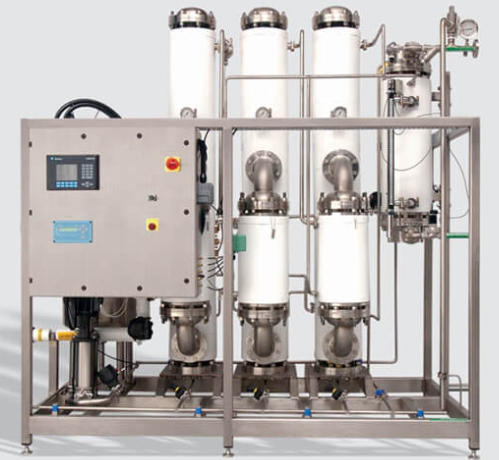
- Pure steam generators designed as skids with evaporator, separator, condenser, and control cabinets, aligned to customer URS and layout.[12][5]
- Sterilizers, liquid filling and sealing machines, and other process equipment to form complete production lines for injectables, infusions, and other sterile products.[6][3]
By integrating these systems, Everheal simplifies commissioning, validation, and long-term operation for African plants working with multiple utilities and complex manufacturing steps.[12][3]
Engineering and Project Support for Africa
Most African projects require coordination among local civil contractors, regional steam engineers, and international Pure Steam Generator Manufacturers And Suppliers. Partners such as Everheal can provide:[8][13]
- Factory layout planning for utilities rooms, boiler houses, and technical floors, optimized for routing pure steam, WFI, and purified water.[3]
- P&ID and 3D design support to integrate pure steam generators with distribution loops, sterilizers, and process equipment.[5][3]
- Commissioning, IQ/OQ documentation, and operator training tailored to local teams, facilitating compliance with national regulators and international auditors.[12][3]
For African investors unfamiliar with pure steam projects, this combination of equipment and engineering support makes Pure Steam Generator Manufacturers And Suppliers more accessible and reduces risk.[1][2]
Future Trends for Pure Steam in Africa
The role of Pure Steam Generator Manufacturers And Suppliers in Africa will expand as more countries prioritize local production of critical medicines and vaccines. Several trends are already visible:[7][1]
- Increasing adoption of energy-efficient pure steam generator designs that lower lifecycle costs and environmental impact.[9][2]
- Integration of digital monitoring and remote diagnostics to track pure steam quality, pressure, and energy consumption in real time.[9][7]
- Stronger collaboration between global Pure Steam Generator Manufacturers And Suppliers and companies like Everheal that focus on turnkey water, pure steam, and filling line solutions for emerging markets.[12][3]
As regulatory frameworks tighten, African facilities will rely more on documented design and qualification support from experienced Pure Steam Generator Manufacturers And Suppliers.[2][1]
Conclusion
Pure steam is a critical utility for any African facility producing sterile pharmaceuticals, vaccines, or high-risk medical devices, and this makes the choice of Pure Steam Generator Manufacturers And Suppliers a strategic decision. By partnering with proven Pure Steam Generator Manufacturers And Suppliers—supported by integrated solution providers like Everheal that also deliver purified water systems, WFI units, sterilizers, and filling lines—African investors can build robust, GMP-compliant plants ready for local and export markets.[4][1][3][12][5]
FAQs About Pure Steam Generator Manufacturers And Suppliers in Africa
1. What is a pure steam generator and why is it important?
A pure steam generator is equipment that converts purified water or WFI into clean, sterile steam, typically using industrial steam as the heating source. It is essential because it supplies pyrogen-free steam used to sterilize tanks, piping, filters, and process equipment in pharmaceutical and biotech facilities.[4][5]
2. How do Pure Steam Generator Manufacturers And Suppliers ensure compliance with pharmacopoeia standards?
Leading Pure Steam Generator Manufacturers And Suppliers design their systems so that the condensate meets major pharmacopoeia requirements such as USP, EP, and CP specifications for WFI quality. They use high-grade stainless steel, dual-tube-sheet heat exchangers, and multi-stage separation to control endotoxins, conductivity, and non-condensable gases.[6][5]
3. What should African buyers consider when choosing Pure Steam Generator Manufacturers And Suppliers?
African buyers should evaluate the supplier's regulatory track record, material quality, energy and water efficiency, documentation package, and ability to provide service in their region. They should also check how well the Pure Steam Generator Manufacturers And Suppliers can integrate pure steam units with purified water, WFI, and sterilization systems in a single project.[1][2][3][5]
4. Can Everheal support turnkey pure steam and water projects for Africa?
Yes, Everheal is one of the specialized Pure Steam Generator Manufacturers And Suppliers that also provides purified water systems, WFI generators, sterilizers, and liquid filling-sealing machines. For African customers, Everheal can support factory layout planning, utilities integration, commissioning, and validation for complete sterile production lines.[3][12][5]
5. How is the pure steam generator market expected to grow in Africa?
Market studies indicate that while Middle East and Africa currently account for a modest share of global pure steam generator revenues, the region is expected to grow steadily. The expansion of local pharmaceutical manufacturing, stricter quality regulations, and infrastructure investments will continue to attract Pure Steam Generator Manufacturers And Suppliers to African projects.[7][2][1]
Citations:
[1](https://www.cognitivemarketresearch.com/pure-steam-generators-market-report)
[2](https://www.persistencemarketresearch.com/market-research/pure-steam-generators-market.asp)
[3](https://www.everhealgroup.com/pharmaceutical-water-trearment-equipment.html)
[4](https://www.bwt-pharma.com/en/application-overview/pure-steam/)
[5](https://www.etwinternational.com/2-3-pure-steam-generator-578182.html)
[6](https://aipakengineering.com/product/quality-pharmaceutical-and-industry-use-pure-steam-generato/)
[7](https://www.linkedin.com/pulse/pure-steam-generators-market-innovation-trajectory-3w8af)
[8](https://energypartners.co.za/steam/)
[9](https://www.syntegon.com/news/energy-efficiency-in-pure-steam-generation/)
[10](https://en.paulmueller.com/pharmaceutical-manufacturing-equipment/pure-steam-generator)
[11](https://www.echung.com.tw/en/category/CAT-6.html)
[12](https://www.everhealgroup.com/pure-steam-generator-manufacturer.html)
[13](https://www.genisttechnocracy.com/product/steam-generator/)
[14](https://www.instek.co.za/pure-steam-generation-pharma-biotec)
[15](https://topsteam.co.za/sterilizers/)


