Content Menu
● Why Pharmaceutical Water Is Critical
● Role Of Pharmaceutical Water Trearment Equipment Manufacturers
● Ningbo Everheal Medical Equipment Co., LTD. – A Turnkey Global Partner
● Engineering And Layout Planning From Everheal
● Korean Pharmaceutical Water Equipment Landscape
● Waternix – Local High‑Purity Water Solutions
● Junghyun Plant – Purified Water And Pure Steam Generation
● Global Specialists Serving The Korean Market
● Typical Pharmaceutical Water System Architecture
● Control, Monitoring, And Data Integrity
● Selection Criteria For Korean Buyers
● Project Models For Korean Facilities
● Long‑Term Operation And Optimization
● Conclusion
● FAQ
>> 1. What is Pharmaceutical Water Trearment Equipment?
>> 2. Why should Korean manufacturers consider Ningbo Everheal?
>> 3. How do Korean suppliers like Waternix and Junghyun cooperate with global vendors?
>> 4. What documents should Pharmaceutical Water Trearment Equipment Manufacturers provide?
>> 5. How can Korean plants ensure long‑term performance of water systems?
● Citations:
Pharmaceutical production in South Korea is expanding rapidly, driven by strong domestic demand, export‑oriented manufacturers, and the growth of biologics and vaccines. Behind every successful facility stand reliable purified water, water for injection (WFI), and pure steam systems that ensure batch safety and regulatory compliance. Because of this, Pharmaceutical Water Trearment Equipment Manufacturers play a strategic role in how fast a plant can reach GMP approval, how stable its operation remains, and how competitive it is in global markets.[1][2][3][4]
Pharmaceutical water systems are not simple utility lines; they are critical process systems that must be designed, built, and validated with the same care as sterile filling or lyophilization lines. South Korean companies often cooperate with both local and international Pharmaceutical Water Trearment Equipment Manufacturers to combine strong engineering, robust validation documentation, and dependable after‑sales service.[3][5][6][1]
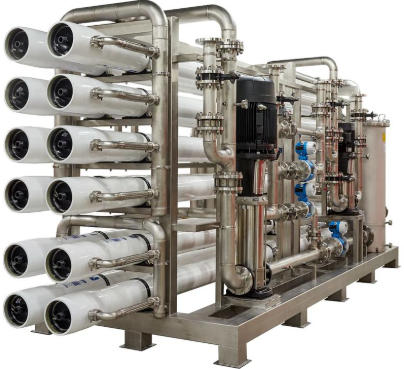
Why Pharmaceutical Water Is Critical
Water is used almost everywhere in a pharmaceutical facility: as a raw material in formulations, for equipment and component cleaning, as feed to pure steam generators, and as a utility in HVAC humidification or washing systems. Each application requires a defined quality, from purified water to WFI, and regulators expect tight control of chemical, microbial, and endotoxin levels.[2][5][3]
If Pharmaceutical Water Trearment Equipment is poorly designed or maintained, problems such as biofilm, corrosion, or inconsistent temperature control can lead to out‑of‑spec water, batch rejections, and even regulatory warning letters. For Korean manufacturers targeting export markets, the choice of Pharmaceutical Water Trearment Equipment Manufacturers therefore has direct consequences on brand reputation and long‑term profitability.[4][1][2]
Role Of Pharmaceutical Water Trearment Equipment Manufacturers
Pharmaceutical Water Trearment Equipment Manufacturers do much more than sell standard water purification devices. They design and build complete systems that include pretreatment, reverse osmosis (RO), deionization or EDI, distillation units, pure steam generators, storage and distribution loops, plus automation and monitoring.[5][7][2]
Leading Pharmaceutical Water Trearment Equipment Manufacturers also provide project‑level services such as user requirement specification (URS) consulting, risk assessments, design qualification, FAT and SAT execution, and IQ/OQ/PQ documentation support. In the Korean market, this combination of technology and validation expertise is particularly valuable for plants that must comply with both local KFDA rules and international standards such as EU GMP and FDA.[1][2][3][4]
Ningbo Everheal Medical Equipment Co., LTD. – A Turnkey Global Partner
Ningbo Everheal Medical Equipment Co., LTD., based in China, is positioned as a global partner for Korean and international pharmaceutical facilities that require integrated utilities. Although not a Korean company, Everheal works closely with South Korean clients, EPC contractors, and local service providers to deliver complete Pharmaceutical Water Trearment Equipment solutions.[6][8][9]
Everheal's product portfolio covers:
- Purified water preparation systems using RO, softening, filtration, and EDI configured for pharmaceutical‑grade performance.[10][11]
- Multi‑effect distilled water machines for WFI production, designed to meet pharmacopeia requirements for endotoxin and conductivity.[8][10]
- Pure steam generators capable of supplying clean steam to autoclaves, SIP lines, and critical process equipment.[11][6]
- Liquid filling and sealing machines, offering a natural integration point between utilities and filling processes.[6]
- Sterilization and related systems that complement Pharmaceutical Water Trearment Equipment in sterilizing components and products.[11][6]
By offering these utility and process solutions together, Everheal can act as a single responsible supplier for entire lines, reducing interface risk between different vendors. This is especially beneficial for Korean projects that need to compress project schedules while still achieving robust validation and documentation for auditors.[9][8][6]
Engineering And Layout Planning From Everheal
A key advantage of Ningbo Everheal compared to many other Pharmaceutical Water Trearment Equipment Manufacturers is its focus on engineering and factory layout planning. Instead of just supplying stand‑alone skids, Everheal supports clients from concept design through detailed layout, piping routing, and integration with cleanrooms and process areas.[8][6][11]
Typical services for Korean and other global clients include:
- Utility concept development: Defining how purified water, WFI, and pure steam systems will be configured, including redundancy and capacity planning.[6][11]
- 3D layout design: Positioning Pharmaceutical Water Trearment Equipment in mechanical rooms and utility corridors to optimize space, maintenance access, and hygienic piping runs.[8][6]
- Control and automation architecture: Integrating PLCs, HMIs, and data recording for critical quality attributes such as conductivity, temperature, and TOC.[11][6]
By providing this level of planning, Everheal allows Korean plant owners to visualize their complete utility system before installation, minimizing construction clashes and rework. It also streamlines later documentation activities, because P&IDs, layout drawings, and control philosophies are produced as a coherent package.[6][8][11]
Korean Pharmaceutical Water Equipment Landscape
South Korea has a sophisticated industrial base, and water treatment is no exception. Domestic companies supply a wide range of RO skids, softeners, filtration units, and even pure steam generators tailored to general industry and high‑purity applications.[12][13][1]
However, when projects require full GMP‑compliant Pharmaceutical Water Trearment Equipment with extensive validation documentation, Korean manufacturers often work alongside international partners. Domestic suppliers contribute detailed knowledge of local regulations, service culture, and site conditions, while global players such as Ningbo Everheal provide integrated systems and strong experience with international regulators.[4][1][6]
Waternix – Local High‑Purity Water Solutions
Waternix in the Republic of Korea produces high‑purity water equipment like RO units, ultra‑pure water systems, and pure steam generators used in industries including pharmaceuticals. The company's systems are known for customized design and compatibility with local water conditions, which can differ significantly between Korean regions.[12]
For Pharmaceutical Water Trearment Equipment projects, Waternix solutions are often used as part of the pretreatment or purified water stage, feeding more specialized WFI or pure steam units when necessary. When combined with integrated platforms from companies like Everheal, Korean clients can create robust hybrid installations that blend domestic service and international expertise.[12][6]
Junghyun Plant – Purified Water And Pure Steam Generation
Junghyun Plant is another Korean supplier active in high‑purity water and pure steam. Its purified water generation systems remove ions, particulates, microorganisms, and organic contaminants, while its pure steam generators provide clean steam for sterilization and heating in pharmaceutical environments.[13][14]
In the context of Pharmaceutical Water Trearment Equipment Manufacturers, Junghyun is particularly relevant where Korean plants prefer a local supplier for certain subsystems while relying on international partners for WFI or fully documented turnkey solutions. Their equipment can be integrated into broader utility architectures designed by global engineering companies or EPCs.[13][1][4]
Global Specialists Serving The Korean Market
Beyond Chinese and Korean vendors, several global companies with strong reputations in pharmaceutical utilities also serve Korean clients. MECO, for example, supplies pure steam generators and high‑grade pharmaceutical water systems with reference installations in many countries. BWT Pharma offers integrated water and pure steam platforms designed specifically for pharma and biotech, with extensive experience supporting GMP inspections and audits.[2][4]
These global Pharmaceutical Water Trearment Equipment Manufacturers are often selected for large, high‑profile projects or when extremely high availability and sophisticated automation are required. In practice, many Korean EPCs and facility owners blend global platforms with local fabrication and service to achieve an optimal balance of cost, technology, and responsiveness.[1][2][4]
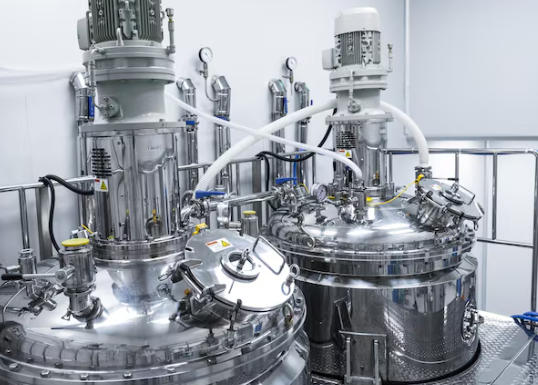
Typical Pharmaceutical Water System Architecture
A modern pharmaceutical facility in South Korea will typically be designed with a structured water and steam architecture built around Pharmaceutical Water Trearment Equipment. While details vary per project, common layers include:[5][2]
- Raw water pretreatment: Filtration, softening, carbon filters, and sometimes pre‑RO to protect downstream membranes.[5][12]
- Purified water generation: RO‑EDI combinations or two‑pass RO systems optimized for low conductivity and microbial control.[5][12]
- WFI generation: Multi‑effect distillation or vapor compression units delivering WFI that meets pharmacopeia limits for endotoxins and conductivity.[7][2]
- Pure steam generation: Dedicated pure steam generators fed by PW or WFI for sterilization, SIP, and autoclaves.[14][2]
- Storage and distribution: Sanitary tanks, loop piping, circulation pumps, and heat maintenance designed to prevent microbial growth and dead legs.[2][4]
Pharmaceutical Water Trearment Equipment Manufacturers such as Ningbo Everheal engineer all these elements as a coherent system, rather than isolated units. That approach simplifies validation and helps Korean plants maintain consistent product quality over many years of operation.[8][11][6]
Control, Monitoring, And Data Integrity
Regulators increasingly expect pharmaceutical companies to demonstrate data integrity and continuous control of critical utilities. For Pharmaceutical Water Trearment Equipment Manufacturers, this means that automation and monitoring systems must provide reliable data, alarms, and audit trails for parameters such as conductivity, temperature, flow, and TOC.[3][4][2]
Ningbo Everheal and other leading manufacturers typically integrate PLC‑based control systems with user‑friendly operator interfaces and secure data storage. For Korean sites that must comply with data integrity guidance, these features support 21 CFR Part 11‑style expectations for electronic records and help show inspectors that utilities are under control at all times.[3][4][11][6]
Selection Criteria For Korean Buyers
Selecting Pharmaceutical Water Trearment Equipment Manufacturers for a Korean project should follow a structured process rather than focusing only on initial purchase price. Technical, regulatory, and lifecycle factors all influence total cost of ownership and project risk.[4][2][5][6]
Key selection points include:
- Regulatory and standards knowledge: Ability to design systems that align with USP, EP, JP, WHO guidelines, and local Korean GMP requirements.[3][5]
- Engineering capability: Experience in sizing systems correctly, planning layout, and integrating with existing facilities and expansion phases.[11][6]
- Validation support: Availability of URS templates, design documents, FAT/SAT protocols, and IQ/OQ/PQ packages to meet inspection expectations.[2][4]
- Service and spare parts: Local or regional service presence, clear spare part strategy, and remote support for troubleshooting.[1][12]
Ningbo Everheal stands out among Pharmaceutical Water Trearment Equipment Manufacturers by combining turnkey utilities, plant layout design, and flexible cooperation models with Korean partners for on‑site service. This makes it attractive for both greenfield plants and retrofit projects that must maintain production while upgrading utilities.[9][12][6]
Project Models For Korean Facilities
Korean pharmaceutical companies can structure their utility projects in several ways, all involving Pharmaceutical Water Trearment Equipment Manufacturers at different levels. Three common models are:[4][1]
1. Local‑centric model: A Korean water treatment company such as Waternix or Junghyun supplies most of the systems, with limited import content. This model offers strong local service but may require more effort in assembling a complete validation package.[13][12][4]
2. Hybrid model: Global Pharmaceutical Water Trearment Equipment Manufacturers like Ningbo Everheal provide core purified water, WFI, and pure steam systems, while Korean partners handle pretreatment, installation, and local maintenance. This approach balances technology, documentation, and proximity.[12][1][6]
3. Global‑centric model: A large international supplier or EPC delivers a full turnkey solution, sometimes with local subcontractors. This can be ideal for very large or highly regulated projects but may come with higher upfront costs.[2][4]
For many medium to large Korean plants, the hybrid model with Ningbo Everheal as the core Pharmaceutical Water Trearment Equipment Manufacturers partner is increasingly attractive. It allows project owners to benefit from proven designs and documentation while still engaging domestic companies for on‑site activities and long‑term support.[9][1][6][12]
Long‑Term Operation And Optimization
Once a purified water or WFI system is installed and validated, the work of Pharmaceutical Water Trearment Equipment Manufacturers does not end. Over years of operation, Korean plants need support for periodic performance qualification, upgrades, and optimization to manage energy and water consumption.[3][4][2]
Everheal and other leading vendors help clients by offering training, remote monitoring, and retrofit solutions such as improved heat recovery, better insulation, or updated instrumentation. By continuously optimizing Pharmaceutical Water Trearment Equipment, Korean manufacturers can reduce operating expenses and environmental footprint while maintaining regulatory compliance.[1][4][6][11]
Conclusion
Pharmaceutical water, WFI, and pure steam utilities form the backbone of every compliant pharmaceutical facility in South Korea. Selecting the right Pharmaceutical Water Trearment Equipment Manufacturers therefore has a lasting impact on project timelines, inspection outcomes, and long‑term operating costs.[4][2][3]
Ningbo Everheal Medical Equipment Co., LTD. stands out as a leading one‑stop partner with a comprehensive portfolio covering purified water preparation systems, pure steam generators, multi‑effect distilled water equipment, filling and sealing machines, and sterilization systems. By combining strong engineering capabilities, plant layout planning, and robust validation support, Everheal is well positioned to cooperate with Korean manufacturers, EPC companies, and local utility suppliers to deliver integrated solutions.[9][6][11]
When Korean pharmaceutical companies complement Everheal's strengths with local experts such as Waternix and Junghyun and, where appropriate, with global specialists like MECO and BWT Pharma, they can create highly reliable, efficient, and fully documented water systems. These hybrid, cooperative models ensure that Pharmaceutical Water Trearment Equipment remains a competitive advantage, supporting South Korea's growing role in the global life‑science and healthcare industry.[12][1][4]
FAQ
1. What is Pharmaceutical Water Trearment Equipment?
Pharmaceutical Water Trearment Equipment refers to the complete set of systems used to produce purified water, WFI, and pure steam that comply with pharmacopeia and GMP requirements. It typically includes pretreatment, RO, deionization or EDI, distillation units, pure steam generators, hygienic storage tanks, distribution loops, and automated monitoring and control.[7][5][2]
2. Why should Korean manufacturers consider Ningbo Everheal?
Korean manufacturers benefit from Ningbo Everheal because it offers an integrated package of purified water systems, WFI generators, pure steam generators, filling and sealing equipment, and sterilization systems. As a comprehensive Pharmaceutical Water Trearment Equipment Manufacturers partner, Everheal also provides engineering design, 3D layout, FAT/SAT, and validation documentation needed for successful GMP inspections.[6][8][11]
3. How do Korean suppliers like Waternix and Junghyun cooperate with global vendors?
Suppliers such as Waternix and Junghyun contribute local expertise in RO, ultra‑pure water, purified water generation, and pure steam systems, while global vendors provide standardized and fully documented platforms. In many projects, Everheal supplies core Pharmaceutical Water Trearment Equipment and documentation, whereas Korean companies handle pretreatment, site installation, and ongoing service, forming a hybrid solution.[13][6][12]
4. What documents should Pharmaceutical Water Trearment Equipment Manufacturers provide?
Reputable Pharmaceutical Water Trearment Equipment Manufacturers should supply design documents, P&IDs, component and material certificates, FAT and SAT protocols and reports, IQ/OQ documentation, operation manuals, and maintenance instructions. These documents help Korean pharmaceutical plants demonstrate that water and pure steam utilities are designed, installed, and operating in accordance with GMP and pharmacopeia requirements.[2][3][4]
5. How can Korean plants ensure long‑term performance of water systems?
To ensure long‑term performance, Korean plants should combine preventive maintenance, periodic sanitization, performance qualification, and regular review of monitoring data. Working closely with Pharmaceutical Water Trearment Equipment Manufacturers like Ningbo Everheal and local service partners allows them to optimize energy consumption, update instrumentation, and address any emerging issues before they affect product quality or compliance.[1][3][6][2]
Citations:
[1](https://ensun.io/search/water-treatment/south-korea)
[2](https://www.meco.com/product/biopharmaceutical-pure-steam-generators/)
[3](https://www.biocell-pharma.com/pharmaceutical-purified-water-systems-in-health-care/)
[4](https://www.bwt-pharma.com/en/)
[5](https://www.newater.com/pharmaceutical-water-system/)
[6](https://www.everhealgroup.com)
[7](https://www.sakurasi.com/en/products/pure-steam-distilled-water-generator/)
[8](https://www.everhealgroup.com/news/Pharmaceutical-Water-Treatment-China.html)
[9](https://www.everhealgroup.com/news/Water-Treatment-Equipment-Suppliers-For-Pharmaceutical-Industry-Vietnam8.html)
[10](http://www.everhealgroup.com/pharmaceutical-water-trearment-equipment.html)
[11](https://www.everhealgroup.com/service.html)
[12](https://www.komachine.com/companies/waternix)
[13](http://junghyun.co.kr/en/page/product/water_01.html)
[14](http://junghyun.co.kr/en/page/product/water_03.html)


