Content Menu
● Why Japan Is A Key Market For Pharmaceutical Mixing Tanks
● Key Selection Criteria For Pharmaceutical Mixing Tank Manufacturers And Suppliers
>> Compliance And Quality Standards
>> Engineering And Customization Capability
>> Integration With The Overall Pharmaceutical Process
● Leading Pharmaceutical Mixing Tank Manufacturers And Suppliers In Japan
>> MONOVATE Co., Ltd.
>> Sumitomo Heavy Industries – Mixing Vessels
>> PRIMIX Corporation – Pharmaceutical Mixing Solutions
>> Other Japanese Process And Equipment Players
● How Everheal Supports Japanese Pharmaceutical Mixing Operations
● Practical Buying Tips For Global Customers
>> Define Process Requirements Clearly
>> Shortlist And Compare Suppliers
>> Plan For Integration And Validation
● Example Of A Typical Collaboration Scenario
● Trends Shaping Pharmaceutical Mixing Tank Manufacturers And Suppliers In Japan
>> Automation And Digitalization
>> Single‑Use And Hybrid Approaches
>> Sustainability And Energy Efficiency
● How To Work Effectively With Pharmaceutical Mixing Tank Manufacturers And Suppliers
● Conclusion
● FAQ
>> 1. What makes Japanese Pharmaceutical Mixing Tank Manufacturers And Suppliers attractive for global buyers?
>> 2. How do Everheal systems work with Japanese mixing tanks?
>> 3. Are Japanese mixing tanks suitable for biologics and injectable drugs?
>> 4. Can small and mid‑size pharma companies afford Japanese mixing equipment?
>> 5. How should I start a project that combines Everheal equipment with Japanese mixing tanks?
● Citations:
Japan has become one of the most important global hubs for high‑precision pharmaceutical equipment, especially for sanitary, automated, and GMP‑compliant mixing systems. For buyers searching for reliable Pharmaceutical Mixing Tank Manufacturers And Suppliers, Japanese brands offer a strong combination of engineering quality, regulatory compliance, and long‑term service support.
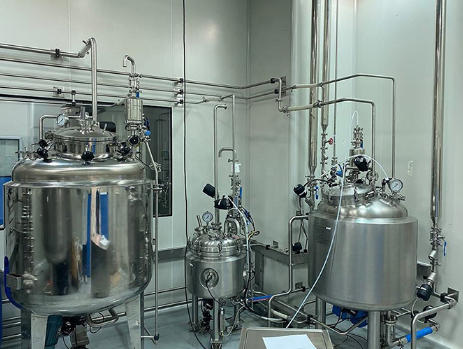
Why Japan Is A Key Market For Pharmaceutical Mixing Tanks
Japan's pharmaceutical sector is known for strict quality standards, advanced automation, and mature GMP practices, which directly drive demand for high‑performance mixing tanks and process vessels. As a result, Pharmaceutical Mixing Tank Manufacturers And Suppliers in Japan focus heavily on hygiene, traceability, process safety, and integration with upstream and downstream production equipment.
For global buyers, sourcing from Japanese Pharmaceutical Mixing Tank Manufacturers And Suppliers usually means:
- High reliability and long service life of mixing tanks and vessels.
- Strong documentation, validation support, and compliance with FDA, EU GMP, and other international guidelines.
- Custom engineering for specific formulations, including biologicals, injectables, and high‑potency drugs.
- Stable after‑sales service networks, spare‑parts availability, and technical support.
Japan also has a long history in precision welding, surface treatment, and sanitary design, which helps Pharmaceutical Mixing Tank Manufacturers And Suppliers deliver vessels with excellent cleanability and low risk of cross‑contamination. This technical background is particularly valuable for sterile formulations and biotech applications.
Key Selection Criteria For Pharmaceutical Mixing Tank Manufacturers And Suppliers
When choosing Pharmaceutical Mixing Tank Manufacturers And Suppliers in Japan, project owners should evaluate more than just price. The correct choice impacts batch quality, cleaning efficiency, energy usage, and long‑term maintenance costs.
Compliance And Quality Standards
Leading Japanese Pharmaceutical Mixing Tank Manufacturers And Suppliers typically design equipment in line with international norms, including:
- cGMP and FDA expectations for contact surfaces, cleanability, and material traceability.
- Use of high‑grade stainless steels such as SUS304 and SUS316L with specialized surface finishes (electropolishing, PTFE coating, mirror buffing).
- Support for validation activities, including FAT documentation and IQ/OQ protocols for mixing vessels and integrated systems.
- Availability of material certificates, welding documentation, and surface roughness data for audit trails.
These practices help pharmaceutical manufacturers pass on‑site inspections and maintain consistent product quality throughout the lifecycle of the mixing equipment.
Engineering And Customization Capability
Because formulations and batch sizes in pharma are diverse, flexibility is essential when dealing with Pharmaceutical Mixing Tank Manufacturers And Suppliers. Buyers should look for:
- Broad capacity coverage from pilot‑scale vessels to full‑scale production mixing tanks and reactors.
- Options for agitators, high‑shear mixers, variable‑speed drives, baffles, and CIP/SIP‑ready designs.
- Custom‑designed heads, nozzles, jackets, and instrumentation layouts tailored to each process line.
- Integration of temperature control, vacuum, nitrogen blanketing, weighing systems, and in‑line sampling ports.
Strong engineering capability allows Pharmaceutical Mixing Tank Manufacturers And Suppliers to support complex processes such as emulsification, sterile solution preparation, buffer preparation, and cell culture media mixing.
Integration With The Overall Pharmaceutical Process
The best Pharmaceutical Mixing Tank Manufacturers And Suppliers can connect mixing tanks with upstream and downstream systems such as purified water plants, pure steam generators, filtration units, filling lines, and sterilizers. This is especially important for injectable lines, vaccine production, and biotech facilities, where mixing, transfer, and filling must operate as a closed, validated chain.
Key integration points include:
- Hygienic piping design for transfers between mixing vessels, holding tanks, and filling machines.
- Coordination of cleaning procedures, CIP sequences, and SIP cycles across the entire line.
- Unified automation architecture, allowing operators to control mixing tanks and related equipment from a central platform.
Leading Pharmaceutical Mixing Tank Manufacturers And Suppliers In Japan
Below is an overview of representative companies relevant to pharmaceutical mixing applications in Japan. Each plays a different role within the network of Pharmaceutical Mixing Tank Manufacturers And Suppliers and related process equipment providers.
MONOVATE Co., Ltd.
MONOVATE is a long‑established Japanese manufacturer specializing in stainless steel containers and tanks for pharmaceuticals, cosmetics, food, chemicals, and semiconductors. The company has supplied tanks and containers to a large number of pharmaceutical companies in Japan, highlighting its broad penetration into the domestic pharma market.
For buyers seeking Pharmaceutical Mixing Tank Manufacturers And Suppliers, MONOVATE offers:
- Stainless steel mixing and pressurization tanks covering volumes from a few milliliters to hundreds of liters, ideal for pilot and small‑batch production.
- Tanks used for mixing, storage, transfer, biological cultivation, injection adjustment, and purified water handling.
- Multiple interior finishes (electrolytic polishing, PTFE coating, buffing) and materials such as SUS304 and SUS316L to match cleanliness requirements.
MONOVATE's strength lies in precision small‑to‑medium tanks and systems, making it attractive for R&D labs, pilot plants, and flexible multi‑product facilities. Pharmaceutical Mixing Tank Manufacturers And Suppliers that focus on high‑volume production can also pair MONOVATE vessels with larger external reactors or upstream utility systems.
Sumitomo Heavy Industries – Mixing Vessels
Sumitomo Heavy Industries is a major Japanese engineering group that designs agitators and mixing vessels for a wide range of process industries, including pharmaceuticals. Their mixing divisions supply custom‑engineered reactors and tanks with appropriate agitation systems and process controls.
As one of the significant Pharmaceutical Mixing Tank Manufacturers And Suppliers, Sumitomo typically offers:
- Tailored agitation solutions, including top‑entry, side‑entry, and specialized impeller configurations.
- Design support to match viscosity, heat transfer, and shear requirements of pharmaceutical products.
- Large‑scale mixing vessels suitable for bulk intermediates and high‑volume formulations.
- Capability to handle challenging processes such as crystallization, suspension, and temperature‑sensitive reactions.
Sumitomo's engineering expertise is very valuable for plants that need Pharmaceutical Mixing Tank Manufacturers And Suppliers to handle both standard liquid blending and more demanding reaction processes within the same facility.
PRIMIX Corporation – Pharmaceutical Mixing Solutions
PRIMIX focuses on advanced mixing technologies for multiple industries and has dedicated solutions for pharmaceutical manufacturing. The company emphasizes strict quality control and supports the production of safe, high‑quality medicines through optimized mixing systems.
For Pharmaceutical Mixing Tank Manufacturers And Suppliers comparisons, PRIMIX stands out by:
- Providing inline and tank mixing technologies that can improve dispersion, emulsification, and homogenization.
- Supporting sterile and clean applications essential for parenterals and biotech products.
- Offering engineering support to integrate mixing equipment into GMP‑compliant production lines.
- Developing mixing technologies that help reduce batch times and improve homogeneity in high‑value formulations.
PRIMIX's portfolio complements traditional Pharmaceutical Mixing Tank Manufacturers And Suppliers by focusing on process intensification and advanced mixing performance.
Other Japanese Process And Equipment Players
While some Japanese companies are better known for filling, sterilization, or analytical systems, they often work in close collaboration with Pharmaceutical Mixing Tank Manufacturers And Suppliers to deliver full lines. Examples include:
- Shibuya Corporation, recognized for aseptic filling systems and sterilization units, often integrated downstream of mixing tanks for injectable products.
- Hisaka Works, known for heat exchangers and sterilization equipment, which can be linked to mixing and reaction vessels as part of thermal processing.
- Nikkiso and Hitachi High‑Tech, which provide process systems, analytical instruments, and clean‑room equipment that complement mixing operations in modern plants.
These companies may not always be classified directly as Pharmaceutical Mixing Tank Manufacturers And Suppliers, but they are essential partners when designing a complete pharmaceutical production plant in Japan.
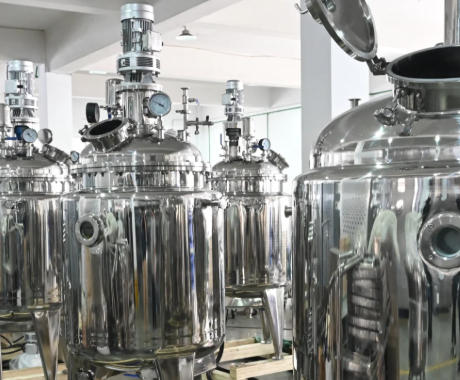
How Everheal Supports Japanese Pharmaceutical Mixing Operations
Everheal, as a specialized pharmaceutical equipment provider from China, works closely with Japanese Pharmaceutical Mixing Tank Manufacturers And Suppliers as well as local end users. The company delivers purified water preparation systems, pure steam generators, multifunctional distillation units, liquid filling‑sealing machines, and sterilization systems used together with Japanese mixing tanks.
By combining Everheal systems with mixing vessels from leading Pharmaceutical Mixing Tank Manufacturers And Suppliers in Japan, pharma plants can build integrated, validated lines:
- Purified water and WFI systems feeding directly into mixing tanks and solution preparation vessels.
- Pure steam generators supporting SIP of tanks, transfer lines, and filling machines.
- Coordinated factory layout design, pipe routing, utility planning, and automation architecture to ensure consistent, contamination‑free operation.
Everheal also provides customized plant layout planning and production line construction services for global customers, including Japanese pharmaceutical companies that require turnkey solutions around their existing mixing assets. This collaborative approach helps Pharmaceutical Mixing Tank Manufacturers And Suppliers focus on their core vessels while Everheal manages utilities and system‑level engineering.
Practical Buying Tips For Global Customers
For international buyers who want to source from Pharmaceutical Mixing Tank Manufacturers And Suppliers in Japan and integrate them with systems from Everheal or other partners, a structured approach reduces risk and cost.
Define Process Requirements Clearly
Before approaching Pharmaceutical Mixing Tank Manufacturers And Suppliers, compile a clear URS (User Requirement Specification) covering:
- Product types (solutions, suspensions, emulsions, biologics) and critical quality attributes.
- Batch sizes, turn‑around time, cleaning method (CIP/SIP), and automation level.
- Required certifications, documentation standards, and target regulatory markets (US, EU, Japan, etc.).
- Constraints related to clean‑room class, building height, and available utilities.
A detailed URS allows Pharmaceutical Mixing Tank Manufacturers And Suppliers in Japan to propose accurate vessel designs, mixing technologies, and control strategies.
Shortlist And Compare Suppliers
When evaluating Japanese Pharmaceutical Mixing Tank Manufacturers And Suppliers, compare:
- Technical fit (materials, agitator options, surface finish, pressure ratings, cleaning concept).
- Experience with similar products and references in your target region.
- Ability to cooperate with third‑party equipment suppliers such as Everheal for water, steam, filling, and sterilization systems.
- Total cost of ownership, including maintenance support, availability of local partners, and lead times.
A structured comparison ensures that Pharmaceutical Mixing Tank Manufacturers And Suppliers are evaluated not only on purchase price, but also on long‑term performance.
Plan For Integration And Validation
Because mixing tanks are central to sterile and non‑sterile processes, coordination with the rest of the plant is critical. Work with both Pharmaceutical Mixing Tank Manufacturers And Suppliers and system integrators like Everheal to:
- Align utilities (water, steam, compressed air), clean‑room design, and floor layout.
- Harmonize automation architecture, data integrity strategy, batch records, and alarm management.
- Schedule FAT, SAT, IQ/OQ, and performance qualification in a realistic project timeline.
- Plan operator training, maintenance procedures, and spare‑parts stocking strategies from project start.
Effective planning turns mixing tanks supplied by leading Pharmaceutical Mixing Tank Manufacturers And Suppliers into stable, compliant assets within a broader production ecosystem.
Example Of A Typical Collaboration Scenario
A mid‑size Japanese injectable plant might select MONOVATE pilot‑scale vessels and larger Sumitomo mixing tanks for bulk solution preparation, while using Everheal purified water systems and pure steam generators to supply utilities. Shibuya aseptic filling lines and Hisaka sterilizers could then be installed downstream, all integrated into a unified, validated production line.
In this scenario, Pharmaceutical Mixing Tank Manufacturers And Suppliers provide the core vessels, while Everheal and other partners deliver utilities, sterilization, and filling capabilities. The outcome is a modern, energy‑efficient facility that meets Japanese and international GMP requirements while maintaining flexibility for future product changes.
Such collaboration shows how Pharmaceutical Mixing Tank Manufacturers And Suppliers, utility system providers, and line integrators can create scalable solutions. As production volumes grow or product portfolios change, the plant can add new mixing tanks, upgrade agitators, or connect new filling machines without redesigning the entire infrastructure.
Trends Shaping Pharmaceutical Mixing Tank Manufacturers And Suppliers In Japan
The landscape for Pharmaceutical Mixing Tank Manufacturers And Suppliers is evolving as pharmaceutical companies adopt new technologies and respond to regulatory expectations.
Automation And Digitalization
More buyers now expect Pharmaceutical Mixing Tank Manufacturers And Suppliers to support advanced automation, including:
- Recipe‑driven batch control with integrated agitation, temperature, and dosing steps.
- Data acquisition and electronic batch records to support data integrity initiatives.
- Remote monitoring, predictive maintenance, and condition‑based service strategies.
Japanese manufacturers are increasingly offering mixing tanks with smart sensors, integrated control panels, and connectivity to higher‑level MES or SCADA systems.
Single‑Use And Hybrid Approaches
Although classic stainless steel tanks remain dominant, some projects introduce single‑use or hybrid technologies for certain stages. Pharmaceutical Mixing Tank Manufacturers And Suppliers in Japan respond by:
- Designing stainless steel vessels that can host disposable bags or mixing assemblies for clinical or high‑risk products.
- Supporting rapid changeover concepts where stainless tanks are combined with single‑use components in transfer and filtration steps.
This flexibility allows pharma companies to handle high‑value or high‑potency products while keeping cleaning risks under control.
Sustainability And Energy Efficiency
Sustainability is becoming a stronger driver for Pharmaceutical Mixing Tank Manufacturers And Suppliers. Buyers now consider:
- Heat recovery and efficient jacket design for reduced energy consumption.
- Optimized agitator designs that deliver the required mixing performance with less power.
- Clean‑in‑place concepts that minimize water and chemical usage.
Japanese suppliers are well positioned to implement such improvements thanks to their long experience in energy‑efficient process industries.
How To Work Effectively With Pharmaceutical Mixing Tank Manufacturers And Suppliers
To get the best results from Japanese Pharmaceutical Mixing Tank Manufacturers And Suppliers, project teams should adopt a cooperative working style.
- Involve equipment vendors early during conceptual design, so they can propose realistic configurations and identify layout constraints.
- Share process data honestly, including viscosity, solids content, shear sensitivity, and foaming behavior, to avoid under‑ or over‑sized agitators.
- Request 3D models and interface drawings, ensuring smooth coordination between mixing tanks, platforms, piping, and clean‑room walls.
- Clarify responsibilities for documentation, validation support, and on‑site commissioning at the contract stage.
This approach reduces unexpected modifications and ensures that Pharmaceutical Mixing Tank Manufacturers And Suppliers deliver equipment that fits the actual process.
Conclusion
Japan offers a mature ecosystem of Pharmaceutical Mixing Tank Manufacturers And Suppliers that can support everything from R&D vessels to high‑capacity production reactors. By focusing on quality, compliance, and engineering depth, Japanese brands like MONOVATE, Sumitomo Heavy Industries, and PRIMIX have earned strong reputations in both domestic and global markets.
For international buyers, the most effective strategy is to treat mixing tanks as part of a larger process architecture rather than isolated units. Collaborating with system providers such as Everheal, who supply purified water, pure steam, distillation, filling, and sterilization capabilities, allows Pharmaceutical Mixing Tank Manufacturers And Suppliers in Japan to be integrated into turnkey, GMP‑ready pharmaceutical plants. This combined approach reduces project risk, shortens validation time, and creates a robust platform for future product expansion and technology upgrades.
By carefully defining requirements, comparing different Pharmaceutical Mixing Tank Manufacturers And Suppliers, and planning integration and validation from the beginning, pharmaceutical companies can secure reliable, efficient, and future‑proof mixing capacity in the demanding Japanese and global markets.
FAQ
1. What makes Japanese Pharmaceutical Mixing Tank Manufacturers And Suppliers attractive for global buyers?
Japanese Pharmaceutical Mixing Tank Manufacturers And Suppliers are attractive because they combine high material quality, precise fabrication, and strong documentation practices. Many have long‑term experience with leading pharma companies in Japan and abroad, which helps them understand regulatory and validation expectations in major markets. As a result, buyers benefit from stable performance, robust quality systems, and professional project communication.
2. How do Everheal systems work with Japanese mixing tanks?
Everheal's purified water systems, pure steam generators, multifunctional distillation machines, filling‑sealing machines, and sterilization units can be designed around Japanese mixing vessels to form complete production lines. In a typical project, Everheal handles utilities, layout design, equipment interconnection, and control system integration, while Japanese Pharmaceutical Mixing Tank Manufacturers And Suppliers provide the core vessels and agitators. This division of roles creates a seamless line from raw water treatment to final product filling.
3. Are Japanese mixing tanks suitable for biologics and injectable drugs?
Yes, many Pharmaceutical Mixing Tank Manufacturers And Suppliers in Japan provide vessels designed for high‑purity, sterile applications such as vaccines, monoclonal antibodies, and injectable solutions. With appropriate materials, surface finishes, and SIP‑capable designs, these tanks can be validated for sensitive biotech and parenteral processes. When combined with correct utilities and clean‑room design, they support consistent batch quality and regulatory compliance.
4. Can small and mid‑size pharma companies afford Japanese mixing equipment?
While Japanese Pharmaceutical Mixing Tank Manufacturers And Suppliers often position themselves in the premium quality segment, they also offer smaller vessels and modular systems suited to mid‑size budgets. Many suppliers provide step‑by‑step capacity expansion options, starting with pilot‑scale or limited‑capacity equipment. By combining Japanese mixing tanks with cost‑effective utilities and turnkey engineering from partners such as Everheal, buyers can optimize total lifecycle cost instead of focusing only on initial investment.
5. How should I start a project that combines Everheal equipment with Japanese mixing tanks?
Begin by preparing a detailed process and capacity requirement, then contact both Everheal and selected Pharmaceutical Mixing Tank Manufacturers And Suppliers in Japan with your URS. Organize early joint engineering workshops to align vessel design, utilities, automation, and validation plans so that all equipment—from mixing tanks to water systems and sterilizers—forms a coherent, compliant production line. Clear project scope definition and regular communication keep schedules on track and minimize design changes.
Citations:
1. https://monovate.net/en/
2. https://www.shi.co.jp/english/products/energy/mixing/index.html
3. https://prime.dotbglobal.com/monovate-co-ltd-dot-b/stainless-steel-mixing-tanks-vessels/
4. https://karaconsulting.jp/stainless_steel_containers/
5. https://monovate.net/en/aboutus/
6. https://www.multipackfillingmachine.com/product/stainless-steel-mixing-vessel-mixing-tank/
7. https://ensun.io/search/drug-pharmaceutical-machinery/japan
8. https://makwell.com/mixer-machine/
9. https://www.jinzongmachinery.com/6000l-stainless-steel-304-316-mixing-tank-for-pharma-processing-6191.html
10. https://www.everhealgroup.com/top-pharmaceutical-equipment-manufacturers-and-suppliers-in-japan.html
11. https://www.linkedin.com/pulse/japan-heating-mixing-tank-market-size-2026-ai-integration-ktxcf
12. https://acemixer.com/stainless-steel-mixing-tank/
13. https://www.shibuya.co.jp/en/
14. https://www.primix.jp/en/products-field/medical-products/


