Content Menu
● Why CPAP Machines Need Distilled Water
● What Exactly Is Alkaline Water?
● “Alkaline Distilled Water”: Why It's Problematic
● Risks Of Using Alkaline Water In A CPAP Machine
● Why Distilled Water Is The Standard For CPAP
● Short‑Term Alternatives When Distilled Water Is Not Available
● How A Distillation Water Machine Produces CPAP‑Suitable Water
● Advantages Of A Distillation Water Machine For CPAP Users
● Daily Best Practices For CPAP Humidifier Water
● Health Considerations And Professional Guidance
● When Does It Make Sense To Invest In A Distillation Water Machine?
● Summary Of The Main Question
● Conclusion
● FAQs About CPAP Water And Distillation Water Machines
>> 1. Can I ever use alkaline water in my CPAP?
>> 2. What if I accidentally used alkaline water for one night?
>> 3. Is water from a Distillation Water Machine accepted by all CPAP brands?
>> 4. If I boil tap water, is it as good as distilled water?
>> 5. How can Everheal support facilities that use many CPAP machines?
● Citations:
Everheal is a China‑based pharmaceutical equipment manufacturer providing purified water preparation systems, pure steam generators, multifunctional distillation water machines, liquid filling and sealing machines, and sterilization systems for global customers. These systems are designed to deliver stable, low‑mineral, microbiologically controlled water that supports pharmaceutical production and medical device operation.
The same engineering concepts behind Everheal's purified‑water plants and Distillation Water Machine solutions can be adapted to supply high‑quality water for sleep labs, hospitals, and home‑care environments that rely on CPAP devices.[11]

Why CPAP Machines Need Distilled Water
Most modern CPAP machines include a heated humidifier that adds moisture to the airflow to reduce dryness, congestion, and sore throat during sleep. If the user fills the humidifier with water containing minerals, microbes, or chemicals, those substances can either be aerosolized or accumulate inside the device over time.[3][5][2]
Distilled water is produced by boiling water and condensing the steam, which removes nearly all dissolved minerals and greatly reduces microbial load. This makes it far less likely to leave limescale deposits or support biofilm formation inside the humidifier chamber, especially when the water is produced and stored using proper sanitary practices or a high‑grade Distillation Water Machine.[4][5][3][11]
What Exactly Is Alkaline Water?
Alkaline water is water with a pH higher than 7, typically achieved by contact with mineral cartridges or media that release ions such as calcium, magnesium, and potassium. These added minerals change the water's taste and pH and are often marketed as a premium drinking option.[12][13]
From a CPAP perspective, alkaline water behaves in a way that conflicts with manufacturer recommendations, because the goal for CPAP humidifier water is to be as mineral‑free as possible. In contrast, water produced by a Distillation Water Machine is intentionally stripped of minerals, which is exactly what CPAP guidelines call for.[5][14][2][3][11]
“Alkaline Distilled Water”: Why It's Problematic
The term “alkaline distilled water” can be confusing. Once water has been properly distilled, it is low in minerals and close to neutral pH; if new minerals are added to raise the pH, the resulting water is no longer pure distilled water from a CPAP‑safety standpoint.[13][4]
CPAP manufacturers and expert reviews state that distilled water without additives is the optimal choice for humidifiers, specifically because of its low mineral content and low microbial risk. Adding alkaline minerals effectively reverses the benefit of using a Distillation Water Machine and can encourage scaling and residue on the heating plate and walls of the reservoir.[2][3][5][13]
Risks Of Using Alkaline Water In A CPAP Machine
Using alkaline water, rather than low‑mineral distilled water, in a CPAP humidifier can create several issues for both the user and the equipment.[5][12][13]
Key risks include:
- Mineral scaling and residue: Extra calcium, magnesium, and other ions in alkaline water will precipitate when heated, forming visible scale and a cloudy film on the tank and heater plate.[3][13][5]
- Shortened device life: Scale can interfere with heat transfer, damage coatings, or trap moisture, contributing to corrosion, leaks, and premature part failure.[7][5]
- Microbial and chemical exposure: Some alkaline products are not produced under medical‑grade conditions and may contain traces of microbes or by‑products from the alkalinizing media, which are not intended for inhalation.[4][12]
Therefore, authoritative CPAP resources explicitly recommend avoiding mineral water, spring water, and other waters with added minerals in CPAP humidifiers.[13][2][3][5]
Why Distilled Water Is The Standard For CPAP
Distilled water is recommended because it reduces both mineral and microbial risks while being easy to source or produce. By definition, properly distilled water contains essentially no dissolved minerals, which prevents the typical “white crust” that appears when tap, mineral, or alkaline water is heated repeatedly.[9][2][3][5]
From a safety perspective, distilled water created in a controlled facility or with a reputable Distillation Water Machine is far less likely to harbor microorganisms or organic contaminants than untreated tap water. That is why hospitals, laboratories, and pharmaceutical plants broadly rely on distilled water for devices such as autoclaves, analyzers, and respiratory humidifiers, not only for CPAP.[15][11][2][4][5]
Short‑Term Alternatives When Distilled Water Is Not Available
In real life, distilled water may not always be available, especially when traveling or in emergencies. Several expert sources and clinical guidelines accept that purified bottled water or filtered tap water can be used temporarily if distilled water is unavailable, with the understanding that the humidifier will need more frequent cleaning and descaling.[2][3][5]
However, even in short‑term situations, alkaline water is specifically discouraged because its purpose is to add minerals, not remove them. Users who travel regularly or rely heavily on CPAP therapy can benefit from a compact, home‑scale Distillation Water Machine that ensures a constant supply of suitable water without depending on retail bottled water.[14][11][12][13]
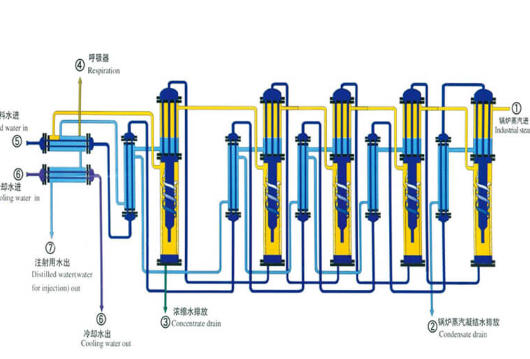
How A Distillation Water Machine Produces CPAP‑Suitable Water
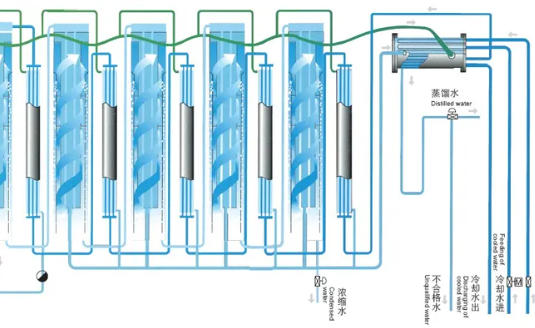
A typical Distillation Water Machine operates in three core stages: pre‑treatment, evaporation, and condensation. Feedwater first passes through filters or softening stages to remove large particles and reduce hardness, then is boiled so that only steam rises, leaving most dissolved solids and microorganisms behind.[11][14]
The steam passes through a condenser where it cools and returns to liquid form, now as distilled water with dramatically reduced mineral and microbial content. In advanced systems used in laboratories and medical facilities, the distillate may then be polished or combined with reverse osmosis and other treatments to meet specific pharmacopeial or ASTM water standards. Everheal's pure water preparation systems and multifunctional distillation units are engineered to integrate into this type of multi‑stage purification process.[14][15][4][5][11]
Advantages Of A Distillation Water Machine For CPAP Users
For households with long‑term CPAP users and for professional environments such as sleep labs, ENT clinics, and hospitals, a dedicated Distillation Water Machine offers important advantages.[14][11]
Typical benefits include:
- Consistent quality and compliance: Distilled water quality is more consistent than many bottled “purified” products and aligns with CPAP manufacturers' recommendations.[3][5][2]
- Lower cost over time: Producing distilled water on‑site using a Distillation Water Machine often becomes more economical than continuously buying small bottles for each patient.[16][11]
- Multi‑device compatibility: The same distilled water can support CPAP humidifiers, autoclaves, instrument washers, and other equipment, simplifying supply management.[15][11]
- Integration with pharma‑grade systems: In pharmaceutical plants, Everheal can design a complete purified‑water and pure‑steam loop that serves process equipment as well as auxiliary devices like CPAPs and sterilizers.[11]
Daily Best Practices For CPAP Humidifier Water
Even when only distilled water is used, good daily hygiene practices are vital for safe CPAP operation.[6][5][3]
Recommended practices include:
- Emptying and drying: Each morning, empty remaining water from the chamber and allow it to air‑dry to reduce microbial growth.[6][3]
- Using fresh distilled water only: Refill the tank each night with fresh distilled water from a trusted bottle or Distillation Water Machine, rather than topping off old water.[5][2][3]
- Routine cleaning: Follow the device manufacturer's instructions for weekly cleaning using mild soap and water, and periodically remove any visible mineral spots, even if distilled water is used most of the time.[9][3]
For hospital and pharmaceutical facilities, these good practices can be combined with Everheal sterilizers and pure steam generators to validate cleaning cycles and ensure alignment with infection‑control and GMP expectations.[11]
Health Considerations And Professional Guidance
Respiratory and infection‑control specialists emphasize that water inhaled as aerosol should be cleaner than water that is merely swallowed, because the respiratory tract lacks the strong acid barriers of the stomach. Cases have been reported where using untreated tap water in respiratory devices contributed to serious infections in vulnerable patients.[4][6][3]
Because of this, guidance from organizations and academic centers often states that distilled or sterile water is ideal for home medical devices such as CPAP, humidifiers, and nebulizers. Facilities or home‑care providers that operate many such devices can reduce risk by installing a validated Distillation Water Machine and formalizing water‑handling procedures as part of their quality system.[1][8][6][14][11]
When Does It Make Sense To Invest In A Distillation Water Machine?
For a single home user with easy access to inexpensive bottled distilled water, purchasing a Distillation Water Machine is a matter of convenience and independence rather than strict necessity. But in several scenarios, on‑site distillation offers clear strategic value.[2][3][5]
Typical situations where a Distillation Water Machine is beneficial include:
- Sleep labs and clinics that operate multiple CPAP units nightly and want consistent quality without relying on retail supply chains.[14][11]
- Hospitals and surgical centers that already need distilled water for sterilization, instrument reprocessing, and analyzers; CPAP is then an additional application.[15][11]
- Pharmaceutical plants where Everheal is already providing purified water preparation and pure steam systems, and CPAP or respiratory support devices must follow the same strict water standards.[11]
In such settings, Everheal can combine a Distillation Water Machine with pure steam generators, storage, sanitary piping, and control systems to create a turnkey, validated water infrastructure around the customer's layout and process flow.
Summary Of The Main Question
So, can you use alkaline distilled water in a CPAP machine? Current expert recommendations and manufacturer instructions say no: only plain distilled water without added minerals or alkalizing agents should be used in the CPAP humidifier. From both safety and equipment‑protection perspectives, water from a properly designed Distillation Water Machine—or sealed bottles labeled as distilled water—is the best choice.[13][3][5][11][2]
Conclusion
Alkaline water, even when originally produced through distillation, is not suitable for CPAP humidifiers because the added minerals can create scale, residues, and potential equipment damage, and they do not offer any respiratory benefit in this context. Expert sources and device manufacturers consistently recommend using only plain distilled water with no additives, fragrances, or minerals to protect both the user's lungs and the internal components of the CPAP machine.[12][9][3][5][13][2]
For individuals, purchasing bottled distilled water or installing a small Distillation Water Machine provides a secure, convenient source of CPAP‑ready water. For clinics, hospitals, and pharmaceutical facilities, Everheal's portfolio of purified water systems, pure steam generators, and multifunctional distillation water machines can be integrated into a custom factory or plant layout, ensuring that all CPAP devices and related equipment operate with high‑purity water that meets rigorous quality standards.[3][5][11][14]
FAQs About CPAP Water And Distillation Water Machines
1. Can I ever use alkaline water in my CPAP?
No. Alkaline water contains additional minerals that can deposit inside the humidifier, leading to scale, residue, and possible damage to the chamber and heater plate. Only plain distilled water, without added minerals, flavorings, or enhancers, is recommended for routine CPAP use.[5][13][2][3]
2. What if I accidentally used alkaline water for one night?
Accidental short‑term use of alkaline or mineral water is unlikely to cause immediate device failure, but it can leave mineral residue in the tank. Empty the chamber, clean it thoroughly according to the manual, remove any visible deposits, and then switch back to pure distilled water for all future use.[17][9][3]
3. Is water from a Distillation Water Machine accepted by all CPAP brands?
Yes. Distilled water that meets typical purity criteria—low minerals and low microbial load—is suitable for all major CPAP brands because their manuals specify distilled water rather than a brand‑specific product. A well‑designed Distillation Water Machine for medical or laboratory environments can reliably deliver this quality and is widely used for multiple devices, not only CPAP.[11][14][15][2][3][5]
4. If I boil tap water, is it as good as distilled water?
Boiling tap water for several minutes can kill many microorganisms but does not remove dissolved minerals or chemical additives, so it can still cause scaling and deposits inside the CPAP humidifier. Guidelines indicate that boiled or filtered water may be used briefly if distilled water is unavailable, but users should clean the humidifier more frequently and return to true distilled water as soon as possible.[6][4][2][3][5]
5. How can Everheal support facilities that use many CPAP machines?
Everheal can supply integrated purified‑water and steam solutions—including pure water preparation units, pure steam generators, multifunctional Distillation Water Machines, and sterilization systems—designed around each customer's factory or hospital layout. This allows clinics, hospitals, and pharmaceutical plants to generate consistent, high‑purity distilled water for CPAP humidifiers and a wide range of other medical and process applications from a single, validated system.[14][11]
Citations:
[1](https://www.who.int/docs/default-source/coronaviruse/checklists-3_2022.pdf)
[2](https://www.sleepfoundation.org/cpap/should-you-use-distilled-water-for-a-cpap-machine)
[3](https://www.sleepapnea.org/cpap/should-you-use-distilled-water-for-a-cpap-machine/)
[4](https://wwwnc.cdc.gov/eid/article/29/2/22-1205_article)
[5](https://sleepdoctor.com/pages/cpap/why-use-distilled-water-for-cpap)
[6](https://www.healthline.com/health-news/sleep-apnea-tap-water-can-be-dangerous-to-use-in-cpap-machines)
[7](https://www.specialtycareent.com/uncategorized/dos-and-donts-of-using-a-cpap-machine/)
[8](https://health.osu.edu/wellness/prevention/using-tap-water-in-medical-devices)
[9](https://www.verywellhealth.com/do-you-need-distilled-water-for-the-cpap-humidifier-3015017)
[10](https://careicahealth.com/can-i-use-non-distilled-water-in-my-cpap-humidifier/)
[11](https://mypurewater.com/commercial-water-distillers/pure-water-for-medical-facilities/)
[12](https://aquapap.com/what-is-alkaline-water/)
[13](https://www.cpap.com/blogs/cpap-therapy/cpap-water)
[14](https://www.newater.com/distilled-water-system-laboratory-purifier/)
[15](https://www.sartorius.com/en/products/water-purification)
[16](https://www.duralinesystems.com/Water-Distiller-s/294.htm)
[17](https://www.cpapsupplyusa.com/blog/post/cpap-water-distilled-purified-tap)


