Content Menu
● Why Powder Handling Matters in Pharma
● Core Types of Powder Handling Equipment
>> Storage, Feeding, and Unloading Systems
>> Powder Conveying Technologies
>> Dosing, Weighing, and Microdosing Units
>> Containment and High‑Potency Handling
>> Mixing, Micronization, and Downstream Interfaces
● Deeper Design Considerations for Pharmaceutical Powder Handling
>> Understanding Powder Behavior
>> Hygienic Design and Cleanability
>> Automation, Digitalization, and Data Integrity
>> Safety, Explosion Protection, and Compliance
● Where to Find Reliable Powder Handling Equipment Suppliers
>> Global Technology Providers
>> Specialized Pharma Integrators and Engineering Firms
>> Knowledge Hubs, Guides, and Best‑Practice Resources
● How Everheal Can Support Powder Handling Projects
● Practical Tips for Buyers of Powder Handling Pharmaceutical Equipment
● Conclusion
● FAQ
>> 1. What is powder handling equipment in pharmaceutical manufacturing?
>> 2. How does vacuum conveying improve safety and quality?
>> 3. What containment level is needed for high‑potency APIs?
>> 4. How should I choose a powder handling equipment supplier?
>> 5. Why combine powder handling with water, steam, and sterilization solutions?
● Citations:
Efficient powder handling equipment is essential to keep pharmaceutical production safe, clean, and compliant while protecting product quality and operator health. Choosing the right partners and technologies also helps reduce cross‑contamination, material loss, and downtime in modern pharmaceutical equipment lines.[11][12]
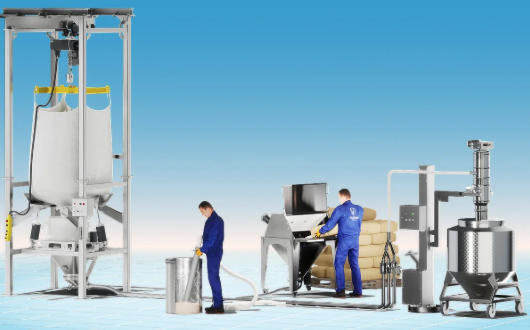
Why Powder Handling Matters in Pharma
Pharmaceutical powders are usually fine, fragile, and sometimes highly potent, so poor handling can cause segregation, dust emissions, or exposure risks for operators. A well‑designed powder handling solution integrated with upstream and downstream pharmaceutical equipment ensures consistent dosing, stable product quality, and reliable regulatory compliance.[2][11]
Typical powder operations in solid‑dose and sterile production include:
- Receiving and unloading bags, drums, and big bags
- Dosing and weighing APIs and excipients
- Conveying powders between processing steps
- Blending, milling, and micronization
- Feeding tablet presses, capsule fillers, and sterile compounding lines
Each stage requires dedicated pharmaceutical equipment that is easy to clean, fully traceable, and capable of high containment when handling potent compounds.[13]
Core Types of Powder Handling Equipment
Modern powder handling solutions combine several equipment types into a closed, automated material flow. Understanding each category helps you evaluate suppliers and design a future‑proof pharmaceutical equipment strategy.[1]
Storage, Feeding, and Unloading Systems
Silos, bins, and hoppers store bulk powders with flow‑aids, vibration, and special geometries to avoid bridging and rat‑holing. Bag and drum emptying stations allow contained unloading of bags, drums, and big bags, often integrating dust extraction, sieving, and metal detection to protect operators and product quality.[14][1][13]
Feeders and dosing units (loss‑in‑weight, volumetric, gravimetric) deliver precise mass flow, which is critical for accurate formulation and tablet or capsule weight control. This “front end” typically connects directly to downstream pharmaceutical equipment such as blenders, granulators, and tablet presses to reduce manual scooping and exposure.[13][14]
Powder Conveying Technologies
Conveying is the backbone of any powder handling system, linking each piece of pharmaceutical equipment into a continuous line. Vacuum conveying, pneumatic conveying, and mechanical conveying each play a role depending on distance, throughput, and powder sensitivity.[15][1]
Vacuum conveying (dense or dilute phase) moves powders via vacuum through closed pipelines, minimizing dust and operator exposure while protecting product integrity. Pneumatic pressure conveying uses compressed air to transport powders, often for longer distances or higher throughputs, whereas mechanical conveying (screw conveyors, bucket elevators, tubular chain conveyors) is suited to robust materials or short distances that still demand gentle handling.[16][17][18][1]
For high‑value APIs and blends, dense‑phase vacuum systems are preferred because they reduce segregation and preserve blend uniformity for excipients and active ingredients. In advanced pharmaceutical equipment layouts, multiple conveying technologies may be combined to balance energy efficiency, flexibility, and containment.[19][16]
Dosing, Weighing, and Microdosing Units
Precise dosing is central to any GMP‑compliant pharmaceutical equipment line. Gravimetric weighing stations on load cells are widely used for batch ingredients, while automated microdosing systems handle micro‑scale quantities of potent powders into reactors, blenders, or tablet press hoppers.[6][19]
Integrated dosing valves, rotary valves, and screw feeders meter product accurately while maintaining a sealed environment. These systems often interface directly with MES/SCADA platforms to record batch data and support electronic records, which are critical for 21 CFR Part 11 and data integrity expectations in pharmaceutical equipment environments.[20][2][13]
Containment and High‑Potency Handling
Handling high‑potency APIs (HPAPIs) or cytotoxic powders requires high‑containment pharmaceutical equipment to protect operators and prevent cross‑contamination. Split butterfly valves (SBVs) enable contained powder transfer between IBCs, vessels, and other units, limiting airborne exposure during charging and discharging.[12][2][19]
Isolators and gloveboxes provide a sealed environment for charging, sampling, or dispensing operations and are frequently combined with micronizers and mills for potent products. High‑containment bag and drum emptying stations, often designed to reach OEB 4 or higher with laminar flow and HEPA filtration, complete the protection envelope when integrated with connected pharmaceutical equipment such as dryers, filters, and centrifuges.[21][12][19][13]
Mixing, Micronization, and Downstream Interfaces
Powder handling also must link to value‑adding pharmaceutical equipment such as blenders, granulators, and mills. Blenders and mixers, including high‑shear mixers and tumble blenders, rely on controlled feeding and contained discharge to avoid segregation and ensure batch homogeneity.[5][1][6]
Micronizers and jet mills deliver very fine particle sizes to improve solubility and bioavailability, usually operating within isolators for potent APIs. Stable, controlled powder feed to tablet presses and capsule fillers is then essential to maintain weight uniformity, reduce rejects, and prevent stoppages in high‑speed lines.[18][5][6][11]
Deeper Design Considerations for Pharmaceutical Powder Handling
Understanding Powder Behavior
Designing reliable pharmaceutical equipment for powders begins with a deep understanding of the material itself. Properties such as particle size distribution, shape, cohesiveness, and bulk density strongly influence flow patterns in silos, hoppers, and transfer lines.[1][11][18]
Poorly characterized powders may suffer from bridging, rat‑holing, or uncontrolled flushing, leading to blocked equipment, inconsistent dosing, and product quality issues. Application laboratories that test customer powders can simulate behavior in different hopper geometries, cone valve technologies, and conveying regimes, reducing risk before full‑scale pharmaceutical equipment is installed.[3][6]
Hygienic Design and Cleanability
Pharmaceutical equipment must support high levels of hygiene and easy cleaning to avoid cross‑contamination. Contact parts are typically manufactured from high‑grade stainless steels with polished surfaces to eliminate crevices where product can accumulate.[4][6][13]
Design measures such as smooth internal profiles, drainability, and minimal dead zones simplify manual cleaning and support CIP/SIP strategies. When combined with purified water and pure steam utilities, powder handling systems can be incorporated into validated cleaning cycles that align with the rest of the pharmaceutical equipment installed on site.[9][4]
Automation, Digitalization, and Data Integrity
Modern powder handling relies heavily on automation to ensure consistency, traceability, and safety. PLC and SCADA systems orchestrate the operation of conveyors, feeders, valves, and weighing stations, managing interlocks with connected pharmaceutical equipment such as blenders, granulators, and tablet presses.[10][6]
Recipe‑driven operation allows operators to switch between products with minimal manual intervention while preserving the correct transfer routes and setpoints. Integration with MES solutions enables electronic batch records, exception tracking, and maintenance logging across the full range of pharmaceutical equipment, simplifying audits and regulatory inspections.[2][10]
Safety, Explosion Protection, and Compliance
Many pharmaceutical powders generate dust clouds that may be combustible or explosive, especially in pneumatic conveying and dust collection systems. Equipment for such applications must comply with appropriate explosion protection standards and zoning, including venting, suppression, and grounding measures.[8][4]
In addition, industrial hygiene standards require that the chosen pharmaceutical equipment supports safe handling of allergenic, toxic, or sensitizing powders through containment and proper filtration. Selecting vendors who understand these risks and provide complete design documentation, risk assessments, and validation support is essential for a compliant facility.[8][2]
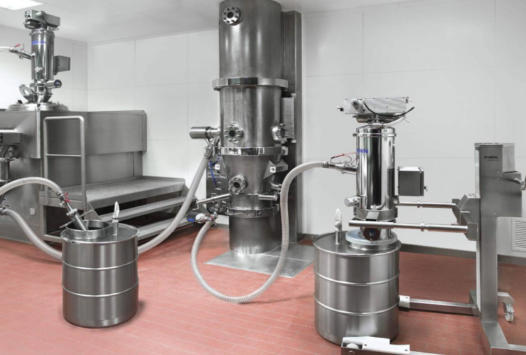
Where to Find Reliable Powder Handling Equipment Suppliers
Global Technology Providers
Several established process technology companies specialize in powder handling for pharmaceuticals, supplying components and systems such as dense‑phase transfer, cone valve IBCs, and high‑containment valves. Their portfolios often include modular pharmaceutical equipment that can be configured for different plant layouts, capacities, and containment levels.[6][19][20][1]
These providers are particularly valuable when a project demands cutting‑edge containment, multi‑site standardization, or integration with sophisticated automation architectures. By combining powder handling with related pharmaceutical equipment such as tablet handling, blending, and roller compaction hardware, they deliver complete solutions that minimize interface risk.[10][6]
Specialized Pharma Integrators and Engineering Firms
Beyond technology owners, specialized integrators design and deploy entire powder handling lines for chemical and pharmaceutical plants. They translate user requirement specifications into 3D layouts, flow diagrams, and functional design descriptions, then source and integrate suitable pharmaceutical equipment from multiple vendors.[22][23][15]
Typical services include process simulation, FAT/SAT management, commissioning, and operator training, helping customers bridge the gap between theoretical design and stable day‑to‑day operation. For companies upgrading existing facilities or adding new dosage forms, such integrators provide an efficient route to modern, compliant powder handling without overwhelming in‑house teams.[23][15]
Knowledge Hubs, Guides, and Best‑Practice Resources
When planning projects, technical libraries and guides from powder handling experts are invaluable. These resources cover issues such as bridging, segregation, contained transfer strategies, and optimal sizing of pharmaceutical equipment for specific throughput and containment targets.[3][6]
Checklists, calculators, and case studies demonstrate how particular technologies solved chronic problems like inconsistent tablet weights, dust emissions, or slow changeovers. Using these tools early helps define realistic performance requirements and avoids over‑ or under‑specifying powder handling pharmaceutical equipment for new projects.[3][6]
How Everheal Can Support Powder Handling Projects
As a Chinese pharmaceutical equipment provider, Everheal can combine powder handling technologies with critical water, steam, and sterilization utilities to create integrated, GMP‑compliant production environments. By acting as a system partner, Everheal helps customers align powder handling with the broader facility design rather than treating it as an isolated subsystem.
Everheal's capabilities include purified water generation and distribution systems that provide high‑quality water for cleaning in place (CIP), ingredient preparation, and utility use in pharmaceutical equipment. Pure steam generators deliver reliable pure steam for sterilization in place (SIP) of vessels, transfer lines, and critical powder contact surfaces, supporting aseptic operation in high‑containment areas. Multi‑effect distillation units supply WFI for sterile and parenteral products that often share utilities with dry powder handling zones.
In addition to utilities, Everheal offers liquid filling and sealing machines that can operate downstream of powder handling stages in combination product manufacturing or where powders are reconstituted into solutions or suspensions. Sterilization systems—such as autoclaves and other terminal sterility solutions—are engineered to work in harmony with powder transfer and containment arrangements, ensuring that all connected pharmaceutical equipment meets stringent hygiene and sterility expectations.
Beyond individual machines, Everheal provides custom factory layout planning and full production line construction. This includes defining powder and personnel flows, integrating HVAC and cleanroom zoning, and placing pharmaceutical equipment so that material moves logically from receiving through processing to packaging. The result is an end‑to‑end solution in which powder handling, utilities, and process equipment are all coordinated from the earliest design stage.
By partnering with Everheal, customers can access engineering support for URS development, concept design, and equipment selection that balances capital cost with long‑term flexibility. The company can collaborate with global powder handling specialists when necessary, acting as a central point for integrating imported high‑containment components with locally manufactured pharmaceutical equipment and utility systems. This hybrid approach helps reduce project risk, shorten timelines, and build plants that are both compliant and adaptable to future product changes.
Practical Tips for Buyers of Powder Handling Pharmaceutical Equipment
When evaluating potential suppliers and technologies, buyers can follow a structured approach to ensure they select the right solution for their facility and budget. First, clearly define process needs by mapping every stage where powders are received, transferred, stored, mixed, and discharged, including any manual steps that might later be automated. This process mapping should consider existing pharmaceutical equipment and identify bottlenecks, dust sources, or quality issues that new powder handling systems must address.
Next, compile a detailed material list with key physical and safety properties for each powder, including flowability, bulk density, explosivity, and toxicity. Sharing this data with prospective suppliers enables them to propose realistic designs and, where possible, perform trials using your products. Side‑by‑side comparison of test results makes it easier to choose between alternative conveying or discharge technologies.
It is also important to quantify performance targets such as throughput, changeover time, and acceptable exposure levels for operators. Expressing these expectations as measurable KPIs—like maximum OEL at the operator's breathing zone or maximum tablet weight variation—allows suppliers to commit to verifiable performance. Align these targets with your quality system and regulatory commitments so that new pharmaceutical equipment strengthens, rather than complicates, compliance.
Finally, consider lifecycle support, including spare parts, service, and potential future expansions. Vendors that offer remote diagnostics, training, and modular upgrades can help ensure that powder handling pharmaceutical equipment continues to deliver value as product portfolios evolve. Choosing partners prepared to collaborate with integrators and utility providers, such as Everheal, increases the likelihood that your plant will remain flexible and competitive over the long term.
Conclusion
Reliable powder handling solutions are essential to protect workers, preserve product quality, and maintain regulatory compliance in pharmaceutical manufacturing. By understanding powder properties, containment needs, and integration requirements, buyers can select pharmaceutical equipment that delivers clean, efficient, and scalable production for both standard and high‑potency products.[12][1][2][10]
Working with experienced suppliers and system integrators, and partnering with companies like Everheal that provide purified water, pure steam, distillation, and sterilization support, allows you to build complete, GMP‑compliant plants with optimized powder handling at the core. Integrated engineering reduces project risk and ensures that every piece of pharmaceutical equipment—from conveying to cleaning and sterilization—works together as one coherent system. This holistic approach positions your facility for safe, efficient, and flexible production in an increasingly demanding pharmaceutical landscape.
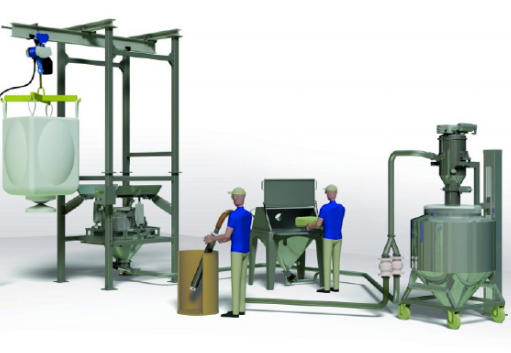
FAQ
1. What is powder handling equipment in pharmaceutical manufacturing?
Powder handling pharmaceutical equipment includes all systems used to store, transfer, dose, blend, and protect powders such as APIs and excipients throughout the manufacturing process. Typical examples are silos, hoppers, vacuum conveyors, feeders, split butterfly valves, and containment isolators, all designed to meet pharmaceutical hygiene and safety standards.[11][1][12][13]
2. How does vacuum conveying improve safety and quality?
Vacuum conveying keeps powders inside closed pipelines, which significantly reduces dust emissions and operator exposure compared with manual handling or open transfer methods. Dense‑phase vacuum conveying also minimizes particle damage and segregation, helping maintain blend uniformity and consistent tablet or capsule quality in connected pharmaceutical equipment.[17][16][19]
3. What containment level is needed for high‑potency APIs?
High‑potency APIs often require containment levels corresponding to high OEB bands, with demonstrated performance through standardized exposure testing. In practice, this means using pharmaceutical equipment such as isolators, SBVs, and high‑containment bag/drum unloading systems that can reliably maintain extremely low airborne concentrations during routine operation and cleaning.[19][21][2][12]
4. How should I choose a powder handling equipment supplier?
When selecting a supplier, assess their experience with similar powders, range of technologies, compliance with GMP and ATEX, ability to test your materials, and support for automation and validation. Prefer partners that can supply integrated pharmaceutical equipment solutions, from bulk handling to dosing and containment, and that offer engineering and lifecycle services rather than only standalone machines.[15][23][6][10]
5. Why combine powder handling with water, steam, and sterilization solutions?
Powder handling rarely stands alone: it interacts with cleaning, sterilization, and utility systems that keep pharmaceutical equipment hygienic and compliant. Combining powder handling with purified water, pure steam, CIP/SIP, and sterilization systems in one integrated design simplifies validation, reduces interfaces between vendors, and ensures a consistent GMP approach across the entire plant.[2][6]
Citations:
[1](https://indpro.com/blog/powder-handling-systems-equipment-a-comprehensive-guide/)
[2](https://www.ilcdover.com/en/company/news/pharmaceutical-powder-handling-101-safety-compliance-containment/)
[3](https://www.matconibc.com/knowledge-hub)
[4](https://hapman.com/handling-bulk-chemical-powders/)
[5](https://sedpharma.com/news-events/the-ultimate-guide-to-pharmaceutical-blenders/)
[6](https://www.matconibc.com/pharmaceutical-manufacturing-best-practice)
[7](https://capplustech.com/2022/06/22/pharma-powder-filling-machines/)
[8](https://resources.psi-bfm.com/comprehensive-guide-to-safe-powder-handling)
[9](https://pharmamachinecn.com/pharmaceutical-equipment-list/)
[10](https://www.ddpsinc.com/blog/choosing-the-right-powder-transfer-system-a-guide-to-key-performance-indicators)
[11](https://pmc.ncbi.nlm.nih.gov/articles/PMC7909273/)
[12](https://www.schematicind.com/techno-blog/enhancing-powder-handling-in-pharmaceutical-production-optimising-safety-and-efficiency)
[13](https://www.pharmaceutical-technology.com/uncategorized/agierre-pharmaceutical-powder-handling/)
[14](https://www.palamaticprocess.com/blog/containment-solutions-for-powders)
[15](https://www.synergiealliance.com/powder-handling-systems)
[16](https://www.piab.com/industries/pharma_automation)
[17](https://pneuconveyor.com/pharma-powder-transfer-system/)
[18](https://www.goughecon.com/powder-bulk-solid-handling-fundamentals/)
[19](https://www.pharmaceutical-networking.com/high-containment-integrated-powder-handling-systems/)
[20](https://www.gea.com/en/products/product-handling-systems/powder-handling-components/)
[21](https://www.palamaticprocess.com/en-us/blog/containment-technologies-for-powder-handling)
[22](https://www.idexindia.in/powder-handling-systems-and-equipment-for-chemical-processes/)
[23](https://pneupowders.com/7-considerations-when-choosing-a-powder-handling-system-supplier/)


