Content Menu
● Understanding the Distillation Water Machine
● Why Distilled Water Matters in Modern Industries
>> Key Applications Include:
● Types of Distillation Water Machines
>> 1. Single-Effect Distillation Machine
>> 2. Multi-Effect Distillation Machine
>> 3. Vapor Compression Distiller
>> 4. Electric Bench-Top Distillers
● Key Features of a High-Quality Distillation Water Machine
>> 1. High Purity Water Output
>> 2. Energy-Saving Design
>> 3. Compact and Modular Structure
>> 4. High-Grade Materials
>> 5. Automation and Control Systems
>> 6. Global Compliance
● How Everheal Delivers Advanced Distillation Solutions
>> Everheal's Offering Includes:
● Evaluating Performance: How to Choose the Best Distillation Water Machine
>> 1. Determine Water Demand and Production Scale
>> 2. Match System Type with Energy Availability
>> 3. Evaluate Quality Monitoring and Validation Support
>> 4. Minimize Maintenance and Downtime
>> 5. Opt for Supplier with Global Service and Custom Design
● Benefits of Investing in a High-Performance Distillation Water Machine
>> 1. Reliable Water Quality
>> 2. Lower Operational Costs
>> 3. Extended Equipment Lifetime
>> 4. Compliance Assurance
>> 5. Full System Integration
● Practical Example: Pharmaceutical Production Facility Layout
● Common Challenges and Solutions
>> 1. High Energy Consumption
>> 2. Water Scaling and Fouling
>> 3. Inconsistent Product Quality
>> 4. Space Constraints
>> 5. Maintenance Accessibility
● Conclusion
● FAQs About Distillation Water Machines
>> 1. What is the working principle of a Distillation Water Machine?
>> 2. How is a multi-effect distillation system more efficient?
>> 3. What industries commonly use distilled water?
>> 4. What maintenance is required for these machines?
>> 5. How can Everheal support customized factory planning?
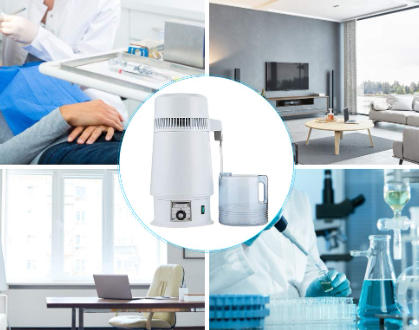
Choosing the best Distillation Water Machine is an important decision for pharmaceutical manufacturers, laboratories, food processing plants, and facilities where water purity is essential. Distilled water plays a crucial role in ensuring that no contaminants, ions, microorganisms, or volatile impurities compromise production quality. In this guide, we explore what defines a top-performing Distillation Water Machine, examine types and features, and highlight how industrial leaders like Everheal deliver customized, high-efficiency systems for global clients.
Understanding the Distillation Water Machine
A Distillation Water Machine (also known as a distilled water generator or multi-effect distiller) is a system that purifies water through the process of evaporation and condensation. It involves heating impure water until it turns into steam, separating it from dissolved salts, heavy metals, and microorganisms. The steam is then cooled and condensed into purified water, free of most contaminants.
This method is one of the oldest yet most reliable technologies for water purification. Modern industrial systems, however, have evolved with automation, improved energy recovery, and higher output capacities—making them suitable for pharmaceutical, chemical, cosmetic, and electronic manufacturing lines.
Why Distilled Water Matters in Modern Industries
Distilled water is crucial for protecting product integrity and equipment life. In industries such as pharmaceuticals, cosmetics, and biotechnology, the presence of contaminants or residual ions can directly affect product safety or chemical reactions.
Key Applications Include:
- Pharmaceuticals: For injection water (WFI), laboratory reagents, and sterile solution preparation.
- Food & Beverage: Used in beverage formulation, flavor extraction, and packaging sterilization.
- Hospitals & Laboratories: Ensures reliability in autoclaves, cleaning systems, and diagnostics.
- Electronics: Essential for rinsing and cleaning delicate components without leaving mineral deposits.
For companies like Everheal, distilled water generation forms the backbone of turnkey production solutions, integrating with pure steam generation, sterilization systems, and filling machines.
Types of Distillation Water Machines
Modern equipment differs by capacity, heat recovery technology, and the number of effects used for distillation. The most common industrial types include:
1. Single-Effect Distillation Machine
This system employs a single evaporator for generating steam. It's suitable for smaller-scale applications where energy efficiency is less critical. The structure is simple, and maintenance costs are lower, but water production and thermal efficiency are limited.
2. Multi-Effect Distillation Machine
A multi-effect Distillation Water Machine uses multiple evaporators connected in series. Each stage (effect) reuses the energy from the previous stage's steam, drastically reducing power consumption.
For example, a seven-effect distiller can save up to 70% of the energy used by a single-effect system. This is the most commonly chosen design for pharmaceutical-grade water generation.
3. Vapor Compression Distiller
This system relies on mechanical vapor compression to recycle and reuse latent heat from condensed steam. It is ideal for regions with limited cooling water availability, offering an excellent balance between energy efficiency and high output.
4. Electric Bench-Top Distillers
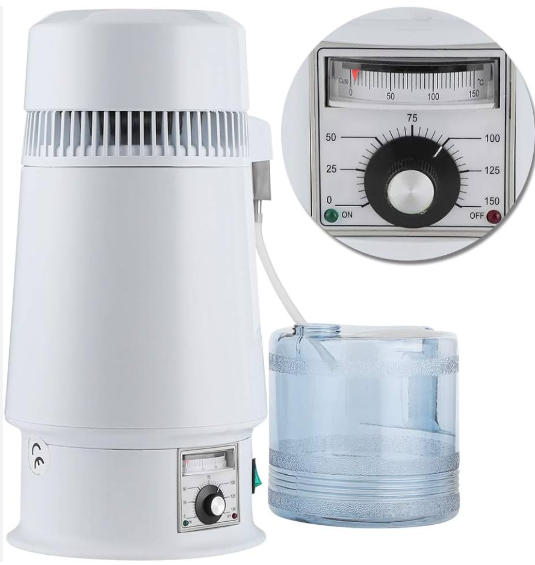
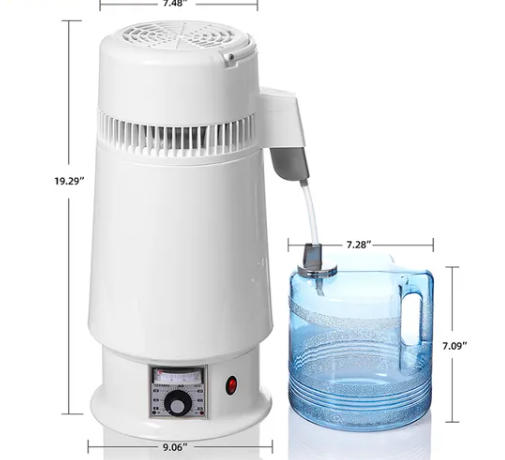
Smaller lab or household units fall under this category. Although not suitable for industrial use, they demonstrate the same core distillation principle. These are perfect for laboratories and clinics that require a reliable source of pure water.
Key Features of a High-Quality Distillation Water Machine
When evaluating a Distillation Water Machine, consider the following features to determine its quality and operational efficiency:
1. High Purity Water Output
A reliable system should consistently produce water meeting pharmacopeia standards (e.g., USP, EP, CP). This involves a conductivity of less than 1.0 µS/cm and minimal endotoxin levels.
2. Energy-Saving Design
Modern units, especially multi-effect and vapor compression models, emphasize thermal efficiency. They often feature condensate recovery systems, automatic control valves, and internal heat exchangers.
3. Compact and Modular Structure
The best machines come with a modular frame for easy installation and maintenance. Skid-mounted designs are particularly valued in factories where layout flexibility matters.
4. High-Grade Materials
All contact parts should use stainless steel (typically SS 316L) to prevent corrosion and contamination. Electro-polishing further improves hygienic integrity.
5. Automation and Control Systems
Touchscreen PLC controls, automatic feed adjustment, and remote monitoring ensure stability, safety, and reduced human error.
6. Global Compliance
Conformance to international regulations such as GMP, FDA, and ISO standards enhances global reliability and compliance across pharmaceutical markets.
How Everheal Delivers Advanced Distillation Solutions
As a leading Chinese manufacturer, Everheal focuses on comprehensive water and steam generation solutions tailored for pharmaceutical and industrial applications. Beyond providing Distillation Water Machines, the company integrates system design, layout planning, and production line installation.
Everheal's Offering Includes:
- Pure Water Preparation Systems – Reverse osmosis + distillation integration.
- Multi-Effect Distillation Water Machines – With high-efficiency steam recycling for WFI.
- Pure Steam Generators – For sterilization and aseptic systems.
- Liquid Filling & Sealing Machines – Optimized for contamination-free packaging.
- Sterilization Systems – Including terminal sterilizers and autoclave equipment.
The company's engineering approach emphasizes turn-key solutions—from cleanroom layout design to utility pipeline construction—creating a truly customized manufacturing environment for clients worldwide.
Evaluating Performance: How to Choose the Best Distillation Water Machine
When selecting a Distillation Water Machine, decision-makers should evaluate not only capacity and cost but also compliance, safety, and service factor. Below are practical criteria that help identify the most suitable system.
1. Determine Water Demand and Production Scale
Calculate daily WFI or purified water requirements. Oversized or undersized equipment affects energy balance and operating costs. Everheal engineers often perform production simulations to achieve accurate sizing.
2. Match System Type with Energy Availability
Choose multi-effect or vapor compression systems based on available utilities (steam, electricity, cooling water). Multi-effect designs suit steam-rich environments, while vapor compression distillers excel where steam is limited.
3. Evaluate Quality Monitoring and Validation Support
Ensure online conductivity monitoring, TOC measurement, and temperature control. Validation certification (DQ/IQ/OQ) should be included to meet pharmaceutical regulatory requirements.
4. Minimize Maintenance and Downtime
A machine with detachable heat exchangers, automatic cleaning systems, and predictable maintenance intervals reduces long-term operating costs.
5. Opt for Supplier with Global Service and Custom Design
As projects scale to international operations, technical support, spare parts availability, and flexible customization matter greatly. Global vendors like Everheal strengthen trust with continuous customer service and project follow-up.
Benefits of Investing in a High-Performance Distillation Water Machine
1. Reliable Water Quality
Produces chemically pure and biologically safe water perfectly suited for sterile manufacturing.
2. Lower Operational Costs
Optimized heat recovery and reduced steam consumption lead to long-term energy savings.
3. Extended Equipment Lifetime
Corrosion-resistant materials and automated control minimize wear-and-tear and operator error.
4. Compliance Assurance
Meets cGMP, FDA, and pharmacopeial standards, which are mandatory in regulated industries.
5. Full System Integration
Can seamlessly connect with pure steam generators, storage tanks, and distribution loops for continuous operation.
Practical Example: Pharmaceutical Production Facility Layout
A typical installation in a mid-sized pharmaceutical facility might include the following sequence:
1. Feedwater Pre-Treatment System (Reverse Osmosis and Deionization).
2. Multi-Effect Distillation Water Machine producing WFI.
3. Storage Tank and Loop Distribution System maintaining thermal sanitization.
4. Pure Steam Generator for sterilization of filling lines and autoclaves.
5. Liquid Filling Machine & Sterilization Module operating under GMP-compliant cleanroom conditions.
This integrated design ensures that every stage—from water purification to product filling—is supported by validated equipment and engineering services.
Common Challenges and Solutions
1. High Energy Consumption
Solution: Choose multi-effect or vapor compression systems with heat recovery.
2. Water Scaling and Fouling
Solution: Apply automatic cleaning-in-place (CIP) and proper feedwater pre-treatment.
3. Inconsistent Product Quality
Solution: Upgrade to PLC-controlled systems with real-time monitoring.
4. Space Constraints
Solution: Opt for skid-mounted compact units designed for modular facilities.
5. Maintenance Accessibility
Solution: Work with manufacturers offering easy disassembly structures and professional service programs.
Conclusion
Selecting the best Distillation Water Machine requires balancing purity, reliability, energy efficiency, and compliance. Whether for pharmaceutical, laboratory, or industrial use, the ideal system must deliver consistent output while meeting international quality standards.
Everheal, as a specialized manufacturer, provides one-stop solutions for water and steam systems—from system design to complete factory construction—helping clients worldwide achieve safe, sustainable, and cost-effective production environments. Investing in a professional-grade Distillation Water Machine not only ensures water quality but also enhances operational excellence across your entire process chain.
FAQs About Distillation Water Machines
1. What is the working principle of a Distillation Water Machine?
A Distillation Water Machine works by heating impure water to create steam, which is then condensed into purified form. This process removes dissolved salts, heavy metals, microorganisms, and non-volatile impurities.
2. How is a multi-effect distillation system more efficient?
In a multi-effect system, the steam from one stage is reused to heat the next, reducing energy consumption by up to 70%. This makes it both cost-effective and environmentally friendly.
3. What industries commonly use distilled water?
Distilled water is widely used in pharmaceuticals, food processing, electronics, and healthcare industries for cleaning, formulation, and sterilization.
4. What maintenance is required for these machines?
Regular maintenance involves descaling, inspecting heat exchangers, and calibrating sensors. Automated systems often include cleaning-in-place (CIP) functions to simplify upkeep.
5. How can Everheal support customized factory planning?
Everheal provides turnkey engineering services—from designing the water purification system to installing complete production lines—ensuring compliance, efficiency, and scalable growth for clients around the world.


