Content Menu
● Understanding Pharmaceutical Equipment
● The Importance of Pharmaceutical Equipment in Modern Manufacturing
● Major Categories of Pharmaceutical Production Equipment
>> 1. Water Purification Systems
>> 2. Pure Steam Generators
>> 3. Multi-Effect Distillation Units
>> 4. Liquid Filling and Sealing Machines
>> 5. Sterilization Systems
● Customized Production Line Solutions
● Emerging Trends in Pharmaceutical Equipment
>> 1. Automation and Digitalization
>> 2. Modular Systems
>> 3. Sustainable Manufacturing
>> 4. Compliance-Ready Design
● How Pharmaceutical Equipment Ensures Product Quality
● The Role of Equipment Manufacturers like Everheal
● Selecting the Right Pharmaceutical Equipment Supplier
● Conclusion
● FAQ
>> 1. What is pharmaceutical equipment used for?
>> 2. What are examples of pharmaceutical production equipment?
>> 3. Why is water purification equipment important in pharmaceutical production?
>> 4. How do automation and digitalization improve pharmaceutical equipment performance?
>> 5. What makes Everheal's pharmaceutical equipment unique?
The pharmaceutical industry stands at the intersection of science, technology, and precision engineering. Every pill, vial, and sterile solution must comply with stringent safety and quality standards before reaching patients. At the heart of this process lies pharmaceutical production equipment — a complex network of machines and systems designed to ensure that products are pure, safe, and consistent.
This article explores what pharmaceutical production equipment entails, the types of machinery used, how it contributes to quality assurance, and why customized equipment solutions are crucial for modern pharmaceutical manufacturing.

Understanding Pharmaceutical Equipment
Pharmaceutical equipment refers to the specialized machinery, systems, and supporting devices used in the production of pharmaceutical products such as tablets, capsules, injections, and sterile solutions. It covers every stage from raw material processing to packaging and sterilization.
This equipment ensures compliance with Good Manufacturing Practices (GMP) and regulatory standards such as those set by the U.S. Food and Drug Administration (FDA), European Medicines Agency (EMA), and China's NMPA. The primary purpose is to maintain product purity, reduce contamination risks, and optimize production efficiency.
The Importance of Pharmaceutical Equipment in Modern Manufacturing
Without advanced equipment, the pharmaceutical industry cannot maintain consistent quality or scale production efficiently. Every step — from water purification to drug filling — depends on technological precision.
- Consistency: Pharmaceutical equipment allows manufacturers to maintain uniform dosage and product integrity.
- Quality Assurance: Automated systems reduce human error and enhance product safety.
- Regulatory Compliance: Equipment design supports GMP, ensuring easy cleaning, validation, and traceability.
- Efficiency: Modern production lines deliver high output with minimal downtime.
- Sustainability: Energy-saving technologies reduce waste and environmental impact.
For companies like Everheal, reliable and efficient equipment is not just a production necessity but a promise of quality to global healthcare providers.
Major Categories of Pharmaceutical Production Equipment
1. Water Purification Systems
Pure water is the foundation of pharmaceutical manufacturing. Pharmaceutical water systems include Pure Water Generation Systems (PWGS) and Water for Injection (WFI) systems. These units remove organic and inorganic impurities using reverse osmosis, electrodeionization, ultrafiltration, and distillation.
Everheal's pure water preparation systems are designed to meet GMP and pharmacopeia standards (USP, EP, and CP). They ensure stable operation, easy maintenance, and consistent water quality suitable for sterile production environments.
2. Pure Steam Generators
The pure steam generator provides sterile, contaminant-free steam for sterilizing equipment, containers, and process lines. The steam must be free of endotoxins and chemical residues.
Everheal's pure steam systems use high-quality stainless steel, precision control, and automated monitoring, making them ideal for critical applications in vaccine and injectable drug production.
3. Multi-Effect Distillation Units
A multi-effect distillation water machine produces distillated water for injection. This equipment applies multiple evaporation effects to purify water efficiently while minimizing energy consumption.
By integrating automation, self-cleaning processes, and temperature control, Everheal's distillation systems ensure high-purity, pyrogen-free water, compliant with global pharmacopeia standards.
4. Liquid Filling and Sealing Machines
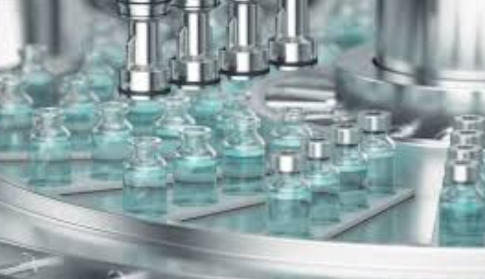
Sterile liquid drugs such as injections, ophthalmic solutions, and infusions rely on precise liquid filling and sealing machines. These systems automatically fill containers (ampoules, vials, bottles) with exact doses before hermetically sealing them to prevent contamination.
Modern filling machines feature laminar airflow protection, HEPA filtration, servo-driven filling, and in-line capping or sealing — all ensuring both quality and operational safety.
5. Sterilization Systems
Sterilization equipment is critical for eliminating microorganisms in production containers, instruments, and products. These systems may include steam autoclaves, dry heat sterilizers, and hydrogen peroxide sterilization chambers.
Everheal designs integrated sterilization units that combine reliability, flexible cycle programming, and temperature uniformity — meeting international pharmacopeial sterilization standards.
Customized Production Line Solutions
Every pharmaceutical plant has unique spatial constraints, production volumes, and regulatory requirements. Therefore, equipment suppliers like Everheal provide custom factory layout planning and integrated production line solutions.
A customized design ensures optimized workflow — from raw material handling to filling and packaging — minimizing cross-contamination risks and improving process efficiency.
Through advanced digital modeling and process validation, Everheal engineers collaborate with global clients to create GMP-compliant turnkey solutions for pharmaceutical water systems, sterile production lines, and automated material handling.
Emerging Trends in Pharmaceutical Equipment
1. Automation and Digitalization
Modern drug manufacturing is shifting toward Industry 4.0 integration. Pharmaceutical equipment now comes equipped with sensors, PLCs, SCADA interfaces, and smart data analytics tools. Real-time monitoring and predictive maintenance reduce downtime and increase traceability.
2. Modular Systems
Modular pharmaceutical equipment simplifies installation, expansion, and maintenance. Factories can adjust capacity without redesigning entire production lines, saving both time and cost.
3. Sustainable Manufacturing
Sustainability drives innovation in equipment design. Features such as heat recovery, reduced water consumption, and energy-efficient components support global efforts to lower manufacturing footprints while maintaining product integrity.
4. Compliance-Ready Design
Future equipment integrates built-in compliance: validation modules, automated cleaning systems (CIP/SIP), and GMP documentation interfaces. This reduces the burden of qualification and regulatory submissions.
How Pharmaceutical Equipment Ensures Product Quality
The value of pharmaceutical equipment lies in its ability to maintain control over critical production parameters — such as temperature, pressure, pH, and microbial levels. Automated sensors continuously track these variables and trigger alarms if deviations occur.
Moreover, clean-in-place (CIP) and steam-in-place (SIP) technologies prevent contamination between production cycles, ensuring sterile conditions for every batch. Equipment made of high-grade stainless steel further guarantees corrosion resistance and easy sanitation.
For manufacturers, this means higher product yield, lower rejection rates, and stronger compliance with global regulatory agencies.
The Role of Equipment Manufacturers like Everheal
As a leading pharmaceutical equipment company in China, Everheal specializes in designing, engineering, and manufacturing a wide range of high-purity and sterile processing systems.
Everheal's core product portfolio includes:
- Pure water preparation systems
- Pure steam generators
- Multi-effect distillation units
- Liquid filling and sealing machines
- Sterilization equipment
The company goes beyond product supply by offering integrated plant design, layout optimization, installation, and validation support. This combination makes Everheal a trusted partner for global clients pursuing long-term, GMP-compliant production operations.
Selecting the Right Pharmaceutical Equipment Supplier
Choosing the right supplier determines a plant's long-term performance. Here are key factors to consider:
1. Regulatory Experience: Suppliers should provide equipment certified under GMP, CE, and ISO 9001 standards.
2. Customization Capabilities: Custom design ensures equipment fits specific product formulations and facility layouts.
3. After-Sales Service: Reliable technical support, spare parts, and remote diagnostics are essential for continuous production.
4. Global Reputation: Look for positive references, international case studies, and collaborative engineering capability.
5. Cost versus Value: Evaluate not just price but also lifecycle costs, durability, and maintenance efficiency.
Everheal's end-to-end service approach and deep technical expertise make it an ideal equipment partner for pharmaceutical companies aiming to modernize production facilities.
Conclusion
Pharmaceutical production equipment represents far more than machinery — it is the technological backbone of drug manufacturing. Advanced systems ensure purity, safety, and efficiency from start to finish. As global standards evolve, pharmaceutical manufacturers must rely on innovative, compliant, and sustainable solutions.
Companies like Everheal are at the forefront of this transformation, combining engineering excellence with customer-centric customization to deliver equipment and systems that empower safe and efficient global pharmaceutical production.

FAQ
1. What is pharmaceutical equipment used for?
Pharmaceutical equipment is used to manufacture, process, sterilize, and package drugs. It ensures that products meet safety, purity, and regulatory requirements through precise control of production parameters.
2. What are examples of pharmaceutical production equipment?
Common examples include pure water systems, pure steam generators, multi-effect distillation machines, liquid filling and sealing machines, and sterilization units — all essential for GMP pharmaceutical manufacturing.
3. Why is water purification equipment important in pharmaceutical production?
Water is a critical raw material in drug manufacturing. Purification systems remove impurities, ensuring clean water for injections, cleaning, and formulation processes, thereby preventing contamination.
4. How do automation and digitalization improve pharmaceutical equipment performance?
Automation ensures consistency, minimizes human error, and enhances traceability. Digital monitoring tools collect real-time data for predictive maintenance and regulatory reporting.
5. What makes Everheal's pharmaceutical equipment unique?
Everheal provides fully customized design, installation, and maintenance solutions that comply with GMP standards. Its equipment is engineered for reliability, energy efficiency, and long-term cost performance.


