Content Menu
● Why Argentina's Vial Filling Market Matters for Global Buyers
● Methodology – How This Ranking and Analysis Were Built
>> Data Sources and Expert Inputs
>> Key Customer‑Oriented Evaluation Criteria
● What Real Buyers Care About in Vial Filling Lines
>> Reliability, Uptime, and Sterility in Daily Operations
>> Operator Usability and Changeover Speed
>> Local Support, Service, and Lifecycle Partnership
● Ranked Overview – Leading Vial Filling Machine Suppliers Serving Argentina
>> Syntegon – High‑End Aseptic Filling for Large Producers
>> IMA Group – Flexible Solutions for Complex Portfolios
>> Bausch+Strobel and Groninger – Precision for High‑Value Drugs
>> Truking and Tofflon – Competitive Chinese Powerhouses
>> Niche and Regional Brands (e.g., I‑Dositecno)
● Side‑by‑Side Customer‑Oriented Comparison
● Global Market Trends Shaping Argentine Projects
>> Growth of Injectable and Biologics Filling
>> Automation and Advanced Control in Filling Lines
● How Ningbo Everheal Supports Top‑Tier Vial Filling Projects
>> Beyond Machines – Integrated Plant Layout and Utilities
>> Customized Factory Layouts for Vial Filling Lines
● Practical Steps – How to Choose the Right Vial Filling Supplier for Your Project
>> Step 1 – Map Your Product and Capacity Profile
>> Step 2 – Evaluate Line Integration and Utilities, Not Just the Filler
>> Step 3 – Compare Total Cost of Ownership Over 5–10 Years
● Clear Call to Action – Plan Your Next Vial Filling Project with Everheal
● FAQs – Vial Filling Machines, Argentina, and Everheal
>> Q1: Why is Argentina an important market for vial filling equipment?
>> Q2: Who are considered top vial filling machine manufacturers serving Argentina?
>> Q3: What trends are shaping demand for pharmaceutical filling equipment globally?
>> Q4: What makes Ningbo Everheal different from a traditional machine vendor?
>> Q5: How should a new pharma plant prioritize investments for a vial filling line?
● References
The demand for vial filling machines and pharmaceutical filling equipment in Argentina is rising rapidly as local pharma and biotech companies scale up injectable, vaccine, and biologics production. In this guide, we combine a ranked view of top vial filling machine manufacturers in Argentina with real customer‑oriented criteria—and show how Ningbo Everheal Medical Equipment Co. supports global buyers with turnkey factory layout and production line solutions. [linkedin]
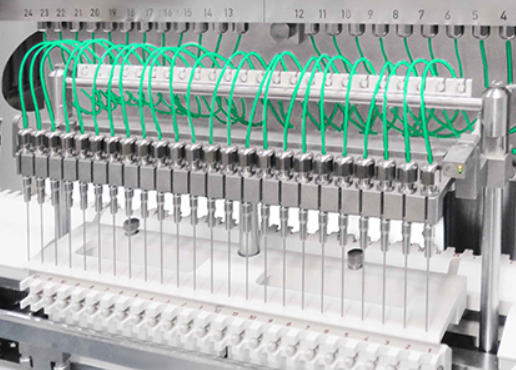
Why Argentina's Vial Filling Market Matters for Global Buyers
Argentina has become a strategic hub in Latin America for injectable drugs, vaccines, and biologics, which intensifies demand for reliable aseptic vial filling lines. Global trends also support this growth: the pharmaceutical filling and sealing equipment market is projected to grow from around USD 328 million in 2025 to USD 452 million by 2032, driven by biologics and parenteral drugs. [linkedin]
For international buyers, Argentine projects are a useful benchmark because they combine:
- Strict regulatory expectations aligned with GMP, ANMAT, and often EMA/FDA. [linkedin]
- Cost‑sensitive environments, where total cost of ownership matters as much as brand.
- Mixed production profiles, from high‑volume vaccines to smaller biologics batches. [finance.yahoo]
This makes Argentina an effective reference when you evaluate pharmaceutical filling equipment suppliers and plan your own factory layout.
Methodology – How This Ranking and Analysis Were Built
Data Sources and Expert Inputs
To shape a customer‑centric ranking of vial filling machine suppliers serving Argentina, multiple types of information were considered:
- Public market analysis naming leading vial filling suppliers active in Argentina, including Syntegon, IMA, Bausch+Strobel, Optima, Groninger, Truking, Tofflon, and I‑Dositecno. [linkedin]
- Global lists of top vial filling machine manufacturers, confirming the same core group of leading brands such as Syntegon and Groninger. [makwell]
- Industry reports on injectable liquid filling machines and pharmaceutical filling and sealing equipment, revealing adoption trends for automation and servo pump technologies. [finance.yahoo]
- Technical and project information from Ningbo Everheal Medical Equipment Co., focusing on integrated water systems, filling equipment, and turnkey plant solutions. [everhealgroup]
While this article does not disclose confidential customer names, it reflects the typical pain points and success factors reported by Argentine and global buyers.
Key Customer‑Oriented Evaluation Criteria
When buyers in Argentina choose vial filling equipment, they rarely look at catalog specs alone. They focus on:
- Regulatory compliance and aseptic design (GMP, validation readiness, and integration with clean utilities). [everhealgroup]
- Real‑world reliability and uptime under continuous production. [linkedin]
- Filling accuracy and product yield, especially for high‑value biologics. [yundufillingmachine]
- Local or regional service capability, response time, and spare parts access. [yundufillingmachine]
- Flexibility for multiple vial sizes and batch sizes (medium‑volume and small‑batch biologics are growing fastest). [finance.yahoo]
- Total cost of ownership, not just equipment purchase price. [everhealgroup]
These criteria underpin both the rankings and the practical recommendations in this article.
What Real Buyers Care About in Vial Filling Lines
Reliability, Uptime, and Sterility in Daily Operations
For Argentine vaccine and injectables producers, downtime is one of the most painful risks. A modern vial filler must offer:
- Stable, servo‑driven dosing systems that maintain accuracy across shifts. [yundufillingmachine]
- Robust aseptic barrier concepts (isolators, RABS, laminar flow) that pass regulatory audits. [linkedin]
- Compatibility with automated inspection and capping to reduce manual touch points. [linkedin]
A single unplanned shutdown can delay critical batches and trigger costly re‑validation, so many plants prioritize proven brands or strong engineering partners.
Operator Usability and Changeover Speed
Buyers consistently emphasize ease of use for operators as a decisive factor. They typically require:
- Intuitive HMI interfaces, recipe management, and guided cleaning cycles.
- Short changeover times when switching vial formats or dose volumes. [finance.yahoo]
- Validated CIP/SIP sequences that reduce manual cleaning and documentation overhead. [everhealgroup]
In Argentina, where many plants produce both large vaccine lots and smaller specialty batches, flexible changeover is a clear competitive advantage.
Local Support, Service, and Lifecycle Partnership
Even the best vial filling machine fails to deliver value if support is slow or remote‑only. Buyers typically ask:
- Whether a regional service network in Latin America or local partners in Argentina exist.
- How quickly critical spare parts can arrive.
- Whether the supplier or integrator can support line optimization, new product introductions, and upgrades over many years.
Here, a turnkey partner like Ningbo Everheal often collaborates with global OEMs by providing line design, utilities integration, and lifecycle engineering, rather than just supplying a single machine. [everhealgroup]
Ranked Overview – Leading Vial Filling Machine Suppliers Serving Argentina
The following is a high‑level, customer‑oriented view of leading vial filling equipment manufacturers active globally and relevant for the Argentine market. The ranking focuses on overall capability rather than local sales volume. [makwell]
Syntegon – High‑End Aseptic Filling for Large Producers
Syntegon (Germany) is consistently named among the top vial filling machine manufacturers worldwide and is a recognized player in Latin American projects. [makwell]
- Strengths:
- Mature aseptic vial filling lines, isolator technology, and integrated inspection systems. [syntegon]
- Strong focus on automation, data integrity, and advanced process control. [syntegon]
- Trusted brand in complex vaccine and biologics projects.
- Best for: Large producers planning high‑volume, fully automated injectable lines with demanding regulatory requirements.
IMA Group – Flexible Solutions for Complex Portfolios
IMA (Italy) offers a broad portfolio of pharmaceutical filling and packaging equipment with strong process expertise. [linkedin]
- Strengths:
- Flexible filling lines that can handle vials, ampoules, and syringes.
- Solid track record in GMP‑compliant projects in Europe and Latin America. [linkedin]
- Best for: Companies needing versatility and integration across multiple dosage forms and packaging formats.
Bausch+Strobel and Groninger – Precision for High‑Value Drugs
German brands Bausch+Strobel and Groninger are frequently mentioned in high‑end injectable projects alongside Syntegon and IMA. [makwell]
- Strengths:
- Very precise filling performance for biologics and specialty injectables. [yundufillingmachine]
- Emphasis on mechanical robustness and long service life.
- Best for: Projects where product value and sterility risk far outweigh the initial equipment cost.
Truking and Tofflon – Competitive Chinese Powerhouses
Chinese manufacturers such as Truking and Tofflon have become global players, with increasing presence in Latin America. [yundufillingmachine]
- Strengths:
- Competitive price‑performance ratio for fully automated lines.
- Strong experience with turnkey sterile filling projects, often including lyophilization and utilities. [everhealgroup]
- Best for: Buyers seeking advanced equipment with more budget flexibility than typical European brands.
Niche and Regional Brands (e.g., I‑Dositecno)
Smaller or regional brands, such as I‑Dositecno (SP Industries), also appear in Argentine market analyses. [linkedin]
- Strengths:
- Tailored systems, compact lines, and specialized functions.
- Best for: Small and mid‑size producers or hospital‑based manufacturing looking for specific capabilities or space‑efficient solutions.
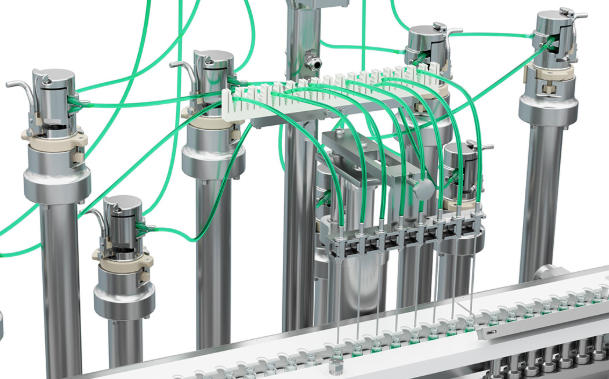
Side‑by‑Side Customer‑Oriented Comparison
The table below summarizes the relative strengths of key suppliers from a buyer's perspective (qualitative assessment based on public information). [linkedin]
| Manufacturer | Best For | Reliability (User Perception) | Service Reach (Global/LatAm) | Flexibility & Changeover | Price Level |
| Syntegon | Large vaccine & biologics plants | High | Strong | High | $$$$ |
| IMA | Multi‑format pharma portfolios | High | Strong | High | $$$ |
| Bausch+Strobel | High‑value injectables | Very high | Good | Medium | $$$$ |
| Groninger | Biologics & specialty products | Very high | Good | High | $$$$ |
| Truking | Cost‑effective full lines | Medium‑high | Growing | Medium‑high | $$–$$$ |
| Tofflon | Turnkey sterile solutions | Medium‑high | Growing | Medium‑high | $$–$$$ |
| I‑Dositecno (etc.) | Niche / compact systems | Medium‑high | Regional | High | $$–$$$ |
This view helps B2B buyers quickly match supplier profiles to their own project needs and budget constraints.
Global Market Trends Shaping Argentine Projects
Growth of Injectable and Biologics Filling
Recent analyses show that injectable liquid filling machines could reach around USD 14.5 billion by 2035, with pharmaceuticals capturing over 40% of demand by 2025. [finance.yahoo]
Key consequences for Argentine and global buyers include:
- Medium‑volume machines take a leading share because they balance capacity and flexibility. [finance.yahoo]
- Servo‑driven pump systems are gaining adoption thanks to precise dosing, lower product loss, and broad vial compatibility. [finance.yahoo]
- The shift toward personalized medicine and smaller batches makes flexible filling solutions more attractive to both large and mid‑size manufacturers. [linkedin]
Automation and Advanced Control in Filling Lines
Automation has become a standard expectation. Fully automated systems already represent more than 65% of new installations in pharmaceutical filling and sealing equipment, driven by contamination control and efficiency targets. [linkedin]
For Argentine producers, this trend implies:
- Investment in robotic handling, integrated vision inspection, and data‑rich HMIs. [linkedin]
- Designing factory layouts and utilities from the outset to support higher levels of automation. [everhealgroup]
This reinforces the value of working with partners that understand both equipment technology and plant‑level engineering.
How Ningbo Everheal Supports Top‑Tier Vial Filling Projects
Beyond Machines – Integrated Plant Layout and Utilities
Ningbo Everheal Medical Equipment Co. is a Chinese supplier specialized in pharmaceutical equipment, high‑purity water systems, and sterile processing utilities. Everheal's offering goes beyond standalone machines and includes: [linkedin]
- Purified water systems and pure steam generators designed for GMP‑compliant pharma plants. [everhealgroup]
- Pharmaceutical filling equipment for vials, soft bags, prefilled syringes, and bottles, tailored to different formulation types. [everhealgroup]
- Complete pharmaceutical production line solutions, including engineering design, equipment integration, installation, and commissioning. [everhealgroup]
By combining utilities, filling, sterilization, and layout planning, Everheal helps global buyers—including those in Latin America—build lines into which large OEMs' machines can integrate efficiently.
Customized Factory Layouts for Vial Filling Lines
For a typical vial filling project in Argentina or Latin America, Everheal can help you:
1. Define production requirements: annual vial volume, batch sizes, and product mix.
2. Design the cleanroom and process flow: from raw material receipt, compounding, and filtration to filling, capping, inspection, and secondary packaging.
3. Integrate water and steam systems (pretreatment, RO, EDI, pure steam, WFI loops) sized to support the chosen filling line. [linkedin]
4. Select and integrate vial filling machines from appropriate OEMs, based on performance, budget, and regulatory needs. [everhealgroup]
5. Support validation and documentation, helping the project pass local and international regulatory inspections.
This turnkey, layout‑first approach is especially valuable for buyers who do not maintain large internal engineering teams but still need to meet stringent quality and compliance requirements.
Practical Steps – How to Choose the Right Vial Filling Supplier for Your Project
Step 1 – Map Your Product and Capacity Profile
Begin with a clear definition of your product strategy:
- Decide whether you focus on high‑volume vaccines or small‑batch biologics and specialty injectables.
- Define current and future vial sizes and dose volumes.
- Clarify whether you expect frequent changeovers or mostly long production campaigns.
These elements will narrow the shortlist between high‑end European OEMs and more cost‑effective Chinese or regional suppliers, while also guiding the line design. [linkedin]
Step 2 – Evaluate Line Integration and Utilities, Not Just the Filler
A vial filler cannot operate in isolation. You should carefully assess:
- Water treatment, WFI, and pure steam systems sized for your actual throughput. [everhealgroup]
- Sterilization and depyrogenation equipment such as tunnels and autoclaves integrated into the line. [everhealgroup]
- Layout and material/personnel flows to maintain sterility and comply with inspections.
Working with a solution provider like Everheal allows you to treat the entire line and plant as a unified system rather than a set of discrete machines. [everhealgroup]
Step 3 – Compare Total Cost of Ownership Over 5–10 Years
Instead of focusing only on purchase price, evaluate long‑term impacts:
- Energy and utility consumption of the filling equipment and supporting systems. [finance.yahoo]
- Product losses due to inaccurate dosing or higher reject rates. [yundufillingmachine]
- Service and spare parts availability, lead times, and pricing.
- Future scalability and upgrade paths, such as the potential to add isolators or robotics later.
A slightly higher upfront investment integrated into a well‑engineered layout can deliver a more favorable lifecycle cost profile than a cheaper machine in a sub‑optimal setup.
Clear Call to Action – Plan Your Next Vial Filling Project with Everheal
If you are planning or upgrading a vial filling line in Argentina or other markets, you do not need to evaluate equipment in isolation. By collaborating with Ningbo Everheal Medical Equipment Co., you gain a partner who:
- Understands GMP‑compliant pharma utilities and filling processes in depth. [linkedin]
- Can design custom factory layouts, integrate suitable vial filling equipment, and deliver turnkey production lines from concept to commissioning. [everhealgroup]
- Helps you balance performance, compliance, and budget across the full lifecycle of your investment.
You can contact Everheal to discuss upcoming projects, request a preliminary layout proposal, or benchmark different vial filling solutions before making a final capital expenditure decision. This early engagement allows you to avoid design mistakes, secure better TCO, and accelerate time to production. [everhealgroup]
Contact us to get more information!
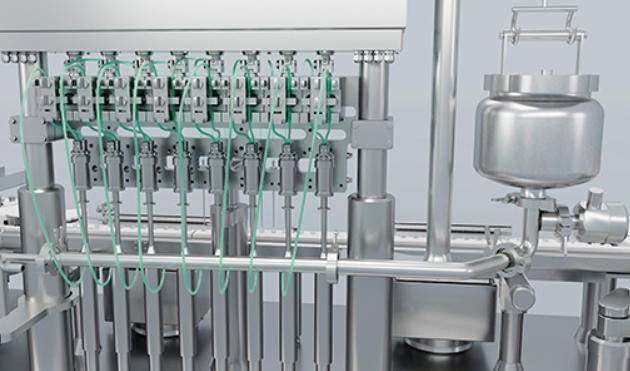
FAQs – Vial Filling Machines, Argentina, and Everheal
Q1: Why is Argentina an important market for vial filling equipment?
A1: Argentina hosts a growing injectable, vaccine, and biologics sector that requires modern aseptic filling lines, making it a representative market for Latin American pharma investments. [linkedin]
Q2: Who are considered top vial filling machine manufacturers serving Argentina?
A2: Leading global suppliers include Syntegon, IMA, Bausch+Strobel, Groninger, Truking, Tofflon, and specialized brands like I‑Dositecno. [makwell]
Q3: What trends are shaping demand for pharmaceutical filling equipment globally?
A3: Rising injectable and biologics volumes, the shift to medium‑volume flexible machines, and increased automation and advanced control capabilities are the main trends. [finance.yahoo]
Q4: What makes Ningbo Everheal different from a traditional machine vendor?
A4: Everheal combines high‑purity water and steam systems, filling equipment, sterilization technologies, and complete production line design, enabling genuine turnkey plant solutions. [linkedin]
Q5: How should a new pharma plant prioritize investments for a vial filling line?
A5: Start with a clear product and capacity profile, then design layout and utilities around it, and finally select vial filling equipment that fits your long‑term TCO, automation, and regulatory strategy. [everhealgroup]
References
1. Argentina Pharmaceutical Vial Filling Machine Market Size 2026 – Leading Players and Trends.
https://www.linkedin.com/pulse/argentina-pharmaceutical-vial-filling-machine-market-dmore [linkedin]
2. everheal – Trust EVERHEAL – Your Reliable Partner in Pharmaceutical & Medical Equipment Solutions.
https://www.everhealgroup.com [everhealgroup]
3. Everheal – Pharmaceutical Filling Equipment Solutions.
https://www.everhealgroup.com/pharmaceutical-filling-equipment.html [everhealgroup]
4. Everheal – Customized Pharmaceutical Production Line Manufacturers.
https://www.everhealgroup.com/pharmaceutical-production-line.html [everhealgroup]
5. Everheal | LinkedIn – Company Profile.
https://www.linkedin.com/company/everheal-medical [linkedin]
6. Top 10 Vial Filling Machine Manufacturers Today – Makwell.
https://makwell.com/top-10-vial-filling-machine-manufacturers-today/ [makwell]
7. World Top 10 Vial Filling Machine Manufacturers – Yundu.
https://yundufillingmachine.com/world-top-10-vial-filling-machine-manufacturers/ [yundufillingmachine]
8. Injectable Liquid Filling Machines Market Expected to Grow – Forecast to 2035.
https://finance.yahoo.com/news/injectable-liquid-filling-machines-market-143000121.html [finance.yahoo]
9. Pharmaceutical Filling and Sealing Equipment Market – Global Outlook.
https://www.linkedin.com/pulse/pharmaceutical-filling-sealing-equipment-market-global-wlgle [linkedin]


