Content Menu
● Russia's demand for pure steam
● What to expect from leading manufacturers
● Everheal: China-based partner for Russian projects
● International pure steam generator brands active in Russia
● Local Russian engineering capabilities for steam systems
● Technical features to compare when selecting suppliers
● How Everheal supports Russian buyers
● Conclusion
● FAQ
>> 1: What is a pharmaceutical pure steam generator?
>> 2: How do Pure Steam Generator Manufacturers And Suppliers ensure regulatory compliance?
>> 3: Why choose Everheal for Russian pure steam projects?
>> 4: What capacities are available from leading pure steam generator brands?
>> 5: How should Russian buyers compare different Pure Steam Generator Manufacturers And Suppliers?
● Citations:
Russia's pharmaceutical and biopharmaceutical sectors are investing heavily in sterilization and critical utilities, driving strong demand for reliable Pure Steam Generator Manufacturers And Suppliers that can meet global GMP and pharmacopeia standards. For global buyers, understanding the landscape of local Russian players and international Pure Steam Generator Manufacturers And Suppliers serving the Russian market is essential for building compliant, future-proof facilities.[1][2]
Russia's demand for pure steam
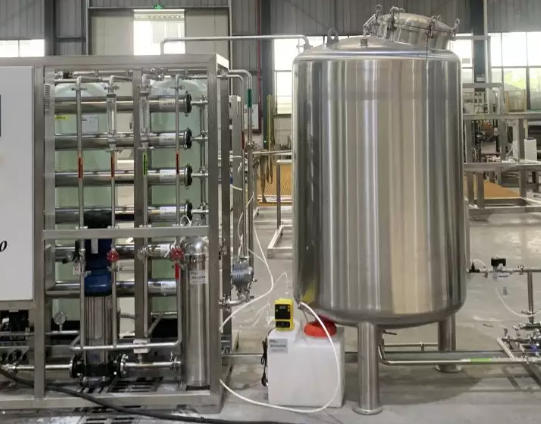
Russia's healthcare, vaccine, and biotech programs require high‑purity, pyrogen‑free steam for sterilization in place (SIP), autoclaves, lyophilizers, and cleanroom utilities. As a result, Pure Steam Generator Manufacturers And Suppliers active in Russia must design systems that comply with EU, USP, and local GOST requirements while also considering energy efficiency and lifecycle costs.[3][4][2]
The country's nuclear, chemical, and food industries also use pure or clean steam solutions, further broadening the opportunities for Pure Steam Generator Manufacturers And Suppliers who can customize systems for complex, multi‑industry projects. Many international OEMs collaborate with Russian engineering and EPC companies to deliver turnkey pure steam and water-for-injection (WFI) packages for greenfield plants and modernization projects.[4][2][1]
What to expect from leading manufacturers
When evaluating Pure Steam Generator Manufacturers And Suppliers for projects in Russia, buyers generally focus on several core capabilities. The most competitive manufacturers combine robust mechanical design with deep regulatory and validation experience.[3][4]
Key expectations include:[2][4][3]
- Consistent production of pharmaceutical‑grade pure steam that meets global pharmacopeia requirements (USP, EP, JP, CP).
- Hygienic design with pharmaceutical‑grade stainless steel, double‑tube‑sheet evaporators, sloped piping, and minimized dead legs.
- Advanced control systems with PLC/SCADA, PID loops for pressure and level control, and data integrity features that support 21 CFR Part 11.
- Comprehensive documentation packages: FAT, SAT, IQ/OQ/PQ support, and lifecycle service.
- Flexibility in configuration (vertical or horizontal units, skid‑mounted solutions, modular systems) to suit different plant layouts and space constraints.
Everheal: China-based partner for Russian projects
Among global Pure Steam Generator Manufacturers And Suppliers serving Russia, Everheal stands out as a specialized Chinese partner focused on pharmaceutical utilities and turnkey lines. Based in Xiangshan, Ningbo, Everheal designs and manufactures pure steam generators, purified water systems, multi‑effect distillation units, liquid filling and sealing machines, and sterilization equipment for global GMP facilities.[5][6][7]
Everheal's pure steam generators are manufactured from pharmaceutical‑grade stainless steel and engineered to deliver consistent, contaminant‑free steam for critical applications in sterile production, laboratories, and hospitals. Each system is produced under strict manufacturing processes and quality checks, with every generator undergoing testing and inspection before shipment to ensure stable performance in continuous operation.[6][5]
Everheal does more than sell standalone equipment:
- Turnkey utilities and layout support. The company provides complete planning for purified water, WFI, and pure steam systems, integrated with process equipment and cleanroom requirements for new or expanding plants.[7][5]
- On‑site engineering and commissioning. Experienced engineers are dispatched to customer facilities to supervise installation, optimize configuration, and train local operators, which is particularly valuable for remote or first‑time sterile projects in Russia and CIS.[5][7]
- Global project experience. With more than 10 years of projects in pharmaceutical water and steam systems, Everheal supports clients in aligning with GMP, validation, and long‑term maintenance needs.[6][5]
For Russian buyers looking to balance cost, compliance, and service, partnering with Everheal as one of the Pure Steam Generator Manufacturers And Suppliers can provide flexible design, competitive pricing, and access to full production-line solutions.[7][5][6]
International pure steam generator brands active in Russia
Although Russia has strong local engineering capabilities, many facilities rely on international Pure Steam Generator Manufacturers And Suppliers for high‑end biopharmaceutical systems. These OEMs often work with Russian EPC firms and integrators to deliver complete utility rooms, skids, and documented validation packages.[4][2][3]
- MECO – Biopharmaceutical pure steam generators
MECO designs biopharmaceutical‑grade pure steam and clean steam generators used worldwide in pharmaceutical and biotech manufacturing. Their units are built to meet USP, EP, JP, and CP standards and feature a three‑stage separation system with vertical disengagement, stainless steel baffles, and demisters to ensure high dryness and separation of impurities.[3]
MECO offers one of the broadest capacity ranges in the industry, from about 90 kg/h up to more than 8,000 kg/h, making the brand suitable for both pilot plants and large vaccine or biosimilar facilities in Russia.[3]
- Aqua‑Chem – BioPharm pure steam generation
Aqua‑Chem's Pure Steam Generators are widely used for pharmaceutical, biotechnology, hospital, and laboratory applications where consistent high‑quality pure steam is required. Their systems employ double‑tube‑sheet evaporators to avoid cross‑contamination of product and utilities, and are designed for easy validation with standard IQ/OQ/PQ support packages.[4]
Aqua‑Chem offers nine standard units spanning from roughly 675 lb/h to 10,150 lb/h of pure steam, while also providing custom configurations to meet specific Russian plant requirements.[4]
- Syntegon – Distillation-based pure media systems
Syntegon supplies complete distillation‑based systems for pharmaceutical‑grade pure steam and WFI, offering flexible, turnkey solutions that can be adapted for Russian manufacturing sites. Their pure media systems integrate seamlessly with process lines, enabling facilities to standardize on a single partner for both utilities and process technology.[2]
These international brands typically support Russian clients through networks of local partners that provide service, spare parts, and front‑line technical support, complementing their roles as global Pure Steam Generator Manufacturers And Suppliers.[2][3][4]
Local Russian engineering capabilities for steam systems
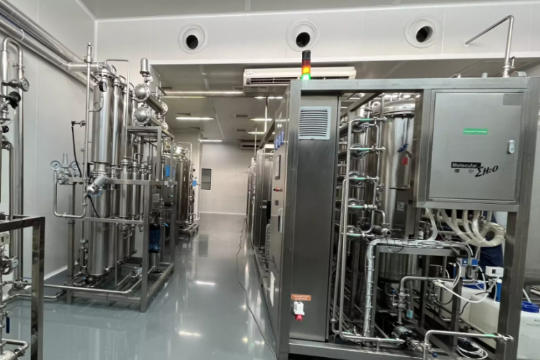
While pure steam for pharmaceutical use is a specialized segment, Russia has long‑standing expertise in designing large‑scale steam generators for power and industrial applications. The mechanical engineering division of major Russian corporations, for example, has produced more than 220 steam generators and reactor components for nuclear plants worldwide, demonstrating deep know‑how in pressure equipment and heat‑exchange design.[1]
For pharmaceutical end users, this means local engineering firms can often integrate imported pure steam generators into Russian‑made skids, piping, and control systems, achieving a balanced solution. Many of these integrators partner with international Pure Steam Generator Manufacturers And Suppliers and with companies like Everheal, combining imported, validated core units with locally manufactured accessories, platforms, and distribution loops.[1][5][7][2]
Technical features to compare when selecting suppliers
Selecting among different Pure Steam Generator Manufacturers And Suppliers for a Russian project should be based on a clear technical and regulatory checklist. Focusing on the right features helps avoid long‑term problems in sterilization performance, validation, and maintenance.[5][2][3][4]
Important aspects include:[5][2][3][4]
- Steam quality and separation. Look for multi‑stage separation, demisters, and proven designs ensuring high dryness and absence of endotoxins and non‑condensable gases.
- Material and surface finish. Pharmaceutical‑grade stainless steel with appropriate surface roughness reduces the risk of biofilm formation and makes cleaning easier.
- Control strategy. Robust PLCs with PID control for pressure and level, alarm management, and data logging are essential for traceability and smooth operation.
- Capacity and scalability. Pure steam generators should match current load while allowing margin for future expansion; modular designs from leading Pure Steam Generator Manufacturers And Suppliers simplify upgrades.
- Validation and documentation. Availability of FAT/SAT, IQ/OQ/PQ documentation, weld records, and material certificates is crucial for Russian GMP inspectors and international audits.
- Service and spare parts. In a country as large as Russia, the ability to access spare parts and trained service personnel quickly can greatly reduce downtime.
How Everheal supports Russian buyers
For Russian pharmaceutical companies, vaccine plants, and contract manufacturing organizations, working with Everheal as one of the Pure Steam Generator Manufacturers And Suppliers offers a combination of equipment supply and engineering support. Everheal's pure steam generators are designed to integrate tightly with purified water systems, multi‑effect distillers, sterilization units, and filling lines, enabling customers to build complete sterile production platforms with a single partner.[6][7][5]
Everheal's typical service package for international customers includes:[7][6][5]
- Process analysis and utility load calculation for pure steam, purified water, and WFI.
- System design, equipment selection, and layout planning for utility rooms and distribution loops.
- Fabrication of pure steam generators and related equipment under strict quality control.
- On‑site supervision for installation and commissioning, along with operator training.
- After‑sales support, troubleshooting, and recommendations for preventive maintenance and spare parts.
By combining competitive pricing with strong project experience and on‑site engineering, Everheal positions itself among the global Pure Steam Generator Manufacturers And Suppliers capable of reliably serving the Russian market.[6][7][5]
Conclusion
Russia's growing pharmaceutical, biotech, and healthcare sectors are steadily increasing their demand for reliable Pure Steam Generator Manufacturers And Suppliers capable of delivering validated, pharmaceutical‑grade utilities. International OEMs like MECO, Aqua‑Chem, and Syntegon, together with specialized partners such as Everheal, offer Russian buyers a wide choice of pure steam solutions that can be tailored to local regulatory requirements, capacity needs, and budget constraints.[2][7][3][4][5]
By focusing on steam quality, hygienic design, automation, validation support, and lifecycle service, project owners in Russia can select Pure Steam Generator Manufacturers And Suppliers that not only meet today's compliance standards but also support long‑term growth and modernization of their production facilities.[3][4][5][2]
FAQ
1: What is a pharmaceutical pure steam generator?
A pharmaceutical pure steam generator is a specialized unit that converts purified water into high‑purity, pyrogen‑free steam used for sterilizing equipment, pipelines, and vessels in GMP environments. Unlike industrial boilers, it is built with pharmaceutical‑grade materials and separation systems to ensure the steam meets pharmacopeia standards for critical applications.[4][5][3]
2: How do Pure Steam Generator Manufacturers And Suppliers ensure regulatory compliance?
Pure Steam Generator Manufacturers And Suppliers design equipment according to standards such as USP, EP, JP, CP, ASME, and cGMP, and use validated components and hygienic construction principles. They also provide comprehensive documentation, FAT/SAT support, and IQ/OQ/PQ protocols to help end users in Russia demonstrate compliance during inspections and audits.[2][3][4]
3: Why choose Everheal for Russian pure steam projects?
Everheal combines the role of Pure Steam Generator Manufacturers And Suppliers with turnkey engineering, supplying pure steam generators, purified water systems, distillation units, filling machines, and sterilizers from its base in Ningbo, China. With strict quality control, on‑site installation supervision, and over 10 years of pharmaceutical project experience, Everheal helps Russian customers implement reliable, cost‑effective pure steam and water systems.[7][5][6]
4: What capacities are available from leading pure steam generator brands?
Leading Pure Steam Generator Manufacturers And Suppliers cover a wide capacity range, from a few dozen kilograms per hour suitable for laboratories to more than 8,000–10,000 kg/h for large‑scale biopharmaceutical plants. MECO, for example, offers sizes from around 90 kg/h to over 8,100 kg/h, while Aqua‑Chem provides standard units from about 675 lb/h to 10,150 lb/h, with custom options for special projects.[3][4]
5: How should Russian buyers compare different Pure Steam Generator Manufacturers And Suppliers?
Russian buyers should compare Pure Steam Generator Manufacturers And Suppliers based on steam quality, separation design, material and surface finish, control systems, validation support, and available local service. Considering total cost of ownership—including energy efficiency, maintenance requirements, spare‑parts availability, and flexibility for future expansion—helps ensure the selected supplier will remain a reliable partner throughout the facility's lifecycle.[5][4][2][3]
Citations:
[1](https://rosatommd.ru/en/services/nuclear.html)
[2](https://www.syntegon.com/solutions/pharma/distillation-based-pure-media-systems/)
[3](https://www.meco.com/product/biopharmaceutical-pure-steam-generators/)
[4](https://aqua-chem.com/pure-steam-generation2/)
[5](https://www.everhealgroup.com/pure-steam-generator.html)
[6](https://www.everhealgroup.com/pure-steam-generator-manufacturer.html)
[7](https://www.everhealgroup.com)
[8](https://www.volframindia.com/hot-water-steam-generator-manufacturers-in-russia.php)
[9](https://www.bwt-pharma.com/en/application-overview/pure-steam/)
[10](https://en.paulmueller.com/pharmaceutical-manufacturing-equipment/pure-steam-generator)
[11](https://www.wemacpharma.com/pure-steam-generator415)
[12](https://www.everhealgroup.com/top-pharmaceutical-equipment-manufacturers-and-suppliers-in-russia.html)
[13](https://www.pharmatechcn.com/shop/pure-steam-generator-1)
[14](https://www.everhealgroup.com/top-10-pure-steam-generator-manufacturers-in-china.html)
[15](https://m.russian.pharmawaterequipment.com/sale-42732626d-psg-pure-steam-generator-pure-steam-generators-pharmaceutical-pharmaceutical-plant-steam-production.html)


