Content Menu
● Understanding Pharmaceutical Water Treatment Systems
● The Rising Demand in South Africa
● Everheal: A Global Leader in Pharmaceutical Equipment Solutions
>> Key Product Portfolio
● Leading Pharmaceutical Water Treatment Equipment Manufacturers in South Africa
>> 1. Everheal (China)
>> 2. Veolia Water Technologies South Africa
>> 3. Aqua Filsep
>> 4. AVK Southern Africa
>> 5. Watericon
● Key Features of Modern Pharmaceutical Water Treatment Equipment
● Regulatory Standards and Compliance
● Benefits of Partnering with Reliable Manufacturers
● Conclusion
● FAQs
>> (1) What standards must pharmaceutical water meet?
>> (2) What is the difference between purified water and WFI?
>> (3) How often should water systems be validated?
>> (4) Why choose Everheal for water treatment systems?
>> (5) How can South African companies benefit from imported systems?
In the growing pharmaceutical industry, maintaining water purity and system reliability is paramount for drug safety and manufacturing efficiency. South Africa, being one of the fastest-developing pharmaceutical markets in Africa, has witnessed a rising demand for advanced pharmaceutical water treatment equipment manufacturers and suppliers that can deliver global-quality, GMP-compliant solutions. These manufacturers provide essential systems such as purified water preparation units, multi-effect distillers, pure steam generators, and more — all designed to support the stringent production standards of modern pharmaceutical operations.
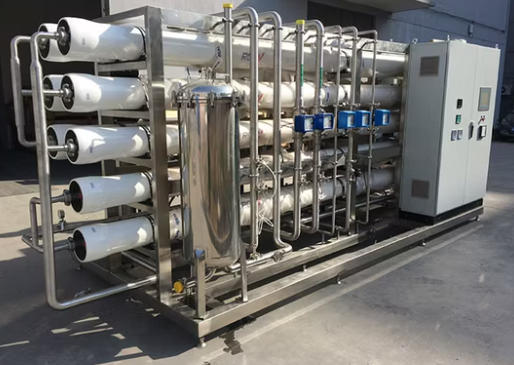
Understanding Pharmaceutical Water Treatment Systems
Pharmaceutical water treatment systems are specialized setups engineered to generate high-purity water used in the production of medicines, vaccines, and injectable products. These systems remove impurities such as dissolved solids, organic compounds, bacteria, and endotoxins, ensuring the final product meets international pharmacopoeia standards like USP, EP, and CP.
Typical systems include:
- Purified water generation units (PW) using reverse osmosis and electrodeionization technologies.
- Water for Injection (WFI) systems, produced through multi-effect distillation or vapor compression.
- Pure steam generators (PSG) designed for sterilization and clean-in-place (CIP) operations.
- Storage and distribution loops that maintain microbial control and consistent quality.
The design and performance of these systems are critical, not only for ensuring product safety but also for optimizing manufacturing productivity and compliance.
The Rising Demand in South Africa
South Africa's pharmaceutical manufacturing sector is expanding rapidly due to growing healthcare needs, supportive government policies, and an increasing focus on local production. Local and foreign investors are establishing GMP-compliant plants that require advanced pharmaceutical water treatment equipment manufacturers to supply reliable systems and engineering expertise.
Some driving factors behind this demand include:
- The expansion of domestic pharmaceutical production facilities.
- Greater emphasis on export-oriented pharmaceutical manufacturing.
- Stricter compliance with WHO and PIC/S GMP standards.
- Investment in technology transfer partnerships with global companies.
As a result, leading Chinese and international equipment manufacturers, including Everheal, have gained strong recognition in South Africa for offering turnkey solutions that meet regulatory and operational demands.
Everheal: A Global Leader in Pharmaceutical Equipment Solutions
Everheal, a Chinese company specializing in pharmaceutical equipment manufacturing, has established itself as a trusted global provider of high-quality water treatment and production line solutions. With decades of experience, Everheal focuses on delivering advanced systems for purified water, pure steam, and sterile liquid processes under strict GMP and ISO standards.
Key Product Portfolio
1. Purified Water Preparation Systems
Designed for consistent water quality, using reverse osmosis and EDI (electrodeionization) technology, ensuring efficient and low-maintenance operation.
2. Pure Steam Generators
Ideal for sterilization and cleanroom applications, providing high-purity, pyrogen-free steam to maintain process integrity.
3. Multi-Effect Distillation Units
Producing Water for Injection (WFI) that meets global pharmacopoeia standards, with high energy efficiency and automatic control.
4. Liquid Filling and Sealing Machines
Suitable for aseptic production environments, ensuring product containment and contamination-free filling.
5. Sterilization Systems
Including autoclaves, steam sterilizers, and CIP/SIP modules that comply with FDA and GMP requirements.
6. Custom Engineering and Layout Design
Everheal provides complete factory layout planning and turnkey production line design to meet each client's unique workflow and capacity needs.
These comprehensive solutions enable South African pharmaceutical companies to achieve seamless plant integration, cost control, and long-term operational reliability.
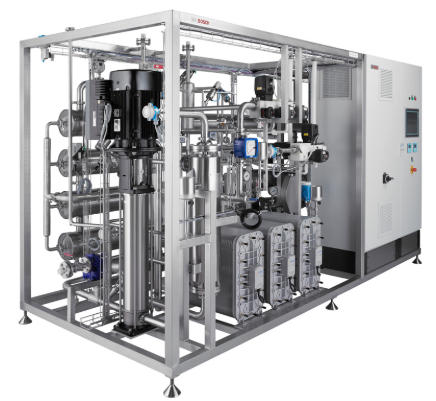
Leading Pharmaceutical Water Treatment Equipment Manufacturers in South Africa
While South Africa imports much of its advanced pharmaceutical equipment, several local and regional suppliers partner with international brands to deliver installation, validation, and after-sales support. Below is a look at prominent names influencing the sector:
1. Everheal (China)
As a global leader, Everheal collaborates with South African pharmaceutical firms by offering complete water and sterilization solutions with end-to-end project management. Their equipment ensures compliance with SAHPRA and international GMP standards.
2. Veolia Water Technologies South Africa
Veolia is a well-established name providing sustainable water and wastewater treatment systems, including purified water generation and distribution equipment for pharmaceutical facilities.
3. Aqua Filsep
A local specialist in water purification technology, Aqua Filsep develops customized RO and EDI-based systems suitable for laboratory and pharmaceutical applications.
4. AVK Southern Africa
AVK provides robust valves and flow control systems essential for pharmaceutical water distribution networks, ensuring hygienic performance and long service life.
5. Watericon
This South African company offers complete water treatment solutions, including RO systems and process water plants, backed by strong engineering support and maintenance services.
Key Features of Modern Pharmaceutical Water Treatment Equipment
Modern pharmaceutical water treatment equipment manufacturers emphasize efficiency, compliance, and automation. Some of the essential features include:
- Automated control systems with PLC and HMI interfaces for real-time monitoring and data recording.
- High-grade stainless steel fabrication (SS316L) with orbital welding to prevent contamination.
- Energy optimization designs for minimal water and power consumption.
- Modular construction for easy installation and scalability.
- Compliance validation documentation including FAT, SAT, IQ, OQ, and PQ protocols.
Such advancements allow pharmaceutical manufacturers to achieve reliable performance while meeting global regulatory requirements.
Regulatory Standards and Compliance
Water used in pharmaceutical production must comply with multiple international standards, including:
- United States Pharmacopeia (USP) — for Purified Water and Water for Injection.
- European Pharmacopoeia (EP) — for quality and microbial limits.
- World Health Organization (WHO) — for GMP compliance in water system design.
- South African Health Products Regulatory Authority (SAHPRA) — for validation and licensing.
Compliance is achieved through proper system design, material selection, documentation, and continuous monitoring of system performance.
Benefits of Partnering with Reliable Manufacturers
Choosing the right pharmaceutical water treatment equipment manufacturers brings several long-term advantages:
- Consistent water quality meeting international pharmacopoeia standards.
- Reduced operational downtime and maintenance costs.
- Improved product safety and regulatory compliance.
- Greater confidence during GMP audits and inspections.
- Long-term after-sales support and spare parts availability.
Through innovative technology and expert engineering, companies like Everheal help boost productivity, efficiency, and brand reputation in the pharmaceutical sector.
Conclusion
The South African pharmaceutical industry is growing rapidly and investing heavily in modern infrastructure to meet both domestic and export market demands. As a result, the role of experienced pharmaceutical water treatment equipment manufacturers has become more crucial than ever. Companies like Everheal bring high standards of engineering, quality, and compliance, supporting pharmaceutical producers in building efficient, compliant, and future-ready facilities. With global collaboration and advanced manufacturing systems, the future of pharmaceutical production in South Africa looks both sustainable and globally competitive.
FAQs
(1) What standards must pharmaceutical water meet?
Pharmaceutical water must comply with USP, EP, and WHO GMP standards, ensuring parameters such as conductivity, microbial count, and TOC are within specified limits for Purified Water or Water for Injection.
(2) What is the difference between purified water and WFI?
Purified water is mainly used for non-parenteral products, while Water for Injection (WFI) is distilled or vapor-compressed water used in sterile formulations and injectable drug production.
(3) How often should water systems be validated?
Water systems should be validated initially upon installation and revalidated periodically or after any major maintenance, modification, or deviation found during monitoring.
(4) Why choose Everheal for water treatment systems?
Everheal offers fully compliant, energy-efficient, and customizable pharmaceutical water treatment systems with factory layout design, documentation support, and turnkey project services worldwide.
(5) How can South African companies benefit from imported systems?
By partnering with global pharmaceutical water treatment equipment manufacturers, local companies gain access to cutting-edge technology, reduced setup time, and compliance-ready systems that meet SAHPRA and international regulations.


