Content Menu
● Russia's pharma water market landscape
● Pharma water quality types and applications
● Core technologies used by leading suppliers
● Russian engineering companies as local partners
● Global pharma water specialists accessible to Russian buyers
● Chinese OEMs and Everheal's positioning
● Typical pharma water and utility line design
● Automation, digitalization, and data integrity
● Total cost of ownership and sustainability
● Cooperation models between Everheal and Russian partners
● Conclusion
● FAQ
>> 1. What makes pharma water systems different from standard industrial water treatment?
>> 2. Do Russian plants need both PW and WFI systems?
>> 3. How can buyers reduce the operating cost of pharma water systems?
>> 4. Why is cooperation with local Russian partners important for foreign suppliers?
>> 5. What advantages does Everheal offer Russian pharmaceutical manufacturers?
● Citations:
Russia's pharmaceutical industry is rapidly upgrading its clean utility infrastructure, creating strong demand for reliable Pharmaceutical Water Trearment Equipment Manufacturers And Suppliers that can deliver GMP‑compliant purified water, WFI, and pure steam systems. Pharmaceutical investors, CMOs, and local drug makers all need partners that combine advanced technology with solid regulatory understanding and practical project execution in the Russian context.[1][2]
This article explains the Russian market environment, key water‑system technologies, representative supplier types, and how Chinese OEMs such as Everheal can cooperate with Russian partners on turnkey utilities and production‑line solutions. The goal is to help buyers and engineering teams choose the right Pharmaceutical Water Trearment Equipment Manufacturers And Suppliers for both new plants and expansions in Russia.[3][4]
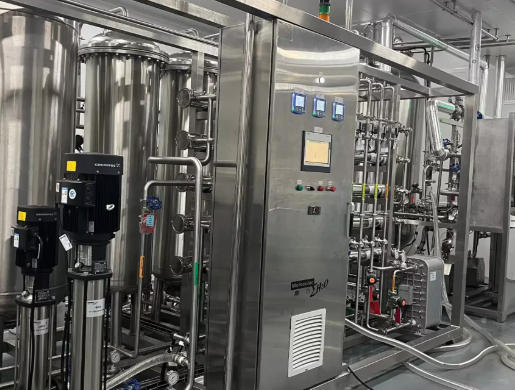
Russia's pharma water market landscape
Russia faces a general modernization push in water treatment as aging infrastructure and variable raw‑water quality challenge both municipal and industrial users. Pharmaceutical sites, which require stable, validated high‑purity utilities, are therefore under strong pressure to move from generic industrial water treatment to dedicated pharmaceutical systems that satisfy international guidelines.[2][1]
Local engineering companies have installed hundreds of automated industrial water treatment facilities across the Russian Federation, many of which serve sectors such as energy, chemicals, and food. When these engineering capabilities are combined with the expertise of Pharmaceutical Water Trearment Equipment Manufacturers And Suppliers focused on pharma, Russian plants can achieve robust, compliant solutions that are still adapted to local water conditions and regulations.[7][1][2][3]
Pharma water quality types and applications
Pharmaceutical Water Trearment Equipment Manufacturers And Suppliers design systems around several standardized water qualities, each used for specific applications in drug manufacturing. Understanding these categories is essential before selecting any vendor.
- Purified water (PW) is used for manufacturing active substances, non‑parenteral finished products, and as a feed for WFI generation; it requires tight control of conductivity, TOC, and microbial counts.[10][11]
- Water for injection (WFI) is a higher‑purity quality used for parenteral products such as injections and infusions and must comply with strict endotoxin and microbial limits defined in pharmacopeias.[11][12]
In addition to water, pure steam is critical for sterilizing equipment, vessels, and piping in contact with sterile products, and it must be generated from high‑quality feed water using hygienic equipment. Many Pharmaceutical Water Trearment Equipment Manufacturers And Suppliers offer integrated packages that include PW, WFI, and pure steam generation along with storage and distribution loops.[13][14][3]
Core technologies used by leading suppliers
Modern Pharmaceutical Water Trearment Equipment Manufacturers And Suppliers serving Russia typically apply a combination of membrane, ion‑exchange, and thermal processes to achieve the required water quality. For PW, a common process flow includes pretreatment, reverse osmosis, and polishing such as EDI. For WFI, options include distillation (multiple‑effect or vapor compression) or advanced membrane‑based systems approved by current regulations.[12][10]
Key technology blocks include:
- Pretreatment: multimedia filters, activated carbon filters, softening, cartridge filtration, and chemical dosing adapted to Russian surface and groundwater characteristics.[15][1]
- Membrane desalination: single or double‑pass reverse osmosis plus ultrafiltration for particle and microorganism control.[10][12]
- Polishing: electrodeionization (EDI) or mixed‑bed ion exchange to further reduce ionic contaminants in PW systems.[5][10]
- Distillation: multiple‑effect and vapor‑compression stills for WFI production, often chosen for their robustness and regulatory track record.[12][13]
Pharmaceutical Water Trearment Equipment Manufacturers And Suppliers usually integrate these technologies into skid‑mounted systems with sanitary stainless steel piping, hygienic design, and advanced automation for monitoring and control.[14][10]
Russian engineering companies as local partners
Several Russian engineering and water‑technology firms act either as direct suppliers or as integration partners for Pharmaceutical Water Trearment Equipment Manufacturers And Suppliers. They bring deep knowledge of local water quality, permitting, and project execution.
- Water Innovative Technologies (GK‑VIT) specializes in design, manufacture, and turnkey supply of industrial water treatment facilities across multiple sectors, including pharmaceutical applications.[2]
- Rusfilter, founded in the 1990s, is one of the most experienced Russian players in filtration and water purification, delivering projects across different industries and offering engineering and installation services.[7]
In addition, Russian exhibitors and companies at industrial trade fairs provide components and modular water‑treatment units that can be integrated into pharma projects, such as block‑modular water treatment plants and pumping stations. When these local capabilities are combined with high‑purity system design from specialized Pharmaceutical Water Trearment Equipment Manufacturers And Suppliers, Russian plants can secure both technical quality and responsive service.[6][9]
Global pharma water specialists accessible to Russian buyers
Global Pharmaceutical Water Trearment Equipment Manufacturers And Suppliers play an important role in Russia by providing standardized, validated solutions for PW, WFI, and pure steam, often via local agents or joint projects with Russian engineering houses. Their systems are typically designed according to EU GMP, US FDA expectations, and leading pharmacopeias.
- BWT Pharma & Biotech offers complete systems for purified water, water for injection, and pure steam, with well‑known brands for integrated skids and distribution loops.[16][3]
- Elettracqua provides high‑purity water, pure steam, and WFI systems for pharma, including design, construction, automation, and qualification support.[14]
- MECO focuses on distillation and membrane solutions for WFI and purified water used in biopharmaceutical plants, with detailed guidance on system selection and validation.[17][12]
These suppliers often collaborate with local water‑treatment and engineering firms in Russia, bridging the gap between global best practice and local implementation. For end users, this means that selecting Pharmaceutical Water Trearment Equipment Manufacturers And Suppliers is no longer only a question of geography but of technology, references, and support strategy.[4][1]
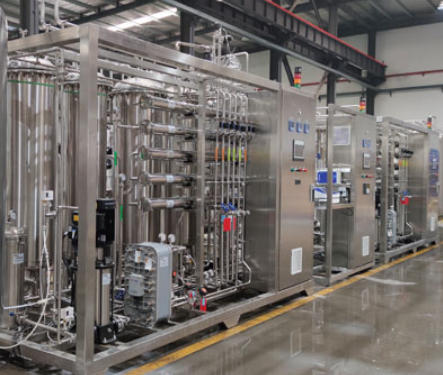
Chinese OEMs and Everheal's positioning
China has become a major source of sophisticated pharma equipment, including pharmaceutical water systems, pure steam generators, and liquid filling and sterilization lines. Many Chinese companies now act as global Pharmaceutical Water Trearment Equipment Manufacturers And Suppliers, offering competitive pricing while meeting international standards.[5]
Everheal fits into this landscape as a Chinese company focused on pharmaceutical equipment, offering purified water preparation systems, pure steam generators, multi‑functional distilled water machines, liquid filling and sealing machines, and sterilization systems as part of integrated plant solutions. (User description) For Russian partners, Everheal can provide not only equipment but also customized factory layout planning and full production‑line construction support, making it a one‑stop solution provider rather than a single‑machine vendor. (User description)
By collaborating with Russian engineering firms and installers, Everheal can adapt its systems to local requirements, support on‑site commissioning, and ensure that its Pharmaceutical Water Trearment Equipment Manufacturers And Suppliers offerings are fully compatible with Russian regulatory and operational expectations.[2][7]
Typical pharma water and utility line design
A typical high‑purity water project in a Russian pharmaceutical facility will follow a structured design approach. Pharmaceutical Water Trearment Equipment Manufacturers And Suppliers usually work from a user requirements specification (URS) to define capacities, quality targets, redundancy, and automation philosophy.
Typical design elements include:
- Detailed analysis of raw‑water quality and selection of pretreatment steps to ensure stable operation of downstream membranes and distillation units.[1][15]
- Capacity and redundancy planning (for example, N+1 basis for critical modules) to guarantee continuous production even during maintenance or failure events.[17][12]
- Hygienic layout with sloped piping, minimized dead legs, and properly designed recirculation loops to control biofilm formation.[11][12]
- Integration of PW, WFI, and pure steam systems with CIP/SIP stations and process equipment to create a complete sterile utility ecosystem.[13][14]
Everheal's product range aligns with these design principles by combining water preparation, pure steam generation, liquid filling and sealing, and sterilization into coordinated packages, simplifying interfaces for Russian end users. (User description)
Automation, digitalization, and data integrity
Automation and data integrity are now central when evaluating Pharmaceutical Water Trearment Equipment Manufacturers And Suppliers. Regulatory agencies expect continuous monitoring of critical parameters such as conductivity, TOC, temperature, pressure, and flow, along with reliable alarm handling and secure data storage.[12][14]
Modern systems use PLC or DCS architectures with HMI/SCADA interfaces, often designed to meet electronic records requirements and support audit trails and user access control. Advanced Pharmaceutical Water Trearment Equipment Manufacturers And Suppliers also offer remote diagnostics, preventive maintenance analytics, and integration with plant MES or batch systems, which helps Russian plants operate more efficiently and respond quickly to deviations.[14][17]
Total cost of ownership and sustainability
For Russian pharmaceutical manufacturers, the long‑term operating cost and sustainability of water systems are critical decision factors, especially given the energy intensity of distillation and the cost of water and wastewater management. Pharmaceutical Water Trearment Equipment Manufacturers And Suppliers therefore compete not only on compliance but also on total cost of ownership.
Energy‑saving features such as high‑recovery RO, heat‑recovery in distillation units, smart pump control, and optimized sanitization strategies can significantly reduce utility bills over time. Waste minimization through efficient concentrate management and better process control supports environmental goals and local regulatory obligations on wastewater discharges. Suppliers that can document these advantages clearly will have a competitive edge when working with Russian buyers.[8][1][10][13]
Cooperation models between Everheal and Russian partners
Everheal can work with Russian clients through several cooperation models that align with how advanced Pharmaceutical Water Trearment Equipment Manufacturers And Suppliers typically engage international markets. (User description)
- Turnkey utility packages: Everheal designs and fabricates complete PW, WFI, and pure steam systems, ships them skid‑mounted, and collaborates with Russian installers for final connections and commissioning. (User description)
- Integrated line delivery: Combining utilities with liquid filling, sealing, and sterilization equipment into a single package, simplifying project management and validation for Russian buyers. (User description)
- Joint engineering and layout planning: Early‑stage factory design support, including space planning for utility rooms, routing of PW/WFI loops, and expansion provisions.[5][12]
- After‑sales collaboration: Training local service partners and providing remote technical support to ensure long‑term reliability, spare‑parts availability, and rapid troubleshooting.[7][2]
These models allow Everheal to position itself as a flexible participant in Russia's network of Pharmaceutical Water Trearment Equipment Manufacturers And Suppliers, combining Chinese manufacturing strengths with Russian local presence and international quality standards.
Conclusion
Russia's pharmaceutical sector is steadily increasing its requirements for high‑purity water and clean utilities, and this shift is reshaping the landscape of Pharmaceutical Water Trearment Equipment Manufacturers And Suppliers active in the country. Local engineering expertise, global pharma‑water specialists, and capable Chinese OEMs such as Everheal together form a diversified supplier base that can deliver robust, compliant, and cost‑effective solutions for PW, WFI, and pure steam systems.[3][4][1][2]
For Russian buyers, success depends on selecting Pharmaceutical Water Trearment Equipment Manufacturers And Suppliers that combine strong process design, reliable automation, regulatory experience, and credible local service, rather than focusing solely on upfront price. Everheal, with its integrated portfolio of pharmaceutical water treatment equipment, pure steam generators, multi‑effect distilled water units, liquid filling and sealing lines, sterilization systems, and factory layout capabilities, is well placed to support Russian partners in building modern, GMP‑compliant facilities. (User description)[17][12]
FAQ
1. What makes pharma water systems different from standard industrial water treatment?
Pharma water systems must meet strict pharmacopeial specifications for conductivity, TOC, microbial counts, and endotoxins, and they are subject to GMP regulations and validation requirements that go beyond typical industrial projects. Pharmaceutical Water Trearment Equipment Manufacturers And Suppliers therefore use hygienic design, sanitary materials, and validated control strategies specifically for drug manufacturing environments.[16][10][11][12]
2. Do Russian plants need both PW and WFI systems?
Most sterile and injectable manufacturing sites in Russia require both purified water for general production needs and WFI for parenteral dosage forms and as feed for pure steam generators. The exact configuration depends on the product portfolio, but Pharmaceutical Water Trearment Equipment Manufacturers And Suppliers usually design PW and WFI systems as an integrated utility concept with shared pretreatment and coordinated controls.[10][11][13][12]
3. How can buyers reduce the operating cost of pharma water systems?
Operating costs can be reduced by choosing energy‑efficient technologies such as high‑recovery RO, optimized distillation with heat recovery, and intelligent pump and sanitization control strategies. Pharmaceutical Water Trearment Equipment Manufacturers And Suppliers that provide lifecycle cost analysis and offer options for reducing water, energy, and chemical consumption help Russian plants improve overall competitiveness.[8][1][13][10]
4. Why is cooperation with local Russian partners important for foreign suppliers?
Local engineering companies understand Russian water quality, construction practices, permitting, and service expectations, which makes them ideal partners for foreign Pharmaceutical Water Trearment Equipment Manufacturers And Suppliers. Joint projects allow global and Chinese OEMs to supply advanced high‑purity systems while local firms handle installation, integration, and long‑term maintenance for Russian clients.[4][1][2][7]
5. What advantages does Everheal offer Russian pharmaceutical manufacturers?
Everheal offers an integrated scope that includes purified water preparation systems, pure steam generators, multi‑functional distilled water machines, liquid filling and sealing machines, and sterilization equipment, all coordinated within a single engineering concept. (User description) By combining this with customized factory layout planning and cooperation with local Russian partners, Everheal can act as a comprehensive Pharmaceutical Water Trearment Equipment Manufacturers And Suppliers partner for new builds and expansion projects in Russia. (User description)
Citations:
[1](https://pureaqua.com/reverse-osmosis-water-treatment-in-russia/)
[2](http://en.gk-vit.ru)
[3](https://www.bwt-pharma.com/en/)
[4](https://blufoxmembranes.com/wastewater-treatment-supplier-in-russia/)
[5](http://pwsystem-en.com/1-systems-solutions.html)
[6](https://www.agroprodmash-expo.ru/en/ci/20049/)
[7](https://rusfilter.ru/eng/)
[8](https://potential-2.ru/en)
[9](https://www.keldysh-space.ru/en/nasha-deyatelnost/proizvodstvo/vodootchistka/)
[10](https://www.meco.com/purified-water-for-pharmaceuticals/)
[11](https://aqua-chem.com/difference_purified_water_pw_water_for_injection_wfi/)
[12](https://www.meco.com/an-end-users-guide-to-water-for-injection/)
[13](https://www.syntegon.com/solutions/pharma/distillation-based-pure-media-systems/)
[14](https://www.pharmaceutical-technology.com/contractors/water-treatment/elettracqua/)
[15](https://www.iven-pharma.com/pharmaceutical-ro-water-treatment-system-product/)
[16](https://www.bwt-pharma.com/en/application-overview/purified-water/)
[17](https://www.meco.com/industries/biopharmaceutical-2/)


