Content Menu
● Indonesia's Pharmaceutical Industry Landscape
● The Importance of Advanced Equipment in Pharmaceutical Manufacturing
● Leading Pharmaceutical Equipment Manufacturers and Suppliers in Indonesia
>> 1. PT. Mitra Global Medika Utama
>> 2. PT. Sari Teknologi Indonesia
>> 3. Everheal (China – Serving the Indonesian Market)
>> 4. PT. Shin Heung Indonesia
>> 5. PT. Mega Andalan Kalasan (MAK)
● Trends Shaping the Indonesian Pharmaceutical Equipment Market
● How to Choose the Right Pharmaceutical Equipment Supplier
● Opportunities for Global Collaboration
● The Role of Turnkey Solutions in Enhancing Efficiency
● Quality Standards and Regulatory Compliance in Indonesia
● Future Outlook of Indonesia's Pharmaceutical Equipment Sector
● Conclusion
● FAQ — Pharmaceutical Equipment Manufacturers and Suppliers in Indonesia
>> 1. What are the main factors to consider when choosing a pharmaceutical equipment supplier?
>> 2. Are there international suppliers operating in Indonesia?
>> 3. Does Indonesia have regulations for pharmaceutical equipment installation?
>> 4. What products are most in demand in the Indonesian pharmaceutical equipment market?
>> 5. How can Everheal support new pharmaceutical factories in Indonesia?
Indonesia stands as one of Southeast Asia's fastest-growing markets in the pharmaceutical industry. As the government continues to support local drug production and strengthen healthcare infrastructure, Pharmaceutical Equipment Manufacturers and Suppliers play a crucial role in transforming this dynamic market. The rising demand for modern, efficient, and GMP-compliant equipment has driven many local and international companies to establish strong bases across Indonesia.
For global pharmaceutical firms seeking reliable partners in Southeast Asia, Indonesia offers a solid foundation of trusted Pharmaceutical Equipment Manufacturers and Suppliers capable of designing, manufacturing, and integrating advanced systems for drug production, packaging, sterilization, and water purification.

Indonesia's Pharmaceutical Industry Landscape
Indonesia's pharmaceutical market has grown steadily due to increased healthcare spending, government-backed production incentives, and the expansion of the middle class demanding higher quality medicines. The domestic market focuses on both generic and branded drugs, creating opportunities for new investments in production technologies.
The government aims to localize pharmaceutical production under the Making Indonesia 4.0 strategy, which emphasizes technological integration, automation, and global export competitiveness. Against this backdrop, Pharmaceutical Equipment Manufacturers and Suppliers are essential partners driving this transformation.
The Importance of Advanced Equipment in Pharmaceutical Manufacturing
In pharmaceutical production, precision and purity define success. High-grade Pharmaceutical Equipment Manufacturers and Suppliers deliver systems that ensure compliance with GMP, FDA, and international standards. Every stage—from water purification and liquid filling to sterilization and packaging—demands flawless accuracy and automation.
The right equipment not only supports consistent product quality but also enhances productivity, safety, and energy efficiency. For instance, pharmaceutical water systems and pure steam generators guarantee sterile conditions for sensitive formulations. Modern filling and sealing systems optimize production lines while minimizing contamination risk.
Leading Pharmaceutical Equipment Manufacturers and Suppliers in Indonesia
Below are some of Indonesia's prominent Pharmaceutical Equipment Manufacturers and Suppliers known for offering high-performance systems, custom solutions, and international-standard services.
1. PT. Mitra Global Medika Utama
PT. Mitra Global Medika Utama is a well-established supplier of pharmaceutical machinery and laboratory instruments. Their portfolio includes vial filling machines, autoclaves, sterile water equipment, and production line integration solutions. They represent several global brands, making them one of the most trusted suppliers for both local and multinational companies.
Key products:
- Liquid filling and sealing systems
- Water for injection (WFI) systems
- Laboratory autoclaves and sterilizers
- Cleanroom solutions
2. PT. Sari Teknologi Indonesia
This company focuses on custom automation systems for pharmaceutical and biotechnology industries. Their services include designing and commissioning process equipment that meets GMP requirements. PT. Sari Teknologi Indonesia combines engineering expertise with advanced digital control systems.
Key strengths:
- Custom process design
- Smart automation technology
- Local after-sales support
3. Everheal (China – Serving the Indonesian Market)
As a global Pharmaceutical Equipment Manufacturer and Supplier, Everheal has gained recognition for providing turnkey pharmaceutical systems worldwide, including in Indonesia. The company offers pure water generation systems, pure steam generators, multi-effect distillation systems, liquid filling and sealing machines, and sterilization equipment, along with full factory layout design and process line installation services.
Everheal's philosophy centers on purity, reliability, and efficiency, ensuring each project adheres to strict quality standards such as GMP, ISO, and CE certifications. For Indonesian pharmaceutical manufacturers seeking a complete system integration partner, Everheal is a trusted name delivering cost-effective and high-performance solutions.
Product highlights:
- Pure water preparation systems
- Multiple-effect distillation units
- Pure steam generators
- Liquid filling and sealing machinery
- Automatic sterilization equipment
- Turnkey production line design
4. PT. Shin Heung Indonesia
Originally a Korean-invested enterprise, PT. Shin Heung Indonesia provides advanced packaging and filling systems designed for pharmaceutical and cosmetic applications. Their precision machinery supports aseptic filling operations and ensures contamination-free environments.
Specializations:
- High-speed blister packaging
- Aseptic filling technologies
- Cleanroom machinery
5. PT. Mega Andalan Kalasan (MAK)
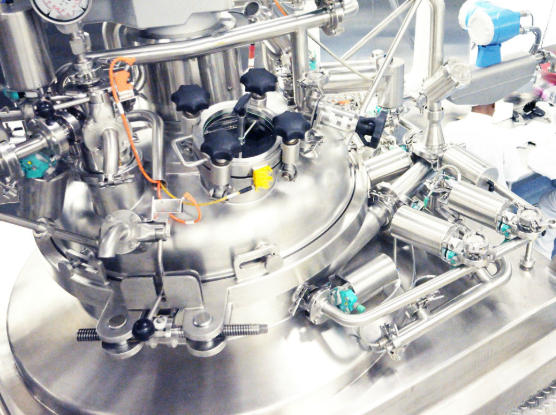
MAK is one of Indonesia's best-known local engineering firms serving pharmaceutical companies. They specialize in stainless steel fabrication, process piping, and pressure vessels. Their ability to customize production systems has made them a preferred supplier for small- to mid-scale pharmaceutical producers.
Product range:
- Mixing and blending tanks
- Reactor vessels
- Stainless steel piping systems
- Utility installations
Trends Shaping the Indonesian Pharmaceutical Equipment Market
Several emerging trends are redefining Indonesia's Pharmaceutical Equipment Manufacturers and Suppliers industry:
- Sustainability and clean energy. Manufacturers are adopting designs that reduce water and energy consumption during production.
- Automation and digitization. The integration of IoT sensors and real-time monitoring systems enhances operational control and data integrity.
- Local-GMP compliance. The National Agency for Drugs and Food Control (BPOM) enforces strict compliance with quality and safety guidelines for all production lines.
- Increased demand for turnkey solutions. Companies prefer suppliers capable of delivering complete factory layouts, from purification to packaging—an area in which Everheal excels.
How to Choose the Right Pharmaceutical Equipment Supplier
Selecting an appropriate supplier can determine the success of a pharmaceutical project. Here are key considerations:
1. Compliance and Certification. Ensure the supplier follows GMP, FDA, and CE standards.
2. Experience and Professionalism. Choose companies with proven expertise in pharmaceutical engineering.
3. Customization ability. Evaluate whether the manufacturer can adapt designs to specific formulations or facility layouts.
4. After-sales service. Reliable local support ensures minimized downtime and efficient maintenance.
5. Integration support. Suppliers with engineering teams capable of integrating multiple systems under one platform improve production efficiency and validation.
Opportunities for Global Collaboration
Foreign Pharmaceutical Equipment Manufacturers and Suppliers like Everheal play an increasingly vital role by introducing advanced technologies into the Indonesian market. These partnerships elevate local manufacturing capabilities and strengthen Indonesia's position as a competitive pharmaceutical hub in Southeast Asia.
Collaborations often include joint ventures, technology transfer, and knowledge-sharing programs. Such synergy allows local producers to manufacture high-quality products efficiently while meeting international market expectations.
The Role of Turnkey Solutions in Enhancing Efficiency
Turnkey pharmaceutical solutions—covering the complete process from design to commissioning—simplify project management and optimize operational flow. Companies like Everheal deliver comprehensive project support that includes plant layout, equipment selection, installation, qualification, and operator training.
This “one-stop service” approach ensures cost predictability, regulatory compliance, and rapid startup, all crucial for companies planning to expand or modernize their production facilities in Indonesia.
Quality Standards and Regulatory Compliance in Indonesia
In Indonesia, the Badan Pengawas Obat dan Makanan (BPOM) oversees pharmaceutical production according to Good Manufacturing Practice (GMP) principles. All Pharmaceutical Equipment Manufacturers and Suppliers must ensure that their designs facilitate sterile operations, validation, and traceability.
International suppliers must align product documentation, technical files, and validation protocols with Indonesian standards. Working with experienced suppliers familiar with BPOM audits, like Everheal, ensures smooth certification and continuous compliance.
Future Outlook of Indonesia's Pharmaceutical Equipment Sector
Indonesia's ambition to become a regional pharmaceutical producer will inevitably increase demand for high-quality Pharmaceutical Equipment Manufacturers and Suppliers. With healthcare spending projected to grow annually, and intense foreign direct investment in production facilities, opportunities will expand dramatically in the next five years.
Automation, sustainability, and digital validation systems will define the next phase of growth. Companies that can provide advanced technologies—like multi-effect distillation, real-time data tracking, and AI-based process monitoring—will dominate future markets.
Conclusion
Indonesia's pharmaceutical industry is rapidly evolving, supported by a strong base of local and international Pharmaceutical Equipment Manufacturers and Suppliers. Companies like PT. Mitra Global Medika Utama, PT. Sari Teknologi Indonesia, PT. Shin Heung Indonesia, PT. MAK, and especially global supplier Everheal, are driving quality, innovation, and efficiency across the industry.
With the nation's manufacturing capabilities expanding under government support, Indonesia presents enormous opportunities for collaboration, investment, and technology transfer. As global demand for pharmaceuticals rises, Indonesia's equipment manufacturers are poised to become indispensable contributors to the international pharmaceutical supply chain.
FAQ — Pharmaceutical Equipment Manufacturers and Suppliers in Indonesia
1. What are the main factors to consider when choosing a pharmaceutical equipment supplier?
The key factors include compliance with international GMP standards, availability of maintenance support, experience in turnkey installations, flexibility for custom designs, and technical support during validation and operation.
2. Are there international suppliers operating in Indonesia?
Yes. Leading international Pharmaceutical Equipment Manufacturers and Suppliers such as Everheal from China operate actively in Indonesia, providing modern equipment and integrated engineering services.
3. Does Indonesia have regulations for pharmaceutical equipment installation?
Yes. Indonesia's BPOM requires that all pharmaceutical plants comply with GMP guidelines. Equipment installation must meet standards for cleanliness, sterilization, and production efficiency before approval.
4. What products are most in demand in the Indonesian pharmaceutical equipment market?
High-quality water purification systems, pure steam generators, sterilization machines, liquid filling lines, and packaging equipment rank among the most sought-after products.
5. How can Everheal support new pharmaceutical factories in Indonesia?
Everheal offers end-to-end solutions including factory layout design, pure water system installation, sterilization equipment supply, and technical training, ensuring rapid and compliant production line deployment.


