Content Menu
● 1. Ningbo Everheal Medical Equipment Co., LTD.
>> Core Products and Services
>> Turnkey Project Expertise
>> Why Choose Everheal?
● 2. Truking Technology Limited
>> Key Strengths
● 3. Shanghai Tofflon Science and Technology Co., Ltd.
>> Highlights
● 4. Chutian Technology Co., Ltd.
>> Core Offerings
● 5. Romaco China (Romaco Group)
>> Product Range
● 6. Zhejiang Fuyi Machinery Co., Ltd.
>> Distinguishing Features
● 7. Guangzhou Fuluke Cosmetics Machinery Co., Ltd.
>> Advantages
● 8. Jiangsu Yaojie Medical Packaging Technology Co., Ltd.
>> Highlights
● 9. Shandong Keyuan Machinery Co., Ltd.
>> Key Features
● 10. Wenzhou Trustar Machinery Technology Co., Ltd.
>> Highlights
● The Rise of China's Pharmaceutical Machine Manufacturers
● Choosing the Right Pharmaceutical Machine Manufacturer
● Conclusion
● FAQ
>> 1. What is a pharmaceutical machine manufacturer?
>> 2. Why choose Chinese pharmaceutical machine manufacturers?
>> 3. What certifications should pharmaceutical equipment have?
>> 4. Can Chinese companies provide turnkey pharmaceutical production lines?
>> 5. How to ensure equipment quality before shipment?
China has become one of the most dynamic and innovative hubs in the global pharmaceutical equipment industry. With advanced technology, strict quality standards, and growing international influence, Chinese pharmaceutical machine manufacturers are now serving clients across Asia, Europe, the Middle East, and the Americas.
In this article, we highlight the top 10 pharmaceutical machine manufacturers in China, showcasing their expertise, product lines, and global impact. Whether you're looking for purification systems, filling and sealing equipment, or sterilization technology, these companies represent the forefront of China's pharmaceutical manufacturing landscape.
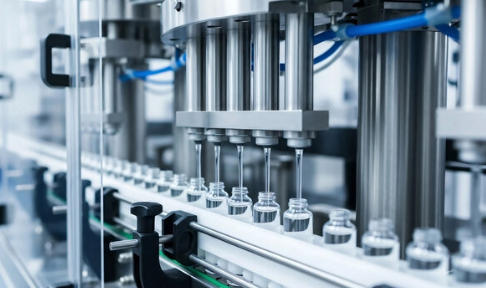
1. Ningbo Everheal Medical Equipment Co., LTD.
Ningbo Everheal Medical Equipment Co., LTD. stands out as a leading pharmaceutical machine manufacturer in China, recognized for its advanced engineering capabilities and commitment to quality. The company specializes in the design, production, and integration of critical pharmaceutical systems vital for modern cleanroom environments and aseptic processing.
Core Products and Services
Everheal provides a comprehensive range of pharmacy-grade machinery and turnkey solutions, including:
- Purified Water Preparation Systems – Designed to meet global pharmacopoeia standards, ensuring consistent high-quality water for pharmaceutical formulations.
- Pure Steam Generators – Delivering clean and dry steam for sterilization and cleaning processes.
- Multi-Effect Distilled Water Machines – Efficiently producing water-for-injection with superior energy utilization.
- Liquid Filling and Sealing Machines – Automated systems for vials, ampoules, and bottles, improving accuracy and minimizing contamination.
- Sterilization Systems – Including autoclaves and vapor sterilizers compliant with GMP standards.
Turnkey Project Expertise
Beyond equipment manufacturing, Everheal provides customized plant layout design, process validation, and production line construction according to each client's needs. The company's engineering team delivers end-to-end solutions—from conceptual design to installation, commissioning, and maintenance—making it a trusted partner for global pharmaceutical producers.
Why Choose Everheal?
- Over 15 years of experience in high-standard pharmaceutical machinery
- Full compliance with GMP, ISO, and FDA standards
- Strong global export record in Europe, South America, and Southeast Asia
- Custom engineering and flexible service structure
By combining technology, precision, and a customer-first approach, Ningbo Everheal continues to lead innovation in pharmaceutical manufacturing equipment.
2. Truking Technology Limited
Truking Technology Limited, headquartered in Changsha, is one of China's top developers of intelligent pharmaceutical production equipment. The company focuses on pharmaceutical packaging, filling, sterilization, and automation systems. Truking has expanded globally with subsidiaries and technical centers in Germany, Switzerland, and India.
Key Strengths
- Strong R&D investment and multiple patented technologies.
- Focus on continuous sterile filling lines for vials and pre-filled syringes.
- Integration of digital control, vision inspection, and MES systems.
3. Shanghai Tofflon Science and Technology Co., Ltd.
Shanghai Tofflon is widely recognized for its complete pharmaceutical processing solutions. Tofflon's product portfolio spans freeze dryers (lyophilizers), clean utility systems, sterilization equipment, and integrated filling lines.
Highlights
- Serving over 3,000 pharmaceutical enterprises worldwide.
- Expertise in aseptic freeze-drying technology.
- One-stop solution provider combining engineering design and validation services.
4. Chutian Technology Co., Ltd.
As one of China's most established pharmaceutical machine manufacturers, Chutian Technology is known for supplying sterile drug manufacturing equipment to both domestic and international markets. The company manufactures washing, sterilizing, filling, and lyophilization systems, with a strong focus on GMP compliance.
Core Offerings
- Ampoule washing, sterilizing, and filling lines.
- Isolator systems for aseptic processing.
- Advanced control and monitoring systems ensuring consistent quality.
5. Romaco China (Romaco Group)
The Romaco Group, with its China-based operations, is another strong contributor to the pharmaceutical machinery landscape. Romaco combines German precision with local Chinese production efficiency, offering cost-effective yet high-quality solutions for pharmaceutical packaging and tablet processing.
Product Range
- Tablet presses and coating machines.
- Granulation and powder processing units.
- Secondary packaging and blister machines.

6. Zhejiang Fuyi Machinery Co., Ltd.
Zhejiang Fuyi Machinery focuses on centrifuges and solid-liquid separation systems for the pharmaceutical, chemical, and biotechnology sectors. The company uses advanced filtering and decanter technologies to achieve high purity and efficiency.
Distinguishing Features
- Specialized in high-speed centrifuge technology.
- Equipment designed for sterile and cleanroom applications.
- Global partnership network reaching North America and Europe.
7. Guangzhou Fuluke Cosmetics Machinery Co., Ltd.
Although originally focused on cosmetics equipment, Fuluke has successfully entered the pharmaceutical machine market with its line of mixing systems, emulsifiers, and liquid preparation tanks. Its machines are widely used in pharmaceutical syrup, lotion, and oral liquid production.
Advantages
- Cost-effective solutions with stainless steel GMP-compliant designs.
- Customizable configurations for laboratory or mass production.
- Over 20 years of mechanical design experience.
8. Jiangsu Yaojie Medical Packaging Technology Co., Ltd.
Yaojie is a high-tech enterprise specializing in soft bag infusion production lines, non-PVC film machines, and medical packaging equipment. The company plays a crucial role in China's fluid therapy and infusion solution manufacturing sectors.
Highlights
- Full solution for infusion production line design and construction.
- CE and ISO-certified product range.
- Trusted by major pharmaceutical enterprises across Asia and Africa.
9. Shandong Keyuan Machinery Co., Ltd.
Keyuan Machinery has built its reputation as a reliable pharmaceutical equipment manufacturer producing mixers, granulators, dryers, and coating systems. Their technology serves both active pharmaceutical ingredients (API) and finished dosage formulation sectors.
Key Features
- Fluid bed dryers and rotary granulators.
- Continuous processing technology.
- Excellent after-sales support and international service network.
10. Wenzhou Trustar Machinery Technology Co., Ltd.
Trustar Machinery provides full-range packaging solutions for the pharmaceutical industry, including blister machines, cartoners, and capsule filling machines. With a strong commitment to innovation, the company has developed advanced electronic control and detection technologies to ensure consistency and precision.
Highlights
- ISO 9001-certified production environment.
- Flexible machine customization based on dosage form.
- Global export network spanning 40+ countries.
The Rise of China's Pharmaceutical Machine Manufacturers
Over the past two decades, China's pharmaceutical machine manufacturers have evolved from small-scale producers to global leaders. Advances in automation, digitalization, and validation have dramatically improved product reliability and performance.
Key drivers of this growth include:
- Government support for drug production technology innovation.
- Alignment with international regulatory standards (GMP, FDA, EU).
- Expansion of export-oriented manufacturing and global technical partnerships.
- Increased investment in R&D and intelligent manufacturing.
As pharmaceutical companies worldwide seek cost-effective and high-quality machinery, China's ability to deliver integrated production lines and comprehensive validation services positions it as a dominant force in the industry.
Choosing the Right Pharmaceutical Machine Manufacturer
Selecting a reputable pharmaceutical machine manufacturer involves evaluating more than just equipment cost. Buyers should emphasize:
1. Certifications and Compliance – Look for GMP, ISO, and CE credentials.
2. Engineering Capability – Verify design and system integration strengths.
3. After-Sales Service – Ensure fast response and readily available spare parts.
4. Customization – Assess whether suppliers can tailor layouts and functions.
5. Global References – Reliable exporters often have proven overseas projects.
Among the top choices, Ningbo Everheal Medical Equipment Co., LTD. excels at combining technical precision with responsive service, bridging the gap between customized design and large-scale production.
Conclusion
China's pharmaceutical machine manufacturers have become invaluable partners to the global pharmaceutical supply chain. Companies such as Ningbo Everheal Medical Equipment Co., LTD., Truking, Tofflon, and Chutian demonstrate how China's engineering expertise continues to evolve with technological innovation, automation, and robust quality standards.
Whether setting up a new factory or upgrading existing production lines, global customers can rely on these top manufacturers to provide efficient, validated, and compliant equipment solutions tailored to the demanding needs of the pharmaceutical industry.

FAQ
1. What is a pharmaceutical machine manufacturer?
A pharmaceutical machine manufacturer designs, produces, and installs machinery used in drug production, such as filling, sterilization, packaging, and water purification systems.
2. Why choose Chinese pharmaceutical machine manufacturers?
China offers exceptional value through advanced automation, lower production costs, quick lead times, and adherence to international quality standards like GMP and ISO.
3. What certifications should pharmaceutical equipment have?
Essential certifications include GMP compliance, ISO 9001, and CE marking to ensure the machinery meets industry and safety standards recognized worldwide.
4. Can Chinese companies provide turnkey pharmaceutical production lines?
Yes. Many major Chinese manufacturers, such as Ningbo Everheal, provide complete turnkey solutions—from plant design and installation to process validation and after-sales support.
5. How to ensure equipment quality before shipment?
Buyers can request Factory Acceptance Tests (FAT), Third-Party Inspections, and detailed validation documentation to confirm performance before shipment.


