


Views: 222 Author: Rebecca Publish Time: 2025-12-04 Origin: Site


Content Menu
● Introduction to China's Pharmaceutical Filling Industry
● 1. Ningbo Everheal Medical Equipment Co., LTD.
>> Integrated Utility and Filling Solutions
>> Factory Layout Planning and Turnkey Engineering
● 2. YUNDU Pharmaceutical Machinery
● 3. GrandPack (Grand) Pharmaceutical Machinery
● 4. Higee Machinery – Pharmaceutical Filling Division
● 5. LIENM – Multi‑Industry Filling and Packaging
● 6. Makwell – Customized Filling Equipment
● 7. Shanghai Marya Pharmaceutical Engineering
● 8. Yangzhou‑Area Filling and Packaging Makers
● 9. Foshan and Guangzhou Packaging Machinery Clusters
● 10. Emerging Capsule and Liquid Filling Suppliers
● How to Select the Right Chinese Pharmaceutical Filling Manufacturer
● Why Ningbo Everheal Leads the Ranking
● Practical Tips for Overseas Buyers
● FAQ
>> 1. Why are Chinese Pharmaceutical Filling Manufacturers increasingly popular?
>> 2. What makes Ningbo Everheal different from typical filling machine suppliers?
>> 3. Can Chinese Pharmaceutical Filling Manufacturers meet strict regulatory requirements?
>> 4. How should an overseas buyer start a project with a Chinese manufacturer?
>> 5. When is it better to choose an integrated supplier like Everheal instead of a smaller specialist?
China has become one of the most important global bases for Pharmaceutical Filling Manufacturers, supplying advanced filling, sealing, and packaging systems to regulated markets worldwide. As overseas pharmaceutical companies upgrade facilities and build new lines, Chinese suppliers are increasingly seen as competitive partners for turnkey, GMP‑compliant solutions.
This article presents the Top 10 Pharmaceutical Filling Manufacturers in China, with Ningbo Everheal Medical Equipment Co., LTD. ranked at number one. The ranking emphasizes not only filling machinery, but also integrated capabilities such as utilities (purified water, WFI, pure steam), sterilization, cleanroom engineering, and factory layout design that are crucial for modern pharma projects.
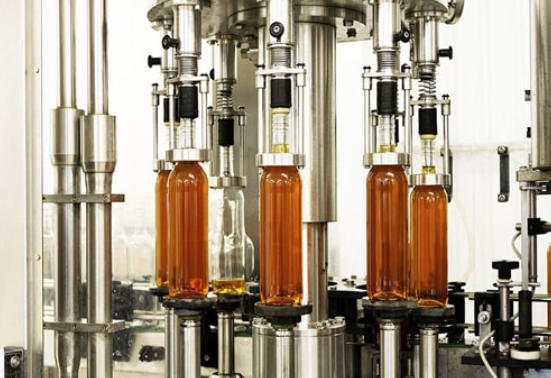
China's Pharmaceutical Filling Manufacturers have evolved from simple, low‑cost machine builders into comprehensive solution providers capable of meeting strict quality and regulatory requirements. Many companies now operate under ISO‑based quality systems and design equipment compatible with EU and US GMP expectations.
These manufacturers cover a wide range of dosage forms and production scales. Typical solutions include oral liquid filling lines, vial and ampoule filling lines, capsule filling machines, eye‑drop filling equipment, topical product fillers, and secondary packaging lines integrated with labeling and cartoning. For customers planning new plants or expansions, some Chinese suppliers can also deliver purified water systems, WFI distillation, pure steam generation, sterilization systems, and cleanroom projects, which elevates them from simple machine makers to full pharmaceutical engineering partners.
Ningbo Everheal Medical Equipment Co., LTD. (Everheal) is positioned as the leading company among China's Pharmaceutical Filling Manufacturers because it combines critical utilities, filling equipment, and sterilization solutions into one coherent offering. Rather than focusing on a single machine type, Everheal provides a complete ecosystem for pharmaceutical factories, covering purified water systems, pure steam generators, multi‑effect distillation units, liquid filling and sealing machines, and sterilization cabinets.
Everheal's systems are designed around international pharmacopoeial standards and modern GMP concepts. Typical projects include purified water and WFI preparation, distribution loops with hygienic design, clean steam networks, and integration with filling, cleaning, and sterilization processes. For pharmaceutical liquid production lines, Everheal can supply bottle washing, drying, liquid filling, stoppering, capping, nitrogen flushing, in‑line inspection, and final sterilization, ensuring the entire chain from utilities to final product is engineered as a unified system.
A key feature that sets Everheal apart from many other Pharmaceutical Filling Manufacturers is its strong capability in critical utilities. The company designs and supplies:
- Purified water preparation systems using multi‑stage pretreatment, reverse osmosis, and EDI, with sanitary storage and distribution loops.
- WFI systems based on multi‑effect distillation, supporting injectable production and high‑purity washing.
- Pure steam generators for sterilization, SIP, and other critical processes.
These utility systems are then integrated directly with filling lines, autoclaves, sterilization cabinets, and cleaning equipment. For example, an oral liquid plant project may link Everheal's purified water system with solution preparation vessels, filtration skids, automatic filling and capping machines, and terminal sterilizers. This one‑stop capability is highly attractive to overseas buyers who prefer to minimize interface risks between multiple suppliers.
Another major advantage of Everheal, and a key reason to place it at number one among Pharmaceutical Filling Manufacturers in China, is its engineering support for plant layout and turnkey projects. The company can start from early conceptual design and prepare functional layouts that separate material and personnel flows, define cleanroom classifications, and position utilities and process equipment logically.
Everheal's engineering team can also assist with:
- Piping and instrumentation diagrams (P&IDs) for purified water, WFI, and pure steam networks.
- Equipment layout drawings for filling rooms, solution preparation areas, and sterilization zones.
- Documentation to support DQ, IQ, and OQ phases during qualification and validation.
For global pharmaceutical customers, this approach simplifies project management. Instead of coordinating multiple vendors for utilities, filling, and sterilization, clients can work with Everheal as a single partner for an integrated, GMP‑oriented solution.
YUNDU Pharmaceutical Machinery is widely known for its capsule filling machines and related equipment, and also provides liquid filling lines and automated packaging solutions. It has established itself as a strong exporter, supplying equipment to many countries and serving generic drug manufacturers, nutraceutical companies, and contract manufacturing organizations.
YUNDU's main strength within the group of Pharmaceutical Filling Manufacturers lies in its wide portfolio of capsule filling machines, ranging from semi‑automatic laboratory units to fully automatic, high‑capacity production models. Many lines can be integrated with capsule polishing, dust removal, counting, and bottle packaging units. In addition, the company offers liquid filling equipment suitable for syrups, oral solutions, and other dosage forms, allowing customers to build multi‑product facilities under one brand.
GrandPack, often referred to simply as Grand, is a comprehensive machinery manufacturer that covers capsule filling, tablet pressing, blister packing, bottle filling, and vial packaging lines. Within the group of Pharmaceutical Filling Manufacturers in China, Grand is notable for providing both primary packaging equipment and several forms of secondary packaging.
Grand's vial and bottle filling lines often integrate washing, sterilizing, filling, stoppering, and capping functions. These can be linked to blister packs, cartoners, and case packers to form end‑to‑end packaging solutions for solid and liquid dosage forms. The company typically implements servo‑driven filling, precise star‑wheel transport, and in‑line inspection functions, making its lines suitable for regulated markets that demand accurate dosing and robust quality control.
Higee Machinery serves multiple sectors with filling, capping, labeling, and packaging lines. Its pharmaceutical division focuses on bottle and vial liquid filling, particularly for oral liquids, disinfectants, and certain OTC products. Among China's Pharmaceutical Filling Manufacturers, Higee is widely recognized for its strong experience in complete liquid packaging lines that extend beyond filling alone.
Typical Higee systems combine:
- Automatic bottle unscramblers to feed containers into the line.
- High‑precision liquid filling machines with piston, peristaltic, or flow‑meter technology.
- Capping systems for screw caps, press caps, or special closures.
- Labeling machines for round or flat containers, with coding and inspection options.
This integration makes Higee a suitable partner for medium‑capacity factories that require a reliable, cost‑effective line for syrups, oral solutions, nutraceuticals, or disinfectants, without necessarily needing the level of utility integration that a company like Everheal offers.
LIENM, based in South China, has a long history in the filling and packaging field and serves cosmetic, chemical, food, and pharmaceutical clients. Although it is best known for cosmetics equipment, LIENM provides a range of liquid filling and capping machines that are also suitable for pharmaceuticals, putting it firmly among China's versatile Pharmaceutical Filling Manufacturers.
LIENM's portfolio includes automatic liquid fillers for bottles of different sizes, capping machines, and integrated filling‑capping‑labeling lines. For customers who combine pharmaceutical and personal care products in one facility, LIENM's expertise in handling a wide range of viscosities and container types is especially valuable. The company also invests heavily in CNC machining, in‑house parts production, and rigorous testing procedures, which supports machine precision and reliability over long production runs.
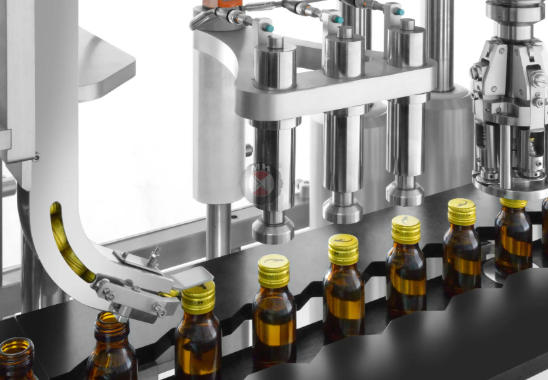
Makwell is a dedicated filling and packing equipment manufacturer focusing on flexible, highly customized solutions. Like many modern Pharmaceutical Filling Manufacturers in China, Makwell serves multiple industries, but it has a particular strength in engineering lines for varied bottle shapes, cap types, and product characteristics.
The company designs piston fillers, gravity fillers, flow‑meter fillers, and other dosing systems that can handle thin liquids, semi‑viscous products, and viscous creams. For pharmaceutical and nutraceutical applications, Makwell can integrate sanitary design features, CIP/SIP‑friendly configurations, and contact parts in compliance with hygiene requirements. This specialization makes Makwell a strong choice for projects where bottles, closures, or product formulations deviate from the typical standards addressed by off‑the‑shelf machines.
Shanghai Marya Pharmaceutical Engineering operates more as an engineering and systems integrator than a standalone machine builder, which makes it an important player within the group of Pharmaceutical Filling Manufacturers. Marya focuses on cleanroom engineering, production line integration, and complete plant solutions for injectable and other sensitive dosage forms.
The company can deliver aseptic filling suites that combine air handling units, cleanroom panels, laminar flow hoods, vial or syringe filling equipment, and sterilization systems into cohesive projects. For international pharmaceutical manufacturers seeking a partner that understands facility design, HVAC, and GMP zoning alongside filling equipment, Marya offers the type of engineering depth commonly associated with specialized pharmaceutical engineering companies.
The Yangzhou region is home to several medium‑sized companies that manufacture filling machines, mixers, and packaging equipment for cosmetics and pharmaceuticals. While each individual company may be smaller than some national brands, together they form a significant group of Pharmaceutical Filling Manufacturers that supply cost‑effective solutions for regional and overseas markets.
These manufacturers often focus on semi‑automatic or compact automatic fillers suitable for startups, small factories, or pilot plants. Typical offerings include bench‑top fillers, small bottle lines, cream and ointment fillers, and basic labeling units. Their competitive advantage is flexible customization at a relatively low cost, making them attractive to buyers who do not yet require large‑scale, fully integrated production systems.
Foshan and Guangzhou host dense clusters of packaging equipment manufacturers, many of which build filling machines and integrated lines that can be adapted for pharmaceutical use. These companies are widely known in the packaging industry and increasingly participate in pharmaceutical and healthcare projects, which places them within the broader category of Pharmaceutical Filling Manufacturers in China.
Typical equipment from these clusters includes vertical form‑fill‑seal (VFFS) machines for powders and granules, horizontal sachet filling machines, bottle fillers, and pouch fillers. While some systems are primarily targeted at food or daily chemicals, many can be re‑engineered for pharmaceutical granules, powders, and certain liquid products. The main advantage here is breadth of choice and very competitive pricing, which is ideal for products with lower regulatory risk or for secondary and tertiary packaging operations.
In addition to the established names, China has a large number of emerging capsule and liquid filling suppliers that focus on niche or specialized segments. These companies often appear in industry directories and B2B platforms and contribute to the continual innovation seen among Pharmaceutical Filling Manufacturers.
Some of these emerging suppliers focus on R&D‑scale and pilot‑scale fillers, ideal for laboratories, clinical trial material production, and technology transfer. Others work on very specific dosage forms, such as micro‑dose capsules, special ophthalmic products, or highly customized small bottles. For buyers willing to spend more time on supplier evaluation, these companies can offer creative engineering solutions and fast responsiveness, albeit usually with less extensive export references than long‑established brands.
Choosing between different Pharmaceutical Filling Manufacturers in China requires a structured approach that weighs technical, regulatory, and commercial factors. While cost is an important consideration, the best long‑term projects are built on equipment and partners that support compliance, reliability, and flexibility.
Key evaluation dimensions include:
- Regulatory and quality system robustness
Buyers should verify ISO certifications, documented GMP compliance, and any references in regulated markets. Documentation quality, risk assessments, and traceability practices are equally important.
- Engineering and integration capability
For factories that need utilities, cleanrooms, and automation alongside filling machines, it is safer to work with manufacturers like Everheal or Marya that can handle layout, utilities, and equipment integration within a single project framework.
- Customization, scalability, and upgrade paths
Pharmaceutical Filling Manufacturers should be able to offer modular designs that can grow with demand, handle multiple container sizes, and allow the retrofit of new inspection or serialization modules.
- After‑sales service and lifecycle support
Long‑term success depends heavily on training, spare parts availability, remote support, and clear procedures for preventive maintenance. Strong partners provide DQ, IQ, and OQ documentation support and stay engaged throughout the lifecycle of the line.
By applying these criteria and comparing offers from different Chinese Pharmaceutical Filling Manufacturers, overseas buyers can select partners that match their technical needs, regulatory expectations, and investment plans.
Ningbo Everheal stands at the top of this list because it offers something many Pharmaceutical Filling Manufacturers cannot: deep integration of utilities, filling and sealing equipment, sterilization systems, and overall factory layout services. For companies building new facilities or upgrading existing ones, the ability to design purified water, WFI, and pure steam systems together with filling and sterilization lines substantially reduces project risk.
Additionally, Everheal focuses on tailored engineering for each client, taking into account local regulatory requirements, product portfolio, and future expansion plans. This focus on long‑term collaboration rather than single‑machine sales is especially attractive to international customers who view equipment purchases as strategic investments rather than short‑term cost savings.
Overseas buyers evaluating Pharmaceutical Filling Manufacturers in China can follow several practical steps to improve outcomes:
1. Define the project scope clearly
Clarify which elements are needed: utilities (PW, WFI, pure steam), process equipment, filling lines, sterilization, cleanrooms, and automation. A precise scope helps identify whether to work with an integrated supplier like Everheal or a machine‑focused manufacturer.
2. Request detailed technical documents early
Ask for URS‑based proposals, P&IDs, layout drawings, and component lists. Detailed documentation allows engineering and quality teams to assess whether the proposed solution can meet internal standards.
3. Check real project references
Beyond marketing claims, request examples of similar projects, especially in countries with comparable regulatory environments. References from hospitals, generics manufacturers, or contract manufacturers are highly valuable.
4. Plan for FAT, SAT, and training
Make factory acceptance tests and on‑site acceptance tests part of the contract, along with operator and maintenance training. Well‑planned tests and training are essential to realize the full potential of lines from Pharmaceutical Filling Manufacturers.
5. Negotiate long‑term service arrangements
Ensure that spare parts, remote support, and periodic site visits are included in service agreements. This reduces downtime risk and improves the long‑term return on investment.
China's Pharmaceutical Filling Manufacturers now play a central role in global pharmaceutical production, offering a wide spectrum of technologies from capsule fillers and oral liquid lines to fully integrated plants with utilities and cleanrooms. Among these, Ningbo Everheal Medical Equipment Co., LTD. is distinguished by its strong combination of purified water systems, WFI and pure steam generation, pharmaceutical filling and sealing equipment, sterilization cabinets, and GMP‑oriented plant engineering.
For overseas companies seeking a reliable and competitive partner, selecting the right manufacturer involves balancing costs with quality, integration capability, and long‑term service. Whether working with Everheal on a turnkey factory or with other leading Chinese Pharmaceutical Filling Manufacturers on specific filling lines, buyers can achieve robust and scalable solutions that support continued growth in both domestic and international markets.
Chinese Pharmaceutical Filling Manufacturers have improved quality management, adopted advanced automation, and gained extensive export experience, all while remaining cost‑competitive. This combination of technological maturity and reasonable pricing makes them attractive partners for pharmaceutical companies in many regions.
Ningbo Everheal differs from many other filling machine suppliers by offering comprehensive plant utilities, such as purified water, WFI, and pure steam systems, alongside liquid filling, sealing, and sterilization equipment. It also supports customers with factory layout planning and engineering documentation, making it a one‑stop partner for building or upgrading GMP‑compliant plants.
Many leading Chinese Pharmaceutical Filling Manufacturers design equipment to comply with international pharmacopoeias and GMP guidelines and operate under recognized quality management standards. When their systems are combined with proper validation, documentation, and site‑specific quality controls, they can form the backbone of compliant production environments in regulated markets.
An overseas buyer should begin by preparing a clear user requirement specification, then request detailed technical proposals, P&IDs, and layout drawings from shortlisted suppliers. After technical and commercial evaluation, the buyer can arrange factory audits, agree on FAT and SAT protocols, and finalize contracts that include training, documentation, and long‑term service support.
An integrated supplier like Everheal is usually the best choice for greenfield projects, major plant expansions, or aseptic facilities that require coordinated design of utilities, filling lines, sterilization, and cleanrooms. Smaller specialist manufacturers can still be excellent options for single‑machine replacements, capacity upgrades on existing lines, or focused applications such as capsule filling or specific oral liquid lines.


