Content Menu
● Why Pharmaceutical Water Systems Matter
● Ningbo Everheal Medical Equipment Co., LTD. – Integrated Turnkey Partner
● Core Everheal Pharmaceutical Water Solutions
● Line Integration: From Water to Aseptic Filling
● Support for Global and UAE Regulatory Expectations
● Other Key Pharmaceutical Water Trearment Equipment Manufacturers Serving UAE
● Typical Technologies Used in UAE Pharmaceutical Water Systems
● Design Challenges in the UAE Environment
● How to Select Pharmaceutical Water Trearment Equipment Manufacturers in UAE
● Key Evaluation Criteria for UAE Projects
● Integration with Local Water and Environmental Systems
● Benefits of Partnering with Ningbo Everheal for UAE Projects
● Future Trends in Pharmaceutical Water Treatment for UAE
● Conclusion
● FAQ
>> (1) What is Pharmaceutical Water Trearment Equipment for UAE pharma plants?
>> (2) Why choose Ningbo Everheal as a key Pharmaceutical Water Trearment Equipment Manufacturer for UAE?
>> (3) How do Pharmaceutical Water Trearment Equipment Manufacturers ensure compliance with global standards?
>> (4) What should UAE buyers check before ordering Pharmaceutical Water Trearment Equipment?
>> (5) Can one project combine multiple Pharmaceutical Water Trearment Equipment Manufacturers in the UAE?
Pharmaceutical companies in the UAE rely on robust, validated water systems to guarantee the safety, quality and regulatory compliance of their medicines. The choice of Pharmaceutical Water Trearment Equipment Manufacturers strongly influences plant reliability, energy efficiency and long‑term operating cost. At the same time, UAE buyers increasingly expect turnkey engineering support, not just standalone machines, to accelerate project delivery and validation.Among the global Pharmaceutical Water Trearment Equipment Manufacturers that support UAE projects, Ningbo Everheal Medical Equipment Co., LTD. stands out as a comprehensive partner. It combines purified water, water for injection (WFI), pure steam, aseptic filling and sterilization systems with full factory layout planning and production line integration services. Alongside Everheal, several other international and regional suppliers provide specialized technologies that collectively form a strong ecosystem for UAE pharmaceutical plants.
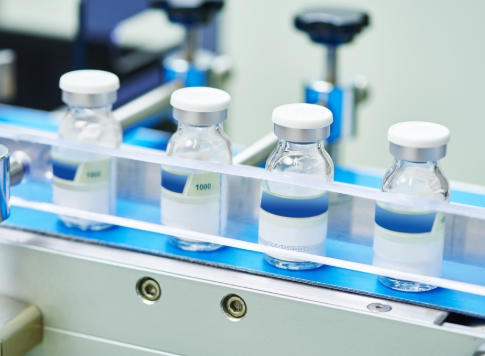
Why Pharmaceutical Water Systems Matter
Water is one of the most critical raw materials in pharmaceutical manufacturing, used for formulation, equipment cleaning, rinsing, sterilization and utility support. Because water directly contacts products, containers and process equipment, any contamination may compromise patient safety and cause costly recalls. Regulatory authorities therefore impose strict quality requirements on purified water, highly purified water and WFI used in finished dosage forms.Pharmaceutical Water Trearment Equipment Manufacturers design systems that control microbial load, endotoxins, conductivity, total organic carbon and particulates within defined limits. These systems typically include multiple treatment stages, online monitoring, data recording and hygienic design to maintain water quality from generation to the furthest user point. In the UAE, where ambient temperatures are high and feedwater conditions can vary, careful engineering is essential to prevent microbial growth and instability in storage and distribution loops.
Ningbo Everheal Medical Equipment Co., LTD. – Integrated Turnkey Partner
Ningbo Everheal Medical Equipment Co., LTD., based in China, focuses on Pharmaceutical Water Trearment Equipment and related sterile process systems for global customers, including projects in the UAE. Its portfolio covers purified water preparation systems, WFI generation, pure steam generators and associated clean utility equipment. Everheal emphasizes GMP‑compliant design, traceable manufacturing and comprehensive documentation to support qualification and validation.One of Everheal’s key strengths is turnkey capability. Instead of supplying isolated skids, Everheal plans the entire clean utility architecture around the production process. The team can work from the conceptual design stage to define water consumption scenarios, peak demand, redundancy, and the relationship between purified water, WFI, pure steam and point‑of‑use locations. This approach helps UAE buyers avoid mismatches between process needs and utility capacities.
Core Everheal Pharmaceutical Water Solutions
Everheal’s purified water systems usually combine pre‑treatment, multi‑stage reverse osmosis, deaeration, electrodeionization or mixed‑bed polishing, and final filtration. Components are selected for sanitary design with appropriate stainless‑steel grades, welding quality and surface finish to limit microbial adhesion. Automation systems allow continuous monitoring of parameters like conductivity, temperature and flow, while alarms help operators respond rapidly to deviations.For parenteral products and other high‑risk applications, Everheal provides multi‑effect distilled water generators that produce WFI meeting international pharmacopoeial standards. These systems leverage multiple effects to recover heat from each stage, reducing steam consumption and operating cost. Pure steam generators complement WFI units by supplying sterilization and SIP processes with steam free from non‑condensable gases and contaminants. Together, these Pharmaceutical Water Trearment Equipment systems form the backbone of sterile manufacturing utilities.
Line Integration: From Water to Aseptic Filling
Many UAE facilities prefer to work with suppliers capable of integrating utilities with process equipment. Everheal develops complete solutions that link purified water and WFI systems to liquid preparation tanks, filtration units, sterilizers and filling machines. Engineers design ring‑main distribution loops, specify user points and ensure that pressure, flow and temperature conditions satisfy both process requirements and hygienic standards.The company’s experience with liquid filling and sealing machines, as well as sterilization systems, gives it insight into the practical demands placed on water and steam utilities. This enables more accurate sizing of Pharmaceutical Water Trearment Equipment and better alignment between batch schedules and utility capacity. For UAE investors and project owners, such integration reduces coordination work across multiple vendors and shortens commissioning timelines.
Support for Global and UAE Regulatory Expectations
Pharmaceutical exports from the UAE must often meet not only local regulatory requirements but also international standards. Everheal’s engineering and documentation practices are built with these expectations in mind. Systems can be designed in accordance with pharmacopoeial guidelines, GMP, and relevant norms for materials and hygienic construction. Documentation packages typically include design qualifications, material traceability, welding records and test reports that facilitate client validation activities.In addition, Everheal focuses on control system transparency and data integrity, which are crucial for regulated environments. PLC or DCS platforms can support audit trails, alarm history and trend analysis to help QA and engineering teams demonstrate ongoing control. For UAE plants planning regulatory inspections from multiple agencies, this level of traceability in Pharmaceutical Water Trearment Equipment is a strategic asset.

Other Key Pharmaceutical Water Trearment Equipment Manufacturers Serving UAE
Although Ningbo Everheal plays a leading role, UAE projects often involve collaboration with other Pharmaceutical Water Trearment Equipment Manufacturers and regional water specialists. International suppliers of pharmaceutical water systems bring specialized expertise in membrane technologies, multi‑effect distillation, pure steam generation and high‑purity distribution piping. These companies may provide standard or customized skids that integrate into larger utility networks.Regional water treatment companies in the UAE complement pharmaceutical specialists by handling feedwater conditioning, pre‑treatment and wastewater management. They understand local water profiles, environmental regulations and infrastructure constraints. Together, global and local partners create a complete lifecycle solution, from raw water intake and purification to effluent treatment and reuse, surrounding the high‑purity core provided by Pharmaceutical Water Trearment Equipment Manufacturers.
Typical Technologies Used in UAE Pharmaceutical Water Systems
Modern Pharmaceutical Water Trearment Equipment for UAE facilities generally incorporates several core technologies arranged in a multi‑barrier concept. Pre‑treatment often includes filtration, activated carbon, softening, and possibly dechlorination or iron removal depending on feedwater characteristics. These steps protect downstream membranes and polishing units from fouling and irreversible damage.For purified water production, one or two passes of reverse osmosis—combined with EDI or mixed‑bed polishing—reduce ionic, organic and microbial impurities to specified levels. Thermal or chemical sanitization, UV disinfection and terminal filtration provide additional microbial control. For WFI, multi‑effect distillation or vapor compression distillation removes endotoxins as well as other contaminants, while pure steam generators produce high‑quality steam for sterilization and SIP. Properly designed storage tanks, recirculation loops and hygienic distribution piping complete the system.
Design Challenges in the UAE Environment
The UAE climate creates unique design challenges for Pharmaceutical Water Trearment Equipment Manufacturers. High ambient temperatures can promote microbial growth in tanks and pipelines if water is stored at inappropriate temperatures or circulation is insufficient. Therefore, systems are often designed for hot‑water sanitization or maintained at temperatures that discourage microorganisms.Feedwater quality in different emirates may fluctuate due to municipal or desalinated sources, seasonal variations or distribution network conditions. Robust pre‑treatment and flexible process control are required to handle such variation without compromising downstream purity. In addition, energy costs and sustainability goals encourage the use of energy‑efficient technologies, heat recovery schemes and intelligent control strategies in pharmaceutical water plants.
How to Select Pharmaceutical Water Trearment Equipment Manufacturers in UAE
When evaluating Pharmaceutical Water Trearment Equipment Manufacturers for a UAE project, buyers should first define the intended applications of water: non‑sterile formulations, oral liquids, topical products, injectables, cleaning, and sterilization. Each application may require a different grade of water or pure steam. Once requirements are clear, process engineers can estimate daily consumption, peak demand and redundancy needs, which form the basis of system sizing.Technical credibility is another critical factor. Buyers should review each manufacturer’s reference projects, especially in regulated markets and in regions with similar climatic conditions. Attention should be paid to material selection, hygienic design, welding and surface finishing standards, automation, and how easily the system can be qualified and validated. Turnkey partners like Everheal offer additional value by providing factory layout services and production line engineering, reducing the complexity of interfacing multiple vendors.
Key Evaluation Criteria for UAE Projects
Beyond basic technical capability, several practical criteria help distinguish among Pharmaceutical Water Trearment Equipment Manufacturers:- Compliance and documentation: Availability of design, manufacturing and testing records suitable for qualification and regulatory inspection. - Automation and data integrity: Capacity for secure data recording, alarm management, audit trails and integration with plant‑wide systems. - After‑sales service: Ability to provide remote support, spare parts, on‑site maintenance and training for UAE operations. - Flexibility and scalability: Designs that can be expanded or upgraded as production volumes or regulatory expectations change. - Energy and water efficiency: Use of heat recovery, optimized membrane selection and intelligent operation to reduce resource consumption.For many UAE clients, Ningbo Everheal’s ability to combine pharmaceutical water systems with filling and sterilization solutions, plus plant layout support, makes it a strong candidate when these criteria are considered together.
Integration with Local Water and Environmental Systems
In a complete pharmaceutical site, high‑purity water systems do not operate in isolation. Pre‑treatment and post‑treatment facilities must handle variations in municipal water quality, brine from RO units and process wastewater. Local UAE water treatment specialists often provide large‑scale RO, filtration and effluent treatment systems that interface with the Pharmaceutical Water Trearment Equipment.This integrated approach improves overall plant sustainability. By pairing high‑purity systems from manufacturers like Everheal with regional solutions for wastewater and reuse, facilities can reduce water footprint and align with environmental goals. For large projects, early coordination between all water‑related suppliers is essential to ensure that flows, pressures, and control strategies are properly harmonized.
Benefits of Partnering with Ningbo Everheal for UAE Projects
For investors and manufacturers in the UAE, partnering with Ningbo Everheal offers several strategic benefits. First, Everheal’s focus on Pharmaceutical Water Trearment Equipment means it can address the specific technical challenges of high‑purity water and steam systems, rather than applying generic industrial solutions. This specialization reduces the risk of non‑compliance or under‑performance in pharmaceutical applications.Second, Everheal’s ability to design complete layouts and production lines allows UAE clients to centralize responsibility for clean utilities, formulation, filling and sterilization around a single engineering partner. This simplifies communication, shortens design cycles and supports coordinated validation. Finally, Everheal’s experience with international markets helps UAE companies build systems that are ready for global regulatory scrutiny and export opportunities.
Future Trends in Pharmaceutical Water Treatment for UAE
The pharmaceutical sector in the UAE is evolving rapidly, with growing focus on biologics, advanced therapies and high‑value injectables. These trends will further increase the importance of reliable, flexible Pharmaceutical Water Trearment Equipment Manufacturers capable of supporting more complex processes and tighter controls. Continuous manufacturing concepts, real‑time monitoring and advanced analytics are likely to influence future water system designs.Sustainability will also remain a priority. Manufacturers will continue to seek energy‑efficient distillation technologies, intelligent RO operation, and wastewater reuse where permissible. Suppliers like Everheal that can combine high‑purity standards with efficient, environmentally conscious engineering will be better positioned to support the long‑term development of the UAE pharmaceutical industry.
Conclusion
Pharmaceutical manufacturers in the UAE depend on experienced Pharmaceutical Water Trearment Equipment Manufacturers to provide the purified water, WFI and pure steam necessary for safe, compliant production. Careful selection of suppliers directly affects product quality, operational reliability and the ability to meet local and international regulatory requirements. In this context, Ningbo Everheal Medical Equipment Co., LTD. stands out as a leading partner, offering integrated purified water systems, multi‑effect distillation units, pure steam generators, liquid filling solutions and sterilization equipment, all supported by factory layout and production line engineering.By combining the strengths of Everheal with other specialized international and UAE‑based water treatment providers, pharmaceutical companies can build robust utility infrastructures tailored to Gulf conditions. Thoughtful system design, rigorous validation and a strong service framework ensure that high‑purity water remains under control throughout the facility’s lifecycle. As the UAE pharmaceutical sector continues to grow and diversify, these partnerships will remain essential to delivering safe, effective medicines to regional and global patients.
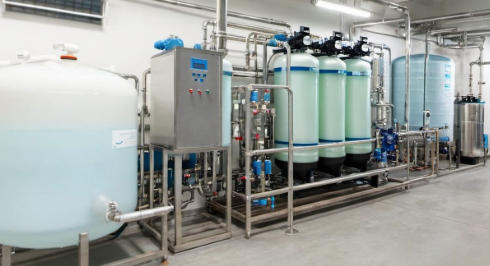
FAQ
(1) What is Pharmaceutical Water Trearment Equipment for UAE pharma plants?
Pharmaceutical Water Trearment Equipment for UAE plants refers to the systems that take raw or municipal water and convert it into purified water, highly purified water, WFI and pure steam suitable for pharmaceutical use. These systems typically combine pre‑treatment, reverse osmosis, polishing technologies, distillation, pure steam generation, hygienic storage and distribution loops under strict quality control.
(2) Why choose Ningbo Everheal as a key Pharmaceutical Water Trearment Equipment Manufacturer for UAE?
Ningbo Everheal is an attractive choice because it offers integrated solutions that span purified water systems, WFI generators, pure steam equipment, liquid filling lines and sterilization systems. The company also provides factory layout planning and production line engineering, helping UAE clients coordinate utilities and process equipment through a single specialized partner, which simplifies project management and validation.
(3) How do Pharmaceutical Water Trearment Equipment Manufacturers ensure compliance with global standards?
Leading manufacturers ensure compliance by designing systems in line with GMP principles and relevant pharmacopoeial requirements for purified water and WFI. They use certified materials, hygienic construction methods, validated automation platforms and extensive testing. Detailed documentation and support for qualification protocols allow pharmaceutical clients to demonstrate regulatory compliance during inspections and audits.
(4) What should UAE buyers check before ordering Pharmaceutical Water Trearment Equipment?
UAE buyers should first clarify required water grades, daily and peak demand, redundancy expectations and future expansion plans. They should then assess each manufacturer’s track record, technical depth, documentation quality, after‑sales service capability in the region and ability to integrate systems with existing or planned facilities. Evaluating energy efficiency and lifecycle operating costs is also important in UAE conditions.
(5) Can one project combine multiple Pharmaceutical Water Trearment Equipment Manufacturers in the UAE?
Yes, many projects successfully combine several suppliers. A UAE plant might select Ningbo Everheal for high‑purity water, WFI and pure steam systems, while partnering with local companies for pre‑treatment, wastewater treatment and environmental solutions. This approach balances specialized pharmaceutical expertise with localized support and can deliver a more optimized, resilient overall water infrastructure.


