Content Menu
● The Growing Importance of Water Treatment in the Pharmaceutical Sector
● Key Technologies in Pharmaceutical Water Treatment
>> 1. Reverse Osmosis (RO) Systems
>> 2. Electrodeionization (EDI)
>> 3. Multi‑Effect Distillation (MED) and Vapor Compression (VC)
>> 4. Pure Steam Generators
>> 5. Clean‑in‑Place (CIP) and Sterilize‑in‑Place (SIP) Systems
● Why Choose Specialized Pharmaceutical Water Systems
● Leading Pharmaceutical Water Treatment Equipment Manufacturers in the Middle East
>> 1. Everheal (China – Serving the Middle East)
>> 2. Aquatech Middle East
>> 3. Merck Millipore (Regional Operations)
>> 4. Arabian Water Engineers LLC (Saudi Arabia)
>> 5. Veolia Water Technologies Middle East
● Market Opportunities for Equipment Suppliers in the Middle East
● Everheal's Contribution to the Middle East Pharmaceutical Industry
● Technical Challenges in Water Treatment for Pharmaceuticals
● Regulatory Compliance and Quality Assurance
● Sustainability and Future Trends
● Conclusion
● FAQs About Pharmaceutical Water Treatment Equipment
>> 1. What is pharmaceutical water treatment equipment?
>> 2. Why is purified water important in pharmaceuticals?
>> 3. How do manufacturers validate pharmaceutical water systems?
>> 4. What are the common types of water used in pharmaceutical production?
>> 5. How does Everheal support clients in the Middle East?
The Middle East has become one of the fastest‑growing regions for the pharmaceutical industry. With strong government investment, booming healthcare infrastructure, and a rising focus on drug safety, the demand for pharmaceutical water treatment equipment manufacturers has never been higher. From purified water systems to clean steam generators, the industry depends on high‑quality water to ensure compliance with Good Manufacturing Practice (GMP) standards and international pharmacopoeia requirements.
This article explores the top pharmaceutical water treatment equipment manufacturers and suppliers in the Middle East, examines the region's market potential, highlights leading technologies, and showcases how Chinese innovators like Everheal are contributing to global pharmaceutical production excellence.
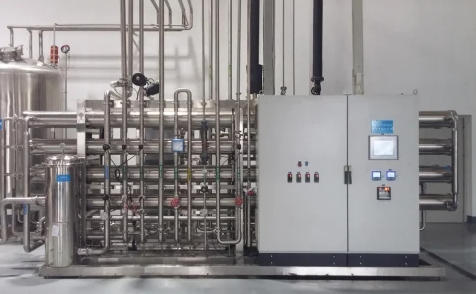
The Growing Importance of Water Treatment in the Pharmaceutical Sector
Pharmaceutical manufacturing relies heavily on ultrapure water. Every process — from formulation, cleaning, and sterilization to equipment cooling — demands strict water quality control. According to the European Pharmacopoeia and the United States Pharmacopeia (USP), water used for pharmaceutical production is categorized into three major grades: Purified Water (PW), Water for Injection (WFI), and Highly Purified Water (HPW).
In the Middle East, as pharmaceutical plants expand, the need for sophisticated water purification and distillation systems has surged. Governments in Saudi Arabia, the UAE, Egypt, and Jordan are promoting local production of essential medicines, pushing factories to adopt advanced treatment solutions that can guarantee compliance with global standards while maintaining operational efficiency.
Key Technologies in Pharmaceutical Water Treatment
Modern pharmaceutical water treatment equipment manufacturers use several advanced technologies to meet stringent quality standards. Typical systems integrate multiple purification stages to remove chemical, microbial, and particulate contaminants.
1. Reverse Osmosis (RO) Systems
RO systems are the backbone of most purification setups. They remove up to 99% of ions, bacteria, and organics through a semi‑permeable membrane. For pharmaceutical applications, double‑pass RO is often used to meet the tight conductivity and TOC (Total Organic Carbon) requirements.
2. Electrodeionization (EDI)
After RO, EDI helps in continuously polishing water to achieve high purity without the need for chemical regeneration. It's a key technology accepted in GMP facilities for producing purified water and serves as a greener alternative to ion exchange resins.
3. Multi‑Effect Distillation (MED) and Vapor Compression (VC)
To produce Water for Injection (WFI), distillation remains the gold standard. Multi‑effect distillers and vapor compression distillers ensure the highest microbiological purity, making them vital in pharmaceutical water treatment equipment solutions.
4. Pure Steam Generators
Pure steam is necessary for sterilizing vessels, pipelines, and filling machines. Equipment designed to produce pyrogen‑free steam ensures sterilization integrity across the plant.
5. Clean‑in‑Place (CIP) and Sterilize‑in‑Place (SIP) Systems
Efficient cleaning and sterilizing systems maintain sanitary conditions in production lines, prolong equipment life, and minimize downtime.
Why Choose Specialized Pharmaceutical Water Systems
Unlike general industrial water purifiers, pharmaceutical water treatment equipment demands validated performance under GMP, cGMP, and FDA standards. Several reasons drive the preference for specialized equipment:
- Regulatory compliance: Systems must meet USP, EP, JP, and WHO standards.
- Sterile design: All contact surfaces use stainless steel 316L or higher.
- Automated monitoring: Continuous control of conductivity, flow rate, and microbial load.
- Documentation support: IQ/OQ/PQ validation ensures traceable quality control.
Choosing a professional pharmaceutical water treatment equipment manufacturer ensures regulatory compliance, reliability, and seamless integration with other production systems such as filling, sterilization, and packaging lines.
Leading Pharmaceutical Water Treatment Equipment Manufacturers in the Middle East
1. Everheal (China – Serving the Middle East)
Everheal is a leading Chinese company specializing in complete pharmaceutical engineering solutions. The company provides purified water preparation systems, pure steam generators, multi‑effect distillation systems, liquid filling and sealing machines, and sterilization systems.
With decades of expertise, Everheal helps Middle Eastern clients design integrated layouts and production lines. Its customized water treatment systems meet the most demanding GMP standards, and its service includes detailed documentation, validation, and on‑site training.
Everheal's modularized design concept allows for cost‑effective installation, faster operation, and long‑term reliability, making it one of the most trusted pharmaceutical water treatment equipment manufacturers collaborating with Middle Eastern pharmaceutical producers.
2. Aquatech Middle East
Headquartered in the UAE, Aquatech Middle East provides advanced RO, EDI, and distillation equipment for pharmaceutical, biotechnology, and cosmetic industries. Its pharmaceutical water systems adhere to USP and EP standards and are widely used by contract manufacturing organizations (CMOs) across the region.
Their focus on sustainability and water recycling aligns with the Middle East's water conservation goals.
3. Merck Millipore (Regional Operations)
Merck Millipore, a globally recognized provider of laboratory and process water solutions, supplies validated water preparation units and storage systems across the Middle East. Its modular designs are favored for research facilities, small‑scale production, and vaccine manufacturing setups.
4. Arabian Water Engineers LLC (Saudi Arabia)
Based in Riyadh, Arabian Water Engineers LLC offers custom pharmaceutical water systems integrating pretreatment, RO, UV sterilization, and distillation units. The company provides engineering design, installation, and after‑sales maintenance, ensuring local compliance with SFDA guidelines.
5. Veolia Water Technologies Middle East
Veolia, a global leader in water management, has numerous pharmaceutical clients in the Gulf region. Its technology portfolio includes multi‑effect distillation and ultra‑filtration equipment for critical clean water and clean steam applications.
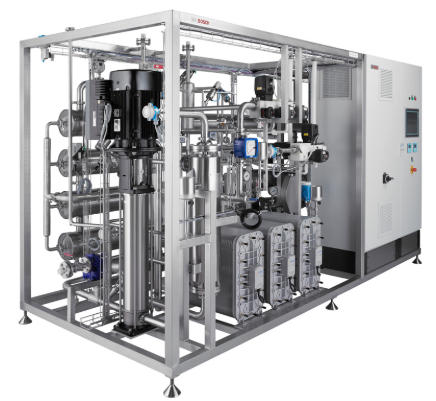
Market Opportunities for Equipment Suppliers in the Middle East
The Middle Eastern pharmaceutical market is expanding at over 9% CAGR (2024–2030). National healthcare visions such as UAE Vision 2030 and Saudi Arabia's Vision 2030 prioritize local drug manufacturing.
This development offers multiple opportunities for pharmaceutical water treatment equipment manufacturers:
- New facility projects: Governments encourage local plants via incentives and import substitution strategies.
- Regulatory upgrades: More countries enforce GMP and WHO certification, requiring validated purification systems.
- R&D expansion: Biotech start‑ups and vaccine developers demand high‑purity water for testing and formulation.
- After‑sale services: Preventive maintenance and system validation services provide continual revenue streams.
Everheal's Contribution to the Middle East Pharmaceutical Industry
As manufacturing moves toward smart automation, Everheal is introducing intelligent water systems featuring digital control, automatic data recording, and real‑time conductivity monitoring. The systems combine high efficiency, energy savings, and ease of maintenance.
Everheal offers a one‑stop service model covering:
1. Project planning and engineering design
2. Equipment manufacturing and testing
3. On‑site installation and validation
4. Operator training and technical support
By integrating pure water, pure steam, sterilization, and filling solutions, Everheal ensures seamless compliance with GMP audit requirements. The company's global references and proven track record establish its reputation among top pharmaceutical water treatment equipment manufacturers serving the Middle East and beyond.
Technical Challenges in Water Treatment for Pharmaceuticals
The harsh climate of the Middle East presents unique challenges. High ambient temperatures and limited freshwater resources require water systems that minimize waste and energy consumption.
Key challenges include:
- High feedwater salinity: Demands robust pretreatment and scaling prevention design.
- Microbial control: Maintaining low microbial counts under hot and humid conditions.
- Energy efficiency: Using heat recovery and intelligent control reduces operational costs.
- Validation complexity: Facilities must perform regular IQ/OQ/PQ testing under pharmacy authorities' audits.
To address these, pharmaceutical water treatment equipment manufacturers adopt advanced features such as double‑pass RO, hot water sanitation, and real‑time monitoring software.
Regulatory Compliance and Quality Assurance
GMP and cGMP guidelines require pharmaceutical manufacturers to document every aspect of water system operation. Validation ensures the system consistently produces water meeting the predefined quality.
Everheal and other major suppliers design systems that comply with:
- USP and EP classifications for PW, HPW, and WFI
- FDA and WHO GMP validation requirements
- ISPE Baseline Guides for engineering documentation
- Automatic Data Recording (ADR) systems for 21 CFR Part 11 compliance
These integrated features help clients smoothly pass inspections from auditors in Saudi Arabia, the UAE, and other international authorities.
Sustainability and Future Trends
Sustainability is becoming the defining theme for the next decade. The region's pharmaceutical manufacturers are investing heavily in green technologies and wastewater recycling.
Future trends in pharmaceutical water treatment include:
- Hybrid systems combining RO + EDI + UV sanitation
- Artificial Intelligence (AI) for predictive maintenance
- Real‑time monitoring with cloud‑based dashboards
- Energy recycling from distillation condensate
Manufacturers that can innovate in these areas — such as Everheal — will remain highly competitive in the Middle Eastern market.
Conclusion
As the Middle East continues its transformation into a pharmaceutical manufacturing hub, the role of pharmaceutical water treatment equipment manufacturers becomes ever more crucial. Reliable purified water and clean steam systems are the foundation of safe, compliant drug production.
Companies like Everheal bring world‑class engineering, advanced technology, and turnkey integration capabilities to meet the region's unique challenges. Their expertise supports pharmaceutical producers from project conception to continuous operation, ensuring efficiency, compliance, and sustainability.
The partnership between technology innovators and growing pharmaceutical firms ensures that the Middle East will remain a significant player in the global pharmaceutical supply chain for decades to come.
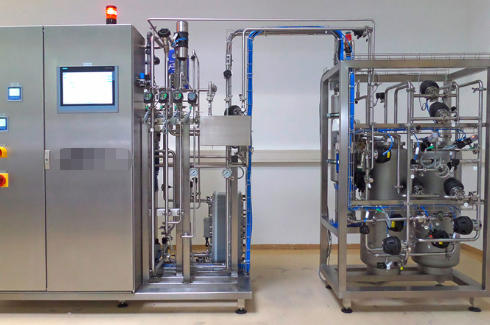
FAQs About Pharmaceutical Water Treatment Equipment
1. What is pharmaceutical water treatment equipment?
Pharmaceutical water treatment equipment consists of systems that purify, distill, or generate clean water and steam for drug manufacturing processes. These systems ensure water meets USP or EP purity standards for safe pharmaceutical production.
2. Why is purified water important in pharmaceuticals?
Purified water is essential for preventing contamination in drug products. It's used in formulation, equipment cleaning, and sterilization, ensuring both product quality and compliance with GMP.
3. How do manufacturers validate pharmaceutical water systems?
Manufacturers perform Installation Qualification (IQ), Operational Qualification (OQ), and Performance Qualification (PQ) to document that the system meets design and operational specifications before production.
4. What are the common types of water used in pharmaceutical production?
The main categories include Purified Water (PW), Water for Injection (WFI), and Highly Purified Water (HPW). Each type serves different manufacturing requirements depending on the final product application.
5. How does Everheal support clients in the Middle East?
Everheal provides customized turnkey solutions — from purified water systems and pure steam generators to validation documentation and operator training — ensuring seamless GMP compliance for Middle Eastern pharmaceutical producers.


