Content Menu
● Understanding CPAP and Its Dependence on Water
● What Is Distilled Water?
● What Is Purified Water?
● Distilled vs. Purified Water: Key Differences
● Why Distilled Water Is Preferred for CPAP Machines
● How Everheal's Distillation Water Machines Support Medical Applications
>> Key Features of Everheal's Distillation Solutions
● The Role of Water Quality in Patient Safety
● Can You Use Purified Water Instead?
● How to Maintain CPAP Humidifier Hygiene
● The Environmental and Economic Impact of Distilled Water
● Choosing the Right Distillation Water Machine
● Conclusion
● FAQs About Purified and Distilled Water for CPAP
>> 1. Can I use tap water in my CPAP machine?
>> 2. Is bottled water safe to use?
>> 3. Can I make distilled water at home?
>> 4. What happens if I use purified water instead of distilled?
>> 5. How often should I replace the water in my CPAP humidifier?
Ensuring clean and safe water for medical equipment like CPAP machines is essential for maintaining patients' health and the longevity of the device. Many users are confused about whether purified water and distilled water are interchangeable when it comes to CPAP use. This article explores the differences, production methods, and implications for CPAP users, while also highlighting the importance of Distillation Water Machine technology in medical and pharmaceutical water treatment.
Understanding CPAP and Its Dependence on Water
Continuous Positive Airway Pressure (CPAP) therapy is commonly used to treat sleep apnea by keeping airways open during sleep. Many CPAP machines include a built-in humidifier that adds moisture to the air, preventing dryness and irritation in the respiratory system. For this humidification to function safely, the water used must be free from impurities, minerals, and biological contaminants.
The choice of water—whether purified or distilled—directly affects not only the user's health but also the performance and durability of the machine. To understand which type is best, let's explore how these kinds of water differ in composition and production.
What Is Distilled Water?
Distilled water is produced through distillation, a process that involves boiling water to create steam, then condensing the steam back into liquid form. During this transformation, contaminants such as minerals, salts, and microorganisms are left behind, resulting in exceptionally pure water.
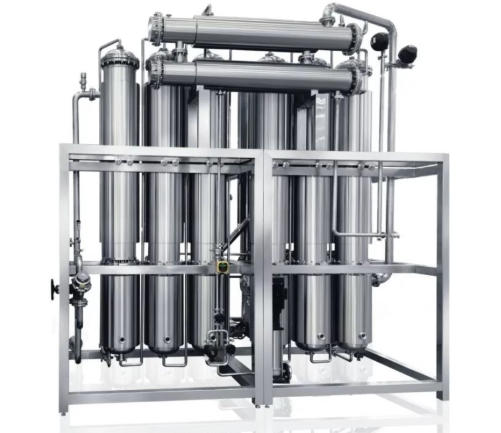
Modern Distillation Water Machines achieve this efficiently through a multi-step process that includes:
- Heating phase: Raw water is boiled until vaporized.
- Vapor collection: Steam separates from impurities and travels through a condenser.
- Condensation: Pure steam cools into liquid distilled water.
- Storage and quality control: The distilled water is collected and stored in sterile containers.
In industrial and pharmaceutical settings, equipment such as multi-effect distillers and pure steam generators—like those produced by Everheal—ensure consistent and validated water quality compliant with Good Manufacturing Practices (GMP).
What Is Purified Water?
Purified water broadly refers to water that has been mechanically filtered or processed to remove impurities such as chemicals and microbes. Unlike distillation, purification may use various methods including reverse osmosis (RO), deionization (DI), and carbon filtration.
Key purification methods include:
- Reverse Osmosis (RO): Pressure forces water through a semi-permeable membrane, trapping dissolved solids and contaminants.
- Deionization (DI): Ion exchange resins remove charged particles, including calcium, magnesium, sodium, and chloride.
- Ultrafiltration and UV Sterilization: Additional stages that kill bacteria or viruses and remove microscopic particulates.
While purified water is very clean, the exact purity depends on the method used and whether the system is properly maintained.
Distilled vs. Purified Water: Key Differences
Although both types of water aim to eliminate contaminants, they are not identical. The distinction lies in how they are produced and the degree of purity achieved.
| Feature | Distilled Water | Purified Water |
| Production method | Boiling and condensation | RO, DI, or filtration methods |
| Mineral removal | Removes nearly all minerals | Removes most minerals but may leave traces |
| Microbes and chemicals | Eliminated through boiling | Removed, depending on filtration type |
| CPAP compatibility | Ideal for humidifiers | Acceptable if high purity verified |
| Equipment used | Distillation Water Machine | RO or purification systems |
In simple terms, all distilled water is purified, but not all purified water is distilled.
Why Distilled Water Is Preferred for CPAP Machines
CPAP manufacturers generally recommend distilled water for several reasons:
1. Mineral-free composition: Tap or partially purified water may contain calcium, magnesium, and other minerals that can accumulate inside the humidifier, leading to scaling and damage.
2. Bacteria prevention: Distilled water minimizes microbial contamination, reducing the risk of inhaling harmful organisms.
3. Longer machine life: Using distilled water prevents residue buildup and extends the lifespan of the CPAP's internal components.
4. Stable performance: Pure, consistent water ensures accurate humidity levels during therapy.
Given these benefits, distilled water remains the safest and most reliable choice.
How Everheal's Distillation Water Machines Support Medical Applications
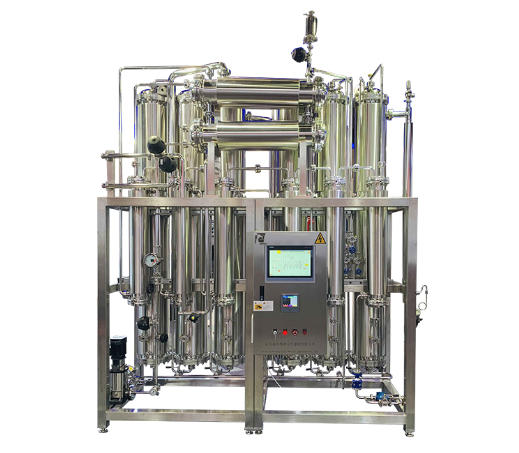
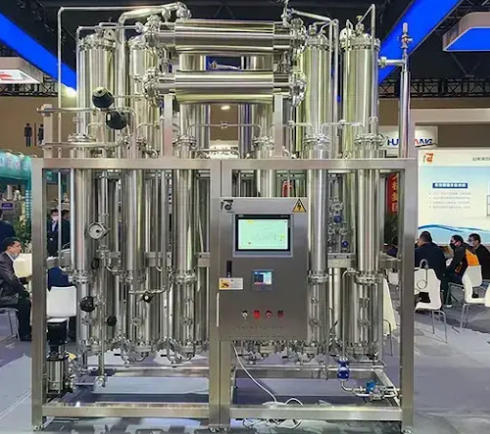
Everheal specializes in the design and manufacture of advanced Distillation Water Machines that meet stringent pharmaceutical and medical standards. These systems are widely used in the production of purified water, distilled water, and pure steam for medicines, sterile products, and sensitive medical equipment like CPAP devices.
Key Features of Everheal's Distillation Solutions
- Multi-effect distillation technology that achieves high efficiency with low energy consumption.
- Automatic control systems ensuring constant quality and consistent output.
- 316L stainless steel construction for hygiene and corrosion resistance.
- Validation and documentation support for compliance with GMP and FDA requirements.
By integrating Everheal's Distillation Water Machine in your manufacturing or hospital water supply network, you can achieve cost-effective production of distilled water suitable for medical devices and laboratory use.
The Role of Water Quality in Patient Safety
For CPAP therapy, using the right water type is more than a maintenance issue—it's a matter of safety. Contaminated or mineral-laden water can cause:
- Respiratory infections due to microbial growth in the humidifier tank.
- Allergic reactions triggered by trace chemicals in unfiltered water.
- Equipment failure from mineral deposits that clog or corrode components.
Using distilled water ensures patient comfort and avoids the risks associated with inconsistent water quality.
Can You Use Purified Water Instead?
If distilled water is temporarily unavailable, high-quality purified water may serve as a substitute, especially when certified as microbial-free and low in total dissolved solids (TDS). However, users should avoid reusing or refilling with water that has not undergone proper sterilization.
A key factor is to ascertain that the purified water was processed by a reliable Distillation Water Machine or advanced purification system with equivalent output purity (typically ≤1 µS/cm conductivity).
How to Maintain CPAP Humidifier Hygiene
Regardless of the water type used, proper hygiene practices are essential:
1. Empty the water chamber after each use.
2. Clean the tank daily with mild soap or a vinegar solution.
3. Rinse thoroughly with distilled or purified water to remove residues.
4. Air dry components completely before reassembly.
5. Replace parts regularly according to manufacturer guidelines.
These steps complement the use of high-purity water and help ensure safe CPAP operation.
The Environmental and Economic Impact of Distilled Water
While distilled water offers unmatched purity, producing it on a large scale requires energy to power the distillation process. Modern Distillation Water Machines have evolved to reduce this burden by using multi-effect evaporation and waste-heat recovery systems. This not only decreases energy costs but also supports sustainable operations across healthcare and pharmaceutical industries.
Hospitals, laboratories, and medical device manufacturers increasingly rely on integrated systems provided by companies like Everheal to produce large volumes of high-quality distilled water efficiently.
Choosing the Right Distillation Water Machine
Selecting the appropriate Distillation Water Machine depends on various parameters:
- Water demand and daily output capacity
- Feed water quality (e.g., municipal, RO pretreated)
- Required conductivity and microbial limits
- Automation and monitoring requirements
- Compliance standards (GMP, USP, EP, etc.)
Everheal's expert engineers offer customized solutions, factory layout planning, and turnkey water system designs tailored to each client's operational goals.
Conclusion
So, is purified water the same as distilled water for a CPAP machine? Not exactly. While both are cleaner than regular tap water, only distilled water guarantees the ultrapure, mineral-free composition that CPAP humidifiers need for safe operation and longevity.
For healthcare providers, pharmaceutical producers, and medical equipment users, relying on advanced Distillation Water Machines—like those designed by Everheal—ensures consistent water purity aligned with medical safety standards. Investing in proper water systems not only protects patients but also enhances the reliability of every device that depends on clean water quality.
FAQs About Purified and Distilled Water for CPAP
1. Can I use tap water in my CPAP machine?
No. Tap water contains minerals, chlorine, and microbes that can damage the machine or pose health risks. Always use distilled or high-purity water.
2. Is bottled water safe to use?
Not necessarily. Many bottled waters contain minerals or additives for taste enhancement, which may leave residues in the humidifier chamber.
3. Can I make distilled water at home?
Yes, but home distillation is time-consuming and may not achieve pharmaceutical purity. Using an industrial-grade Distillation Water Machine ensures consistency and safety.
4. What happens if I use purified water instead of distilled?
Short-term use of purified water is acceptable, but only if its quality is verified. Over time, any residual minerals may still cause buildup inside your CPAP equipment.
5. How often should I replace the water in my CPAP humidifier?
Replace the water after every use and clean the tank daily to prevent bacterial growth, even if you are using distilled water.


