Content Menu
● Israel's Pharmaceutical Manufacturing Landscape
● Key Requirements For Pharmaceutical Mixing Tanks
● Leading Mixing Tank Players Relevant To Israel
● How To Evaluate Pharmaceutical Mixing Tank Manufacturers And Suppliers
● Typical Configurations Of Pharmaceutical Mixing Tanks
● Integration Of Mixing Tanks Into Israeli Production Lines
● Everheal As A Strategic Export Partner
● Working With Israeli And Global Suppliers: A Practical Approach
● Comparison Of Supplier Types For Israel Projects
● Future Trends In Pharmaceutical Mixing For Israel
● Risk Management When Choosing Pharmaceutical Mixing Tank Manufacturers And Suppliers
● Practical Example: Building A Liquid Syrup Line
● Conclusion
● FAQ
>> 1. What should I look for in Pharmaceutical Mixing Tank Manufacturers And Suppliers for Israeli projects?
>> 2. Are general industrial mixing tanks suitable for pharmaceutical use in Israel?
>> 3. How can Everheal support local Israeli Pharmaceutical Mixing Tank Manufacturers And Suppliers?
>> 4. Why is CIP/SIP capability critical for pharmaceutical mixing tanks in Israel?
>> 5. How do automation and data integration influence the choice of Pharmaceutical Mixing Tank Manufacturers And Suppliers?
● Citations:
Israel has a rapidly growing life-science and biotech ecosystem, and the demand for reliable Pharmaceutical Mixing Tank Manufacturers And Suppliers is increasing year by year. For global buyers, identifying local partners in Israel and integrating them with proven international exporters is the most effective way to build compliant, efficient, and scalable liquid-processing lines.
Israel hosts a dense cluster of pharmaceutical manufacturers, biotech startups, and contract manufacturing organizations that require validated mixing, blending, and storage solutions for liquid, semi-solid, and suspension formulations. Facilities typically operate under strict GMP, cGMP, ISO, and local Ministry of Health regulations, which directly shape the specifications buyers must request from Pharmaceutical Mixing Tank Manufacturers And Suppliers.
These sites produce a broad spectrum of dosage forms, including oral liquids, syrups, suspensions, and sterile products, all of which rely on precisely engineered mixing tanks and vessels. As a result, there is a strong market for stainless-steel sanitary vessels with CIP/SIP capability, validated surface finishes, and advanced agitation systems supplied by specialized Pharmaceutical Mixing Tank Manufacturers And Suppliers.
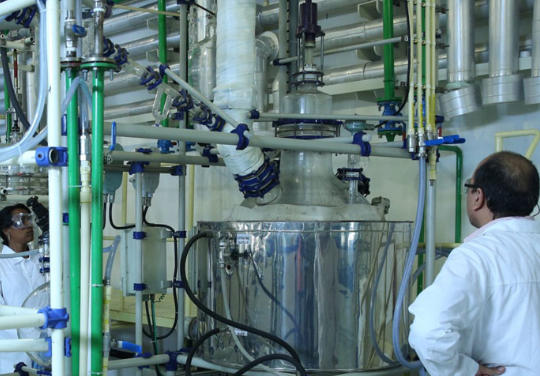
Israel's Pharmaceutical Manufacturing Landscape
Israel is recognized as one of the most innovative hubs for life sciences, combining pharmaceutical giants, agile biotech firms, and university-linked research centers. This concentration of R&D and manufacturing activity creates continuous demand for process equipment that can scale from lab to pilot to full commercial production without compromising quality.
In practice, that means pharmaceutical facilities in Israel need mixing tanks not only for traditional small-molecule drugs, but also for biologics, vaccines, and advanced formulations. Project teams must carefully define the role of each mixing tank within the overall process: solution preparation, buffer mixing, product compounding, holding, or final bulk storage before filling.
Because many of these companies work under strict export requirements, their equipment decisions are heavily influenced by FDA, EMA, and other international regulatory expectations. Pharmaceutical Mixing Tank Manufacturers And Suppliers that understand these expectations and can provide complete documentation find a particularly strong market in Israel.
Key Requirements For Pharmaceutical Mixing Tanks
Modern pharmaceutical plants in Israel and worldwide look for mixing systems that guarantee process repeatability, aseptic integrity, and regulatory compliance. To source effectively from Pharmaceutical Mixing Tank Manufacturers And Suppliers, buyers should clearly define a set of technical and regulatory requirements before requesting quotations.
Typical requirements include:
- GMP and cGMP-compliant design, with traceable materials and documented fabrication procedures.
- Construction from 304 or 316L stainless steel, often with controlled surface roughness to minimize microbial adhesion in product-contact areas.
- Appropriate tank sizing and aspect ratios to handle specific batch volumes while avoiding vortex formation and ensuring homogenous mixing.
- Integration-ready jackets or coils for heating and cooling, supporting precise temperature control during reactions or solution preparation.
- Validated CIP/SIP capability, including spray balls, steam lines, and drainability to support aseptic operations.
- Agitator and mixer configurations matched to product rheology and process goals, such as high-shear dispersing for suspensions or gentle agitation for shear-sensitive actives.
Because these requirements impact both capital expenditure and operating cost, Pharmaceutical Mixing Tank Manufacturers And Suppliers that can provide process engineering support typically deliver higher lifecycle value. They help users optimize mixing time, energy consumption, and cleaning cycles, which are all crucial for competitive operation.
Leading Mixing Tank Players Relevant To Israel
While Israel has local engineering and project companies that integrate process vessels, many Pharmaceutical Mixing Tank Manufacturers And Suppliers serving Israeli plants are global exporters with experience in sanitary industries. Buyers often combine local project management with imported, certified vessels to balance responsiveness and technology depth.
Among the local and regional ecosystem, engineering groups and industrial mixing specialists provide a range of stainless-steel process tanks, agitators, and complete mixing systems. These companies frequently serve multiple industries, including food, cosmetics, and chemicals, while also supporting pharmaceutical-grade projects when properly specified.
On the international side, there are OEMs dedicated to pharmacological and pharmaceutical tanks, supplying fully engineered stainless-steel mixing and storage vessels for critical process steps. Global sanitary tank brands also provide GMP-compliant tanks for pure water, buffer preparation, and biotech processes that can be integrated into Israeli facilities, often through local agents or engineering partners.
When evaluating these Pharmaceutical Mixing Tank Manufacturers And Suppliers for projects in Israel, it is essential to check their track record in regulated pharma environments rather than only general industrial applications. Previous project references, documentation samples, and successful inspections are strong indicators of competence.
How To Evaluate Pharmaceutical Mixing Tank Manufacturers And Suppliers
Choosing the right partner involves both technical and commercial evaluation. Decision makers should create a structured checklist that aligns plant requirements with the capabilities of shortlisted Pharmaceutical Mixing Tank Manufacturers And Suppliers.
Key evaluation dimensions include:
- Regulatory experience: Evidence of supplying equipment into cGMP facilities and familiarity with validation documentation such as FAT, SAT, IQ/OQ, and associated protocols.
- Engineering depth: Ability to recommend impeller types, baffle configurations, and tank geometry based on viscosity, solid content, and mixing objectives.
- Material and fabrication quality: Use of high-grade stainless steel, high-quality welds, passivation, and appropriate surface finishing verified by inspection.
- Customization capability: Flexibility to adapt nozzles, manways, jackets, clean-in-place components, instrumentation ports, and control interfaces based on the user's URS.
- After-sales support: Availability of spare parts, remote troubleshooting, and long-term service agreements for critical equipment in Israeli sites.
Pharmaceutical Mixing Tank Manufacturers And Suppliers that can provide detailed process data, 3D drawings, and lifecycle support documentation usually deliver smoother project execution and easier regulatory inspections. Their involvement in design reviews, HAZOP studies, and commissioning also contributes to safer and more robust operations.
Typical Configurations Of Pharmaceutical Mixing Tanks
Pharmaceutical processes in Israel use a range of mixing tank configurations tailored to product type and batch strategy. Selecting the right configuration from Pharmaceutical Mixing Tank Manufacturers And Suppliers ensures consistent quality and efficient scale-up.
Common configurations include:
- Atmospheric mixing tanks for non-sterile oral liquids and syrups, often with low-to-medium shear agitators and temperature control.
- Pressure-rated vessels for processes involving gas dispersion, vacuum deaeration, or reactions requiring elevated pressure or vacuum conditions.
- Jacketed and insulated tanks for controlled heating or cooling of sensitive formulations, including biologics and temperature-sensitive actives.
- Aseptic mixing vessels for sterile injectables or high-risk formulations, designed with sanitary fittings, aseptic seals, and full drainability to avoid dead legs.
- Skid-mounted systems that combine tanks, pumps, valves, filtration units, and control panels into integrated process units for faster installation.
Pharmaceutical Mixing Tank Manufacturers And Suppliers who can offer both standard models and highly customized solutions allow Israeli buyers to mix and match equipment within the same plant while maintaining consistent quality standards. For instance, a facility may use a series of standardized buffer tanks alongside a fully customized compounding vessel built for a specific high-value product.
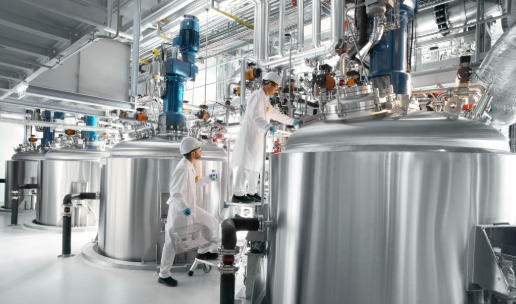
Integration Of Mixing Tanks Into Israeli Production Lines
In addition to stand-alone vessels, Israeli pharma and biotech companies often require complete line integration, from raw material dissolution to final bulk storage prior to filling. This integration frequently involves combining local project companies with global Pharmaceutical Mixing Tank Manufacturers And Suppliers and automation partners.
Key integration points include:
- Process flow design that ensures logical sequencing of mixing, holding, filtration, and transfer steps with minimal product loss and controlled exposure.
- Compatibility with upstream utilities such as pure water systems, clean steam, HVAC, and process gases, all of which feed the mixing stages and affect product quality.
- Downstream connectivity to liquid filling and capping machines, sterilization systems, and packaging lines, which must receive product under carefully controlled conditions.
- Automation and control through PLC or DCS platforms, enabling recipe management, batch recording, and alarm handling in line with data-integrity expectations.
Pharmaceutical Mixing Tank Manufacturers And Suppliers that understand these integration challenges can cooperate more efficiently with Israeli engineering teams and EPC contractors. Their ability to coordinate nozzle orientation, instrumentation placement, and skid layout with adjacent equipment significantly reduces commissioning time.
Everheal As A Strategic Export Partner
Beyond local sourcing, many Israeli buyers look to specialized international suppliers that provide full-line pharmaceutical process solutions, from water preparation to mixing, filling, and sterilization. Everheal, as a Chinese company focused on pharmaceutical equipment, can complement local Pharmaceutical Mixing Tank Manufacturers And Suppliers by delivering engineered systems and complete production-line packages.
Everheal's portfolio includes:
- Pure water preparation systems and pure steam generators that supply utility media to upstream and downstream processes.
- Multifunctional distillation units designed for pharmaceutical-grade water and solvent handling.
- Liquid filling and sealing machines that connect seamlessly with mixing and holding tanks to form a continuous liquid line.
- Sterilization systems that support terminal sterilization or component sterilization workflows, depending on process strategy.
By combining custom factory layout planning, production-line design, and high-quality process equipment, Everheal can work alongside local Pharmaceutical Mixing Tank Manufacturers And Suppliers to build efficient plants for Israeli and global clients. The company's experience in configuring layouts for different cleanroom classes and production capacities helps investors shorten project timelines.
Working With Israeli And Global Suppliers: A Practical Approach
International buyers sourcing for projects in or near Israel often coordinate multiple vendors across different countries. A structured sourcing approach improves communication and reduces risk when dealing with various Pharmaceutical Mixing Tank Manufacturers And Suppliers at once.
Recommended steps include:
1. Define a user requirement specification (URS) that clearly states product types, batch sizes, regulatory requirements, cleaning strategy, and integration needs.
2. Shortlist local Israeli integrators and international Pharmaceutical Mixing Tank Manufacturers And Suppliers capable of meeting those specifications and providing compliant documentation.
3. Request detailed technical proposals, including drawings, materials of construction, mixing performance data, utility requirements, and preliminary P&IDs.
4. Evaluate total cost of ownership, incorporating energy use, cleaning requirements, maintenance intervals, spare-parts strategy, and expected service life.
5. Plan for FAT, SAT, and qualification activities with clear responsibilities between project teams and suppliers, including timelines and acceptance criteria.
This approach helps buyers exploit the strengths of both Israeli engineering capabilities and experienced global Pharmaceutical Mixing Tank Manufacturers And Suppliers. It also minimizes miscommunication during design and installation, which can otherwise cause delays and cost overruns.
Comparison Of Supplier Types For Israel Projects
Different project strategies may involve different types of suppliers. The following comparison highlights how each type of partner contributes to building effective pharmaceutical mixing systems for Israel-related projects.
| Supplier type | Typical strengths | Typical limitations |
| Local Israeli project integrators | Strong on-site presence, understanding of local regulation and building codes, ability to coordinate installation and commissioning across multiple trades. | Often rely on third-party Pharmaceutical Mixing Tank Manufacturers And Suppliers for complex vessels, high-end agitation systems, or highly specialized pharma designs. |
| Global tank OEMs | Deep expertise in stainless-steel tank design, advanced mixing technology, and proven references in pharmaceutical and biotech facilities worldwide. | Longer lead times and logistics complexity when shipping to Israel; service activities may require local partners or long-distance travel. |
| International full-line solution providers (such as Everheal) | Capability to deliver integrated lines, from utilities to mixing, filling, and sterilization, along with layout design and process optimization. | Need careful coordination with local contractors and consultants to match site-specific regulations, languages, and infrastructure. |
| General industrial mixing suppliers | Competitive pricing, large range of tank sizes and configurations for multiple industries, flexible customization for non-sterile applications. | Not all equipment is optimized for stringent pharmaceutical GMP, so thorough specification checks and upgrades may be required. |
When choosing among these options, buyers should prioritize Pharmaceutical Mixing Tank Manufacturers And Suppliers that can demonstrate concrete experience in regulated pharma or biotech projects. In some cases, a hybrid model—using a full-line provider for core systems and local partners for auxiliary equipment—delivers the best balance.
Future Trends In Pharmaceutical Mixing For Israel
As Israel's life-science sector continues to innovate, process equipment expectations are evolving. Pharmaceutical Mixing Tank Manufacturers And Suppliers are responding with smarter, more connected, and more sustainable solutions that appeal to Israeli manufacturers.
Key trends include:
- Increased adoption of automation-ready mixing tanks with integrated sensors (temperature, level, conductivity, torque) and connectivity for real-time monitoring and data collection.
- Greater emphasis on flexible, multi-product vessels that enable faster changeover, reduced cleaning times, and support for smaller, more frequent batches typical of personalized medicine.
- Sustainability-driven design, focusing on energy-efficient agitation, optimized cleaning cycles, reduced water and steam consumption, and better insulation to cut heat loss.
- More modular, skid-based offerings from Pharmaceutical Mixing Tank Manufacturers And Suppliers that simplify deployment in existing buildings with limited space and access.
These trends create opportunities for cooperative projects where Everheal and other global partners align their equipment portfolios to the needs of Israeli manufacturers and CMOs. Buyers who factor these directions into their current investments will be better positioned for future upgrades and regulatory expectations.
Risk Management When Choosing Pharmaceutical Mixing Tank Manufacturers And Suppliers
Beyond technical specifications, risk management should guide procurement decisions. A mixing tank that fails, leaks, or cannot be properly cleaned can lead to costly downtime, product loss, or even regulatory action.
Important risk-related considerations include:
- Supplier stability: Long-term financial and operational stability of Pharmaceutical Mixing Tank Manufacturers And Suppliers, ensuring they remain available for service, upgrades, and spare parts.
- Documentation quality: Accuracy and completeness of manuals, drawings, material certificates, and validation documents to avoid delays during qualification.
- Change control: Clear procedures for handling design changes, deviations, and non-conformities during fabrication and installation.
- Training and knowledge transfer: Availability of training for operators, maintenance technicians, and quality staff so the equipment is used correctly from day one.
By embedding these aspects into the selection process, buyers reduce surprises and protect the long-term performance of their investment in mixing systems.
Practical Example: Building A Liquid Syrup Line
To illustrate how these concepts come together, consider an investor setting up a liquid syrup line for the Israeli market and export. The process might include:
- A purified water system feeding one or more preparation tanks.
- A main mixing tank where active ingredients, solvents, and excipients are combined under controlled agitation and temperature.
- A holding tank that keeps the product homogeneous while waiting for filtration and filling.
- A CIP system that cleans all tanks, transfer lines, and filters between batches.
In such a project, Pharmaceutical Mixing Tank Manufacturers And Suppliers must collaborate with water-system vendors, filtration specialists, and filling-machine providers. A partner like Everheal can supply utilities, mixing equipment, and filling solutions as an integrated package, while local Israeli integrators manage installation and connection to site services.
Conclusion
Israel's strong pharmaceutical and biotech ecosystem creates a robust demand for reliable Pharmaceutical Mixing Tank Manufacturers And Suppliers that can meet stringent regulatory and performance requirements. By combining local Israeli integrators, global tank OEMs, and international full-line solution providers such as Everheal, buyers can design and implement efficient, compliant, and future-ready liquid-processing lines.
Successful projects focus on clear user requirements, careful supplier evaluation, robust risk management, and a long-term view of equipment lifecycle. With the right mix of partners and technologies, investors can build pharmaceutical plants in Israel that are competitive, flexible, and prepared for future innovations in drug development and manufacturing.
FAQ
1. What should I look for in Pharmaceutical Mixing Tank Manufacturers And Suppliers for Israeli projects?
Buyers should verify GMP experience, stainless-steel quality, documented fabrication procedures, and the ability to provide validation support such as FAT, SAT, and IQ/OQ documentation. It is also important that Pharmaceutical Mixing Tank Manufacturers And Suppliers demonstrate strong engineering skills in matching agitator design and tank geometry to specific products and processes.
2. Are general industrial mixing tanks suitable for pharmaceutical use in Israel?
General industrial tanks may not satisfy cGMP, documentation, or surface-finish requirements expected in pharmaceutical environments. Before purchase, buyers must confirm that Pharmaceutical Mixing Tank Manufacturers And Suppliers can provide sanitary designs, traceable materials, appropriate surface finishes, and compliance with applicable pharmaceutical standards.
3. How can Everheal support local Israeli Pharmaceutical Mixing Tank Manufacturers And Suppliers?
Everheal can supply pure water systems, pure steam generators, multifunctional distillation equipment, liquid filling lines, and sterilization systems that integrate with locally sourced mixing vessels. By offering custom factory layout planning and complete production-line solutions, Everheal complements Israeli Pharmaceutical Mixing Tank Manufacturers And Suppliers and enhances overall plant performance.
4. Why is CIP/SIP capability critical for pharmaceutical mixing tanks in Israel?
CIP/SIP features enable automated, validated cleaning and sterilization of tanks, which is essential for preventing cross-contamination and meeting regulatory expectations. Pharmaceutical Mixing Tank Manufacturers And Suppliers that design tanks for effective cleaning help Israeli manufacturers reduce downtime, maintain consistent product quality, and support robust quality systems.
5. How do automation and data integration influence the choice of Pharmaceutical Mixing Tank Manufacturers And Suppliers?
Modern plants often require mixing tanks that can integrate with PLC or DCS systems, support recipe control, and provide process data for electronic batch records. Pharmaceutical Mixing Tank Manufacturers And Suppliers with strong automation capabilities create equipment that fits seamlessly into digitalized manufacturing strategies used by Israeli and global pharma companies.
Citations:
1. https://www.edal.co.il/Mixing-Tanks
2. https://mgt-mixing.com/about-mgt-industrial-mixing-solutions/
3. https://www.everhealgroup.com/top-pharmaceutical-equipment-manufacturers-and-suppliers-in-israel.html
4. https://makwell.com/mixer-machine/
5. https://www.marutimachines.com/israel/stainless-steel-blending-mixing-tank.html
6. https://ensun.io/search/pharmaceutical-machinery/israel
7. https://www.jbtc.com/foodtech/products-and-solutions/products/tanks-and-asme-pressure-vessels/mix-tanks/
8. https://mixingtanksusa.com/pharmacological-equipment/
9. https://ctspharma.com/company-overview/manufacturing/
10. https://ergil.com/process-vessels/mixing-vessel/
11. https://www.pharmaceutical-tech.com/products/aryan-engineers/aseptic-mixing-vessel
12. https://en.paulmueller.com/pharmaceutical-manufacturing-equipment/tanks
13. https://www.dayuwz.com/100-ton-Giant-Chemical-Mixing-Tank-Stainless-Steel-Chemical-Tank-for-Sale-pd508550348.html


