Content Menu
● The Role of Mixing Tanks in Pharmaceutical Manufacturing
>> Key Functions of Mixing Tanks
● Why the UAE Is a Growing Pharmaceutical Manufacturing Hub
>> Contributing Factors
● Criteria for Selecting Pharmaceutical Mixing Tank Manufacturers and Suppliers
● Top Pharmaceutical Mixing Tank Manufacturers And Suppliers in UAE
>> 1. Everheal Pharmaceutical Equipment Co., Ltd.
>> 2. Fabtech Technologies International Ltd.
>> 3. Neelam Industries
>> 4. Pharmaline Manufacturing Equipment LLC
>> 5. Ginhong Process Technology
>> 6. Wotek Technical Services LLC
>> 7. Stainless Engineering FZC
● Advantages of Working with UAE-Based Manufacturers
● Innovative Features in Modern Pharmaceutical Mixing Tanks
● How Everheal Supports UAE Pharmaceutical Manufacturing
● Conclusion
● FAQs About Pharmaceutical Mixing Tank Manufacturers and Suppliers in UAE
>> 1. What materials are used in pharmaceutical mixing tanks?
>> 2. How do I choose the right mixing tank supplier in the UAE?
>> 3. Are Everheal's mixing tanks suitable for sterile production?
>> 4. What capacity options are available for mixing tanks?
>> 5. Do UAE suppliers provide installation and maintenance services?
The United Arab Emirates (UAE) has rapidly become a crucial hub for pharmaceutical innovation and industrial production in the Middle East. With the growing demand for high-quality medicines and advanced healthcare infrastructure, the need for reliable Pharmaceutical Mixing Tank Manufacturers and Suppliers in the UAE is stronger than ever.
Mixing tanks are central to the pharmaceutical production process — ensuring consistency, purity, and precise formulation of liquid products such as syrups, vaccines, and injectable solutions. Their quality determines not only production efficiency but also product safety and compliance with global standards like GMP and FDA.
This article explores the top Pharmaceutical Mixing Tank Manufacturers and Suppliers in UAE, examines the critical specifications of mixing systems, and highlights how choosing the right partner can enhance your manufacturing process.
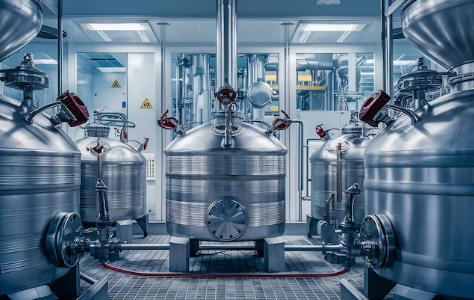
The Role of Mixing Tanks in Pharmaceutical Manufacturing
Pharmaceutical mixing tanks are integral to various formulation and compounding processes. They are designed to provide precise temperature control, uniform mixing, and hygienic storage conditions to prevent contamination.
Key Functions of Mixing Tanks
- Homogenization of ingredients for consistent product quality.
- Sterile mixing environments using stainless steel and sanitary designs.
- Automation compatibility with PLC or SCADA systems for process control.
- Efficient heating and cooling mechanisms for thermal-sensitive ingredients.
- Compliance with pharmaceutical standards like ASME-BPE, cGMP, and ISO.
By partnering with experienced Pharmaceutical Mixing Tank Manufacturers and Suppliers, companies can access advanced system solutions with automated controls, clean-in-place (CIP) design, and scalability options.
Why the UAE Is a Growing Pharmaceutical Manufacturing Hub
The UAE government's strong investment in healthcare infrastructure and pharmaceutical self-sufficiency has positioned the country as a regional leader. Several strategic initiatives — such as the *UAE Pharma Vision 2030* — aim to make the nation a competitive global production base.
Contributing Factors
- Advanced industrial zones like Dubai Industrial City and Khalifa Industrial Zone Abu Dhabi (KIZAD).
- Proximity to international markets, providing easy export access to Africa, Asia, and Europe.
- Government support for local medicine manufacturing and biotechnology startups.
- Strong regulatory framework aligned with global pharmaceutical manufacturing standards.
This environment encourages collaboration between technology providers, such as Pharmaceutical Mixing Tank Manufacturers and Suppliers, and local pharmaceutical producers seeking turnkey solutions for production lines.
Criteria for Selecting Pharmaceutical Mixing Tank Manufacturers and Suppliers
Selecting the right supplier is critical for consistent production quality and regulatory compliance. Here are key factors to consider when comparing Pharmaceutical Mixing Tank Manufacturers and Suppliers in UAE:
- Material quality: Most pharmaceutical tanks use 316L stainless steel for corrosion resistance and hygiene.
- Design standards: Ensure compliance with GMP and ASME-BPE requirements for cleanability and safety.
- Automation capability: Choose systems that include PLC control, process visualization, and batch recording.
- After-sales support: Local maintenance services and spare parts availability reduce downtime.
- Experience and portfolio: Suppliers with references in sterile manufacturing are more reliable partners.
A good manufacturer not only sells mixing tanks but also provides engineering consultation, customization, and validation documentation.
Top Pharmaceutical Mixing Tank Manufacturers And Suppliers in UAE
Let's review some of the most reputable Pharmaceutical Mixing Tank Manufacturers And Suppliers operating in the UAE market today. These companies combine advanced engineering with practical experience in pharmaceutical process design.
1. Everheal Pharmaceutical Equipment Co., Ltd.
Everheal, a leading Chinese manufacturer, has become a trusted global supplier for pharmaceutical production systems. The company offers pure water systems, multi-effect distillation units, pure steam generators, sterilization systems, and advanced pharmaceutical mixing tanks customized for UAE clients.
- Key strength: Turnkey project solutions from system design to installation.
- Special feature: CIP/SIP compatible mixing tanks with precise temperature and speed control.
- Export experience: Projects across the Middle East, Africa, and Southeast Asia.
Everheal also provides factory layout consulting and production line optimization services — ideal for companies establishing new pharmaceutical facilities in the UAE.
2. Fabtech Technologies International Ltd.
Fabtech, headquartered in Dubai, is one of the region's top Pharmaceutical Mixing Tank Manufacturers and Suppliers offering integrated cleanroom and process equipment.
- Product range: Mixing vessels, reactors, formulation systems, and process skids.
- Design advantage: Modular systems that comply with GMP and WHO standards.
- Technology: Automation integration for maximum production efficiency.
Fabtech's presence in the UAE ensures timely support and engineering service for critical projects in sterile manufacturing.
3. Neelam Industries
Neelam Industries specializes in stainless-steel equipment manufacturing for the biotech and pharmaceutical industries.
- Core offering: High-quality mixing and storage tanks for sterile liquids.
- Key markets: UAE, Saudi Arabia, and India.
- Strength: Hygienic design with electropolished surfaces and orbital welding technology.
Their mixing tanks are ideal for formulation of injectables, emulsions, or suspensions.
4. Pharmaline Manufacturing Equipment LLC
Based in Ras Al Khaimah, Pharmaline manufactures locally engineered process equipment for pharmaceutical and cosmetic applications.
- Products include: Liquid mixing systems, pressure vessels, and reactors.
- Advantage: UAE-based production ensures faster delivery times and customization.
- Specialization: Automated mixing tanks with real-time process monitoring.
Their tanks are widely used by generic drug manufacturers and contract manufacturing organizations in the Gulf region.
5. Ginhong Process Technology
Ginhong, though headquartered in China, maintains a distribution and service presence in the UAE. They are internationally recognized Pharmaceutical Mixing Tank Manufacturers and Suppliers serving both small-scale and industrial pharmaceutical producers.
- Technology: Vacuum emulsifying and mixing systems.
- Applications: Ointments, suspensions, syrups, and lotions.
- Global footprint: Over 40 export markets including the UAE.
Their mixing tanks feature automatic vacuum deaeration and variable-speed agitators to achieve precise product consistency.
6. Wotek Technical Services LLC
A well-established UAE-based process engineering company, Wotek provides turnkey plant and utility solutions.
- Focus: Water systems, formulation tanks, and cleanroom technologies.
- Key advantage: Local design and fabrication capacity.
- Strength: Expertise in integrating mixing tanks into complete production lines.
Wotek supports pharmaceutical clients with installation, validation, and preventive maintenance services.
7. Stainless Engineering FZC
Operating from Sharjah, Stainless Engineering focuses on precision fabrication of mixing and holding tanks using SS316L materials.
- Applications: Liquid formulations, sterile suspensions, and buffer solutions.
- Design value: Mirror-polished internal surfaces with sanitary welding.
- USP: Custom-sized tanks for small and mid-scale production units.
Their systems are well-suited to contract manufacturing plants and startup pharmaceutical firms in the UAE.
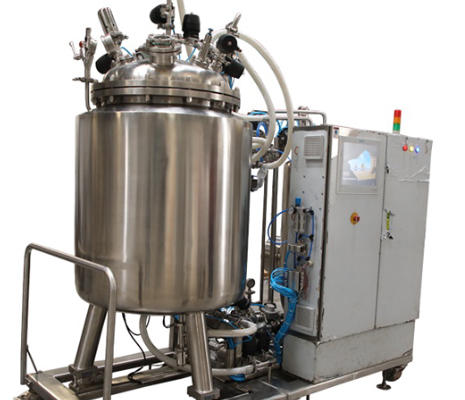
Advantages of Working with UAE-Based Manufacturers
Partnering with local or regionally active Pharmaceutical Mixing Tank Manufacturers and Suppliers offers unique strategic and logistical benefits:
- Reduced lead times for system delivery and installation.
- Simplified regulatory approval aligned with UAE health authority standards.
- Faster service response through local engineering teams.
- Availability of spare parts and after-sales maintenance.
- Economic incentives from the UAE's industrial development programs.
Such advantages make the UAE a cost-competitive location for building advanced pharmaceutical production facilities.
Innovative Features in Modern Pharmaceutical Mixing Tanks
Modern pharmaceutical tanks have evolved beyond simple vessels; they are now smart, automated process systems. Some of the latest innovations include:
- Automated CIP/SIP systems for improved hygiene control.
- Variable frequency drives (VFD) enabling precise mixing speed.
- Load cells and sensors for accurate ingredient measurement.
- Vacuum mixing systems to prevent air entrapment.
- Digital monitoring and data recording for GMP traceability.
These innovations allow manufacturers to reduce waste, increase batch accuracy, and comply with regulatory expectations for data integrity.
How Everheal Supports UAE Pharmaceutical Manufacturing
As a trusted global equipment supplier, Everheal has partnered with pharmaceutical companies across the UAE to design and install high-efficiency production systems. Its equipment ensures precision in critical processes including sterilization, liquid filling, water purification, and mixing.
Everheal's pharmaceutical mixing tanks are engineered for maximum flexibility and control. Each system is customizable with various capacities, agitation types, and automation options — making them ideal for both pilot plants and full-scale production lines.
By integrating design, engineering, and technical support, Everheal enables its clients to achieve smooth validation processes and consistent GMP compliance.
Conclusion
The UAE's rapidly growing pharmaceutical industry relies heavily on advanced process systems that can ensure precision, safety, and efficiency. Choosing qualified Pharmaceutical Mixing Tank Manufacturers and Suppliers is essential to maintaining high production standards and meeting regulatory requirements.
Companies like Everheal, along with established regional players such as Fabtech, Neelam Industries, and Pharmaline, provide reliable solutions that empower the UAE's pharmaceutical sector to thrive globally. Selecting a partner that offers engineering expertise, customization, and after-sales support ensures your production facility operates at world-class levels.
FAQs About Pharmaceutical Mixing Tank Manufacturers and Suppliers in UAE
1. What materials are used in pharmaceutical mixing tanks?
Most mixing tanks use SS316L stainless steel, known for its corrosion resistance, smooth finish, and hygienic properties. This ensures the product remains uncontaminated and complies with GMP standards.
2. How do I choose the right mixing tank supplier in the UAE?
Select Pharmaceutical Mixing Tank Manufacturers and Suppliers who provide GMP documentation, customizable designs, and local after-sales service. Always check their experience with pharmaceutical-grade projects.
3. Are Everheal's mixing tanks suitable for sterile production?
Yes. Everheal's systems are designed for sterile manufacturing, featuring CIP/SIP compatibility, automated controls, and validation documents to meet regulatory standards in the UAE and abroad.
4. What capacity options are available for mixing tanks?
Pharmaceutical mixing tanks range from 50 liters to over 10,000 liters, depending on production scale. Suppliers can customize capacity, agitation type, and control systems as needed.
5. Do UAE suppliers provide installation and maintenance services?
Yes. Most leading UAE Pharmaceutical Mixing Tank Manufacturers and Suppliers offer complete installation, validation, and preventive maintenance packages to ensure reliable long-term performance.


