Content Menu
● What Is A Pressure Infusion Bag?
● Main Components And Design
● How A Pressure Infusion Bag Works
● Clinical Scenarios And Applications
● Benefits Of Using A Pressure Infusion Bag
● Safety, Limits, And Best Practices
● Disposable Versus Reusable Designs
● Key Technical Features To Look For
● Integration With Infusion Pumps And Monitoring
● Workflow And Training Considerations
● Role Of Everheal In The Infusion Bag Value Chain
● Conclusion
● Frequently Asked Questions (FAQ)
>> 1. What is the main function of a pressure infusion bag?
>> 2. Which fluids and Infusion Bags can be used with a pressure infusion bag?
>> 3. How much pressure is usually applied to an Infusion Bag?
>> 4. Are pressure infusion bags reusable?
>> 5. How do pressure infusion bags relate to Everheal's equipment and solutions?
● Citations:
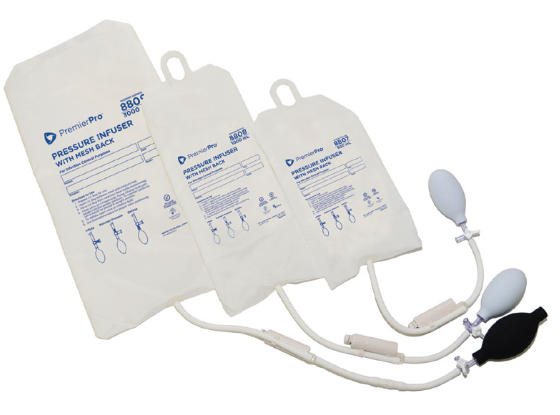
A pressure infusion bag is an inflatable sleeve that surrounds an IV fluid or blood Infusion Bag and applies external air pressure so fluid flows rapidly into a patient's bloodstream. It is a simple, mechanical device that turns a standard Infusion Bag into a high‑flow delivery system for emergencies and critical care.
What Is A Pressure Infusion Bag?
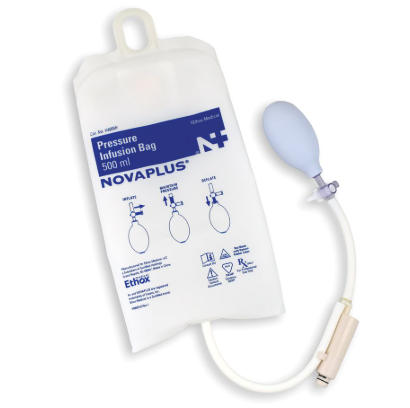
A pressure infusion bag is a cuff‑like device containing an internal air bladder, a hand pump, and a pressure gauge that fits around an IV Infusion Bag. The clinician inflates the bladder with the pump, which compresses the Infusion Bag and forces its contents through the IV line at a much higher rate than gravity alone can provide.
Typically, the pressure infusion bag hangs from an IV pole and holds an Infusion Bag of crystalloid, colloid, blood, or plasma. Because the pressure is applied evenly around the Infusion Bag, flow is fast but controlled, and the integrated gauge allows staff to monitor and adjust pressure as needed.
Main Components And Design
A modern pressure infusion bag is designed to be intuitive for clinical staff and compatible with common Infusion Bag sizes. While designs vary, they usually include:
- A flexible sleeve that wraps fully around the Infusion Bag
- An internal air bladder that inflates and squeezes the Infusion Bag
- A hand inflation bulb connected by tubing
- A three‑way stopcock or valve for inflation, maintaining pressure, and deflation
- A color‑coded pressure gauge showing current pressure in mmHg
- Hooks, straps, or loops for securing the Infusion Bag and hanging on an IV pole
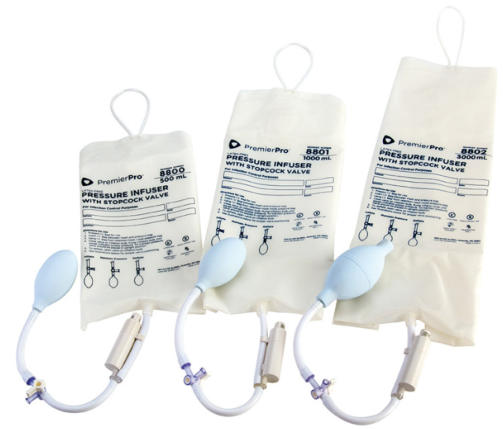
Many devices are available in sizes that match 500 ml, 1,000 ml, or 3,000 ml Infusion Bags, ensuring that the pressure is applied safely and effectively to the chosen volume. The transparent window or translucent sleeve helps staff see the Infusion Bag's fluid level and label clearly during rapid infusions.
How A Pressure Infusion Bag Works
The working principle of a pressure infusion bag is straightforward, yet very effective. A standard IV Infusion Bag is placed inside the sleeve, secured with the internal hook or hood, and then hung on the IV pole. Once connected to the patient via IV tubing, the clinician begins inflating the pressure infusion bag.
As the air bladder inflates, it exerts uniform pressure on the Infusion Bag, increasing hydrostatic pressure at the bag's outlet. This pressure translates into a much faster flow rate through the IV catheter, allowing rapid delivery of the fluid in the Infusion Bag. When the desired pressure is reached—often around 200–300 mmHg in rapid resuscitation—the valve is closed to maintain that pressure.
When the Infusion Bag is nearly empty, the clinician opens the release valve to deflate the bladder, removes the empty Infusion Bag, and replaces it with a new one if needed. Because the pressure infusion bag itself is purely mechanical, it can be used even where electrical power is not available, and it can be deployed very quickly.
Clinical Scenarios And Applications
Pressure infusion bags are used wherever rapid administration of fluid from an Infusion Bag can make the difference between stability and deterioration. Common scenarios include:
- Trauma and hemorrhagic shock requiring rapid transfusion of blood or plasma from an Infusion Bag
- Severe dehydration or sepsis where large volumes of crystalloid Infusion Bag solutions must be given quickly
- Operating rooms during major surgery, when blood loss requires fast replacement from blood Infusion Bags
- Intensive care units, where pressurized flush Infusion Bags maintain patency of arterial lines and central venous catheters
- Emergency departments and prehospital settings, where gravity infusion is too slow or the IV pole position is suboptimal
In invasive arterial pressure monitoring, a smaller flush Infusion Bag is kept under constant pressure in a pressure infusion bag to ensure a steady, controlled flow through the transducer line. This prevents clotting and allows accurate waveform transmission for blood pressure monitoring.
Benefits Of Using A Pressure Infusion Bag
Pressure infusion bags offer several important benefits compared with gravity alone or manual squeezing of an Infusion Bag:
- Rapid flow: External pressure dramatically increases the flow rate from the Infusion Bag, crucial during resuscitation.
- Controlled pressure: The gauge allows clinicians to keep pressure within a safe range for both patient and Infusion Bag.
- Reduced fatigue: The device applies pressure continuously, eliminating the need for staff to manually squeeze the Infusion Bag for extended periods.
- Standardization: Using a pressure infusion bag ensures more consistent and repeatable performance across different staff members and departments.
- Versatility: The same device can be used with different Infusion Bag types and volumes, from crystalloids to blood products.
For hospitals and clinics, these advantages translate into faster response times, safer delivery, and more efficient use of clinical staff during emergencies.
Safety, Limits, And Best Practices
Although a pressure infusion bag is simple, its use requires careful adherence to safety practices. The Infusion Bag itself must be inspected for leaks, weakened seams, and correct product labeling before being pressurized. Air should be purged from the IV line before connecting to the patient, as increased pressure could otherwise force air into the circulation.
Typical working pressures range up to about 300 mmHg for rapid infusion, depending on the product. Exceeding the recommended pressure may risk rupturing the Infusion Bag or damaging components of the IV set. Many devices include pressure relief valves that automatically vent air if the pressure becomes too high, adding a layer of protection against over‑inflation.
Staff should be trained to:
- Inflate slowly and watch the gauge closely
- Keep pressure in the recommended range for the specific Infusion Bag and clinical situation
- Release pressure before removing or changing the Infusion Bag
- Never leave a pressurized system unattended in unstable patients
Routine checks and clear institutional protocols help ensure that pressure infusion bags support patient safety rather than introduce risk.
Disposable Versus Reusable Designs
Pressure infusion bags are available in disposable and reusable designs, and each approach has its own advantages. Disposable devices are single‑patient use, which helps minimize cross‑contamination risk and eliminates the need for cleaning and reprocessing. At the end of therapy, the entire pressure infusion bag is discarded according to local regulations.
Reusable pressure infusion bags are usually made of more robust materials, designed for repeated cycles of inflation, deflation, and cleaning. They can be more cost‑effective across many uses, but they demand a validated cleaning and disinfection procedure, staff training, and tracking to be sure they are safe to use with new Infusion Bags and new patients.
Many hospitals adopt a mixed strategy: disposable pressure infusion bags for emergency, high‑risk, or isolation cases; and reusable models for lower‑risk environments or training. In all cases, compatibility with the intended Infusion Bag sizes and clear labeling are essential for safe use.
Key Technical Features To Look For
When selecting pressure infusion bags for a facility, technical features directly affect ease of use, safety, and compatibility with Infusion Bags. Key aspects include:
- Pressure range and gauge design: A clear, color‑coded gauge with an appropriate range (for example, 0–300 mmHg) helps staff avoid under‑ or over‑pressurizing the Infusion Bag.
- Pressure relief valve: Automatic relief at a defined threshold helps prevent over‑inflation and potential Infusion Bag rupture.
- Inflation and deflation controls: A well‑designed three‑way stopcock and an ergonomic bulb make one‑handed operation possible in busy settings.
- Sleeve transparency: A transparent or translucent sleeve allows visual confirmation of fluid level and Infusion Bag label.
- Hooks and hangers: A stable IV pole loop and blunt fluid‑bag hook keep the Infusion Bag in place even if pressure changes or the system is bumped.
Other desirable features include latex‑free and DEHP‑free materials, MR‑conditional labeling for use near MRI scanners, and clear size markings indicating which Infusion Bag volumes are supported.
Integration With Infusion Pumps And Monitoring
Pressure infusion bags coexist with electronic infusion pumps rather than replacing them. Pumps deliver precise volumes or flow rates from an Infusion Bag, especially in long‑term therapies or when small dose accuracy is essential. However, pumps may not achieve the extremely high flow rates needed in massive transfusion or shock resuscitation.
In high‑acuity environments, a pressure infusion bag can be used for rapid bolus administration from an Infusion Bag, while pumps manage maintenance infusions or vasoactive medications. For arterial line monitoring, pressure infusion bags keep the flush Infusion Bag at a stable pressure, ensuring a constant low‑rate flow through the line that pumps cannot easily replicate.
This layered approach allows clinicians to choose the best tool for each clinical task: pressure infusion bags for speed and high flow from Infusion Bags, and pumps for precision and long‑term control.
Workflow And Training Considerations
For a hospital or clinic, implementing pressure infusion bags requires standardized workflow and training. Typical steps include:
1. Preparing the Infusion Bag: Verify the correct solution, volume, and patient, and check the Infusion Bag for integrity.
2. Loading the Infusion Bag: Place the Infusion Bag into the pressure infusion sleeve and secure it with the internal hook or hood.
3. Connecting to the patient: Spike the Infusion Bag with the appropriate IV set, remove air from the line, and connect to the patient's IV access.
4. Pressurizing: Inflate the pressure infusion bag gradually, watching the gauge until the target pressure is reached.
5. Monitoring: Observe the patient, the IV site, the Infusion Bag level, and the gauge regularly during therapy.
6. Completion: Release pressure, remove the empty Infusion Bag, and dispose of single‑use components in the proper containers.
Clear written protocols, simulation‑based training, and competency assessments help ensure that all staff handle pressure infusion bags safely and consistently.
Role Of Everheal In The Infusion Bag Value Chain
Everheal is a Chinese company specializing in pharmaceutical equipment such as purified water preparation systems, pure steam generators, multi‑effect distillation water machines, liquid filling and sealing machines, and sterilization systems. These systems provide the critical utility and processing backbone required to produce high‑purity IV solutions that are ultimately filled into Infusion Bags.
By offering customized factory layout planning and turnkey production line construction, Everheal helps pharmaceutical manufacturers design, build, and validate entire facilities dedicated to Infusion Bag production. From water treatment to formulation, aseptic filling of Infusion Bags, sealing, sterilization, and final inspection, each step can be integrated into a cohesive, GMP‑compliant line.
For hospitals and health systems, this means a more reliable global supply of sterile Infusion Bags compatible with pressure infusion bag devices. For Everheal's clients, it means being able to launch or expand their own Infusion Bag product lines to meet regional and international demand for IV therapies and emergency resuscitation fluids.
Conclusion
Pressure infusion bags are simple yet powerful tools that transform standard IV and blood Infusion Bags into high‑flow delivery systems for emergencies, surgery, and critical care. By applying controlled external air pressure, they allow clinicians to infuse large volumes quickly, maintain pressurized flush lines, and respond more effectively to life‑threatening situations.
As pharmaceutical manufacturers and equipment providers such as Everheal continue to improve water treatment, filling, and sterilization technologies, the quality and availability of Infusion Bags will keep advancing. Together, high‑quality Infusion Bag production and effective pressure infusion bag use form a vital link in modern acute care and resuscitation medicine.
Frequently Asked Questions (FAQ)
1. What is the main function of a pressure infusion bag?
The main function of a pressure infusion bag is to apply external air pressure around an IV or blood Infusion Bag so that fluid flows much faster than it would under gravity alone. This allows rapid volume replacement and supports life‑saving resuscitation in trauma, shock, and perioperative bleeding.
2. Which fluids and Infusion Bags can be used with a pressure infusion bag?
Pressure infusion bags can be used with a wide range of Infusion Bags containing crystalloids, colloids, blood, and blood components, as long as the device's size and pressure limits match the bag. Always follow institutional guidelines and product labeling to confirm which Infusion Bags and solutions are appropriate.
3. How much pressure is usually applied to an Infusion Bag?
In many clinical situations, pressures up to about 300 mmHg are used for rapid infusion from an Infusion Bag, but the exact target depends on the device and the clinical context. The pressure gauge on the pressure infusion bag helps clinicians stay within safe limits recommended by the manufacturer and hospital policy.
4. Are pressure infusion bags reusable?
Some pressure infusion bags are designed as single‑patient disposable devices, while others are reusable. Disposable models help reduce infection risk because they are discarded after use with one patient, whereas reusable devices require validated cleaning and disinfection procedures before being used with new Infusion Bags and new patients.
5. How do pressure infusion bags relate to Everheal's equipment and solutions?
Everheal does not manufacture pressure infusion bags themselves but provides the upstream pharmaceutical equipment used to produce sterile IV solutions and Infusion Bags. By supplying purified water systems, distillation units, liquid filling and sealing machines, and sterilization systems, Everheal enables manufacturers to produce high‑quality Infusion Bags that can be used safely with pressure infusion bags worldwide.
Citations:
[1](https://www.merit.com/product/pib-pressure-infusor-bag/)
[2](https://spacelabshealthcare.com/product/pressure-infusion-bag-part-reusable-1000ml-box-of-24/)
[3](https://connect.myairlife.com/resources/TDS-20112-C1%20Vital%20Signs%20Pressure%20Infusor%20Bag%20Technical%20Data%20Sheet%20Rev1.pdf)
[4](https://www.american-hospitalsupply.com/products/ahs-pressure-infusion-bags)
[5](https://www.fannin.eu/wp-content/uploads/2024/05/TDS-20025-C1_InfuSurg-Hook_Rev1-Fannin.pdf)
[6](https://www.vitalitymedical.com/sunmed-infu-surg-pressure-infusion-bag.html)
[7](https://spacelabshealthcare.com/product/pressure-infusion-bag-500ml-disposable-box-of-24-3/)
[8](https://www.boundtree.com/iv-drug-delivery/infusion-pumps-accessories-sets/disposable-pressure-infusers/p/group001780)
[9](https://www.alimed.com/products/pressure-infuser-bag)


