


Views: 222 Author: Rebecca Publish Time: 2026-02-11 Origin: Site


Content Menu
● Understanding How a Distillation Water Machine Works
● Can a Water Distiller Machine Be Used to Distill Oil?
>> 1. Different Boiling Points
>> 2. Material Incompatibility
>> 3. Condensation and Flow Behavior
>> 4. Cross-Contamination Risks
● What Type of Distillation Equipment Is Used to Make Oil?
>> 1. Steam Distillation Units
● Why Water Distillers Are Specialized for Pharmaceutical Use
● Key Differences Between Water and Oil Distillation Equipment
● The Science Behind Water Distillation Efficiency
● Common Misconceptions About Oil Distillation
>> 1. “Oil Is Just Another Liquid—So Any Distiller Works.”
>> 2. “I Can Clean the Water Distiller After Oil Use.”
>> 3. “Adding Plant Material to a Water Distiller Gives Essential Oils.”
● Can a Modified Water Distiller Be Converted for Oil Extraction?
● Everheal's Expertise in Distillation Water Technology
● Best Practices When Operating a Distillation Water Machine
● Environmental and Economic Benefits of Modern Distillation Systems
● FAQ
>> 1. Can I make essential oils using a Distillation Water Machine?
>> 2. What happens if I try to distill oil in a water distiller?
>> 3. Is steam distillation the same as water distillation?
>> 4. Can a pharmaceutical water distiller handle other liquids?
>> 5. How does Everheal ensure water purity in its Distillation Water Machine?
The question of whether a Distillation Water Machine can be used to produce oil is one that often arises among manufacturers, laboratory technicians, and home experimenters. While both oil extraction and water distillation involve vaporization and condensation processes, the goals, mechanisms, and design principles are entirely different.
This article explores how a Distillation Water Machine works, why it's not suitable for making oil, what are safer and more efficient systems for this purpose, and how industrial-grade pharmaceutical distillers—like those designed by Everheal—ensure perfect purity in critical production environments.
A Distillation Water Machine, sometimes called a water distiller or purified water generator, is an industrial apparatus that removes impurities, minerals, and microbial contaminants from water through the process of evaporation and condensation. In the pharmaceutical and biotechnology industries, this purified water forms the foundation for product safety and consistency.
Here's how the cycle works:
1. Boiling – Water is heated in a stainless-steel chamber until it vaporizes.
2. Separation – As water turns to steam, heavier contaminants, chemical residues, and minerals remain behind.
3. Condensation – The purified steam passes through a condenser coil or heat exchanger where it cools and becomes liquid again.
4. Collection – The condensed water is captured in a sterile receiver vessel as pure distilled water.
This process ensures that the output meets standards such as USP, EP, and GMP water quality requirements.
Companies like Everheal engineer these systems with advanced automation, heat recovery, and hygiene-grade materials to comply with pharmaceutical-grade purity standards.
The short answer is no—a standard Distillation Water Machine is not designed to produce oil.
Although both water and oil can undergo distillation, their physical and chemical properties differ drastically. Let's break down why substituting one for the other is impractical and potentially hazardous.
Distilling water requires temperatures around 100°C (212°F). Oils, depending on the type (such as essential oils, mineral oils, or industrial lubricants), require much higher temperatures—often exceeding 200°C or more.
A Distillation Water Machine cannot safely maintain these extreme temperatures without risking damage to heating elements, seals, or gaskets.
The construction materials of water distillers—stainless steel, glass, and PTFE tubing—are tailored for purity, not for handling viscous or oily fluids.
When oil vaporizes, it may leave film residues, carbon deposits, or chemical reactions that corrode internal parts and cause contamination.
Such contamination could ruin the entire system and violate sterile water production requirements.
Water vapor condenses easily on cool surfaces. In contrast, oil vapors behave differently—they condense more slowly, often requiring special condensers or vacuum-assisted systems.
A standard Distillation Water Machine lacks these features, meaning oil vapors may not re-condense properly, leading to incomplete collection or system clogging.
If a system used for oil distillation were later reused for pharmaceutical water production, residual oil residues could compromise water purity.
For GMP-certified pharmaceutical facilities, this would be a major compliance violation. Everheal's systems are specifically validated to prevent such cross-contamination.
To produce oils—especially essential oils or plant-based extracts—manufacturers use specialized systems based on different thermal and separation principles.
For essential oils, steam distillation is the most common method. Steam passes through plant material, vaporizing the volatile oil components. The mixture of steam and oils is then condensed and separated.
These systems involve pressure control valves, oil separators, and condensers built for specific temperature and flow patterns.
For sensitive oils or heat-sensitive ingredients, vacuum distillation lowers the boiling point to protect delicate compounds from thermal degradation. This process requires sophisticated pumps and vacuum-resistant equipment that a Distillation Water Machine simply doesn't include.
Industrial oil refineries use fractional distillation, which separates multiple components from crude oil based on their different boiling points in a tall column structure with controlled temperature gradients.
These specialized systems demonstrate that oil distillation demands precise equipment design beyond the scope of water distillers.
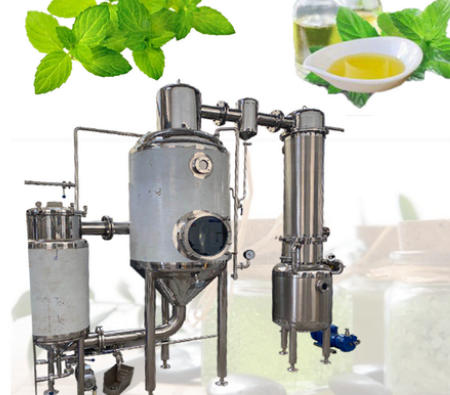
In pharmaceutical manufacturing, water is not just a utility—it's a critical raw material. Every drop must meet stringent microbial and chemical limits because it is used in drug formulations, cleaning, and sterilization.
Everheal's Distillation Water Machine systems are engineered for this environment. They feature:
- Automatic feed and discharge cycles to prevent manual contamination.
- 316L stainless steel construction for chemical resistance and long service life.
- Integrated conductivity monitoring to guarantee purity in real time.
- Energy-recovery design for sustainable operation and reduced utilities cost.
- Validation documentation (DQ/IQ/OQ/PQ) to meet GMP compliance.
Such systems are common in pharmaceutical plants, cosmetics manufacturing, research laboratories, and biotechnology installations requiring Water for Injection (WFI) or Pure Steam.
| Parameter | Distillation Water Machine | Oil Distillation Unit |
|---|---|---|
| Operating fluid | Water | Plant extracts or crude oils |
| Temperature range | 80–120°C | 150–400°C |
| Materials used | SS316L, glass, PTFE | Alloy steel, copper, borosilicate glass |
| Pressure | Atmospheric | Often vacuum or pressurized |
| Output | Purified water (WFI or distilled) | Essential oils, fuel fractions |
| Typical industry | Pharmaceutical, biotech, cosmetics | Fragrance, petrochemical, agriculture |
This comparison highlights that mixing these technologies is neither efficient nor safe.
Advanced pharmaceutical distillation machines optimize condensation and recovery through thermodynamic efficiency.
For instance, Everheal's multi-effect Distillation Water Machine uses successive stages of evaporation, where vapor from one effect heats the next. This cuts energy consumption by up to 60% compared to single-stage systems.
Each stage ensures constant output of WFI-grade purity while automatically maintaining sterilization cycles.
This kind of efficiency is irrelevant to oil production, where design priorities differ—mainly solvent recovery, molecular stability, and chemical yield.
This is a myth. While both are liquids, the molecular composition of oils requires far more precise control over temperature gradients and vacuum pressure.
Even cleaning with detergents or solvents cannot fully remove oil residues from the heating chamber or condenser surfaces. Trace residues can severely affect subsequent batches of purified water.
A Distillation Water Machine cannot extract essential oils. Water vapor simply boils the plant material but fails to separate volatile components accurately, producing mostly flavored water instead of usable oil.
Technically, one could modify a water distiller to include heat-resistant parts, oil separators, and vacuum control, but doing so would eliminate its original purpose.
Such modification is impractical because:
- It voids any pharmaceutical certification or warranty.
- It poses safety and contamination risks.
- It's costlier than purchasing dedicated oil distillation equipment.
Therefore, it's better to use the right machine for each application.
Everheal specializes in high-performance equipment for pharmaceutical liquids and sterilization systems. Our products include:
- Pure Steam Generators
- Multifunctional Distillation Water Machines
- Water for Injection Preparation Systems
- Sterilization Units and Filling Equipment
Each solution is customized for international clients, ensuring proper plant layout planning, compliance with global standards, and reliable operational continuity.
By focusing strictly on water and steam systems rather than oil extraction, Everheal guarantees purity, stability, and safety at every production stage.
- Use only feedwater meeting specified pre-treatment standards (RO or softened water).
- Schedule preventive maintenance to prevent scaling or corrosion.
- Regularly validate key parameters like conductivity, TOC, and microbial count.
- Never introduce non-water feed—especially organic substances or oils—into the system.
- Maintain sealed connections and sanitary fittings to ensure sterile output.
Modern Distillation Water Machines like those made by Everheal integrate energy recovery, reducing both steam and cooling water demand.
They can be configured as multi-effect or vapor compression systems, providing high throughput with minimal utility consumption.
This not only reduces operational cost but also contributes to environmental sustainability in pharmaceutical water management—an increasingly important factor for global manufacturers.
While both oil distillation and water distillation rely on vaporization and condensation, their engineering requirements are distinctly different.
A Distillation Water Machine is designed exclusively for creating ultra-pure water—particularly for pharmaceutical or laboratory use. Using it to produce oil may damage the system, compromise purity, and violate compliance regulations.
To create high-quality oils, specialized steam distillation or vacuum distillation systems should be used instead.
Companies like Everheal focus on what they do best: designing, manufacturing, and implementing advanced Distillation Water Machines and related systems that ensure purity, reliability, and long-term performance in every facility around the world.
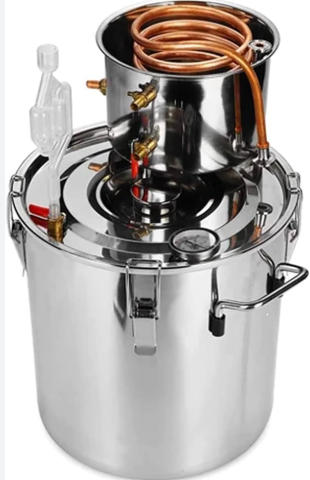
No. A Distillation Water Machine is not built for essential oil extraction. It is optimized for producing high-purity water, not for separating volatile compounds from plants.
You risk damaging heating elements and causing contamination. Oils require higher temperatures and different condensers, which a water distiller lacks.
Not exactly. Steam distillation uses vapor to extract oils, while water distillation purifies water by evaporation and condensation. Their purposes and equipment differ.
No. Pharmaceutical distillers are validated systems for water only. Using other liquids invalidates certification and risks system failure.
Everheal integrates multiple purification stages, real-time conductivity monitoring, and fully sanitary design to achieve WFI-grade water purity.


