Content Menu
● What Is A HEPA Air Filter?
● How A HEPA Air Filter Works
● Planning Your DIY HEPA Air Filter
● Materials Needed To Make A HEPA Air Filter Unit
● Step‑By‑Step: Simple DIY HEPA Air Filter Box
● Multi‑Filter Cube Design For Higher Performance
● Safety And Operational Tips
● Choosing The Right HEPA Air Filter Grade
● Integrating HEPA Air Filters Into Professional Systems
● Maintenance Of A HEPA Air Filter Unit
● Limitations Of DIY HEPA Air Filters
● Conclusion
● FAQ About HEPA Air Filters
>> 1) How effective is a HEPA Air Filter against viruses?
>> 2) What is the difference between H13 and H14 HEPA Air Filters?
>> 3) How often should a HEPA Air Filter be replaced?
>> 4) Can a DIY HEPA Air Filter replace a professional air purifier?
>> 5) Is a HEPA Air Filter enough for pharmaceutical environments?
● Citations:
A HEPA Air Filter is one of the most effective ways to remove dust, allergens, smoke, and microbes from indoor air, both in homes and in professional environments such as laboratories, hospitals, and pharmaceutical plants. For a company like Everheal that focuses on pharmaceutical equipment and clean production lines, understanding how to make a HEPA Air Filter–based cleaner helps bridge the gap between industrial purity standards and everyday air quality. This guide explains how a HEPA Air Filter works, how to design a DIY HEPA Air Filter unit, and what to consider if you want professional-grade performance similar to cleanroom systems.[1][2][3][4]
What Is A HEPA Air Filter?
A HEPA Air Filter (High Efficiency Particulate Air filter) is a pleated mechanical filter made from dense mats of fibers, often glass fiber or synthetic materials. According to widely recognized standards, a genuine HEPA Air Filter can capture at least 99.95%–99.995% of particles around the most penetrating particle size, typically near 0.1–0.3 microns, which includes fine dust, bacteria, and some viruses.[2][5][6][7]
A HEPA Air Filter works through three main mechanisms: interception (particles following airflow get caught on fibers), impaction (larger particles crash into fibers due to inertia), and diffusion (very small particles zigzag randomly and eventually stick to fibers). Unlike simple mesh screens, the dense, randomly arranged fibers inside a HEPA Air Filter create a complex pathway that encourages particles to collide with fibers and remain trapped instead of passing through.[8][9][3][1]
How A HEPA Air Filter Works
The internal structure of a HEPA Air Filter looks like a thick, folded mat of fibers arranged in pleats to increase surface area while keeping airflow resistance manageable. As air passes through the HEPA Air Filter, larger dust and pollen are removed by interception and impaction, while the smallest particles are mainly captured by diffusion within the dense fiber network.[10][7][1][8]
Some HEPA Air Filters also benefit from weak electrostatic attraction, where charged particles are drawn to the slightly charged fibers and held there, further boosting efficiency for ultrafine contaminants. The overall performance of a HEPA Air Filter in a real device depends not only on filter media quality but also on proper installation that avoids bypass leakage around the filter edges.[4][8]
Planning Your DIY HEPA Air Filter
Before building a DIY HEPA Air Filter cleaner, you must decide on your application: home use, office, classroom, or a more demanding technical environment. For home or office, a simple box fan combined with a high‑efficiency HEPA Air Filter can significantly reduce indoor particle levels when sized correctly for the room's volume and air changes per hour.[11][12][13]
For pharmaceutical or quasi‑cleanroom scenarios, an industrial‑grade HEPA Air Filter (H13 or H14) combined with controlled airflow patterns and leak‑tested housings is required, similar to the systems used in laminar flow hoods and sterile filling areas. Everheal-style engineering solutions often integrate HEPA Air Filter modules into complete air handling systems with ducting, pre‑filters, and monitoring instruments to keep the environment compliant with GMP and ISO cleanroom classes.[6][14][4]
Materials Needed To Make A HEPA Air Filter Unit
To assemble a basic DIY HEPA Air Filter air cleaner, gather the following components suitable for your room size and performance target.[12][11]
- One or more genuine HEPA Air Filter cartridges (rated H13 or higher if possible, or certified “true HEPA” for consumer systems)
- A box fan or axial blower with enough airflow to overcome HEPA Air Filter resistance
- High‑quality tape (duct tape or masking tape) to seal joints and eliminate leaks
- Cardboard or thin sheet material to build shrouds or support structures
- Optional pre‑filter (coarse dust filter) to extend the life of the HEPA Air Filter
The HEPA Air Filter must clearly show airflow direction arrows and its efficiency or rating; avoid vague “HEPA‑like” or “HEPA‑type” labels that may not meet real standards. Using a larger surface area HEPA Air Filter, or multiple HEPA Air Filter panels arranged in a cube, can improve airflow and reduce noise while maintaining high particle capture efficiency.[15][2][11][12]
Step‑By‑Step: Simple DIY HEPA Air Filter Box
The simplest configuration is a box‑fan plus single HEPA Air Filter design, often recommended as an emergency or low‑cost clean air solution. Even though this is a basic setup, careful sealing around the HEPA Air Filter is crucial so that all air is forced through the filter instead of leaking around it.[13][11][12]
1. Position the fan and HEPA Air Filter
- Place the box fan so that it pulls air through the HEPA Air Filter rather than pushing directly into it, aligning the filter's airflow arrow toward the fan intake.[11]
- Make sure the HEPA Air Filter completely covers the intake side of the fan; if needed, use cardboard to create an adapter plate to hold the filter securely.[11]
2. Seal the HEPA Air Filter to the fan
- Use wide duct tape around all edges where the HEPA Air Filter meets the fan housing, ensuring there are no visible gaps or air channels.[12][11]
- Reinforce the corners and any irregular surfaces so that the suction from the fan pulls air evenly through the HEPA Air Filter face, not around the sides.[13][12]
3. Add a shroud for better performance
- Attach a cardboard shroud to the outlet side of the fan, reducing recirculation and guiding airflow away from the edges, which can increase the effective clean air delivery rate.[12]
- Make openings or a short duct that distributes clean air into the room, avoiding blockage that might overheat the fan or reduce performance.[13][12]
4. Test operation of the HEPA Air Filter unit
- Turn the fan to a moderate speed and check for drafts around the edges; if you feel air leaking from joints instead of filter surface, reseal with additional tape.[11]
- For a more professional check, use a handheld particle counter to compare particle levels at the intake and outlet, verifying that the HEPA Air Filter is significantly reducing particle counts.[4]
Multi‑Filter Cube Design For Higher Performance
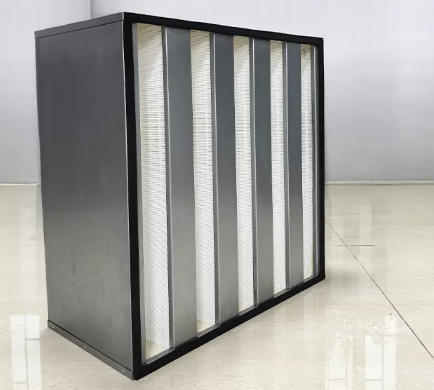
For larger rooms or higher air change targets, multiple HEPA Air Filters can be arranged in a cube or prism around a single fan, increasing surface area and reducing pressure drop. Common layouts include a four‑filter “cube” where each side uses a HEPA Air Filter and the fan is placed at the top or one face.[12][11]
When building a cube with more than one HEPA Air Filter, align all airflow arrows inward so air is drawn through each HEPA Air Filter toward the fan. The joints between HEPA Air Filter panels and between filters and fan must be carefully taped to prevent bypass leakage, which would otherwise compromise the effective performance of the HEPA Air Filter surfaces.[13][11][12]
Adding simple cardboard supports or internal braces can prevent the HEPA Air Filter frames from flexing under suction, preserving the integrity of the pleats and ensuring long‑term efficiency. With a multi‑filter structure, fan noise usually decreases because the fan does not need to work against as much resistance per square centimeter of HEPA Air Filter media.[11][12]
Safety And Operational Tips
Any DIY HEPA Air Filter air cleaner must be operated with basic electrical and fire safety in mind, especially when running for many hours. Choose a modern fan that has been safety‑tested; results from controlled tests show that attaching filters to recent fan models does not usually create excessive heat under normal indoor temperatures.[13]
Keep the HEPA Air Filter unit away from curtains, paper, or other flammable materials, and ensure the intake and outlet are not blocked while the fan runs. In hot environments, or when using older fans, periodically check for abnormal heat around the motor and wiring to reduce any risk during extended operation with a HEPA Air Filter attached.[13]
Choosing The Right HEPA Air Filter Grade
In consumer devices, the term “HEPA Air Filter” often refers to filters that meet at least 99.97% efficiency at 0.3 microns, while industrial standards further classify HEPA Air Filters into H13 and H14 grades and beyond. An H13 HEPA Air Filter typically has ≥99.95% efficiency at the most penetrating particle size, whereas an H14 HEPA Air Filter reaches ≥99.995%, making it suitable for more critical applications where ultra‑low particle counts are demanded.[5][6][15]
For homes, an H13‑class HEPA Air Filter is generally sufficient to handle pollen, smoke, and common indoor pollutants without excessive cost or pressure drop. In pharmaceutical production, sterile filling, and critical laboratory environments, H14 HEPA Air Filter units combined with validated housings, leak tests, and airflow mapping are often required to meet regulatory expectations.[6][15][4]
Integrating HEPA Air Filters Into Professional Systems
In professional systems such as those Everheal designs for purified water preparation, pure steam, and sterile filling lines, HEPA Air Filter modules are part of a broader contamination‑control strategy. Air handling units may incorporate pre‑filters, HEPA Air Filter final filters, and sometimes ULPA stages, all mounted in leak‑tested frames with gasket or gel seals to eliminate bypass leakage.[14][4]
Proper installation of each HEPA Air Filter includes verifying correct fit, performing leak tests, and checking airflow uniformity to confirm that the clean zone receives adequate filtered air without dead corners. In aseptic filling and sterilization areas, the combination of correctly installed HEPA Air Filter ceilings, validated sterilization cycles, and high‑grade piping for pure media creates a complete barrier against airborne contamination.[14][4]
Maintenance Of A HEPA Air Filter Unit
Even the best HEPA Air Filter will lose performance if it is overloaded with dust or installed in a way that allows air to bypass the media. Regular inspection is necessary to look for discoloration, mechanical damage, or deformed pleats that may indicate it is time to replace the HEPA Air Filter.[3][4]
For DIY units, follow the manufacturer's recommended replacement interval, and consider adding a pre‑filter so large particles are removed before they reach the HEPA Air Filter core, extending its service life. When replacing, always power off the fan, remove the used HEPA Air Filter carefully, and place it in a sealed bag to avoid releasing collected particles back into the room.[15][3][4]
Limitations Of DIY HEPA Air Filters
While a DIY HEPA Air Filter air cleaner can dramatically improve indoor air, it does not replace proper ventilation, humidity control, or, in industrial settings, full HVAC and cleanroom systems. DIY devices usually lack certified leak testing and may not maintain stable airflow or cleanliness classifications required in regulated pharmaceutical production.[4][11][13]
In environments with hazardous bioaerosols or toxic particles, only engineered systems that pair HEPA Air Filter stages with controlled exhaust, pressure differentials, and monitoring should be used. For everyday spaces such as homes, offices, and classrooms, however, a well‑built DIY HEPA Air Filter unit offers a cost‑effective way to reduce particulate exposure significantly.[4][12][11]
Conclusion
A HEPA Air Filter is a powerful technology that captures a very high percentage of fine airborne particles using a dense mat of fibers and mechanisms like interception, impaction, and diffusion. By combining a genuine HEPA Air Filter with an appropriate fan, carefully sealing all joints, and choosing the right filter grade, you can build a DIY HEPA Air Filter air cleaner that meaningfully improves indoor air quality in homes, offices, and supplemental technical spaces. For pharmaceutical and high‑risk environments, the same HEPA Air Filter principles scale into fully engineered, leak‑tested systems integrated with sterilization and process equipment, ensuring clean, compliant production conditions.[9][1][6][12][4][11]
FAQ About HEPA Air Filters
1) How effective is a HEPA Air Filter against viruses?
A true HEPA Air Filter can capture the majority of virus‑laden droplets and aerosols because many of these particles fall within or above the size range where HEPA media performs best. Although some individual viruses are smaller than the nominal rating, diffusion and complex particle behavior enable a HEPA Air Filter to remove a very high fraction of them from the air stream.[8][5][9][10]
2) What is the difference between H13 and H14 HEPA Air Filters?
An H13 HEPA Air Filter typically removes at least 99.95% of particles at the most penetrating particle size, whereas an H14 HEPA Air Filter reaches 99.995% or higher, providing an order of magnitude better log‑scale retention. Because of this higher efficiency, an H14 HEPA Air Filter is preferred in cleanrooms, biosafety labs, and sterile production zones, while H13 HEPA Air Filters are often sufficient for household air purifiers.[6][15]
3) How often should a HEPA Air Filter be replaced?
Replacement frequency depends on dust load, run time, and whether a pre‑filter is used, but many HEPA Air Filters in consumer units are replaced every 6–12 months. In professional environments, the HEPA Air Filter changeout schedule is tied to pressure drop measurements, cleanliness tests, and regulatory requirements, ensuring filters are replaced before performance declines below specified limits.[3][15][4]
4) Can a DIY HEPA Air Filter replace a professional air purifier?
A DIY HEPA Air Filter device can reach impressive particle removal levels and significantly lower indoor particulate concentrations in typical rooms when built and operated correctly. However, a DIY HEPA Air Filter unit usually lacks certification, noise optimization, and integrated controls found in commercial or industrial HEPA Air Filter systems, so it should be viewed as a practical supplement rather than a full replacement in critical applications.[12][4][11][13]
5) Is a HEPA Air Filter enough for pharmaceutical environments?
A HEPA Air Filter is essential but not sufficient on its own for pharmaceutical areas, where validated HVAC systems, pressure control, and sterilization processes are also required. In these settings, HEPA Air Filter modules are integrated into a complete contamination‑control design that includes zoning, air change targets, and routine qualification to meet GMP and cleanroom standards.[14][4]
Citations:
[1](https://www.iso-aire.com/blog/what-is-a-hepa-filter-and-how-does-it-work)
[2](https://www.epa.gov/indoor-air-quality-iaq/what-hepa-filter)
[3](https://www.explainthatstuff.com/hepafilters.html)
[4](https://cleanair.camfil.us/2025/09/22/hepa-filters-understanding-performance-standards-applications-and-selection-criteria/)
[5](https://en.wikipedia.org/wiki/HEPA)
[6](https://airyfilter.com/h13-vs-h14-hepa-filters/)
[7](https://www.dyson.co.nz/newsroom/updates/what-is-a-hepa-filter)
[8](https://www.ossila.com/pages/how-does-hepa-filter-work)
[9](https://www.ecovacs.com/us/blog/what-is-hepa-filter)
[10](https://www.eurekaforbes.com/blog/guide-on-working-principle-of-hepa-filter-in-air-purifiers.html)
[11](https://healthybuildings.hsph.harvard.edu/diy-air-cleaners/)
[12](https://blogs.cdc.gov/niosh-science-blog/2023/02/03/diy-filtration/)
[13](https://ncceh.ca/resources/evidence-reviews/do-it-yourself-diy-air-cleaners-evidence-effectiveness-and)
[14](https://airyfilter.com/vi/h13-vs-h14-hepa-filters/)
[15](https://pureairadviser.com/air-purifiers/h13vsh14filters/)


