Content Menu
● Understanding Why CPAP Machines Need Distilled Water
● How Much Distilled Water Does a CPAP Machine Use per Night?
● Why Distilled Water Is the Best Choice
>> 1. Preventing Mineral Scale
>> 2. Reducing Bacterial Growth
>> 3. Extending Equipment Lifespan
>> 4. Improving Air Quality
● How a Distillation Water Machine Works
● Estimating Monthly and Annual Distilled Water Usage
● Tips to Optimize CPAP Water Usage
>> 1. Adjust Humidity Levels Smartly
>> 2. Use Room Temperature Distilled Water
>> 3. Clean the Water Chamber Regularly
>> 4. Inspect for Leaks and Condensation
>> 5. Store Distilled Water Correctly
● Benefits of Producing Distilled Water In-House
● Other Water Types and Why They Don't Work Well
● Signs You're Using the Wrong Type of Water
● The Role of Industrial Distillation Water Machines in Medical Applications
● Maintenance Best Practices for CPAP Machines
● Conclusion
● FAQs
>> 1. Why can't I use tap water in my CPAP humidifier?
>> 2. How often should I fill my CPAP water chamber?
>> 3. Can I reuse distilled water from the previous night?
>> 4. How do I store distilled water safely?
>> 5. What size Distillation Water Machine do I need for multiple CPAP users?
Continuous Positive Airway Pressure (CPAP) machines have become essential medical devices for millions of people suffering from sleep apnea. These machines help maintain steady air pressure to keep airways open during sleep. However, an often-overlooked aspect of CPAP therapy is water consumption, particularly the use of distilled water. Understanding how much distilled water a CPAP machine uses is crucial to ensure consistent performance, equipment longevity, and user safety.
In this comprehensive article, we will explore factors determining CPAP water consumption, the role of Distillation Water Machines in producing pure water, and how users can manage water usage efficiently.
Understanding Why CPAP Machines Need Distilled Water
CPAP machines rely on humidifiers to moisten the air delivered through the device. This moisture prevents dryness and irritation in the user's nose, throat, and mouth. The humidifier's chamber requires clean water to produce the finest vapor possible.
Using distilled water is not merely a suggestion—it's a vital maintenance requirement. Tap water often contains minerals, chlorine, and other impurities that can cause:
- Mineral buildup inside the humidifier chamber.
- Reduced machine efficiency over time.
- Potential respiratory irritation from contaminants.
- Accelerated corrosion of internal components.
A Distillation Water Machine plays an essential role here. It removes minerals, bacteria, and chemical residues from water, ensuring that only vaporized pure H₂O remains. This pure water extends the service life of your CPAP device and provides safer air for users.
How Much Distilled Water Does a CPAP Machine Use per Night?
Most CPAP machines typically use between 300 to 500 milliliters of distilled water per night, depending on factors such as:
1. Ambient humidity level: In dry climates, the humidifier compensates by producing more moisture, thus using more water.
2. Room temperature: Warm air holds more humidity, while colder air limits vapor absorption.
3. Pressure settings: Higher pressure settings require more airflow and often correlate with higher water usage.
4. Heated humidifier temperature: The higher you set the heating plate, the more distilled water evaporates overnight.
5. Hose length and insulation: Long or uninsulated hoses can cause condensation ("rainout"), which impacts how much water remains in the chamber.
For most users, one tank of distilled water (roughly 400 ml) is sufficient for an 8-hour night of sleep. However, heavy users, or those living in arid regions, might notice that the tank empties faster.
If your humidifier runs dry before morning, check if your temperature or humidity settings are unnecessarily high. Proper adjustment saves both water and energy.
Why Distilled Water Is the Best Choice
While some might wonder whether they can substitute tap or bottled water, the benefits of using distilled water are worth emphasizing.
1. Preventing Mineral Scale
Tap water contains dissolved calcium, magnesium, and other minerals. When heated in a CPAP humidifier, these minerals crystallize into deposits that can be difficult to clean. Over time, these deposits may permanently damage the heating plate.
2. Reducing Bacterial Growth
Standing water with impurities promotes bacterial growth. Distilled water, however, provides a sterile environment, reducing the risk of microbial contamination.
3. Extending Equipment Lifespan
Clean water ensures that the humidifier chamber remains residue-free. The hoses and internal valves also benefit from the absence of mineral corrosion.
4. Improving Air Quality
Since distilled water contains no chemicals or residues, the vapor inhaled by users is pure and safe. Patients often report better sleep comfort and fewer sinus issues compared to when non-distilled water is used.
Using a Distillation Water Machine in your facility or home guarantees a continuous source of purified water tailored to your CPAP device's needs.
How a Distillation Water Machine Works
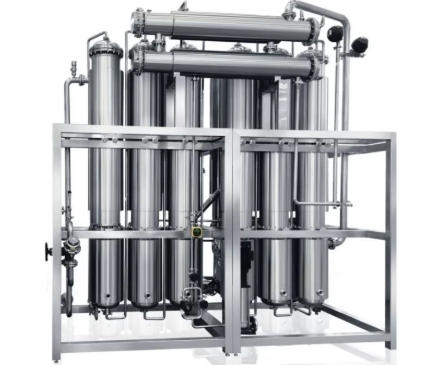
A Distillation Water Machine purifies water by mimicking nature's hydrologic cycle. This process involves three main stages:
1. Boiling: The machine heats water to its boiling point, converting it into steam.
2. Condensation: The steam rises and is captured in a cooling coil or chamber, where it condenses back into liquid form.
3. Collection: The condensed water—now free of minerals and contaminants—is collected in a separate reservoir.
This method removes bacteria, viruses, heavy metals, and chemical residues, delivering water ready for medical and industrial applications.
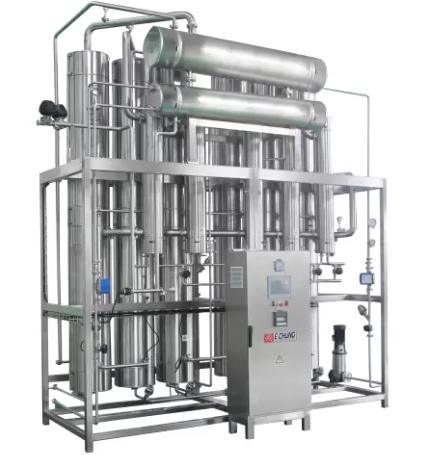
For pharmaceutical, laboratory, or healthcare environments, Everheal's Distillation Water Machines offer robust solutions tailored for continuous operation with high purity yield. In CPAP usage, this ensures reliable access to pure water for humidification systems without interruption.
Estimating Monthly and Annual Distilled Water Usage
Let's calculate approximate consumption rates under common user scenarios:
| Usage Type | Average Water (ml/night) | Nights per Month | Monthly Total (liters) | Yearly Total (liters) |
| Light user (humidifier on low) | 250 | 30 | 7.5 | 90 |
| Average user | 400 | 30 | 12 | 144 |
| High humidity user | 500 | 30 | 15 | 180 |
This table shows that even at higher usage, the total yearly consumption is modest—around 150 to 180 liters. For personal CPAP care, this can be easily covered using a small-scale Distillation Water Machine that produces 1–2 liters per hour.
However, for hospitals or sleep clinics managing multiple CPAP units, a larger industrial Distillation Water Machine is more suitable, capable of producing 100–200 liters daily, ensuring uninterrupted, hygienic operation.
Tips to Optimize CPAP Water Usage
Proper water management ensures that your CPAP system functions efficiently without unnecessary waste.
1. Adjust Humidity Levels Smartly
Set the humidity level according to room conditions. In summer or humid climates, lower settings reduce water consumption.
2. Use Room Temperature Distilled Water
Adding extremely cold or hot distilled water can affect the humidity balance. Using water at room temperature helps the machine maintain stable evaporation.
3. Clean the Water Chamber Regularly
Even when using distilled water, minor dust or residue can accumulate. Rinse the water tank daily and perform a thorough cleaning weekly.
4. Inspect for Leaks and Condensation
Condensation inside hoses or around joints causes uneven vapor delivery, indirectly increasing water use. Check for proper insulation or consider using heated tubing.
5. Store Distilled Water Correctly
Keep your distilled water in clean, airtight containers. Exposure to the air can allow dust or microbes to settle, compromising purity.
Benefits of Producing Distilled Water In-House
Many medical institutions and high-demand users invest in their own Distillation Water Machines rather than purchasing packaged distilled water. This brings several benefits:
- Cost-effectiveness: Producing water internally is cheaper in the long run.
- Supply stability: No dependency on external water delivery schedules.
- Quality control: Strict adherence to purity standards ensures system safety.
- Environmental benefits: Minimizes plastic waste from bottled water containers.
Everheal's water distillation systems offer custom scalability—from compact tabletop models for clinics to high-capacity plants for pharmaceutical manufacturers. For users managing multiple CPAP stations, in-house distilled water generation saves time and guarantees compliance with international hygiene standards.
Other Water Types and Why They Don't Work Well
It may be tempting to use alternative water types, but understanding their limitations is crucial.
- Tap water: Contains minerals that cause scaling and bacterial growth.
- Filtered water: Removes chlorine but not dissolved minerals.
- Deionized water: Purified by ion exchange but can still contain organic contaminants.
- Bottled water: Often mineral-enriched for taste, unsuitable for medical humidifiers.
Only distilled water, preferably from a high-grade Distillation Water Machine, meets the purity required for CPAP use.
Signs You're Using the Wrong Type of Water
If you occasionally forget and use tap or bottled water, monitor your device for:
- White or chalky deposits on the chamber's base.
- Visible discoloration or metallic stains.
- Strange odors when the humidifier runs.
- Reduced airflow or uneven humidity output.
If any of these signs appear, clean your humidifier thoroughly using a vinegar-water mix (1:1 ratio), rinse thoroughly, and refill it with distilled water only.
The Role of Industrial Distillation Water Machines in Medical Applications
Beyond CPAP devices, Distillation Water Machines are irreplaceable across healthcare industries. Hospitals, laboratories, and pharmaceutical plants rely on them to meet sterile water demands for:
- Formulation of injectable drugs.
- Cleaning and sterilization of surgical instruments.
- Laboratory testing procedures.
- Humidification in medical environments.
Everheal's advanced designs integrate automation, energy efficiency, and high vapor recovery rates, ensuring sustainable operation. The same principles applied to pharmaceutical-grade systems guarantee that your CPAP water remains pure, consistent, and free from contaminants.
Maintenance Best Practices for CPAP Machines
To complement proper water usage, maintaining your CPAP equipment ensures durability and comfort:
1. Empty the water chamber daily after use.
2. Allow all components to air-dry before reassembly.
3. Replace the water chamber every 6–12 months depending on wear.
4. Check filters monthly to prevent dust from entering the system.
5. Use only certified cleaning solutions approved for CPAP equipment.
Conclusion
Understanding how much distilled water your CPAP machine uses is more than a matter of convenience—it's key to sustaining optimal performance, hygiene, and comfort. On average, most units consume 300–500 ml per night, depending on temperature, humidity, and settings. Using only properly prepared distilled water ensures the longest service life and healthiest sleep experience.
Whether you rely on packaged distilled water or produce it in-house using a Distillation Water Machine, the essential principle remains the same: purity determines performance.
For medical institutions, clinics, and home users alike, investing in a reliable Distillation Water Machine not only protects equipment but also safeguards respiratory health.
FAQs
1. Why can't I use tap water in my CPAP humidifier?
Tap water contains minerals and impurities that can leave residue inside your humidifier, damage its heating plate, and encourage bacterial growth. Distilled water prevents these issues entirely.
2. How often should I fill my CPAP water chamber?
Most users fill the chamber once per night. If your humidifier runs dry before morning, try lowering your humidity setting or using a slightly cooler room temperature.
3. Can I reuse distilled water from the previous night?
It's best not to. Even if it looks clean, standing water can harbor bacteria after hours of exposure. Always empty and refill your humidifier daily with fresh distilled water.
4. How do I store distilled water safely?
Keep stored water in tightly sealed, BPA-free containers away from sunlight and dust. This prevents airborne contamination and preserves water purity.
5. What size Distillation Water Machine do I need for multiple CPAP users?
For households or clinics using several machines, consider a water distiller producing 10–20 liters daily. Larger facilities like hospitals may require industrial units exceeding 100 liters per hour, depending on demand.


