


Views: 222 Author: Rebecca Publish Time: 2026-01-25 Origin: Site


Content Menu
● Understanding the Role of Water in CPAP Machines
● Why Distilled Water Is Recommended for CPAP Machines
>> 1. Preventing Mineral Buildup
>> 2. Reducing Microbial Contamination
>> 3. Extending CPAP Device Longevity
>> 4. Ensuring Pure and Odor-Free Humidification
● Risks of Using Non-Distilled Water in CPAP Machines
● How Distilled Water Is Made: Inside a Distillation Water Machine
● How to Properly Use Distilled Water in Your CPAP Machine
● Alternatives to Distilled Water — Are They Safe?
● Why Pharmaceutical-Grade Distillation Matters
● How Often Should You Replace Distilled Water?
● Environmental and Economic Considerations
● FAQ: Common Questions About Distilled Water for CPAP Machines
>> 1. What happens if I accidentally use tap water once?
>> 2. Can I use bottled water instead of distilled water?
>> 3. Is it okay to reuse distilled water from last night?
>> 4. How much distilled water should I add daily?
>> 5. Can I make my own distilled water at home?
When it comes to Continuous Positive Airway Pressure (CPAP) therapy, the water you use inside the humidifier chamber greatly affects the machine's performance and your respiratory health. One of the most common questions CPAP users ask is: “Is distilled water safe for CPAP machines?” The short answer is yes — not only is it safe, but distilled water is strongly recommended.
In this article, we will explore what distilled water is, why it is best suited for CPAP machines, how it compares with other types of water, and the crucial role industrial Distillation Water Machines play in ensuring water purity.
CPAP machines assist people with sleep apnea by keeping airways open during sleep through gentle, constant airflow. To make this airflow more comfortable, many CPAP systems include a humidifier chamber that adds moisture to the air.
If you use untreated or impure water in this chamber, it can cause several issues such as mineral buildup, bacterial growth, and even an unpleasant odor. Using distilled water eliminates these potential problems, ensuring both machine longevity and user safety.
Distilled water is produced through an advanced purification process known as distillation. During this process, water is boiled until it vaporizes, and then the vapor is cooled back into liquid form. Impurities — including minerals, heavy metals, microorganisms, and other contaminants — remain behind in the boiling chamber, leaving only pure H₂O.
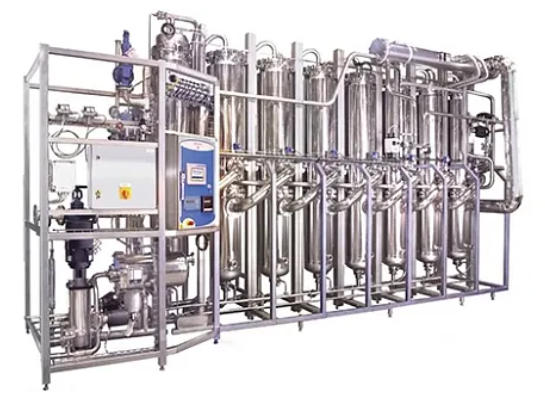
In pharmaceutical and medical device industries, such purified water is produced using a Distillation Water Machine. These machines ensure that every drop meets international quality standards such as USP, EP, and GMP. They are often integrated with systems like pure steam generators and water for injection production units in controlled manufacturing environments.
The recommendation to use distilled water in CPAP equipment is not arbitrary. It's rooted in both health protection and mechanical preservation. Here are the main reasons why distilled water is ideal for your CPAP humidifier:
Tap water or even filtered water often contains dissolved minerals such as calcium, magnesium, and iron. When boiled repeatedly, these minerals form white residue or scaling on the humidifier walls and water chamber. Distilled water, made by a Distillation Water Machine, contains no such minerals, ensuring your CPAP device stays clean and efficient.
Distillation kills microbes and removes organic impurities. This means there's minimal chance for bacteria or fungi to grow inside your humidifier chamber — an especially important factor for those with respiratory sensitivities.
Because distilled water prevents sediment accumulation, it prolongs the lifespan of internal components like the heater plate and chamber lining. Many manufacturers, in fact, specify distilled water in their user manuals to maintain warranty coverage.
Since distilled water lacks chemicals such as chlorine and fluoride, it delivers cleaner, fresher moisture to the air you breathe — leading to a more comfortable and hygienic sleep experience.
Although it may seem harmless to use tap, bottled, or filtered water, doing so can introduce several risks over time:
- Mineral deposits on the water chamber and heating plate.
- Reduced performance due to scaling and lower moisture output.
- Foul odors caused by bacterial or mold growth.
- Health issues, particularly for users with allergies or asthma.
Hard water areas make this problem worse because minerals can build up even after a single night of use. Over time, the humidifier may become difficult to clean, affecting both hygiene and machine efficiency.
A Distillation Water Machine is a highly controlled system designed to ensure complete purification. In pharmaceutical and medical-grade applications, such as those used by Everheal, these machines typically include multiple stages:
1. Evaporation Process: Raw water is heated in a stainless-steel boiling chamber until it turns into vapor.
2. Separation of Impurities: Minerals and contaminants remain in the chamber as vapor rises.
3. Condensation: The vapor passes through cooling coils where it turns back into liquid water.
4. Collection of Distillate: The purified distillate is collected in sterilized storage vessels or transferred directly to use points.
5. Quality Validation: Sensors monitor conductivity, temperature, and quality to ensure the final distilled water meets strict pharmaceutical-grade standards.
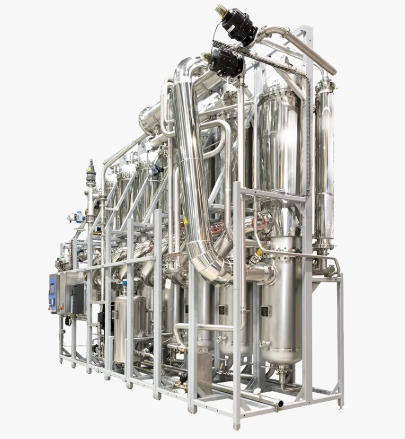
Modern Distillation Water Machines from companies like Everheal integrate automation and monitoring to maintain consistent quality and efficiency. They can also be combined with pure steam generators and multi-effect distillers to produce high-purity water for injection (WFI), sterile processing, or laboratory use.
While distilled water is safe and recommended, following proper guidelines ensures optimal performance:
- Fill only to indicated level: Overfilling may cause spills or water to enter the hose.
- Empty and rinse daily: Prevents any residual buildup.
- Air-dry the chamber: Moist environments encourage microbial growth.
- Do not reuse old distilled water: Once exposed to air and heat, it may collect airborne particles.
- Clean weekly with mild soap or vinegar solution: This maintains cleanliness between replacements.
If you plan to travel, you can carry small pre-filled bottles of distilled water or purchase it locally. Some users even produce their own distilled water at home using compact Distillation Water Machines designed for personal use.
Many users wonder if other purified water types, like deionized or reverse osmosis (RO) water, can be used instead. Here's a quick comparison:
| Water Type | Purification Method | Safe for CPAP? | Residue Risk | Comments |
|---|---|---|---|---|
| Distilled | Boiling & condensation | ✅ Yes | None | Most recommended |
| Deionized | Ion exchange resins | ⚠️ Partial | Low | May contain organics |
| Reverse Osmosis (RO) | Membrane filtration | ⚠️ Partial | Low | Often suitable if no minerals |
| Tap Water | Filtered municipal | ❌ No | High | Contains chlorine & minerals |
| Bottled Water | Varied sources | ❌ No | Moderate | Brand-dependent |
While RO or deionized water might seem similar, distilled water remains the gold standard due to its near-total purity and lack of ion residues.
Companies like Everheal excel in manufacturing industrial Distillation Water Machines that supply ultra-pure water to pharmaceutical and healthcare industries. Their systems are specifically engineered to meet international GMP and FDA requirements, ensuring water purity that's fit for contact with medical equipment — including CPAP humidifiers.
Everheal's integrated solutions include:
- Pure water generation systems with automatic control units.
- Pure steam generators for sterilization.
- Multi-effect distilled water systems for producing water for injection.
- Factory layout and pipeline design to optimize water distribution.
By applying pharmaceutical-grade design standards to water purification, Everheal provides clients with long-lasting, hygienic, and fully compliant solutions for both medical and industrial usage.
It's highly advisable to change the water in your CPAP tank daily. Even though distilled water resists bacterial growth, once it's exposed to open air or your humidifier chamber, it can still accumulate dust or microorganisms. Always empty leftover water after each night's use, rinse the chamber with fresh distilled water, and refill for the next session.
For frequent travelers or heavy users, investing in a Distillation Water Machine can be both economical and environmentally friendly. Instead of buying countless plastic bottles, you can produce your own clean distilled water at home or within your facility.
Using distilled water might initially seem resource-intensive due to the energy in distillation. However, modern Distillation Water Machines are designed with advanced recovery systems that reuse latent heat, significantly reducing electricity and water consumption.
For pharmaceutical companies, hospitals, or laboratories, integrating these systems into production lines not only ensures purity but also enhances sustainability — aligning with modern environmental goals.
So, is distilled water safe for CPAP machines? Absolutely — it is the safest, most effective, and most hygienic option available. Distilled water prevents mineral buildup, extends machine life, and ensures clean air for therapy users. Whether produced by a household distiller or an industrial-grade Distillation Water Machine, the purity of distilled water is unmatched.
By investing in purified water technology, users can maintain both their CPAP equipment and their respiratory health, while manufacturers like Everheal continue to set global standards in pure water generation.
Using tap water once will not immediately damage your CPAP, but repeated use causes scaling and residue buildup. Rinse the chamber thoroughly and switch back to distilled water made from a Distillation Water Machine.
Most bottled water contains minerals or additives that can leave residues. Unless clearly labeled “distilled,” bottled water is not a safe long-term choice for CPAP humidifiers.
No. Once exposed to air, it can accumulate dust or microbes. For optimal hygiene, always use fresh distilled water each night.
Fill only up to the “max” line in your humidifier chamber. Overfilling can cause overflow or water entry into the tubing.
Yes! Home Distillation Water Machines are available for personal use. They replicate industrial distillation principles on a smaller scale and can produce water pure enough for CPAP use.


