Content Menu
● Ecuador's Growing Demand for Vial Filling and Pharmaceutical Filling Equipment
● Methodology: How This Ecuador‑Focused Ranking and Review Was Structured
● What Ecuadorian Customers Care About Most in Vial Filling Machines
>> Production Performance, Stability, and Real OEE
>> Filling Accuracy and Aseptic Assurance in Daily Operation
>> Ease of Use, Training, and Operator Experience
>> After‑Sales Service and Spare Parts in Ecuador and Latin America
>> Total Cost of Ownership (TCO), Not Just Purchase Price
● Ranked Overview – Representative Vial Filling Machine Suppliers Serving Ecuador
● Everheal as a Turnkey Partner for Pharmaceutical Filling Equipment
● Other Representative Suppliers and Their Typical Roles
>> Vibgyor – Liquid Filling Machines with Export Experience to Ecuador
>> VKPAK – Flexible Filling Solutions for Diverse Applications
● Practical Case‑Style Scenarios from Latin American Facilities
>> Scenario 1 – Upgrading from Manual to Semi‑Automatic Vial Filling
>> Scenario 2 – Greenfield Injectable Plant with Turnkey Integration
● Practical Checklist for Ecuadorian Buyers
● New Deep‑Dive Section: How Everheal Supports International Projects Including Ecuador
● How to Choose the Right Vial Filling Machine Supplier in Ecuador – Step‑by‑Step
● Call to Action – Plan Your Next Filling Line with Everheal
● FAQs: Vial Filling Machine Manufacturers and Pharmaceutical Filling Equipment in Ecuador
>> Q1: What is the main driver for investing in vial filling machines in Ecuador now?
>> Q2: Are medium‑volume vial filling machines suitable for most Ecuadorian plants?
>> Q3: Why consider a turnkey provider instead of buying machines from several suppliers?
>> Q4: How important is local service support in Ecuador?
>> Q5: What documents should be requested from vial filling machine suppliers?
● References
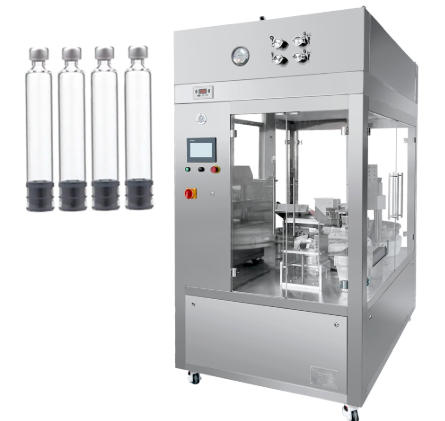
Pharmaceutical companies in Ecuador are under pressure to scale sterile injectable production while maintaining compliance, cost‑efficiency, and readiness for export markets, which makes choosing the right vial filling machine manufacturer and supplier a strategic decision rather than a simple equipment purchase. For global partners like Ningbo Everheal Medical Equipment Co., Ltd. (Everheal), this creates a clear opportunity to provide not only machines but also end‑to‑end pharmaceutical filling equipment solutions, including factory layout design and complete production line integration for international clients. [finance.yahoo]
Ecuador's Growing Demand for Vial Filling and Pharmaceutical Filling Equipment
Ecuador's pharmaceutical sector is increasingly focused on injectables, vaccines, and hospital generics, in line with worldwide shifts toward sterile and parenteral therapies. As regulatory expectations rise and more manufacturers target regional export markets, the demand for reliable vial filling machines and integrated pharmaceutical filling equipment has been growing steadily. [industryresearch]
From a global standpoint, the injectable liquid filling machines market is projected to reach USD 8.6 billion by 2025 and USD 14.5 billion by 2035, with pharmaceutical applications accounting for a large share of the demand, driven by biologics, vaccines, and personalized therapies. The pharmaceutical filling and sealing equipment segment alone is expected to expand from USD 328 million in 2025 to USD 452 million by 2032, confirming a long‑term investment trend in aseptic filling capabilities. [linkedin]
For Ecuadorian manufacturers, this means that upgrading or building modern filling lines is not only about keeping up with domestic demand but also about aligning with the technical standards of global supply chains.
Methodology: How This Ecuador‑Focused Ranking and Review Was Structured
To make this guide genuinely useful for buyers in Ecuador, the ranking and insights are structured around real customer priorities and operational realities, rather than catalog specifications alone. The following criteria are used to evaluate vial filling machine manufacturers and suppliers that are active in or can realistically serve Ecuador: [machinesequipments]
- Regulatory compliance and validation support (GMP, FDA, EU, ISO certifications)
- Production performance: actual throughput, OEE, and stability reported by users
- Filling accuracy and aseptic assurance in daily operation
- Local and regional after‑sales service and spare parts availability
- Total cost of ownership (TCO) over the machine lifecycle
- Customer experience: training, usability, troubleshooting, and responsiveness
These factors are weighted towards real‑world performance and service rather than theoretical performance, reflecting how plant managers, production leaders, and engineering teams actually make purchasing decisions.
What Ecuadorian Customers Care About Most in Vial Filling Machines
Production Performance, Stability, and Real OEE
For plants in Quito, Guayaquil, and other industrial hubs, line stability and predictable output are often more important than pushing absolute maximum speed. Users frequently focus on: [liquidfillingmachinemanufacturer]
- Actual throughput versus nameplate speed under real batch conditions
- Changeover time when switching vial sizes, stoppers, or product formulations
- The impact of minor stops and unplanned downtime on batch release and delivery schedules
In practice, medium‑volume machines dominate global demand because they balance capacity and flexibility, a pattern that fits mid‑size facilities in emerging markets such as Ecuador. These machines typically support both routine production and moderate volume increases without requiring disproportionate investment. [finance.yahoo]
Filling Accuracy and Aseptic Assurance in Daily Operation
Pharmaceutical manufacturers in Ecuador must ensure that every vial meets strict dosing and sterility requirements, especially when aiming for export into more tightly regulated markets. Teams responsible for quality and validation pay close attention to: [linkedin]
- Real filling accuracy and rejection rates for different vial volumes
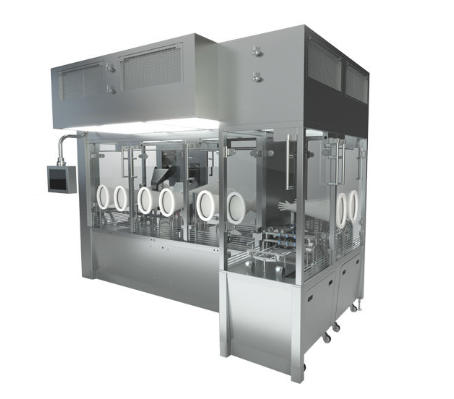
- Effectiveness of isolators, RABS, laminar flow, and CIP/SIP systems for contamination control
- Ease of cleaning, changeover, and execution of validated procedures
Servo‑driven pump systems have become more prominent in this context because they provide high precision and repeatability across different vial sizes while reducing product loss, supporting consistent batch quality. [finance.yahoo]
Ease of Use, Training, and Operator Experience
In many Ecuadorian facilities, varying levels of experience with advanced automation make user‑friendliness a critical factor. Customers often highlight: [mjptv]
- Intuitive HMI interfaces with Spanish and English language options
- Clear SOPs and structured maintenance guidance
- The speed at which operators and maintenance personnel become confident with start‑up, changeover, and troubleshooting
Suppliers that combine well‑designed interfaces with structured on‑site training and follow‑up remote support during the first months of operation tend to receive better feedback in operational reviews.
After‑Sales Service and Spare Parts in Ecuador and Latin America
For buyers in Ecuador, service proximity is frequently a decisive issue. Key questions include: [machinesequipments]
- Availability of local or regional service partners in Latin America
- Typical response times for urgent breakdowns and the quality of remote diagnostics
- Whether common wear parts and critical spares are kept in regional stocks
Manufacturers that combine competitive pricing with reliable local or regional service support often secure a greater share of projects, particularly among mid‑sized generic producers and contract manufacturers.
Total Cost of Ownership (TCO), Not Just Purchase Price
Experienced procurement and engineering teams do not rely solely on initial purchase price. Instead, they study: [industryresearch]
- Maintenance costs, energy consumption, and spare parts usage over five to ten years
- Losses associated with unplanned downtime and their impact on service levels to hospitals and distributors
- Flexibility to handle both routine demand and temporary volume spikes without needing a complete new line
Well‑specified medium‑volume equipment frequently delivers the most attractive return on investment, supporting current needs while accommodating foreseeable growth. [finance.yahoo]
Ranked Overview – Representative Vial Filling Machine Suppliers Serving Ecuador
The following is a representative ranking of suppliers and solution partners that either operate directly in Ecuador or have a realistic presence in the region, combined with system integrators that support turnkey projects. Names can be adapted or localized further based on detailed market research.
| Rank | Company / Role | Key Strength for Ecuadorian Buyers |
| 1 | Ningbo Everheal Medical Equipment Co., Ltd. | Turnkey factory layout, integrated pharmaceutical filling equipment, and GMP‑oriented engineering for global projects. (everhealgroup) |
| 2 | Vibgyor (Liquid Filling Machines) | Broad portfolio and experience supplying liquid filling machines to Ecuador across multiple industries. (liquidfillingmachinemanufacturer) |
| 3 | VKPAK | Diverse automatic and semi‑automatic filling solutions with an export track record into Latin America, including Ecuador. (mjptv) |
| 4 | Regional Pharma Engineering Integrator (Example) | Local integration, installation, and validation services for imported vial filling lines. |
| 5 | Global Aseptic Filling OEM (Example) | High‑speed, advanced aseptic technologies tailored for export‑oriented plants. |
Everheal as a Turnkey Partner for Pharmaceutical Filling Equipment
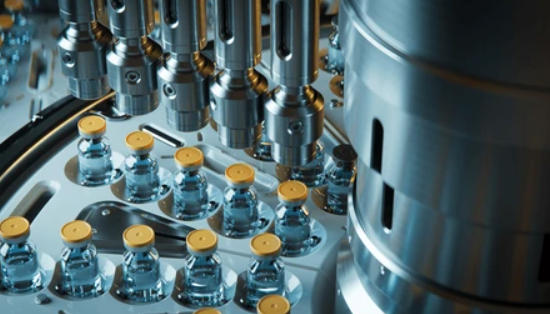
Everheal, headquartered in Ningbo, China, focuses on customized pharmaceutical filling equipment and complete production lines, including utilities, sterilization systems, and factory layout design for international customers. For buyers in Ecuador, this approach means working with a partner that designs a coherent, GMP‑aligned factory concept rather than supplying isolated pieces of machinery. [everhealgroup]
Important strengths that matter to Ecuadorian customers include:
- Ability to deliver integrated filling, sealing, pure water, WFI, clean steam, and sterilization systems, reducing interface risk between different vendors and systems. [everhealgroup]
- Experience with GMP‑oriented plant layout, zoning, and utility routing that aligns with regulatory expectations and inspection practices, which can shorten design and validation phases. [everhealgroup]
- Flexibility to configure liquid, powder, and semi‑solid filling lines for a range of injectable and oral products, allowing plants to serve multiple product categories. [everhealgroup]
By combining equipment, engineering, and documentation, Everheal supports customers who want a single partner capable of delivering projects from initial concept to validated production line.
Other Representative Suppliers and Their Typical Roles
Vibgyor – Liquid Filling Machines with Export Experience to Ecuador
Vibgyor is referenced as a liquid filling machine manufacturer and exporter to Ecuador, offering solutions that cover various liquid products and closure types. Although its portfolio serves multiple industries beyond pharmaceuticals, its experience in liquid handling and regional exports makes it relevant for certain pharmaceutical and nutraceutical applications. [liquidfillingmachinemanufacturer]
For some Ecuadorian buyers, Vibgyor's value lies in a wide equipment range and the possibility of sourcing multiple filling and packaging machines from a single provider, particularly where regulatory requirements are less complex than for high‑risk injectables. [liquidfillingmachinemanufacturer]
VKPAK – Flexible Filling Solutions for Diverse Applications
VKPAK provides a broad set of automatic and semi‑automatic filling machines, including models used in medical and pharmaceutical environments, and has supplied equipment to customers in Ecuador. Its portfolio spans different container types and product categories, which is attractive for companies operating mixed‑use facilities or multiple production sectors. [mjptv]
In Ecuador, VKPAK's combination of modular equipment and competitive pricing can be suitable for smaller plants or those transitioning from manual or semi‑manual filling processes. [mjptv]
Practical Case‑Style Scenarios from Latin American Facilities
Scenario 1 – Upgrading from Manual to Semi‑Automatic Vial Filling
A mid‑size hospital supply manufacturer in Latin America struggled with manual vial filling of small‑volume parenterals, facing inconsistent dosing, long batch times, and a high dependency on operator skill. After installing a semi‑automatic servo‑driven filling system, the company observed:
- More consistent dosing and a reduction in overfill, improving batch yield
- Shorter changeover times when switching between vial sizes
- Simplified cleaning procedures and reduced risk of operator errors
These improvements are consistent with industry data that show servo pump systems provide high precision and operational flexibility for medium‑volume production environments. [finance.yahoo]
Scenario 2 – Greenfield Injectable Plant with Turnkey Integration
A company planning a new injectable facility required more than individual machines; it needed facility layout, utilities design, and process planning that aligned with EU GMP requirements. By working with a turnkey engineering provider similar in scope to Everheal, the project team obtained:
- A complete plant layout covering vial washing, sterilization tunnels, filling, closing, inspection, and supporting utilities such as pure water and clean steam [everhealgroup]
- Coordinated documentation for validation and regulatory submission
- Reduced integration risk and a smoother path to commercial production
For investors and manufacturers in Ecuador, this model offers a practical route to establishing export‑capable injectable plants without building a full in‑house engineering department.
Practical Checklist for Ecuadorian Buyers
To turn these insights into a concrete action plan, procurement and engineering teams in Ecuador can apply the following structured checklist before selecting any vial filling equipment supplier:
1. Define your product and capacity profile
- Clarify annual production volume, batch size, vial sizes, and whether you handle liquids, powders, or both.
2. Identify regulatory targets
- Decide whether you will focus on domestic markets only or also pursue registrations in the US, EU, or other Latin American countries with stricter standards. [industryresearch]
3. Evaluate internal technical capabilities
- Determine whether you have the in‑house expertise for maintenance, validation, and integration, or whether a turnkey partner such as Everheal is more suitable. [everhealgroup]
4. Compare suppliers on TCO rather than price alone
- Request clear data on energy consumption, maintenance intervals, typical spare parts needs, and estimated downtime costs. [linkedin]
5. Validate supplier claims through references
- Contact existing customers in Latin America where possible to discuss uptime, service response, and actual performance in daily operation. [machinesequipments]
This checklist helps align equipment investments with strategic priorities and risk tolerance, which is especially important for mid‑size organizations making long‑term capital decisions.
New Deep‑Dive Section: How Everheal Supports International Projects Including Ecuador
As a pharmaceutical filling equipment manufacturer and system integrator, Everheal positions itself as a partner for global turnkey projects, including potential collaborations with companies in Ecuador. The company's offering, as described in its own materials, covers several key areas: [everhealgroup]
- Customized pharmaceutical production and filling lines for vials, ampoules, bottles, and other containers, across liquids, powders, and semi‑solid products. [everhealgroup]
- Integrated pure water, WFI, clean steam, and sterilization systems, aligned with filling and closing equipment to create a unified process environment. [everhealgroup]
- Support for GMP‑oriented plant layout and documentation, including process flow optimization and utility planning, which can reduce design‑related delays and simplify inspections. [everhealgroup]
For Ecuadorian companies planning upgrades or new projects, working with Everheal can offer a combination of competitive engineering solutions and a structured, compliance‑focused approach to plant realization.
How to Choose the Right Vial Filling Machine Supplier in Ecuador – Step‑by‑Step
1. Map your current and future product portfolio
- Identify which products (for example, vaccines, small‑volume parenterals, oncology drugs) you plan to fill and how this may evolve during the next five to ten years. [industryresearch]
2. Create a short list of three to five suppliers
- Include at least one turnkey integrator, one regional supplier, and one global equipment manufacturer to compare technical and commercial approaches. [everhealgroup]
3. Request technical proposals and draft layouts
- Ask for proposed line layouts, utility requirements, automation architecture, and validation concepts, instead of only requesting price quotations.
4. Evaluate total cost and service commitments
- Compare preventive maintenance agreements, spare parts packages, and service response obligations specifically for Ecuador or nearby countries. [machinesequipments]
5. Review references through visits or remote audits
- When feasible, visit plants in Latin America running similar lines, or conduct structured remote audits to confirm that the equipment performs as described.
Following this sequence helps ensure that the final selection reflects both technical fit and long‑term reliability.
Call to Action – Plan Your Next Filling Line with Everheal
If you are considering a new vial filling line or a complete injectable facility in Ecuador, working with a partner that understands pharmaceutical filling equipment, utilities, and GMP‑oriented factory layout can significantly reduce project risk. Everheal can collaborate with your team to:
- Review your product roadmap and regulatory objectives
- Design a flexible, compliant production line for vials and other dosage forms
- Provide integrated filling, sterilization, and utility systems with coordinated documentation and technical support throughout the project lifecycle [everhealgroup]
A practical next step is to request a technical consultation, share your current site layout or greenfield plans, and obtain a tailored concept proposal built around Ecuadorian conditions and broader Latin American regulatory requirements. [everhealgroup]
Contact us to get more information!
FAQs: Vial Filling Machine Manufacturers and Pharmaceutical Filling Equipment in Ecuador
Q1: What is the main driver for investing in vial filling machines in Ecuador now?
A: Growing demand for injectable therapies, tighter regulatory expectations, and the goal of serving regional export markets are all encouraging Ecuadorian pharmaceutical companies to modernize their vial filling and aseptic processing capabilities. [linkedin]
Q2: Are medium‑volume vial filling machines suitable for most Ecuadorian plants?
A: Medium‑volume systems often provide the best balance between flexibility and cost, allowing facilities to manage routine production and moderate volume increases without oversizing their capital investments, which is well suited to many mid‑size plants in emerging markets. [finance.yahoo]
Q3: Why consider a turnkey provider instead of buying machines from several suppliers?
A: Turnkey partners such as Everheal can integrate filling equipment with utilities, sterilization processes, and GMP‑oriented layouts, reducing interface risks, simplifying validation work, and accelerating time to market by coordinating the full system. [everhealgroup]
Q4: How important is local service support in Ecuador?
A: Local or regional service support is critical because slow response times during breakdowns can cause production delays and missed delivery commitments; suppliers with established service structures in Latin America typically have an advantage. [liquidfillingmachinemanufacturer]
Q5: What documents should be requested from vial filling machine suppliers?
A: It is advisable to request detailed equipment specifications, material certificates, FAT and SAT protocols, validation documentation such as DQ, IQ, and OQ, and clearly defined preventive maintenance plans to support compliance and long‑term reliability. [linkedin]
References
1. Machinesequipments – “Filling and Packaging Machine in Ecuador.”
https://www.machinesequipments.com/ecuador/food-processing-equipment-and-machines/filling-and-packaging-machine [machinesequipments]
2. Yahoo Finance – “Injectable Liquid Filling Machines Market Expected to…”
https://finance.yahoo.com/news/injectable-liquid-filling-machines-market-143000121.html [finance.yahoo]
3. Vibgyor – “Liquid Filling Machine Manufacturer & Exporter in Ecuador.”
https://www.liquidfillingmachinemanufacturer.in/liquid-filling-machine-manufacturer-in-ecuador.html [liquidfillingmachinemanufacturer]
4. VKPAK – “5–20 ml Filling Machine in Ecuador” and related product pages.
https://www.mjptv.com/sale/showroom/5-20ml-filling-machine-in-ecuador [mjptv]
5. Industry analysis article – “Pharmaceutical Filling and Sealing Equipment Market, Global Forecast.”
https://www.linkedin.com/pulse/pharmaceutical-filling-sealing-equipment-market-global-wlgle [linkedin]
6. IndustryResearch.biz – “Pharmaceutical Vial Filling Machine Market Growth Forecast.”
https://www.industryresearch.biz/market-reports/pharmaceutical-vial-filling-machine-market-112714 [industryresearch]
7. Everheal Group – Company overview.
https://www.everhealgroup.com [everhealgroup]
8. Everheal Group – “Customized Pharmaceutical Production Line Manufacturers.”
https://www.everhealgroup.com/pharmaceutical-production-line.html [everhealgroup]
9. Everheal Group – “Customized Pharmaceutical Filling Equipment Manufacturers.”
https://www.everhealgroup.com/pharmaceutical-filling-equipment.html [everhealgroup]


