Content Menu
● Understanding the Pressure Infusion Bag
● Why Pressure Instead of Gravity?
● Main Clinical Uses of a Pressure Infusion Bag
>> Rapid Fluid Resuscitation
>> Blood and Blood Product Transfusion
>> Invasive Hemodynamic Monitoring
● Components and Design Features
● Typical Pressure Ranges and Control
● Step-by-Step Use With an Infusion Bag
● Pressure Infusion Bag vs. Infusion Pump
>> When to Use a Pressure Infusion Bag
>> When to Use an Infusion Pump
● Advantages of Using a Pressure Infusion Bag
● Limitations and Risks
● Safety and Best Practices With Infusion Bags
● Application Settings Across the Hospital
● Disposable vs. Reusable Pressure Infusion Bags
>> Disposable Pressure Infusion Bags
>> Reusable Pressure Infusion Bags
● Integration With Sterile Infusion Bag Production (Everheal Context)
● How Everheal Solutions Support Pressure Infusion Use
● Conclusion
● FAQ
>> 1) What is the main purpose of a pressure infusion bag?
>> 2) Can a pressure infusion bag be used for all medications?
>> 3) What sizes of Infusion Bag are compatible?
>> 4) How is patient safety ensured when using pressure on an Infusion Bag?
>> 5) How does Everheal relate to pressure infusion bags?
● Citations:
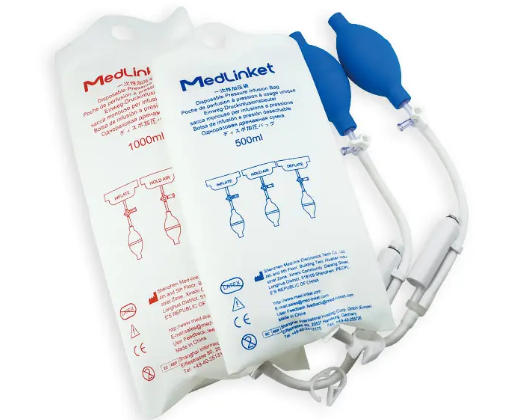
A pressure infusion bag is a simple, cuff-style device used to apply external pressure around an IV Infusion Bag so that fluids or blood products can be delivered into the patient more rapidly and reliably than with gravity alone. It is widely used in emergency care, operating rooms, ICUs, and invasive hemodynamic monitoring.
Understanding the Pressure Infusion Bag
A pressure infusion bag is essentially an inflatable sleeve that wraps around a flexible IV Infusion Bag containing crystalloids, blood, or other sterile solutions. When the cuff is inflated with air, the pressure is transmitted to the Infusion Bag, which forces the liquid through the IV tubing and into the patient's bloodstream.
The device normally includes a transparent body, an internal air bladder, a manual inflation bulb, a pressure gauge, and a stopcock or valve to control inflation and deflation. By adjusting the amount of air in the bladder, clinicians can control the pressure on the Infusion Bag and therefore the flow rate of the infusion.
Why Pressure Instead of Gravity?
Under normal circumstances, IV fluid is delivered simply by hanging an Infusion Bag on an IV pole and relying on gravity. However, gravity flow may be too slow or unreliable in several situations:
- The patient is in shock or severe hemorrhage and needs rapid volume resuscitation
- Blood or viscous fluids are being infused, which naturally flow slower
- The IV catheter is small or vascular resistance is high
- The infusion set-up must maintain a constant pressure for monitoring
By enclosing the Infusion Bag in a pressure infusion bag, the clinician can rapidly increase the hydrostatic pressure above what gravity alone can provide. This greatly accelerates flow without having to compress the Infusion Bag by hand.
Main Clinical Uses of a Pressure Infusion Bag
Rapid Fluid Resuscitation
One of the most important uses is rapid administration of crystalloids (such as normal saline or Ringer's lactate) during shock, trauma, or perioperative hypotension. In these cases, every second counts, and the standard drop-by-drop flow of an Infusion Bag under gravity is not fast enough.
By raising the external pressure around the Infusion Bag, flow rates can be increased several-fold, allowing clinicians to deliver large fluid volumes in minutes rather than nearly an hour in some cases. This can be life-saving in severe blood loss, burns, or sepsis resuscitation scenarios.
Blood and Blood Product Transfusion
Blood and blood products are more viscous than clear crystalloids, so they naturally flow more slowly. When patients require rapid transfusion—such as in massive hemorrhage or major surgery—a pressure infusion bag is commonly used to pressurize the blood Infusion Bag.
This approach shortens transfusion time dramatically while avoiding constant manual squeezing, which is tiring, inconsistent, and harder to control. The pressure bag keeps a steady pressure on the blood Infusion Bag, maintaining high flow until the bag is nearly empty.
Invasive Hemodynamic Monitoring
Pressure infusion bags are also vital components of invasive arterial pressure monitoring and certain central venous or pulmonary artery catheter systems. In these “pressure monitoring sets,” a small Infusion Bag of heparinized saline is placed inside a pressure infuser and inflated to a pressure higher than the patient's systolic blood pressure.
This continuous pressure:
- Prevents blood from flowing backward into the catheter tubing
- Keeps the catheter and transducer line patent
- Allows fast manual flushing when needed
Without a pressurized Infusion Bag in this setup, arterial lines could easily clot or fail, compromising accurate blood pressure waveform monitoring.
Components and Design Features
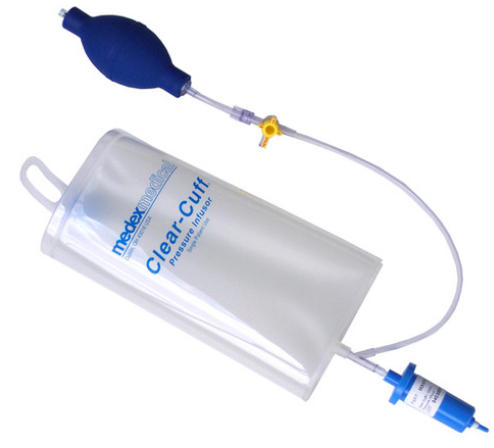
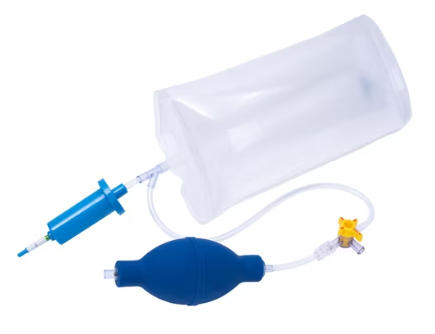
A typical pressure infusion bag that surrounds an Infusion Bag includes:
- Transparent outer shell: Allows a full 360° view of the Infusion Bag volume and label
- Internal inflatable bladder: Wraps around the Infusion Bag and exerts uniform pressure when inflated
- Manual inflation bulb: Similar to a blood pressure cuff bulb, used to pump air into the bladder
- Pressure gauge: Displays the current pressure (often from 0 to 300 mmHg) so staff can stay within safe ranges
- Three-way stopcock or valve: Controls inflation, holds pressure, and enables rapid deflation when needed
- Hook or hanger system: Holds the Infusion Bag in position and attaches to IV poles or mounting points
These features work together to ensure that the pressure on the Infusion Bag is applied consistently, easily adjusted, and safely monitored.
Typical Pressure Ranges and Control
In many clinical protocols, the working pressure for a pressure infusion bag is around 300 mmHg. This is high enough to significantly accelerate flow and maintain arterial monitoring lines, but low enough to remain within the device's safe operating range.
The stopcock and gauge combination allows clinicians to:
- Gradually inflate the bladder until the gauge shows the desired pressure
- Maintain that pressure during infusion
- Make fine adjustments as the Infusion Bag empties or patient needs change
- Rapidly release pressure by opening the valve for deflation
Because infusion pressure can be adjusted at any time, nurses and doctors can respond quickly if venous access, patient blood pressure, or therapy goals shift during treatment.
Step-by-Step Use With an Infusion Bag
While exact steps vary by manufacturer, the general workflow is similar:
1. Prepare the Infusion Bag
- Confirm fluid type, volume, expiration date, and compatibility.
- Spike the Infusion Bag with the IV set as usual and prime the line to remove air.
2. Load the Infusion Bag into the Pressure Device
- Open the pressure infusion bag cuff or sleeve.
- Place the Infusion Bag inside the transparent chamber, aligning it so the volume scale and label are visible.
- Use the internal hook or strap to suspend the Infusion Bag in the correct position.
3. Hang the Assembly
- Hang the combined pressure infuser–plus–Infusion Bag unit on an IV pole or mounting hook.
- Ensure the IV tubing is routed without kinks and reaches the patient comfortably.
4. Inflate to Target Pressure
- Close the stopcock to the “inflate/hold” position.
- Pump the inflation bulb slowly while watching the gauge.
- Stop inflating when the desired pressure (often around 300 mmHg) is reached.
5. Monitor During Infusion
- Frequently check the pressure gauge to ensure it remains in the target range.
- Observe the Infusion Bag level and the patient's response (blood pressure, heart rate, urine output, etc.).
- Adjust the clamp or roller on the IV line if a more precise flow limitation is needed.
6. Deflate When Finished
- Once the Infusion Bag is nearly empty or therapy goals are met, open the stopcock to the deflate position.
- Allow the bladder to depressurize fully.
- Remove and discard the used Infusion Bag according to protocol.
This sequence allows a pressure infusion bag to work seamlessly with a standard Infusion Bag while maintaining clinician control over speed and safety.
Pressure Infusion Bag vs. Infusion Pump
Both pressure infusion bags and infusion pumps are used to deliver fluids from an Infusion Bag, but they serve different purposes.
When to Use a Pressure Infusion Bag
A pressure infusion bag is most appropriate when:
- Very rapid fluid or blood administration is required
- The goal is to maintain a pressurized flush system for an arterial line
- Portability and simplicity are important
- Electrical power or sophisticated equipment is not immediately available
In these contexts, high precision in dose per minute is less important than speed and practicality.
When to Use an Infusion Pump
An infusion pump is more suitable when:
- Medications must be delivered in very precise doses
- The rate must be tightly controlled or titrated over time
- Long-term infusions are required (e.g., vasoactive drugs, insulin, chemotherapy, analgesia)
- Alarms and safety interlocks are necessary to prevent dosing errors
Here, the pump works with the Infusion Bag as a reservoir but meters the flow using internal mechanisms, independent of gravity or external cuff pressure.
Advantages of Using a Pressure Infusion Bag
Using a pressure infusion bag around a standard Infusion Bag offers several clinical and operational advantages:
- Rapid flow: Drives fluid or blood into the patient much faster than gravity alone
- Consistent pressure: Maintains a near-steady driving pressure rather than irregular manual squeezing
- Hands-free operation: Frees staff from continuous manual compression, reducing fatigue and inconsistency
- Compatibility: Works with commonly used Infusion Bag sizes (e.g., 500 mL, 1000 mL, 3000 mL)
- Portability: Requires no electricity, making it suitable for transport, field use, and resource-limited environments
These benefits make pressure infusion bags valuable in both high-tech hospitals and lower-resource settings.
Limitations and Risks
Despite their usefulness, pressure infusion bags must be used carefully because they introduce potential risks:
- Air embolism: If air remains in the line or Infusion Bag, pressure can drive it quickly into the bloodstream; strict priming and air removal are essential.
- Over-pressurization: Excessive pressure can stress the Infusion Bag or tubing, potentially leading to leaks or ruptures.
- Inaccurate dosing: Because the device does not meter flow precisely, it is not appropriate for medications that require tightly controlled infusion rates.
- Cross-contamination: Reusable cuffs must be disinfected properly between patients; disposable models mitigate this but increase consumable costs.
Good clinical practice, training, and adherence to device instructions help reduce these risks significantly.
Safety and Best Practices With Infusion Bags
To use a pressure infusion bag safely with any Infusion Bag, clinicians should follow several core principles:
- Thoroughly prime all lines to remove visible air before applying pressure
- Confirm all connections are secure and that there are no cracks or leaks in tubing or the Infusion Bag port
- Stay within recommended pressure ranges based on the manufacturer's instructions
- Monitor the patient continuously, especially in critical cases, watching for signs of fluid overload, transfusion reactions, or hemodynamic instability
- Use single-patient devices or strict cleaning protocols for reusable bags to reduce infection risk
By treating the pressure infusion bag and the Infusion Bag as one integrated system, healthcare teams can deliver therapy both rapidly and safely.
Application Settings Across the Hospital
Pressure infusion bags are used anywhere that fast or pressurized fluid delivery from an Infusion Bag is required, including:
- Emergency Department (ED)
- Trauma resuscitation
- Massive transfusion protocols
- Shock and severe dehydration cases
- Operating Room (OR)
- Major surgeries with large blood loss
- Controlled rapid volume replacement
- Intraoperative arterial line monitoring
- Intensive Care Unit (ICU)
- Arterial and central venous pressure monitoring
- Rapid response to hemodynamic deterioration
- Prehospital and Transport Services
- Ambulances, air medical transport, and field medicine where gravity alone is insufficient and power may be limited
In all these locations, the pressure bag is a simple but powerful partner to the Infusion Bag in achieving clinical goals quickly.
Disposable vs. Reusable Pressure Infusion Bags
When working with Infusion Bags, hospitals can choose between disposable and reusable pressure infusers.
Disposable Pressure Infusion Bags
- Designed for single-patient use
- Help minimize cross-infection risk
- Require no reprocessing or maintenance
- Often include clear labeling areas and color-coded gauges
These are particularly attractive in high-acuity settings where infection control and workflow efficiency are priorities.
Reusable Pressure Infusion Bags
- Built for repeated use after appropriate cleaning
- More cost-efficient over time in some facilities
- Must be regularly inspected for leaks, wear, and gauge accuracy
- Must be handled carefully to avoid puncturing the internal bladder
Both types are fully compatible with standard Infusion Bags; the choice depends on institutional policy, infection control strategy, and budget.
Integration With Sterile Infusion Bag Production (Everheal Context)
Everheal, as a Chinese manufacturer of pharmaceutical equipment, focuses on the upstream side of IV therapy—designing and supplying systems that help pharmaceutical producers create safe, high-quality Infusion Bag products.
Key equipment that supports the production of sterile solutions packaged in Infusion Bags includes:
- Purified water preparation systems for generating pharmaceutical-grade water used as the base of many infusates
- Pure steam generators for sterilization-in-place, clean-in-place systems, and contact surfaces involved in Infusion Bag manufacturing
- Multi-function distillation water machines to supply water-for-injection quality feed for parenteral solutions
- Liquid filling and sealing machines that accurately fill Infusion Bags and hermetically seal ports or connectors
- Sterilization systems (such as autoclaves) that terminally sterilize filled Infusion Bags or maintain aseptic environments
When these upstream systems are properly designed and validated, the resulting Infusion Bags are safer and more reliable when placed inside a pressure infusion bag at the bedside. This ensures that rapid infusion does not compromise sterility or product integrity.
How Everheal Solutions Support Pressure Infusion Use
Properly designed factory layouts and automated production lines from Everheal help pharmaceutical clients achieve:
- Consistent fluid composition and volume in each Infusion Bag, supporting predictable clinical response
- Robust sterility assurance, so that even when an Infusion Bag is rapidly pressurized and infused, contamination risk remains low
- Flexible Infusion Bag formats, including various volumes and port designs suitable for both gravity and pressure infuser use
- Regulatory compliance with international standards, facilitating global export of Infusion Bags that can be safely used in pressure infusion systems
This alignment between manufacturing excellence and clinical practice allows hospitals worldwide to use Everheal-supported Infusion Bags confidently with pressure infusion devices in demanding environments.
Conclusion
A pressure infusion bag is a manually pressurized cuff that surrounds a standard IV Infusion Bag to accelerate fluid or blood delivery and to maintain pressurized monitoring lines when gravity alone is inadequate. It is essential for rapid resuscitation, blood transfusion in critical situations, and long-term arterial line patency, especially in the ED, OR, ICU, and transport settings.
By understanding how the pressure infusion bag interacts with the Infusion Bag, clinicians can exploit its speed and simplicity while respecting its limitations, such as the lack of precise dosing and the need for rigorous air and pressure control. Upstream, manufacturers like Everheal play a crucial role by supplying purified water systems, pure steam generators, distillation equipment, filling and sealing machinery, and sterilization systems that enable the production of reliable sterile Infusion Bags. Together, high-quality Infusion Bags and well-designed pressure infusion devices form a powerful combination that supports safe, effective, and rapid IV therapy across modern healthcare.
FAQ
1) What is the main purpose of a pressure infusion bag?
The main purpose of a pressure infusion bag is to apply controlled external pressure around an IV Infusion Bag so that fluids or blood products can be delivered faster than with gravity alone. This is particularly useful in emergencies and in invasive arterial pressure monitoring systems.
2) Can a pressure infusion bag be used for all medications?
No. A pressure infusion bag is ideal for rapid fluids, blood, and pressurized saline used in monitoring lines, but not for medications that require very precise, programmable infusion rates. For vasoactive drugs, insulin, chemotherapy, and many other critical infusions, a dedicated infusion pump working with an Infusion Bag is the safer choice.
3) What sizes of Infusion Bag are compatible?
Most pressure infusion bags are designed to work with common Infusion Bag volumes such as 500 mL, 1000 mL, and sometimes 3000 mL. The pressure device's physical dimensions and hanger system must match the size and shape of the Infusion Bag, but the basic operating principle remains the same regardless of volume.
4) How is patient safety ensured when using pressure on an Infusion Bag?
Patient safety depends on careful priming to remove air, correct pressure selection, and continuous monitoring. Clinicians must stay within the manufacturer's recommended pressure range, regularly check the gauge, and verify that all connections between the pressure bag, Infusion Bag, and IV tubing are secure and leak-free.
5) How does Everheal relate to pressure infusion bags?
Everheal does not produce the bedside pressure cuffs themselves; instead, it supplies purified water systems, pure steam generators, multi-function distillers, liquid filling and sealing machines, and sterilization systems used to manufacture sterile Infusion Bags. These high-quality Infusion Bags can then be safely placed inside a pressure infusion bag in hospitals worldwide.
Citations:
[1](https://cellbios.com/medical/fusorflo-pressure-infusion-bag/)
[2](https://www.sinymedical.com/why-use-a-pressure-infusion-bag/)
[3](http://www.tapmedic.com/uploads/1/0/5/5/105534595/clinical_applications_for_pressure_infusion_bags_crf-06_rev_b.pdf)
[4](https://pubmed.ncbi.nlm.nih.gov/10149684/)
[5](https://www.unimed.cn/blogs/news/what-is-the-pressure-infusion-bag-for)
[6](https://www.gcmedica.com/pressure%20infusion%20bag.html)
[7](https://www.kk-bioscience.com/Where-We-Can-Apply-The-Pressure-Infusion-Bag-id45795066.html)
[8](https://med-linket-corp.com/blogs/news/what-is-a-pressure-infusion-bag-and-used-for)


