


Views: 222 Author: Rebecca Publish Time: 2025-12-02 Origin: Site


Content Menu
● What Exactly Is a HEPA Air Filter?
● How Does a HEPA Filter Air Purifier Work?
>> Air Intake and Pre-Filtration
● Types and Grades of HEPA Air Filters
>> True HEPA and High-Grade HEPA
>> HEPA-Type and HEPA-Like Filters
>> ULPA and Specialized Filters
● What Can a HEPA Air Filter Remove?
● Benefits of Using a HEPA Filter Air Purifier
>> Allergy and Asthma Management
>> Cleaner, Healthier Indoor Air
>> Reduced Airborne Microorganisms
>> Less Dust and Easier Cleaning
● Limitations of HEPA Air Filter Technology
● Choosing the Right HEPA Filter Air Purifier
>> Match Capacity to Room Size
>> Confirm True HEPA Specifications
>> Consider Additional Filtration and Features
>> Evaluate Noise, Energy, and Maintenance
● Key Applications of HEPA Filter Air Purifiers
>> Offices and Commercial Spaces
>> Healthcare and Pharmaceutical Environments
>> Industrial and Laboratory Use
● Best Practices for Using a HEPA Filter Air Purifier
● FAQ
>> 1. What makes a HEPA Air Filter different from a regular air filter?
>> 2. How long does a HEPA Air Filter typically last?
>> 3. Can a HEPA filter air purifier improve symptoms of allergies and asthma?
>> 4. Does a HEPA Air Filter remove odors and harmful gases?
>> 5. Is a HEPA filter air purifier suitable for pharmaceutical or medical clean areas?
A HEPA filter air purifier is an air cleaning device that uses a High Efficiency Particulate Air (HEPA) filter to remove tiny airborne particles such as dust, pollen, mold spores, pet dander, bacteria, and smoke from indoor air. HEPA Air Filter technology is widely recognized as one of the most effective filtration methods for improving indoor air quality in homes, offices, hospitals, and cleanrooms.

HEPA stands for High Efficiency Particulate Air (or High Efficiency Particulate Arrestance), and it refers to a defined performance standard rather than a single brand or product. A HEPA Air Filter is a dense, pleated mat of ultra-fine fibers that physically traps airborne particles as air passes through the filter media.
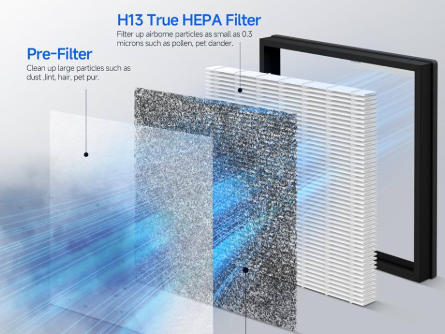
To be considered a true HEPA Air Filter, the filter must capture at least 99.97% of particles with a diameter of 0.3 microns, which is regarded as the most penetrating particle size. In practice, a high‑quality HEPA Air Filter can also capture a very high percentage of both smaller and larger particles, making it extremely efficient in real-world applications.
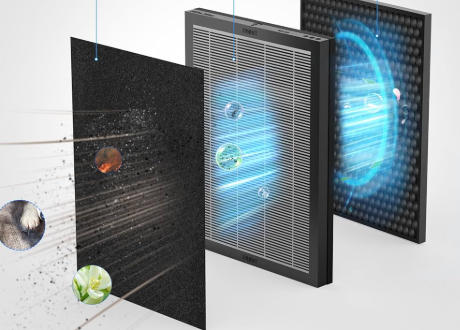
A HEPA filter air purifier works by continuously circulating room air through internal filters and returning cleaner air back into the environment. The core of the system is the HEPA Air Filter, but the purifier usually includes additional stages to protect the main filter and enhance overall performance.
First, the device uses a fan to draw contaminated air into the purifier's housing. Many units include a pre-filter that captures larger debris such as hair, lint, and coarse dust before the air reaches the HEPA Air Filter. This pre-filtration step reduces the load on the HEPA media, extends its service life, and helps maintain stable airflow over time.
After passing the pre-filter, air flows into the HEPA Air Filter section, where extremely small particles are trapped by the dense network of fibers. The filter captures contaminants using multiple physical mechanisms: larger particles are strained out, mid-sized particles are intercepted as they follow airflow lines, and ultra-fine particles collide randomly with fibers and become trapped. Because of these combined effects, a well-designed HEPA Air Filter can remove a wide spectrum of particulate pollution from the air.
Many HEPA filter air purifiers integrate extra technologies downstream or upstream of the HEPA Air Filter. Common additions include activated carbon filters to adsorb volatile organic compounds and odors, and sometimes UV-based or other antimicrobial technologies to reduce microbial growth. Although these stages do not replace the HEPA Air Filter, they provide complementary functions and allow the purifier to handle both particles and certain gases more effectively.
Not all filters using the word “HEPA” deliver the same performance. Understanding the different types and grades helps you choose the right HEPA filter air purifier for your specific application.
True HEPA refers to filters that meet the 99.97% efficiency requirement at 0.3 microns under standardized testing. Many modern purifiers use H13 or H14 grade HEPA Air Filter media, which provide medical- or cleanroom-level performance with extremely high capture efficiency for fine particles and bioaerosols. These grades are commonly used in healthcare, pharmaceutical production, and high-end residential air cleaners.
Some products are marketed as “HEPA-type” or “HEPA-like” but do not meet the strict true HEPA standard. These filters may improve air cleanliness compared with basic filters, but they usually have lower efficiency, especially for the smallest particles. When selecting a HEPA filter air purifier, it is important to verify whether the unit uses a certified HEPA Air Filter or only a HEPA-style element.
In ultra-sensitive environments, filters with even higher efficiency than HEPA can be used. ULPA (Ultra-Low Penetration Air) filters can capture an even greater percentage of extremely fine particles and are used in critical cleanrooms and specialized laboratories. While these are not common in consumer air purifiers, they follow the same basic principle as a HEPA Air Filter but with tighter performance requirements.
A HEPA Air Filter is designed to remove solid and liquid particles suspended in the air, which covers a wide range of common indoor pollutants.
Typical contaminants captured by a HEPA Air Filter include:
- Household dust and fine particulate matter
- Pollen from trees, grasses, and weeds
- Pet dander and hair fragments
- Dust mite allergens and mold spores
- Many types of bacteria and particles carrying viruses
- Smoke particles from cooking, candles, or wildfires
Because the HEPA Air Filter targets particles rather than gases, it does not directly remove chemical vapors, odors, or gases such as carbon monoxide or ozone. For these pollutants, you need a HEPA filter air purifier equipped with additional media such as activated carbon.
Using a HEPA filter air purifier can bring multiple advantages to both residential and commercial environments.
A HEPA Air Filter is highly effective at reducing airborne allergens that trigger sneezing, congestion, and asthma symptoms. By continuously removing pollen, pet dander, dust mites, and mold spores from the air, a HEPA filter air purifier can help sensitive individuals breathe more easily and maintain a more comfortable indoor environment.
In urban areas and industrial zones, indoor air can contain fine particulate pollution that penetrates from outdoors. A HEPA Air Filter provides an extra barrier against these pollutants, lowering indoor PM2.5 levels and reducing long-term exposure to fine particles. Cleaner air supports respiratory health, cardiovascular well-being, and overall comfort for occupants.
While a HEPA Air Filter is not a disinfectant by itself, it can capture bacteria and particles that carry viruses, thus reducing their concentration in indoor air. When combined with appropriate ventilation and hygiene practices, a HEPA filter air purifier becomes part of a broader strategy to control airborne transmission in healthcare facilities, laboratories, and crowded indoor spaces.
By capturing dust and other fine debris before it settles, a HEPA filter air purifier can reduce the amount of dust that accumulates on surfaces. This means less frequent dusting and cleaning, and can also help protect sensitive electronics, instruments, and pharmaceutical equipment from particulate contamination over time.
Although HEPA Air Filter technology is highly effective, it is important to recognize its limitations so that expectations remain realistic.
First, a HEPA Air Filter does not remove gases, odors, or most chemical vapors. If you are dealing with smoke smells, cooking odors, or volatile organic compounds, you will need a HEPA filter air purifier that includes effective gas-phase filtration, typically using activated carbon or other adsorbent materials.
Second, HEPA filters introduce resistance to airflow because of their dense structure. To maintain adequate air circulation through a HEPA Air Filter, the purifier needs a fan powerful enough to overcome this resistance. Higher airflow can lead to increased noise, so careful design and appropriate speed settings are essential for quiet operation.
Finally, a HEPA Air Filter must be maintained properly. Over time, the filter accumulates particles and becomes clogged, which reduces airflow and cleaning efficiency. If the filter is not replaced at recommended intervals, the purifier's performance drops significantly and may eventually become insufficient for the intended space.
Selecting a suitable HEPA filter air purifier involves balancing performance, running cost, and specific application requirements.
One of the most important parameters is the air cleaner's capacity relative to the size of the room. The device should be able to cycle the air through the HEPA Air Filter multiple times per hour to maintain low particle levels. Manufacturers usually provide coverage area or airflow ratings; choosing a model sized slightly above your calculated need offers a safety margin and allows quieter operation on lower fan speeds.
Always verify whether the purifier uses a genuine HEPA Air Filter that meets recognized standards. Pay attention to stated efficiency at 0.3 microns and look for clear labeling indicating true HEPA or specific classes such as H13 or H14. This ensures that the HEPA filter air purifier can reliably remove the fine particles that represent the greatest health concern.
Depending on your environment, you may need more than just a HEPA Air Filter. If odors, chemical vapors, or smoke are issues, select a model with a significant activated carbon filter. If microbial control is a priority, consider units that combine the HEPA Air Filter with antimicrobial components, always ensuring that the technology does not generate harmful byproducts like ozone. Convenience features such as air quality sensors, automatic speed adjustment, timer functions, and connectivity can further improve the user experience.
Because the air purifier may run for many hours each day, noise level and energy consumption are important practical considerations. Look for designs that maintain strong performance through the HEPA Air Filter while remaining quiet on typical operating settings. Also check the cost and availability of replacement filters, including the HEPA Air Filter and any pre-filters or carbon cartridges, and factor these into the long‑term operating expenses.
HEPA filter air purifiers are widely used in both general and specialized environments where air quality matters.
In homes and apartments, a HEPA filter air purifier is commonly placed in bedrooms, living rooms, and study areas to help people with allergies and respiratory conditions. The HEPA Air Filter continuously reduces the level of airborne allergens and dust, making the indoor environment more comfortable for children, elderly family members, and anyone with sensitive airways.
In offices, conference rooms, and commercial buildings, HEPA filter air purifiers support a cleaner working environment. By reducing airborne particles, a HEPA Air Filter can lower perceived stuffiness and help manage the impact of outdoor pollution or nearby construction. Cleaner air contributes to comfort, and may support productivity and well-being for employees and visitors.
Hospitals, clinics, and pharmaceutical production facilities have strict air quality requirements to protect patients, staff, and products. HEPA filter systems are used in isolation wards, operating rooms, and cleanrooms to reduce airborne contaminants. A certified HEPA Air Filter is a core element in these environments, forming part of multi-stage air treatment systems that also include pressure control, temperature and humidity regulation, and specialized ventilation.
In laboratories and manufacturing plants, airborne particles can threaten both product quality and worker health. HEPA filter air purifiers and HEPA-equipped ventilation systems capture fine dusts, fumes, and bioaerosols. A properly specified HEPA Air Filter helps maintain controlled conditions for sensitive processes, such as pharmaceutical filling, aseptic packaging, electronics production, and precision assembly.
To obtain consistent performance from a HEPA filter air purifier, proper installation and operation are just as important as selecting the right device.
Place the purifier where airflow is not obstructed by walls, furniture, or equipment, and avoid corners or enclosed spaces that block circulation. The HEPA Air Filter needs a good flow of room air to do its job effectively. For large rooms or complex layouts, more than one HEPA filter air purifier may be necessary to achieve uniform coverage.
Operate the purifier at an appropriate speed for the room size and pollution load. In highly polluted conditions or during peak allergy seasons, a higher fan speed may be required to ensure that enough air passes through the HEPA Air Filter each hour. At night or in quieter periods, you can choose a lower setting if the purifier is sized generously for the space.
Finally, follow the manufacturer's maintenance schedule for filter replacement. Regularly check the pre-filter and clean or replace it as needed to protect the HEPA Air Filter. When indicators show that the HEPA Air Filter has reached the end of its service life, replacing it promptly keeps the HEPA filter air purifier working at its designed efficiency.
HEPA filter air purifiers have become a key technology for achieving clean and healthy indoor air in homes, offices, healthcare facilities, laboratories, and industrial environments. At the heart of every unit is the HEPA Air Filter, a highly efficient mechanical filter capable of capturing at least 99.97% of fine particles at the most penetrating size, as well as a wide range of larger and smaller contaminants. By continuously cycling air through this filter media, a HEPA filter air purifier reduces dust, allergens, microorganisms, and other particulate pollutants that affect comfort and health.
When selecting and using a HEPA filter air purifier, it is essential to confirm that it uses a genuine HEPA Air Filter, to match its capacity to the room size, and to consider complementary filtration for gases and odors where necessary. With correct sizing, thoughtful placement, and regular maintenance, HEPA Air Filter technology can provide long‑term protection for occupants and processes, supporting cleaner air, improved respiratory comfort, and a more hygienic indoor environment.
A HEPA Air Filter is designed to meet strict efficiency standards, capturing at least 99.97% of particles with a diameter of 0.3 microns, whereas regular filters often capture only larger dust and debris. This means a HEPA filter air purifier can remove far more fine particles, including many allergens and microorganisms, compared with basic filters.
The service life of a HEPA Air Filter depends on air quality, usage time, and the presence of pre-filtration, but many residential units require replacement every 6 to 12 months. In more demanding environments such as hospitals or industrial facilities, filters may need to be changed more frequently to maintain the designed efficiency of the HEPA filter air purifier.
Yes, a properly sized HEPA filter air purifier can significantly reduce airborne allergens such as pollen, pet dander, dust mites, and mold spores, which often trigger allergy and asthma symptoms. By continuously trapping these particles in the HEPA Air Filter, the purifier lowers exposure levels and can help sensitive individuals breathe more comfortably indoors.
A HEPA Air Filter targets solid and liquid particles, so it does not directly remove odors or gases such as VOCs and smoke chemicals. To control smells and gaseous pollutants, you should choose a HEPA filter air purifier equipped with additional media like activated carbon, which adsorbs these molecules and works alongside the HEPA Air Filter.
Yes, HEPA filter technology is widely used in pharmaceutical plants, cleanrooms, and medical facilities, as it can provide the high level of particle control required for sterile and controlled environments. In these settings, a certified HEPA Air Filter is integrated into carefully designed ventilation and filtration systems to protect both patients and products from airborne contamination.
[1](https://oransi.com/blogs/how-it-works/what-is-a-hepa-filter)
[2](https://www.filtertime.com/news/the-ultimate-guide-to-hepa-air-filters-do-they-really-work)
[3](https://dphhs.mt.gov/assets/publichealth/Asthma/Wildfire%20Smoke/HEPAFilterGuide.pdf)
[4](https://www.weliahealth.org/2025/09/a-practical-guide-to-hepa-filters/)
[5](https://welovhome.com/blog/post/ultimate-guide-to-hepa-air-purifiers)
[6](https://www.air-and-health.com/purificateur-air-comment-ca-marche/le-filtre-hepa/)
[7](https://alen.com/blogs/articles/the-ultimate-guide-to-hepa)
[8](https://purunity.co/blog/what-is-the-hepa-filter-in-the-air-purifier)
[9](https://www.bestvacuum.com/pages/choosing-a-hepa-air-purifier)
[10](https://www.consumerreports.org/appliances/air-purifiers/buying-guide/)


