Content Menu
● What Is a HEPA Air Filter?
● The Science Behind HEPA Air Filtration
>> 1. Interception
>> 2. Impaction
>> 3. Diffusion
>> 4. Electrostatic Attraction
● The Structure of a HEPA Air Filter
● HEPA Air Filters in Industrial and Pharmaceutical Applications
>> 1. Cleanroom Filtration
>> 2. Pharmaceutical Production Lines
>> 3. Hospital and Laboratory Environments
>> 4. Electronic and Semiconductor Manufacturing
● Maintenance and Replacement of HEPA Filters
>> Recommended Practices:
● Benefits of HEPA Air Filters
● How to Choose the Right HEPA Air Filter
● Trends and Innovations in HEPA Filtration
● Conclusion
● FAQ
>> 1. What does HEPA stand for?
>> 2. Do HEPA air filters remove viruses?
>> 3. How often should a HEPA filter be replaced?
>> 4. Can HEPA filters be cleaned and reused?
>> 5. What is the difference between HEPA and ULPA filters?
Air quality plays a crucial role in industries such as pharmaceuticals, healthcare, and electronics manufacturing. In these sectors, even the smallest airborne particles can compromise the integrity of production environments or damage sensitive equipment. Among the many solutions developed to ensure air purity, HEPA air filters have become the gold standard. But what exactly is a HEPA filter, how does it work, and why is it indispensable for industries requiring sterile or contaminant-free environments?
In this article, we'll explore the science behind HEPA air filters, their applications, and their benefits in industrial and pharmaceutical settings. We will also explain how your company can optimize air filtration systems to meet international quality and regulatory standards.
What Is a HEPA Air Filter?
The term HEPA stands for *High-Efficiency Particulate Air*. A HEPA air filter is designed to capture at least 99.97% of airborne particles that measure 0.3 microns in diameter. This standard comes from scientific testing that identifies 0.3 microns as the *Most Penetrating Particle Size (MPPS)* — the size that is most difficult to trap.
To meet the HEPA standard, filters must pass rigorous performance tests as defined by organizations such as the U.S. Department of Energy (DOE), EN 1822, and ISO 29463. These certifications ensure that HEPA filters provide consistent and reliable particle retention efficiency, making them suitable for cleanrooms, hospitals, laboratories, and industrial production lines.
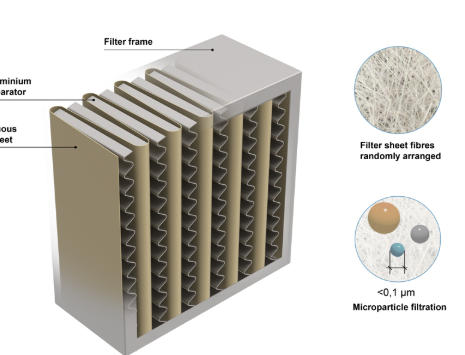
A typical HEPA air filter consists of several layers of ultra-fine glass fibers randomly arranged to form a dense mat. These fibers are bonded together with durable materials and housed in a rigid frame to maintain structural integrity even under high airflow conditions.
The Science Behind HEPA Air Filtration
Understanding how a HEPA air filter works requires a look at the physical mechanisms that capture particles. Unlike simple sieving, HEPA filtration relies on several complex physical processes that target particles of various sizes through multiple capture methods:
1. Interception
When a particle follows the airflow streamlines passing close to a fiber, it touches and adheres to the fiber. This happens mostly for medium-sized particles that are small enough to follow the airflow but large enough to collide with the fibers.
2. Impaction
Larger particles are unable to follow the curves of the air stream around fibers due to inertia. Instead, they crash into the fibers directly. This mechanism is especially effective for particles larger than 1 micron, such as pollen, dust, and many bacteria.
3. Diffusion
Smaller particles—especially those below 0.1 micron—behave erratically due to Brownian motion. This random movement increases the likelihood of contact with filter fibers, causing them to stick. Diffusion is the main reason HEPA filters capture ultrafine particles, including some viruses.
4. Electrostatic Attraction
Some HEPA filters are electrostatically charged to attract particles through opposite electric charges. This additional mechanism increases efficiency without increasing airflow resistance.
Together, these processes allow HEPA air filters to achieve exceptionally high levels of purity across a broad range of particle sizes. The balance of fiber density, diameter, and airflow velocity defines a filter's performance.
The Structure of a HEPA Air Filter
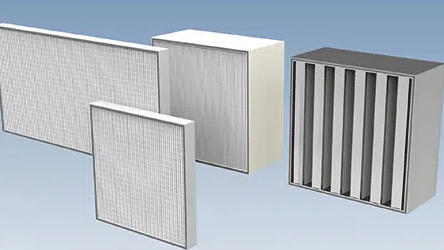
A HEPA air filter typically consists of three key components:
- Filter Media: The heart of the HEPA system, made from fine glass or synthetic microfibers. The density and thickness of these fibers determine the filtration efficiency.
- Separator or Spacer: This keeps pleated filter layers apart to allow even airflow distribution.
- Enclosure Frame: Provides support and rigidity. Common materials include aluminum, galvanized steel, or plastic, often with sealing gaskets to prevent air leakage.
The pleated design increases the available surface area, allowing for greater dust-holding capacity and lower pressure drop—important factors for maintaining energy efficiency.

HEPA Air Filters in Industrial and Pharmaceutical Applications
In industries such as pharmaceuticals, biotechnology, and medical equipment manufacturing, air quality is tightly regulated. Contaminants such as microorganisms, dust, or vapors can render an entire production batch unusable. Therefore, HEPA air filters form a critical part of cleanroom and process air systems.
1. Cleanroom Filtration
In a cleanroom, HEPA filters maintain strict air purity levels (e.g., ISO 5 to ISO 8). They remove airborne contaminants generated by personnel, equipment, and processes. These filters are usually installed in ceiling modules or air handling units (AHUs) to ensure laminar airflow patterns that minimize turbulence and particle deposition.
2. Pharmaceutical Production Lines
During sterile drug manufacturing, HEPA-filtered air prevents contamination at critical points such as filling, sealing, and sterilization. Systems like pure steam generators and water-for-injection facilities rely on HEPA filtration to maintain sterility.
3. Hospital and Laboratory Environments
In hospitals, HEPA filters are used in isolation wards, operating theaters, and even HVAC systems to protect patients with weak immune systems. Laboratories also rely on HEPA filters in biological safety cabinets and fume hoods.
4. Electronic and Semiconductor Manufacturing
Tiny impurities can compromise circuit integrity. HEPA filtration is therefore vital in microelectronics and semiconductor fabrication cleanrooms, where the smallest dust particle can damage chips.
Maintenance and Replacement of HEPA Filters
To maintain air quality and consistent performance, HEPA air filters require regular inspection and replacement. Clogged filters can increase pressure drop, reduce airflow, and lower overall system efficiency.
Recommended Practices:
- Pre-filtration: Use pre-filters (such as G4 or F7 filters) to trap larger particles before they reach the HEPA filter.
- Scheduled Testing: Conduct leak tests (using DOP or PAO aerosol testing) annually or semi-annually.
- Timely Replacement: Replace filters when pressure drop exceeds manufacturer specifications or when contamination is detected.
- Proper Installation: Seal filters tightly within their housings to prevent bypass leakage.
For pharmaceutical facilities, filter validation forms part of Good Manufacturing Practice (GMP) requirements, ensuring that air systems perform consistently according to regulatory standards like EU GMP Annex 1 or FDA guidelines.
Benefits of HEPA Air Filters
The benefits of using HEPA air filters extend beyond air cleanliness:
- Superior Filtration Efficiency: Capture nearly all harmful airborne particles, even those invisible to the naked eye.
- Improved Product Quality: Ensure contamination-free production environments that comply with international pharmaceutical standards.
- Health and Safety: Protect employees and consumers from exposure to hazardous airborne contaminants.
- Energy Efficiency: Advanced HEPA designs maintain high filtration with minimal resistance, optimizing airflow and reducing energy consumption.
- Regulatory Compliance: Meet global cleanroom and manufacturing regulations.
In addition, a reliable HEPA filtration system enhances a company's competitiveness, particularly in export markets where regulatory compliance and reputation for quality are vital.
How to Choose the Right HEPA Air Filter
Selecting an appropriate HEPA air filter depends on several factors related to your application:
1. Filtration Class: Choose filters verified under ISO 29463 or EN 1822 standards (e.g., H13 or H14 class).
2. Airflow and Pressure Drop: Match the filter to your system's airflow to avoid system inefficiency.
3. Operating Conditions: Consider temperature, humidity, and potential chemical exposure.
4. Construction Material: Stainless steel or aluminum housings are ideal for sterilization processes.
5. Validation Requirements: Ensure your filter system aligns with relevant GMP or ISO cleanroom validation criteria.
Everheal, as a professional pharmaceutical equipment manufacturer, integrates HEPA filtration technology into complete production line solutions, ensuring clean air control across processes such as liquid filling, sterilization, and pure water generation. Our systems are custom-engineered to meet international certifications and customer-specific layouts.
Trends and Innovations in HEPA Filtration
With the growing demand for precision manufacturing and public health safety, HEPA technology continues to evolve. Key advancements include:
- ULPA Filters: Ultra-Low Penetration Air filters exceeding HEPA standards, capturing 99.999% of 0.12-micron particles.
- Smart Monitoring Systems: Sensors that measure pressure drop, temperature, and air quality in real-time.
- Nanofiber Technology: Advanced materials increase filtration efficiency while lowering airflow resistance.
- Recycling and Sustainable Design: Manufacturers are now focusing on recyclable filter components and longer-lasting filter media to reduce environmental impact.
Conclusion
HEPA air filters are indispensable tools for maintaining clean and sterile environments across industries—from hospitals to pharmaceuticals, from semiconductors to precision manufacturing. The principle behind their operation combines physical interception, impaction, diffusion, and sometimes electrostatic attraction, resulting in outstanding purification performance.
For pharmaceutical facilities, where contamination control is a matter of safety and compliance, reliable HEPA filtration systems are the backbone of production integrity. Companies like Everheal leverage decades of expertise in designing purification systems and cleanroom solutions that integrate advanced HEPA technologies into total production line designs.
By understanding how a HEPA air filter works and implementing regular maintenance and validation, businesses can ensure sustainable, efficient, and contamination-free production environments that meet both technical and regulatory standards.
FAQ
1. What does HEPA stand for?
HEPA stands for High-Efficiency Particulate Air. It refers to filters capable of trapping at least 99.97% of particles that are 0.3 microns in diameter.
2. Do HEPA air filters remove viruses?
Yes, HEPA filters can capture many airborne viruses because viruses often attach to larger particles like respiratory droplets, which are easily intercepted by HEPA fibers.
3. How often should a HEPA filter be replaced?
Replacement schedules vary depending on system use, but most filters require replacement every 6 to 12 months in industrial or pharmaceutical environments. Regular pressure drop monitoring is the best indicator.
4. Can HEPA filters be cleaned and reused?
Typically, true HEPA air filters are not washable. Cleaning may damage the fibers and compromise performance. Always follow manufacturer recommendations or replace when necessary.
5. What is the difference between HEPA and ULPA filters?
ULPA (Ultra-Low Penetration Air) filters offer even higher efficiency than HEPA, capturing 99.999% of particles as small as 0.12 microns. However, they also have greater airflow resistance and are used mainly in ultra-clean environments.


